


Subscribe to Bankless or sign in
The main barbell on Robinhood Chain thus far has been memes and real world assets (RWA), and now these trends have coalesced into a new mechanism gaining significant traction on the network: RWA-paired memecoin launches.
One of the early pillars on the L2 has been Robinhood Stock Tokens, e.g. onchain versions of NVDA, SPCX, TSLA, AAPL, etc. Yet to date most memecoins deployed on the chain have been paired against ETH (and specifically WETH) for the widespread liquidity.
That said, what would happen if you paired new launches against tokenized stocks instead? We're getting answers in production, as a handful of launchpads are now testing what memecoins' charts look like tied to stocks instead of ETH.
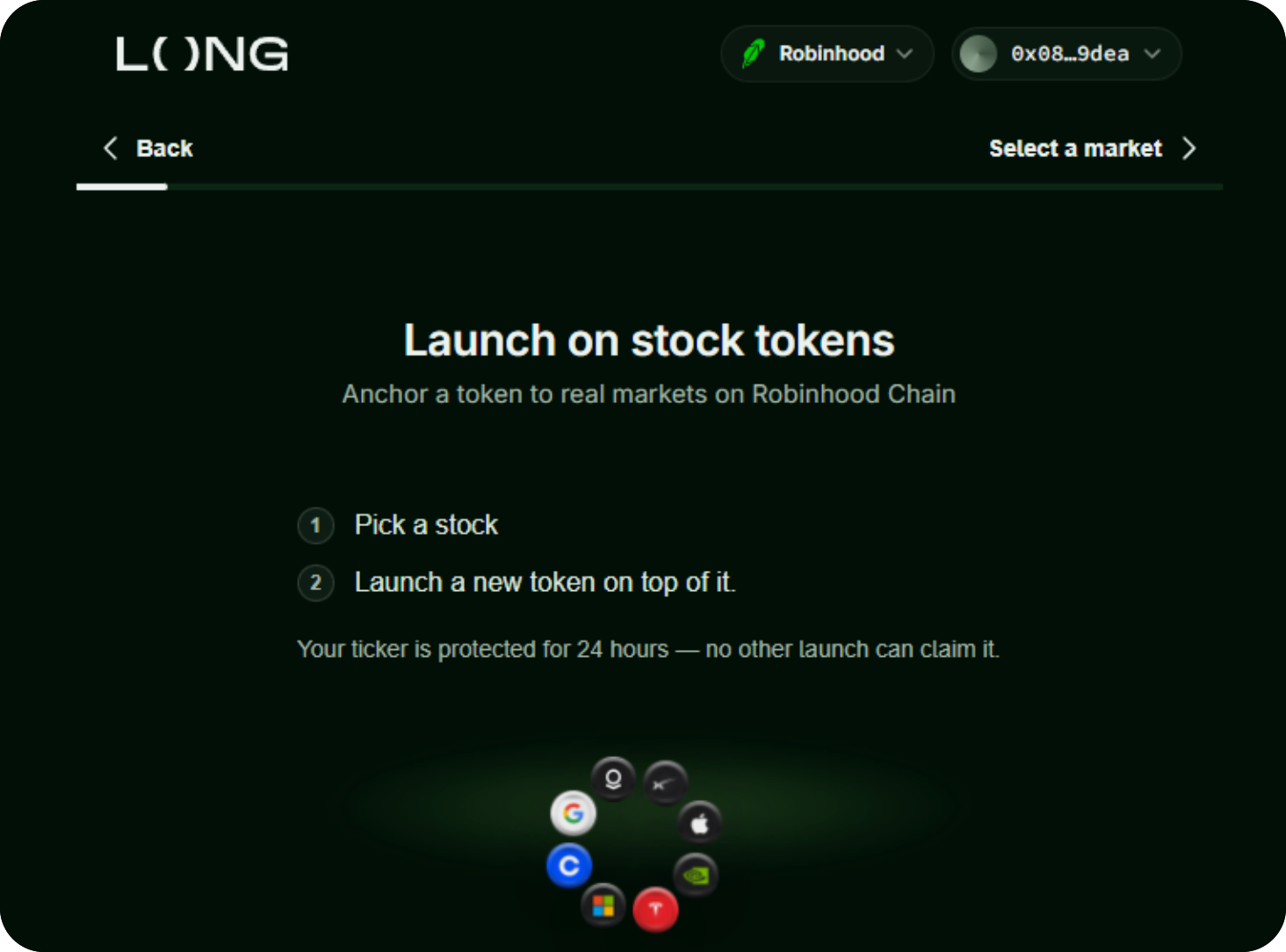
For instance, LONG was an early oncomer and supports a large swathe of the stock-paired memes dropping on Robinhood Chain. Bankr, having recently added this capability, is supporting similar levels of activity here. The popular indie launchpad Pons is adding custom pairs to its V2, and Flaunch is working on stock tokens, too.
So the race is on, but what are the actual mechanics here?
Notably, pairing against a stock isn't a pure bet on the meme itself. A pool's price is a ratio, i.e. how much of the stock token it takes to buy one meme token. This dynamic isolates relative demand, but the dollar return is that price ratio times whatever the stock itself does over the same stretch.
Consider an “XYZ” memecoin launched at a price of 0.001 NVDA. If NVDA is worth $180, each XYZ token starts at $0.18.
Enjoying this article?
Subscribe to Bankless or sign in
Now assume demand for XYZ rises and, one month later, it trades at 0.0015 NVDA. That means XYZ has gained 50% relative to NVDA. Your actual dollar return, however, still depends on what happened to NVDA itself:
- If NVDA stays flat: XYZ rises 50% in dollar terms, from $0.18 to $0.27.
- If NVDA falls 20%: XYZ’s 50% relative gain is partly offset by the stock’s decline. Its dollar value rises only 20%, from $0.18 to about $0.22.
- If NVDA rises 20%: Both parts of the trade work in your favor. XYZ rises 80% in dollar terms, from $0.18 to about $0.32.
In other words, buying a stock-paired memecoin is a combined bet: you are betting that the meme will outperform the stock, while also remaining fully exposed to the stock’s price movement.
As such, pairing against a stock trades ETH's volatility for the stock's. And since top equities are way less volatile than crypto, the chop amid these pools can be considerably calmer. That's one big appeal of this model.
Another interesting dynamic to note here is these sorts of pools let token creators accrue fees in whatever stocks their launches are paired against, meaning they get paid directly with tokenized equity exposure over time (if their pools continue to generate meaningful onchain volume, of course).
This sort of architecture mostly depends on liquidity, and Robinhood Stock Tokens don't have tons of that right now. That's straightforward enough to steadily improve going forward, though, and things are apparently liquid enough considering how Robinhood Chain already boasts the most tokenized stock holders in all of crypto.
Wow. Less than a month after launch, Robinhood Chain has become the largest network by tokenized stock holders, surpassing Solana, BNB Chain, Ethereum, and Base.
— Frank Chaparro (@fintechfrank) July 27, 2026
Distribution matters.
Source: @tokenterminal pic.twitter.com/HIlYA4fjoJ
There are geofencing restrictions in place around these tokens in various jurisdictions, so we'll have to see if these soften or tighten in the months ahead. Even in spite of them, this new pool style is already moving serious volume onchain and will lead to further second-order experiments. Keep it on your radar for 2026, as it's a trend poised to continue blooming.