

Subscribe to Bankless or sign in
Uniswap's V4 hooks have brought an incredible layer of flexibility around onchain trading. They're so flexible, in fact, that their use cases can extend beyond the purely financial while still using transactions as their creative substrate.
For instance, digital collectibles:
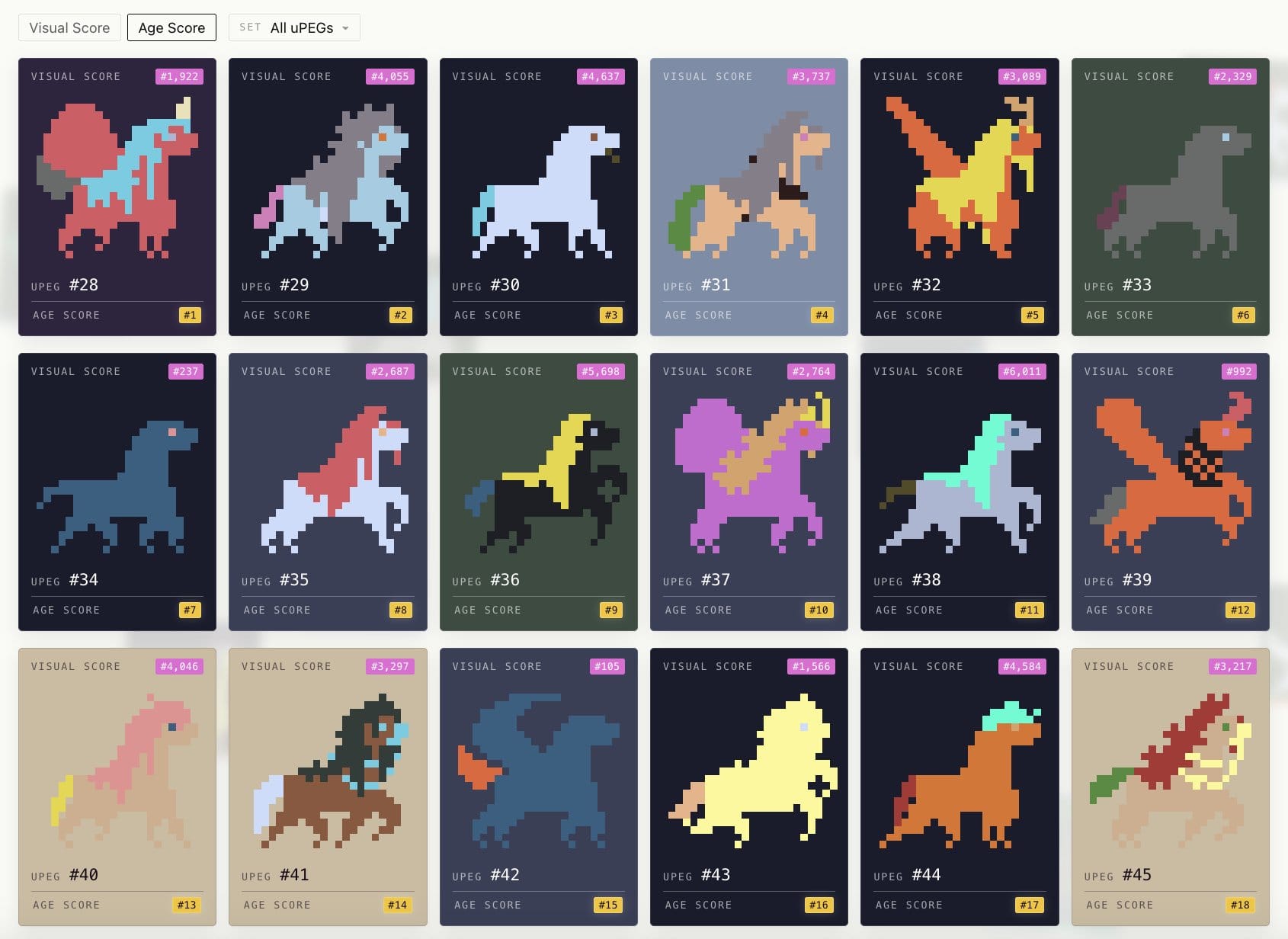
Over the years we've seen a zoo of alternative approaches to onchain collectibles beyond plain ERC-721 NFTs, like ERC-404 or DN-404 hybrid deploys and calldata-based projects like 0xmons, Blitnauts, Ethscriptions, etc.
The newest entrant to this field is  Uniswap V4 hook-based art, as this category is structurally distinct from prior formats. In short, hooks let you attach custom logic to liquidity pools, so you can use them to turn token swaps into generative art events.
I'm not talking about minting NFTs, either. In practice this flow looks like so:
- You interact with a V4 collectibles pool.
- A hook catches your swap of the ERC-20 token, computes traits from the transaction context, and passes those traits to an onchain SVG renderer.
- The renderer then assembles a unique visual artifact entirely from contract code and with no offchain dependencies.
- Your artifact emerges from the pool, bound to your balance and trading activity.
The resulting digital object isn't an NFT, and it's distinct from, but tied to, the fungible token that's traded in the underlying V4 pool. It's a new third thing that can be collected like an NFT, and it can even be wrapped into an NFT, but it springs entirely from the pool's hook logic.
Enjoying this article?
Subscribe to Bankless or sign in
The largest example we have of this model in the wild today is the Unipeg collection, which has a ~$14M market cap at the time of writing after deploying on  Ethereum in April 2026. Its base ERC-20 is $uPEG, which has a hard-capped supply of 10,000 tokens.
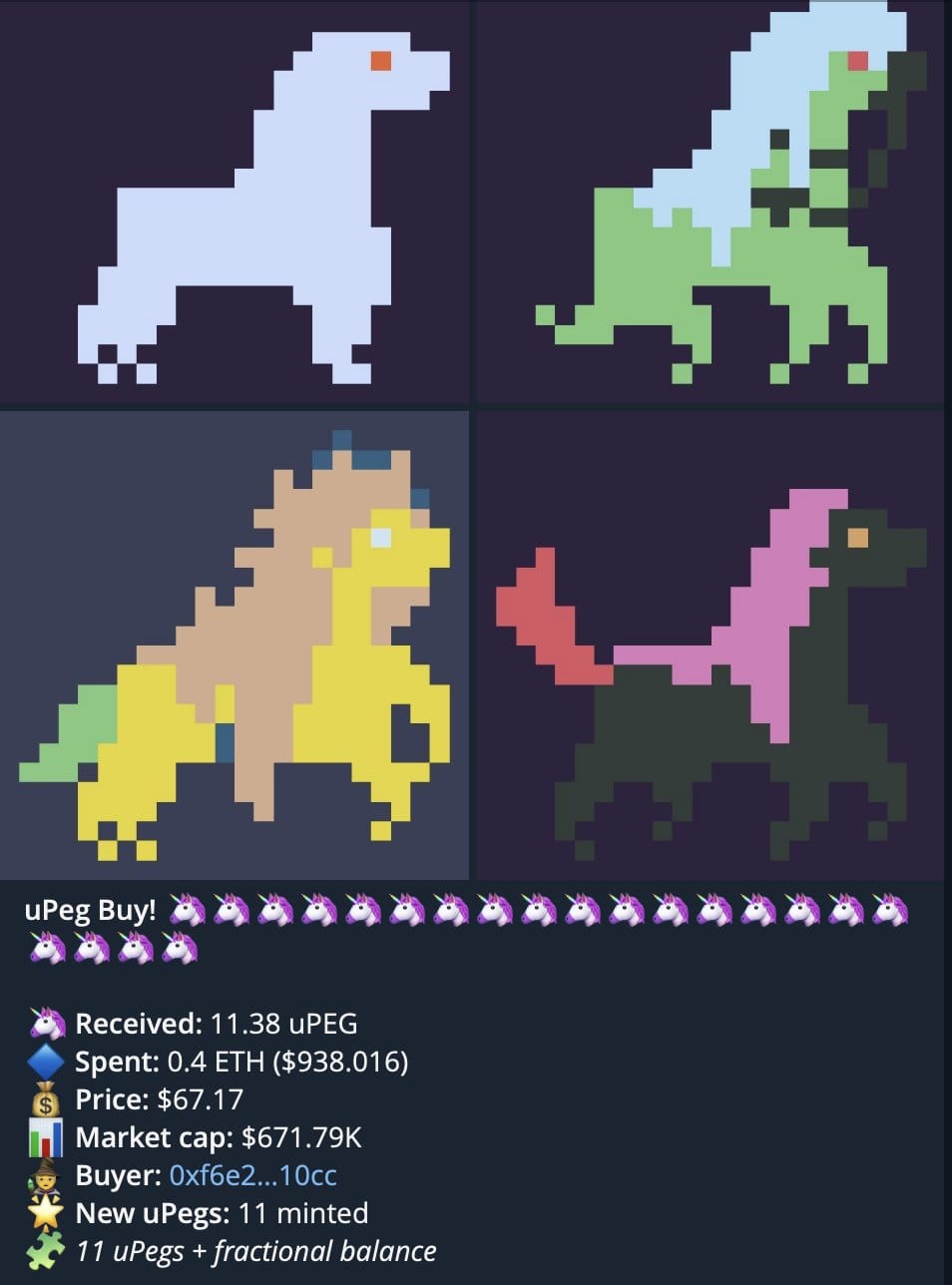
Around this token, Unipeg's governing hook, UpegHook.sol, maps integer balances to 24x24 unicorn pixel art images, all rendered onchain. So if you have one $uPEG token in your wallet, you'll own one associated collectible. Fractional balances (e.g. 0.5 $uPEG) stay inert until activated by crossing the next whole number threshold (1, 8, 37, etc.).
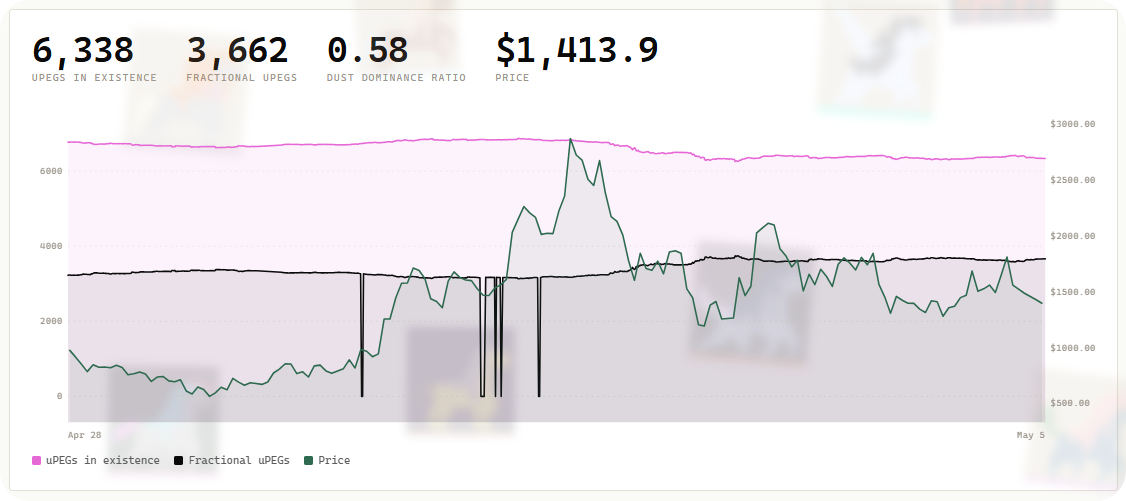
The collection's generated ~$120M worth of trade volume since launching last month, so there's clearly been a good bit of appetite for this sort of project. It's not the only hook-based collection to hit the scene to date, as the OpenPeg marketplace shows, but it's fielded the most activity yet in this category.
As far as where people are diving in, trading has come through various avenues, namely the Uniswap V4 $uPEG pool, the official P2p collectibles market, and OpenSea (for Unipegs wrapped as NFTs). There's now even a UnipegStrategy token for trading around the collection.
I admittedly haven't tried this all myself yet, so tread cautiously as with anything new in crypto's frontier. But I've always been interested in crossovers of cultural experiments and onchain infra, and as Unipeg is demonstrating, Uniswap V4 hooks offer new creative terrain for this. It's a thread to watch, at the very least.
Whether Unipeg as an individual project sustains its early momentum is an open question, sure, but it's already a successful proof-of-concept. Hook-based collections can work. And I suspect we'll see many more of them going forward as people continue to experiment with the possibilities here, so familiarize yourself with the basics now to get ahead of the curve.