



Subscribe to Bankless or sign in
ross.wei is a prolific indie dev I follow by way of his recent  Ethereum experiments, of which there are no shortage. Consider Wei Name Service, zFi, zOrg, zSwap, SLOW, Majeur, etc. He's been on a vibefi coding tear this year.
It's been particularly cool to watch his foray into  Bitcoin DeFi, namely trying to one-man truly trustless and private money legos atop Bitcoin. And he's been doing a great job, if the technical possibilities around his new Tacit project are any indication.
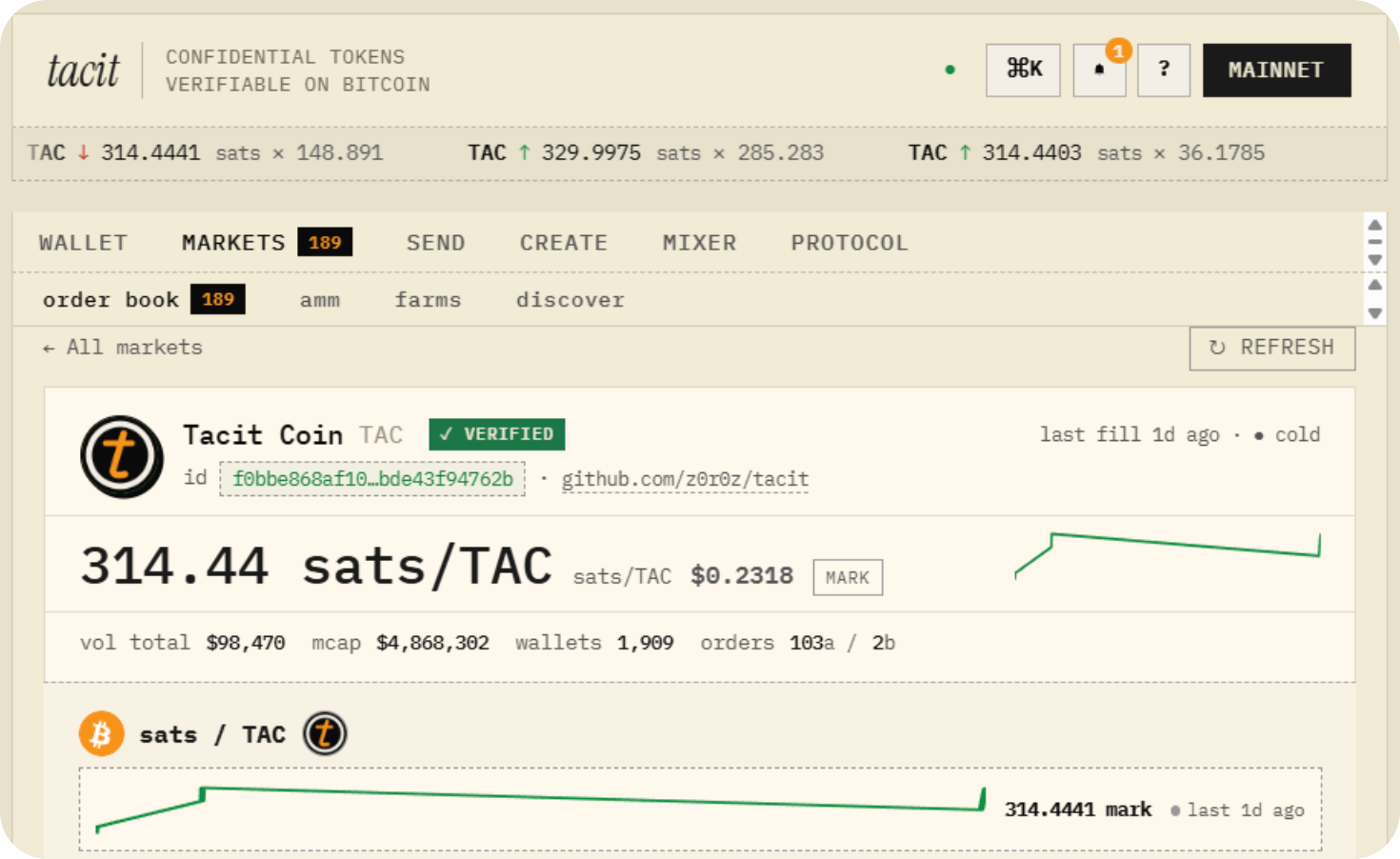
In short, Tacit is a meta-protocol on Bitcoin with its own bespoke indexer validation system. It's the same trust model we see in  Ordinals or Runes, where token rules are enforced by indexers anyone can run, and with everyone independently landing on the same answers just from what's onchain.
However, Tacit pushes this pattern beyond regular tokens and into confidential DeFi. You can explore the protocol's mainnet at tacit.finance or read the full spec yourself, but the gist is it offers Zcash-style privacy with Runes-style token deployer infra, and with DeFi on top, i.e. cryptography standing in for the smart contract VM you'd normally need.
Importantly, with Tacit, token amounts are hidden by default. Every balance sits behind a Pedersen commitment (i.e. a cryptographic blob that conceals a number while still letting you prove things about it, like the fact that nobody minted coins from thin air).
On top of that there's a Tornado-style shielded pool for anonymous spends, where a deposit and its eventual withdrawal share no visible onchain connections. And then there's also a native confidential AMM that keeps per-trader swap amounts private while leaving pool reserves public (and since no actual UTXO custodies a pool's funds, there's nothing there to rug in the first place).
Enjoying this article?
Subscribe to Bankless or sign in
Rounding it all out for now? Trustless wrapped BTC and a trustless ETH→Bitcoin bridge, via tETH, which happens to double as a mixer.
tacit.png pic.twitter.com/asa8vJL36o
— ross.wei (@z0r0zzz) May 26, 2026
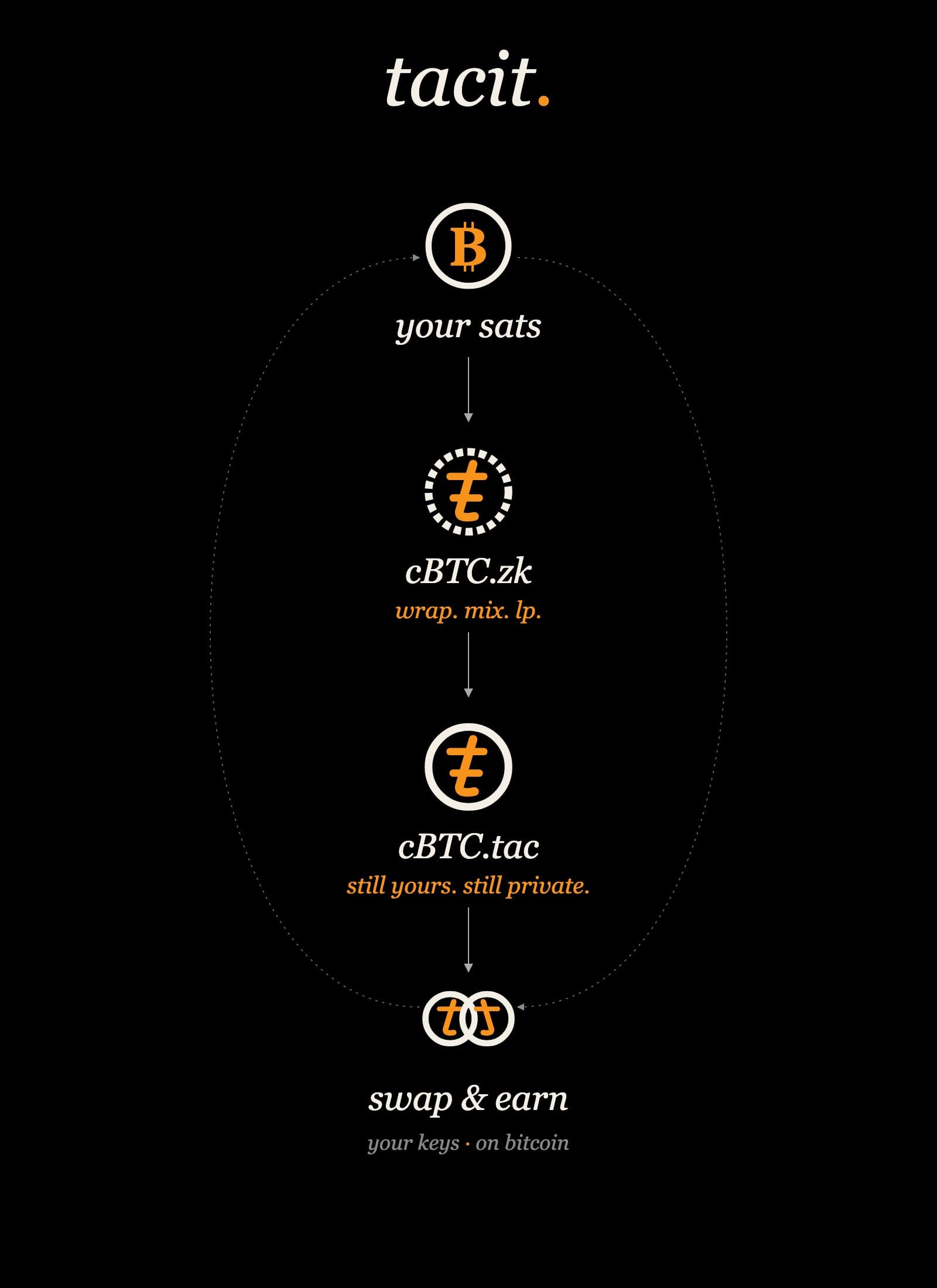
The wrapped BTC design is the part that's really interesting to me. Most wrapped BTC is custodial (e.g. WBTC has BitGo), but Tacit's cBTC.zk instead reuses the same secret two ways: the secret that proves you own a hidden mixer note also derives the Bitcoin key that locks the underlying BTC.
In other words, "one leaf, two locks." No federation, no oracles, etc., but rather mixer tech refashioned as a trustless escrow. This is awesome even if you're not huge into Bitcoin stuff. If you want to build Bitcoin DeFi from the ground up, this seems like the right way to do it.
Yet there's no denying that privacy projects are getting hyped constantly lately. Does this one hold up under scrutiny? Tacit does hide amounts by default, though it doesn't hide other things like the address graph and so forth. If you want full unlinkability, that comes from going through all the available layers, like shielding amounts + shielded addresses + a mixer round trip, etc.
So yes, there's real privacy here. Tacit is an open platform for confidential tokens atop Bitcoin, and it's actualizing supporting components like a private Bitcoin AMM in ways we haven't seen before. It's legit, from a good builder, and creating new private DeFi paths between the two biggest chains. Cheers to that and worth a follow, I say!