
| 24h Majors & Movers | ||||||

|
BTC $65.8k | ↗ 0% |

|
HYPE $75 | ↗ 2% | |

|
ETH $1.7k | ↗ 0% |

|
VVV $17 | ↗ 12% | |

|
SOL $73 | ↗ 1% |

|
ENA $0.09 | ↗ 10% | |

Enjoying this article?
Subscribe to Bankless or sign in
- 💸 Plasma launched Plasma One, a mobile stablecoin banking app with a Visa card and tiered membership system that uses its native XPL token as the gateway to better perks.
- 🏦 Zama, Morpho, and Steakhouse Financial are teaming up to launch the first confidential yield vault on Ethereum, using fully homomorphic encryption to let users earn yield on USDC without exposing their activities onchain.
- ⚖️ Illinois Governor JB Pritzker signed the Digital Asset Tax Act into law as part of the state's budget bill, creating what appears to be the first state-level transaction tax on digital asset activity.

Lei Yang, co-founder of MegaETH, and Chris Rivers, the chain's product lead, have a theory for why using crypto apps often still feels janky, namely that the wallet layer itself continues to have two big pain points.
First, regular browser and mobile wallets are nice because you can take them anywhere, though they make you manually approve everything. And as for embedded wallets, they're extremely easy for anyone to dive right into, but they isolate your funds across multiple apps.
Friction or fragmentation, in other words.
Amid this backdrop, MOSS, the new  MegaETH account layer, is the team's bid to dissolve this tradeoff entirely. One smart contract account to follow you across every app on the chain, with embedded-grade usability still intact.
How MOSS threads that needle, and what it unlocks for MegaETH down the line, is the focus of Yang and Rivers's convo with David Hoffman in the latest Bankless episode.
One deposit, infinite usage
Rivers framed MOSS's goal as allowing users to arrive at any MegaETH app already "transaction ready," i.e. no per-app deposits, no exporting keys, no DEX detours just to move a token into the right wallet, etc. Gas is payable in ETH or basically any stablecoin, and the ability for apps to sponsor users' transactions is natively supported.
As such, the Apple ID comparison came up during the convo (i.e. your account, usable everywhere), but MOSS will notably also offer streamlined support for sub-accounts. This architecture will make it easy to organize your activities however you wish, e.g. setting up a gaming-only account for using MegaETH apps like Euphoria and Stomp, all under the umbrella of your main profile.
 William M. Peaster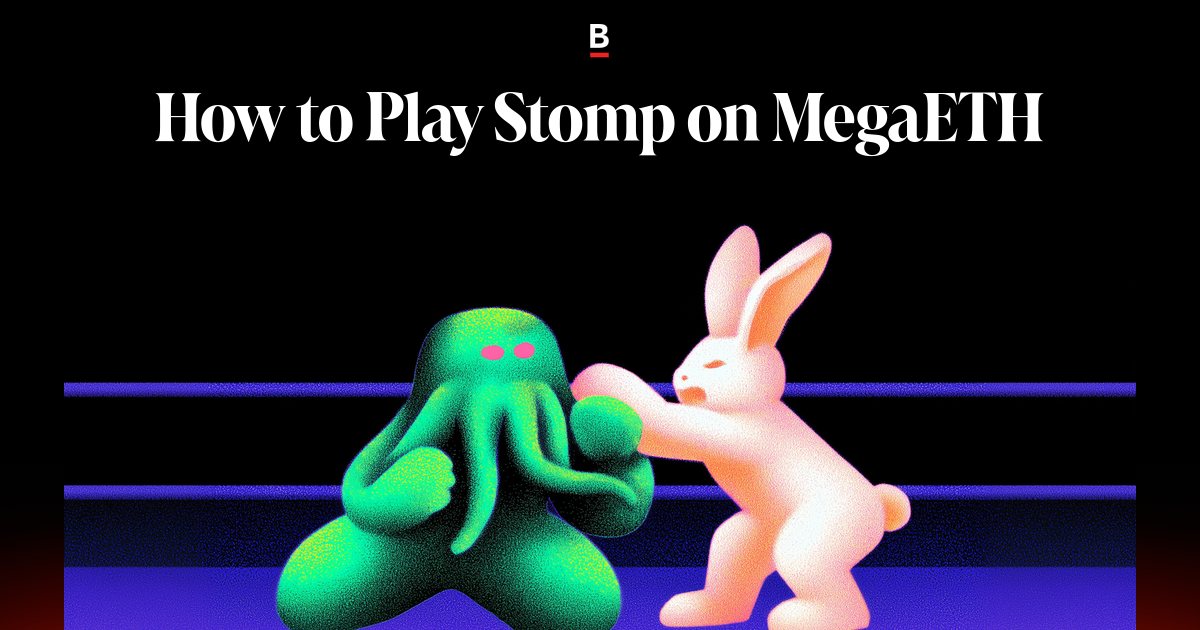
The smart approvals pillar
Yang added more detail on MOSS’s sub-accounts, describing them as per-app sub-wallets that share one address and pooled funds while carrying user-defined permissions: which contracts an app can call, how much it can spend, when access expires, and more.
Rivers called this feature smart approvals, and the implication David teased out from this is something to watch, which is to say that if a compromised app can only ever touch the $100 you scoped to it, phishing on MegaETH becomes seriously minus-EV.
Additionally, Yang and Rivers also hinted at permissions that auto-revoke when you close a tab. How far can this onchain-enforced model actually go? That one's answered in the episode...
Agentic horizons and beyond
The roadmap details were the most forward-looking stretch of the conversation.
Yang touched on a permissioning language expressive enough to delegate transactions to untrusted agents safely, while Rivers teased personalized app discovery and a reputation layer that one-wallet behavior finally makes possible, plus a migration plan whose timeline is, in his words, "sooner than you'd expect."
Wallet UX has been crypto's perennial chokepoint, and MOSS is a serious swing at cracking it, so keep this advance on your radar.
Become a Bankless Citizen to hear the full breakdown episode today.
 Bankless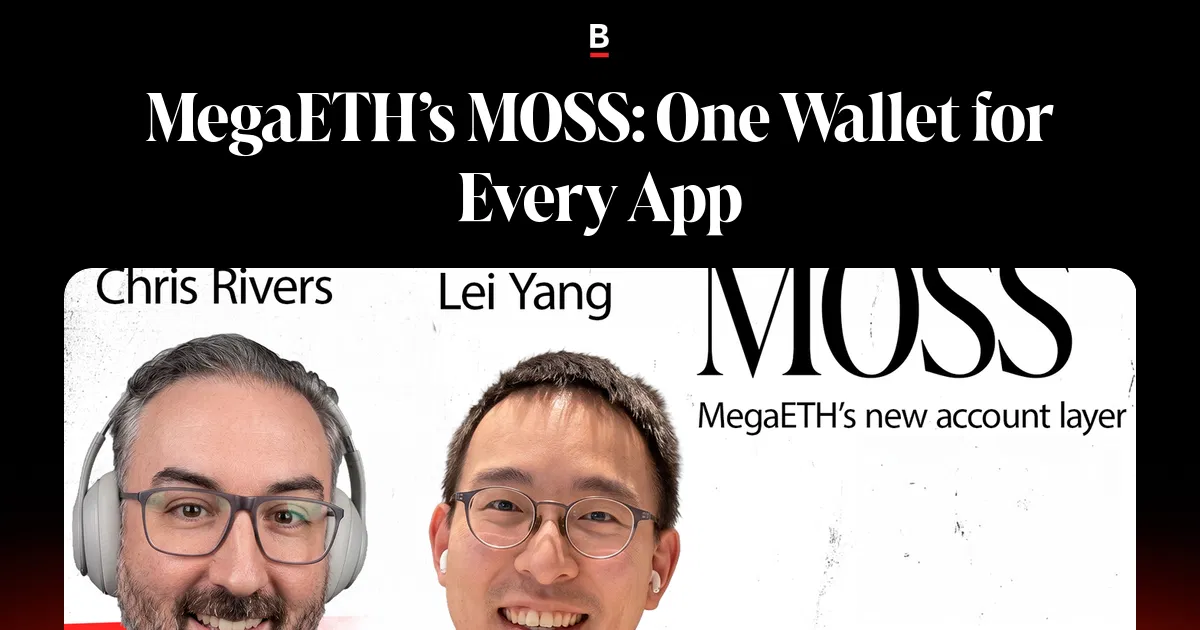
Bitget’s Stocks 2.0 brings 500 major equities and ETFs (like Tesla and NVIDIA) directly to your portfolio. Enjoy 1:1 mapping, deep liquidity, and USDT dividend payouts with ultra-low 0.04% fees.