
Sponsor: MetaMask - Spend crypto anywhere online and AFK with  MetaMask Card.
 Solana
This week’s biggest news came from the other side of the fence: Solana.
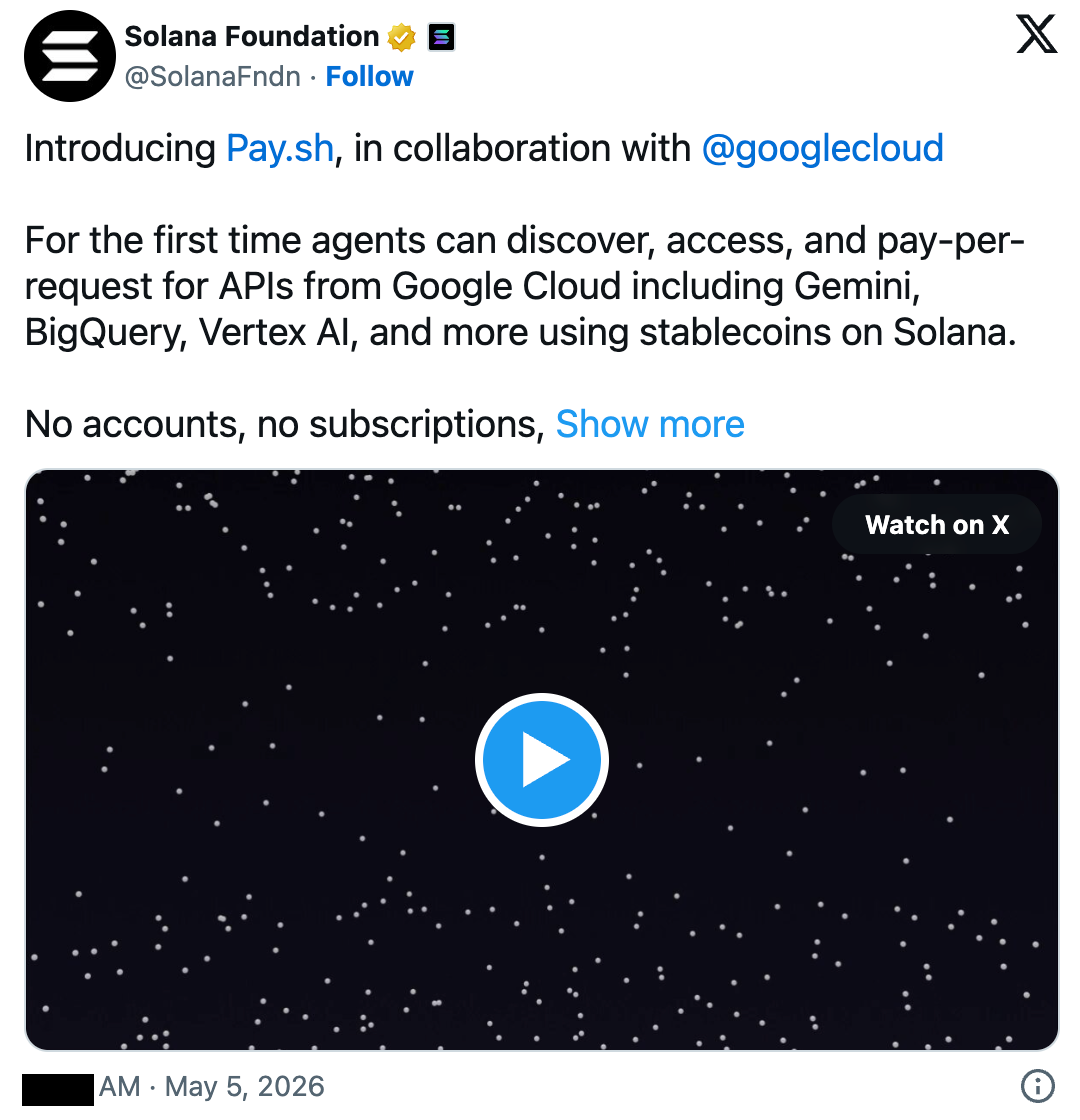
The Solana Foundation and Google Cloud released Pay.sh, a gateway that lets agents discover and access curated APIs through x402 or MPP, including first-party endpoints for Google services. A few days later,  Coinbase announced that x402 discovery had been natively integrated into Amazon Bedrock AgentCore Payments. AWS developers now have a sanctioned path to build agents that can find services, send micropayments, transact in USDC, and operate under enterprise budgets, compliance, and audit trails.
Two weeks ago I wrote about x402's authorization problem, where many live endpoints acted as unauthorized third-party wrappers in clear violation of the underlying APIs' terms of service. The risk is that the dynamic turns potential native integrators into adversaries once they see third parties collecting fees while the original providers carry the costs.
 David Christopher
Now, two weeks later, Google Cloud and AWS are directly in the agent-payment flow. I honestly did not expect that to happen this fast. There are still plenty of unauthorized endpoints circulating, but I expect their presence to accelerate agentic payments. This week may mark the next phase of x402's growth.
Enjoying this article?
Subscribe to Bankless or sign in
But before I get too sidetracked, this piece is about Pay.sh: how it works, where it still needs work, and what its partner list reveals about Solana's agent ecosystem.
What Pay.sh Actually Does
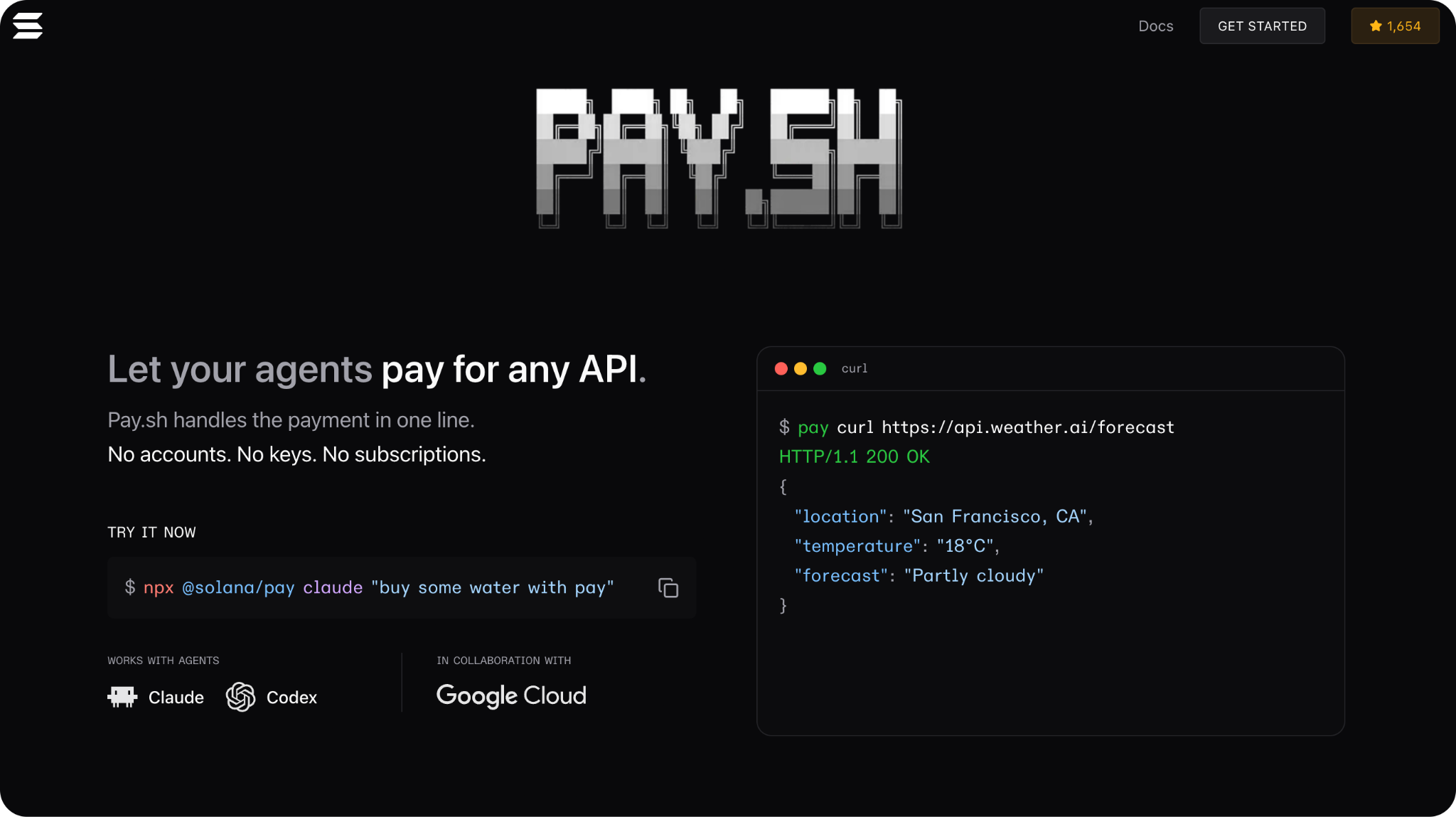
Pay.sh is a discovery and access toolkit for AI agents, letting them search the catalog, find an endpoint, and pay for it.
In that broad shape, Pay.sh resembles AgentCash or Sponge, other agentic Swiss Army knives. The difference is the Google Cloud partnership: Pay.sh offers authorized access to Gemini, BigQuery, Vertex AI, and other Google services.
Pay.sh comes equipped with many endpoints beyond just Google’s. Endpoints for data, search, storage, messaging, commerce, crypto, finance, maps, media, and infrastructure. Out of the mix, three I'm particularly excited to continue using are:
- Fact Check Tools, a free endpoint for searching Google ClaimReview fact-check data across more than 100 publishers. This lets agents check whether a claim has already been reviewed without manually searching news sites.
- Crush Rewards, for tracking retail prices across major US and Canadian stores. This lets agents compare live prices, spot deals, and monitor availability without scraping each retailer directly.
- BigQuery, a metered endpoint for running SQL over BigQuery, Google's data warehouse environment where users can run analysis on large datasets without having to build the necessary infrastructure themselves.
Where Pay.sh Still Needs Work
The first gap is pricing language.
Pay.sh is a directory of endpoint providers, and that hierarchy needs to be visible at a glance. Most providers offer a series of endpoints, some paid, some not. When a provider offers both, the catalog labels them as "free tier" but still shows a nonzero "price." A cleaner taxonomy would be three labels: free (every listed endpoint is free), metered (every listed endpoint is paid and usage-based), and mixed (the provider offers both).
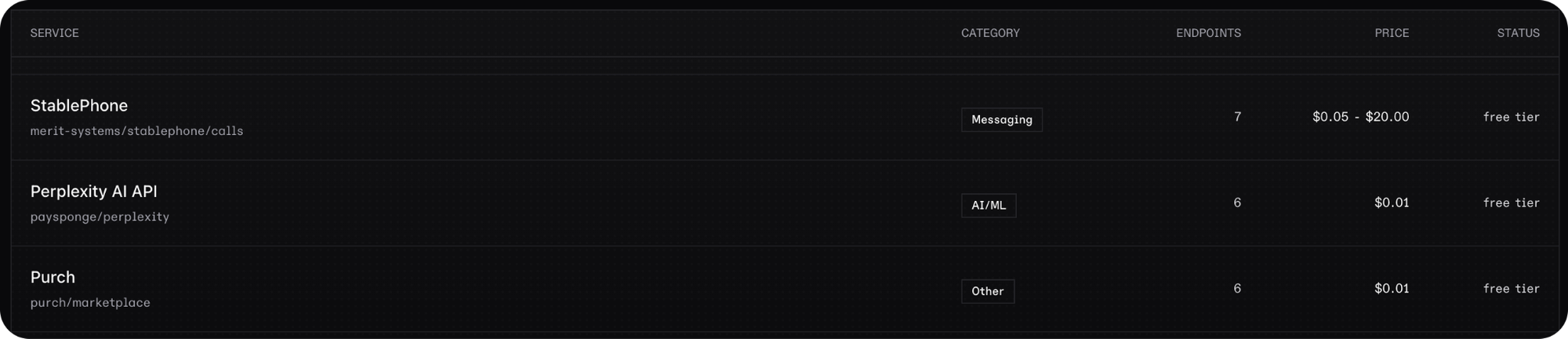
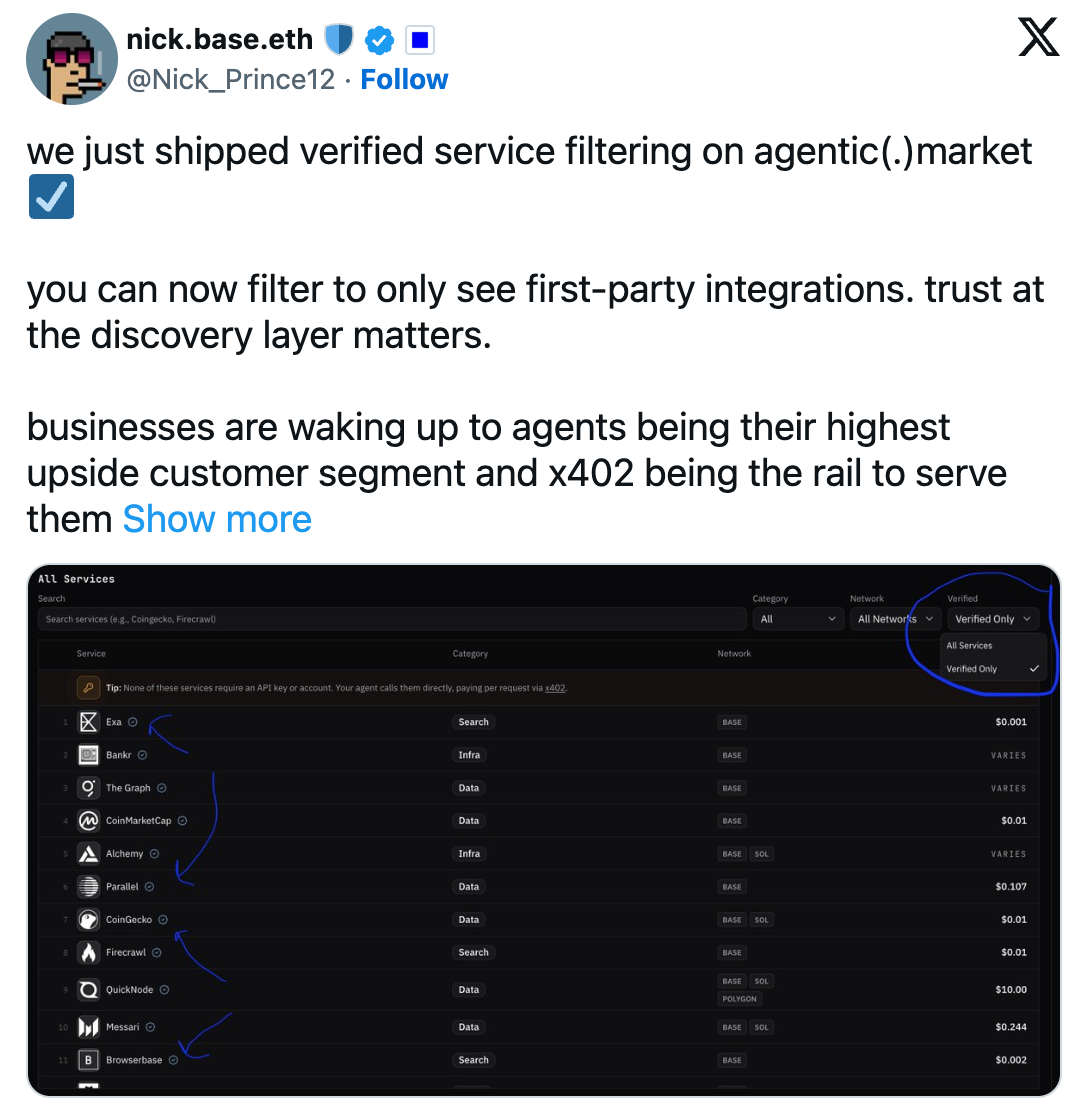
The second gap is endpoint provenance. Pay.sh has a strong native center of gravity through Google Cloud, but the broader catalog doesn't make it obvious which endpoints (beyond Google's) are first-party, which are authorized third-party integrations, and which are unauthorized. Agentic Market provides a useful model for how this could look.
The Partners Around the Launch
While spearheaded by the Solana Foundation and Google Cloud, Pay.sh draws on work from a number of ecosystem teams, and that list serves as a valuable gateway into Solana's agent landscape.
PayAI, which handles the "payment-network" layer of Pay.sh, is a Solana-first x402 facilitator. In plain terms, it shoulders the payment admin work API providers would otherwise have to build themselves to offer their services through x402: verifying an agent paid the right amount, used the right token, sent the payment to the right recipient, and confirming when the server can safely release the API response. Facilitators are optional in x402, but they make the system much easier to use. Without one, web services would have to build the blockchain infrastructure for verifying and settling payments themselves.
Crossmint provides the wallet and controlled-spending layer. It builds what agents need to hold and move money safely, including virtual cards and spend controls like merchant whitelists, transaction limits, and human approvals.
Merit Systems, the team behind AgentCash, brings the bundled-access model, the "agentic Swiss Army knife." They offer agents access to data, communication, and storage services through their own endpoints like StableCrypto, StableEmail, StablePhone, StableUpload, and StableDomains.
Corbits sits on the provider side of Pay.sh, helping services turn APIs into agent-payable x402 endpoints. Like PayAI, it includes facilitator infrastructure for outsourced payment verification and settlement. It also provides tooling to self-host more of the x402 stack through its open-source Faremeter framework.
MoonPay is the official onramp for Pay.sh, letting users show up with fiat and convert it to Solana stablecoins, like USDC or Phantom’s CASH.
Sponge sits on both sides of the agent-payment flow. For agents, it provides a wallet and SDK to hold funds and pay for endpoints. For providers, Sponge Gateway helps monetize existing APIs for agents. That makes Sponge part wallet, part paid-request tool, and part gateway for services selling directly to agents.
ATXP gives agents a persistent identity and payment setup they can use across services. Agents launched through the company's tooling get an email address, a wallet, starter credits, and a connection token for SDK or CLI access. The result is a credentialed agent identity, something most other tooling stops short of constructing.
Tektonic, the sister company of agent infrastructure provider Clawpump, fits in as Pay.sh’s institutional data layer. As co-founder Bunny described it to me, Tektonic focuses on institutional agents, while Clawpump handles the consumer side. Tektonic has already open-sourced its x402 public dataset, which was built with Google Cloud’s Web3 team, including Devan Mitchem, who presented at Solana Accelerate’s demo day. A Google Cloud-native facilitator is also in the works. Together, these efforts give the ecosystem a cleaner view of x402 activity across Solana and Base, while making it easier for companies already building on Google Cloud to plug in.
Overall, the team list shows that Pay.sh is a full-stack tool for augmenting one's agents, with each company contributing a distinct layer.
The Next Phase
Google Cloud and Amazon wouldn't be standing this close to the flow if they didn't see what we see. That alone is a phase shift from where x402 was a month ago.
What I'm still working out is the next phase. Most of the infrastructure being announced lives on the developer side. The harder problem is demonstrating agentic payments' value to the average AI user, who has no interest (yet) in SDKs or CLIs. Bridging that gap will likely come first through chat-based interfaces with endpoints built in, like AgentCash is doing with Poncho.
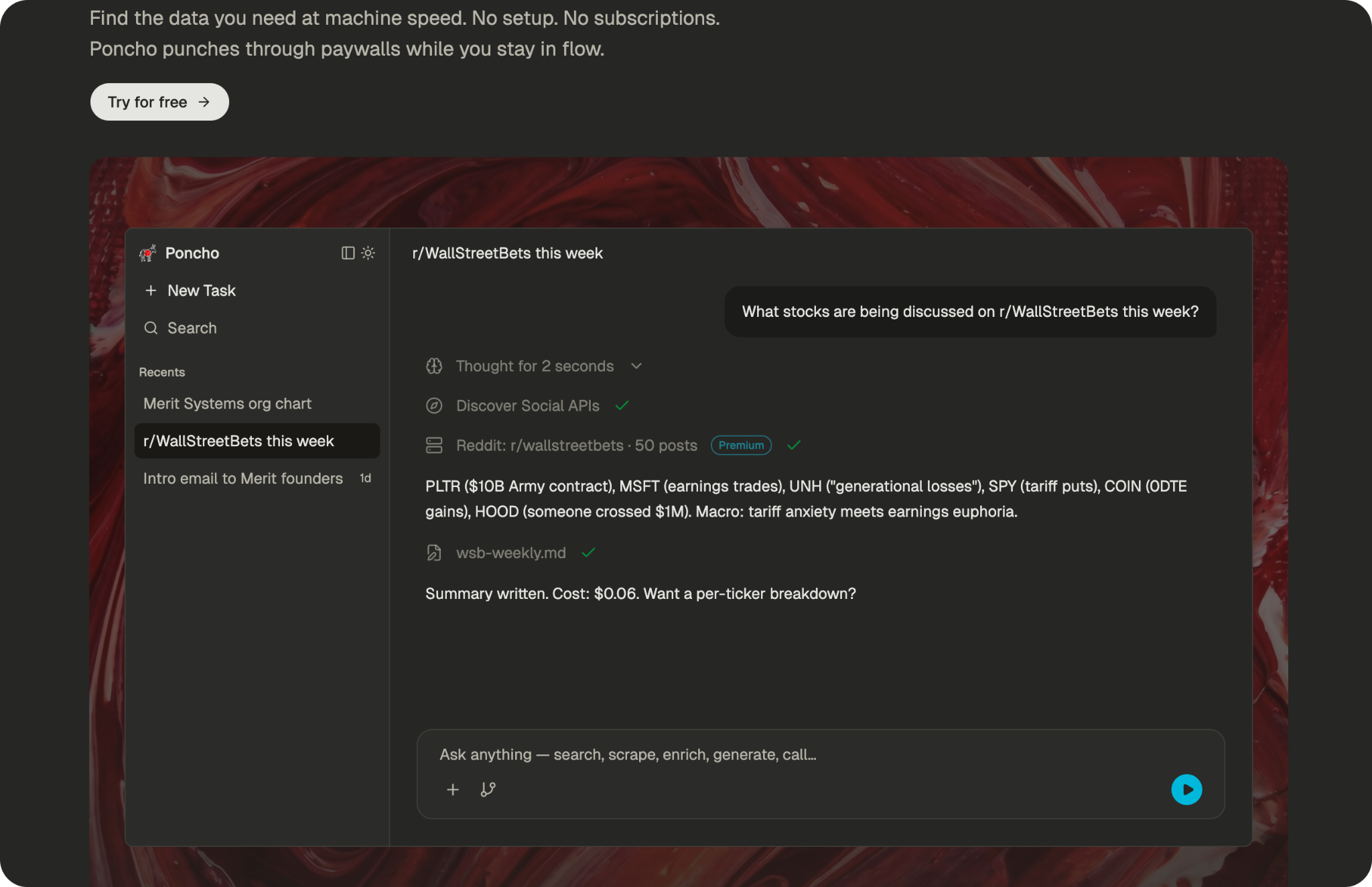
Hopefully Pay.sh will spin one up soon and slap a subscription model on it. Maybe reimburse you if you don't use all the credits in a month, or roll them over? That feels like a bridge in the right direction.
Regardless, the increasing ease of using endpoints instead of APIs has a bright future. Make sure you're giving all the chains involved equal time of day. It's something I intend to get better at.
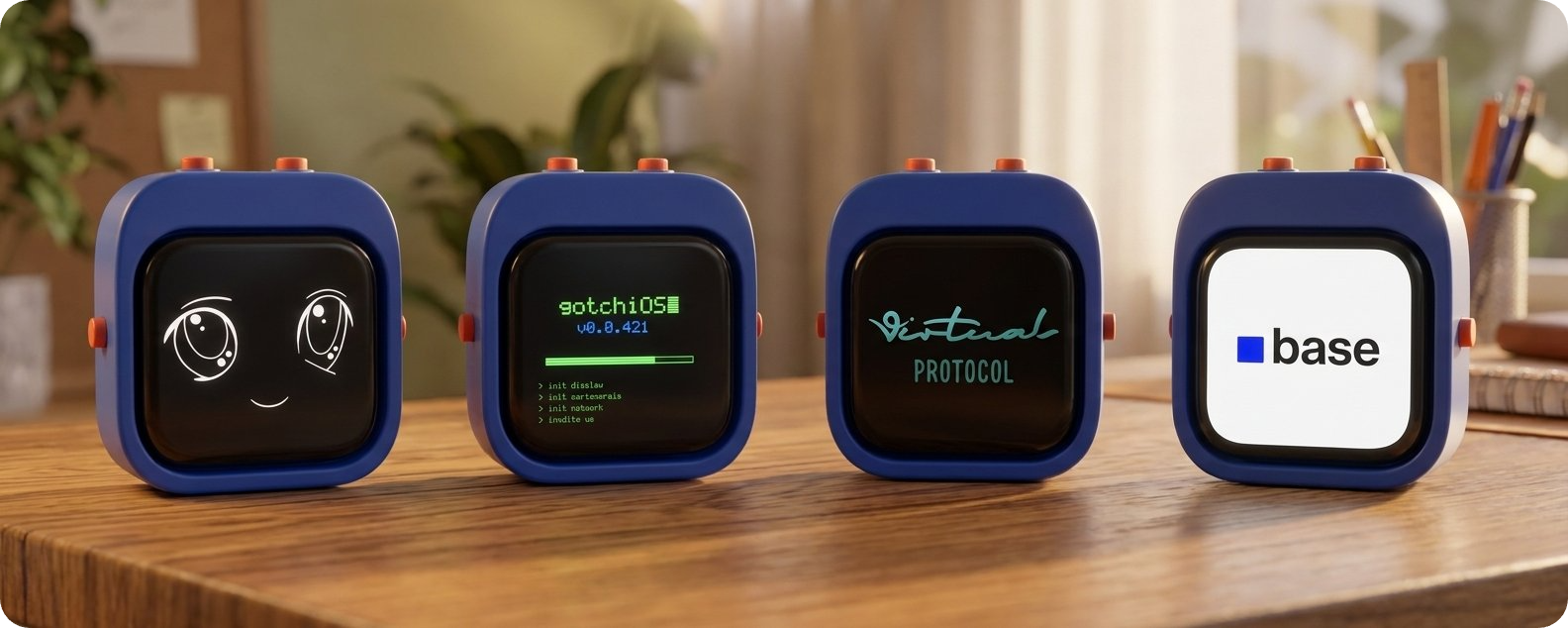
The pocket-sized agent computer runs GotchiOS, built expressly for AI agents, and features a Tamagotchi-style pet. Agents write their own software to the device, and native Base and x402 integrations grant them onchain powers out of the gate.
The devices aren't for sale yet, but an initial batch of 500 is going out to early supporters in the near future!
What else is new...
- ERC-8257 was unveiled, proposing a system for simple onchain gating of x402 payments
- PSE proposed ACTA, or anonymous credentials for trustless agents, which is designed as a privacy layer atop ERC-8004
Plus, this week's other headlines...
🤖 News
- Agent Wonderland — Launched tooling that helps existing APIs become discoverable and payable by agents through x402 and MPP
- 🔥 Amazon — Integrated x402 payments into its AWS AgentCore Payments system
- Anchorage Digital — Announced its new insititional-focused Agentic Banking system
- Bankr — Someone prompt-injected Grok's Bankr wallet and drained ~$150k worth of DRB tokens (before returning 80%)
- Coinbase — Laid off 14% of its employees as part of a plan to reshape its operations around AI
- Elastics — Raised $2M in pre-seed funding to build AI agents for prediction markets, with agent investments from ElevenLabs and a16z
- 🔥 ETHGlobal Skills — Released a skill repo giving coding agents access to 17,180 hackathon projects, sponsor docs, bounties, finalists, and prize winners
- 🔥
 Ethereum Foundation PSE — Introduced ACTA, a privacy layer for ERC-8004 that lets agents prove claims like personhood, reputation, and model provenance without exposing underlying data
 - Honcho — Made its agent memory system permissionless through AgentCash, letting agents with wallets store, query, and reason over memory without API keys or signup
📚 Reads
- 🔥 David George — The AI Job Apocalypse Is a Complete Fantasy
- Lisa Akselrod — Formal Verification for the Agentic Era
- Gideon Ng — You're Stuck in the AI Cost War
Spend crypto online or IRL directly from your crypto wallet at over 150 million merchants worldwide—anywhere Mastercard is accepted. This is how you offramp: 3% cashback, zero foreign transaction fees, and exclusive benefits. Keep full custody of your funds until the moment you pay. Get the MetaMask Virtual Card now, free.