


Subscribe to Bankless or sign in
Many within the crypto industry are outraged by Circle's lack of a response to the Drift exploit conducted this week, expressing dismay regarding the capabilities of the USDC issuer's compliance program.
What's the Scoop?
- Drift Disaster: In a recent exploit condunducted earlier this week, attackers successfully bridged $280M of stolen Drift funds through Circle's CCTP infrastructure, casing out their ill-gotten gains over the course of multiple hours amid public cries for intervention.
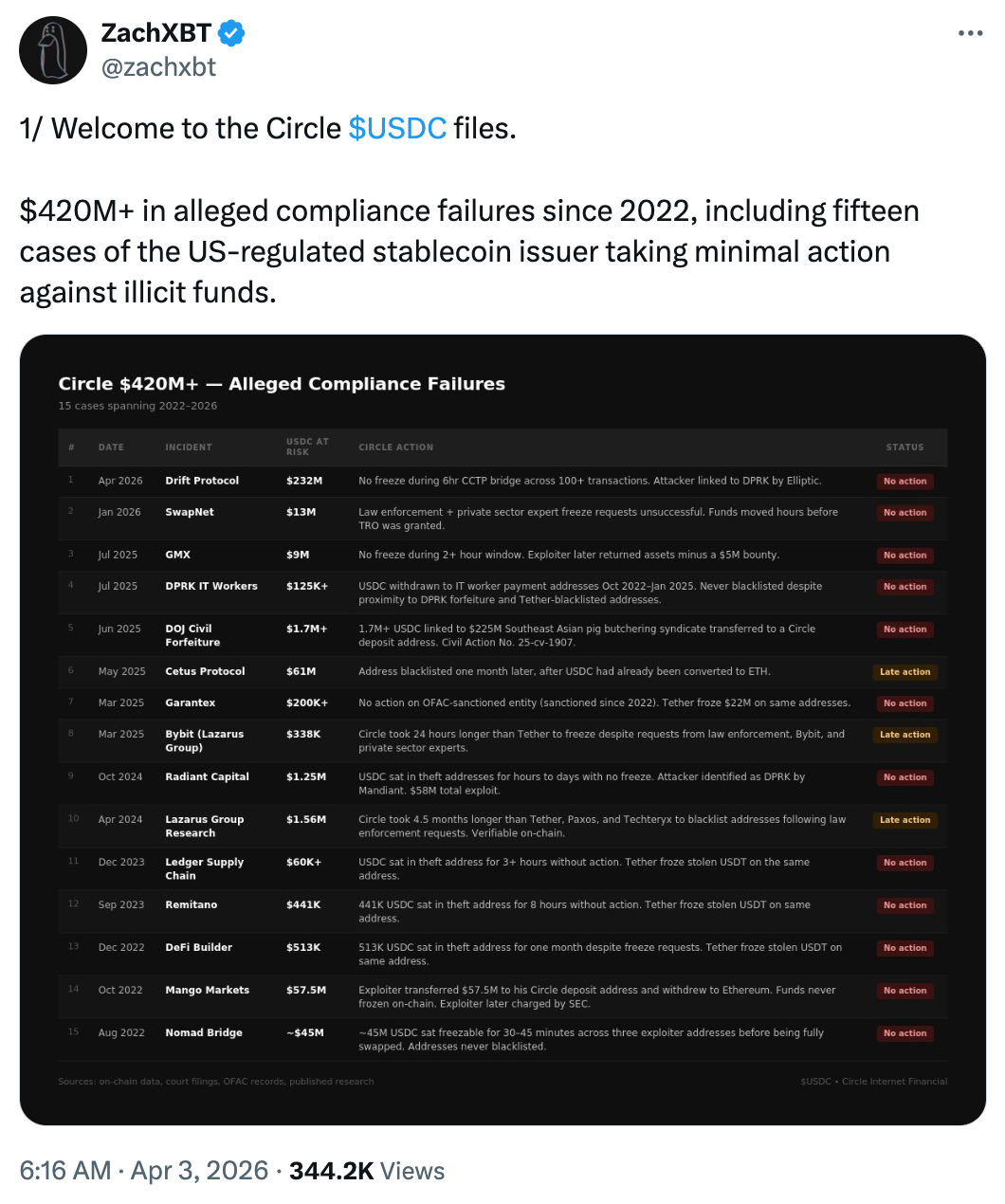
- Bigger Problem: According to anonymous onchain sleuth ZachXBT,
 Circle has failed to freeze more than $420M of illicit USDC transfers since 2022, a concerningly large figure that raises questions about the stablecoin issuer's enforcement capabilities.
 - GENIUS Clarity: Under the recently passed GENIUS Act, set to take effect this upcoming January, approved payment stablecoin issuers in America will be treated as U.S. financial institutions, subjecting them to the full scope of applicable federal laws and forcing their adoption of the similar AML/KYC policies as those used by banks.
What's the Take?
Had GENIUS already been in effect, incidents like the Drift exploit may have played out differently. At a minimum, stablecoin issuers would have the information and authority to identify bad actors and quickly freeze funds —potentially limiting damage and accelerating recovery.
While the frustration with Circle's response is understandable, the reality is that a "fix" is already on the way. It, however, comes with the tradeoff of bank-like compliance systems, which could encumber on the permissionless stablecoin access enjoyed by today's blockchain users.