Vitalik Buterin Discusses The 2-Month Zuzalu Experiment
We reflect on a 2-month journey into dazzling new technological frontiers.
Up next
All episodes 01:44:04
Podcast
01:44:04
Podcast
177 - AI is a Ticking Time Bomb with Connor Leahy
 01:40:38
Podcast
01:40:38
Podcast
ROLLUP: What BlackRock's Bitcoin ETF Means For Crypto
 00:59:30
Bitcoin
00:59:30
Bitcoin
$30k BTC & Beyond? BlackRock Bitcoin ETF with Austin Campbell
 00:59:10
Podcast
00:59:10
Podcast
Zora Announces The Zora Network
 01:25:04
Podcast
01:25:04
Podcast
ROLLUP: Prometheum SEC Psyop Exposed
 00:20:38
Podcast Premium
00:20:38
Podcast Premium
DEBRIEF - What is Money in the Digital Age?
 01:20:20
DeFi
01:20:20
DeFi
176 - What is Money in the Digital Age? with Brendan Malone
 01:33:39
DeFi
01:33:39
DeFi
Announcing Uniswap V4 With Hayden Adams
Inside the episode
Welcome to Bankless, where we explore the frontier of internet money and internet finance. In this 8-episode series, we are exploring some new frontiers. New frontiers in new technologies, all of which are poised to completely revolutionize the world and change everything about the operating system that society is currently running.
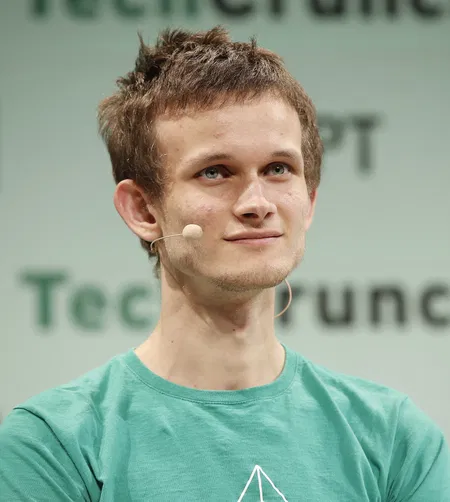
In this first episode with Vitalik, we kick off by discussing the concept of Zuzalu with a birds-eye view. Vitalik helps us unravel the meta-quest of understanding the essence of Zuzalu and its role in curating communities.
Discover why Zuzalu was structured in this unique manner, touching upon intriguing elements such as Zupass, zero-knowledge infrastructure, ZuPoll, and Stamps. Keep an eye out as we roll out the rest of these boundary-pushing episodes!
Timestamps
0:00 Intro
1:20 What is Zuzalu?
4:15 The Content Roadmap
5:12 Ethereum the Sibling
7:20 A Taste of the Future
8:45 Front-Run the Opportunity
12:00 VITALIK BUTERIN
14:00 The Zuzalu Experiment
19:00 Technological Seasons
22:50 ZuPass
25:00 Curating Topics
29:55 Cross-Pollination
33:05 Zuzalu Culture
37:30 The Future of Zuzalu
41:00 What it Means to be a Zuzalian
Resources
Vitalik Buterin
https://twitter.com/VitalikButerin?s=20
Zuzalu
ZuPass
Transcript
Welcome to Bankless, where we explore the frontier of internet money and internet finance. But here today on Bankless, we are exploring some new frontiers. New frontiers in new technologies, all of which seem poised to completely revolutionize the world and change everything about the operating system that society is currently running. In fact, there are as many as five other technologies out there that are all accelerating in progress. And while each one of these new technologies are pioneering into their respective frontiers, they are also all beginning to converge with each other. And the intersections of these various frontiers are fertile grounds for massive disruption of the status quo. AI, longevity, synthetic biology, network states and coordinations, and zero knowledge cryptography. Each of these are paradigm-changing technological frontiers, and each of these industries are in various stages of development and maturity. But, Bankless Nation, I'm here to tell you that each one of these frontier technologies is a tidal wave coming for society. The crypto wave hit society in 2021. Now society is learning how to deal with this nascent but powerful technology. And society is in the middle of being hit with the AI wave now in 2023, and that wave only appears to be growing in size.
The waves of synthetic biology, longevity, network states, zero-knowledge cryptography, and other technology frontiers are still to come. This was the main subject of a two-month-long experiment called Zuzalu. Bankless viewers who are watching the background of my podcast shift in the last two months will notice I was gone from my Brooklyn apartment for two months. I was in Montenegro of all places at this thing called Zuzalu. Zuzalu was an experiment in a temporary community. The idea here is that we have crypto conferences or conferences in general, which are between two and 20,000 people for anywhere between two days to a week. And then there are hacker houses, which are 20 people for even as long as one year.
Suzalu was an experiment in a specific arena of both size of people, number of people, and lengths of stay. So Suzalu was 200-ish people for two months of time. And then also about 600 more people that would come in for shorter term stays, like one to two weeks, during specific themed weeks. Zuzalu is a brainchild of Vitalic Buterin, but it was really a holistic effort of many different individuals from across many different industries, and also individuals who were adept at community building itself.
It was simultaneously a place for different frontier technologies to come together and discuss and collaborate and cross pollinate, while also produce this experiment in what a temporary short term community looks like. Something in the middle of a network state, a QWERTY nation, a digital nation that manifests physically in the world for two months at a time.
So, like I said, every single week at Zuzalu had a theme: longevity week, synthetic biology week, new cities and network states, AI and crypto, public goods, zero-knowledge cryptography, digital tribes, and cordi nations. The idea behind Zuzalu is that residents were staying there for the entire eight-week period, and us residents would watch hundreds of visitors cycle through to have their weeklong sets of talks, panels, and workshops. While the visitors of Zuzalu were able to present their respective work and industry to people across vastly different other industries. The benefits of this are huge because some of these technologies have never really had a meaningful meeting place before. For many of the industry leaders here, Zuzalu was the first opportunity for them to meet their fellow industry professionals, but not just other professionals inside their own industry, but founders, researchers, and builders across other industries who can bring unique perspectives and knowledge to the table in order to cross-pollinate, spread knowledge beyond internal walls, and optimize for serendipity by just including new people from new industries. And then the community aspect of this made this especially unique because having cross-industry conferences is one thing, but this was a cross-industry two-month-long community. We lived together. We ate breakfast together. We all became friends. And that level of cross-pollination is just so much deeper and lasting than what a three-day or week-long conference could even bring. So, Bankless Nation, this was Zuzalu. And here's what you can expect from Zuzalu content. My first conversation that you're going to hear is this one with Vitalik Buterin, which we will get to in just a second. And then we'll talk about some of the philosophy and ideas and meaning and purpose behind Zuzalu. What it is, what he thinks it is, what it can be, what other people think it can be. Really, the question of what is Zuzalu is embodied in the question itself. There is no answer. It's up to us. And eventually, the idea is that Zuzalu spirals into a headless movement where maybe soon there is a Zuzalu near you. I recorded 18 different interviews at Zuzalu from all across the different industries that had representation there. These interviews range from 20 minutes to up to a full hour. These topics of conversations range from synthetic biology to AI to crypto in Africa to how to live forever, to even conversations about Zuzalu itself, like this one.
Some of these are very much crypto conversations. A lot of these are only crypto conversations if you use your imagination.
So to understand the significance of each of these episodes,
I want to share my biggest takeaway that I got from Zuzalu. And that's this.
Ethereum in crypto.
is the eldest sibling of a bunch of frontier technologies. It's alone in this room, waiting for its fellow siblings to grow up. AI is actually recently of age, so now crypto and AI are starting to be able to play together.
Decentralized science will help longevity and synthetic biology come into the fold. The episode with Boris and Mikey will help illustrate that. Digital nations have a lot of work to do, and my episode with Primavera De Felipe will show you that way. Network states and new cities, there is an immense new need for competitiveness and governance over our physical countries and cities. When we get a bunch of new cities in the world, where are they going to find financial and governance tools ready out of the box? Well, Ethereum, of course. And my conversation with Nicholas will guide you through this world. So while crypto is currently going toe-to-toe with the old world of securities law and nation-state regulation, it is simultaneously stuck waiting for its future use cases across other frontier technologies to grow up and mature. But the biggest takeaway that I got, Bankless Nation, is that as all of these other frontier technologies grow up, and yes, crypto is not the only frontier technology that's up there, they are going to need Ethereum. They are going to need open public permissionless blockchain rails. They are going to need secure block space. The rapidity and speed of innovation and progress in the crypto space matches some of the innovation and speed and progress and just paradigm shifting technologies being built elsewhere. The frontier technical nature of all of these industries will bring them together.
So meanwhile, here Ethereum sits, alone.
Fighting with its parents, the nation states, the regulators, the old world, while its younger tech siblings are still too nascent to give it support. But, Bankless Nation, I guarantee you that day will eventually come where each one of these technologies will impact your life. Zuzalu was a taste of the future. Everyone and everything at Zuzalu felt like they got beamed in from 20 years in the future to show the rest of Zuzalians how the future will look from their vantage point. The longevity people tell us of an inevitable future in which the option to live forever is a choice that you can make. The network state people show us a future of fluid human migration and citizenship across the globe. Synthetic biology people tell us about a future in which we can grow buildings and vehicles and materials out of organic material, and that material can self repair and self propagate. Everyone at Zuzalu was a futurist. And I would also add that everyone had a resigned note of optimism. Resigned specifically, though, as in everyone looks at the future and they see a paradigm shifting technology that could improve the human condition at a very deep level.
And then they also see these seemingly impossible obstacles that get in our way. Governments, dystopia, malicious use of the technology. No one in Zuzalu was naive about the trials that each individual industry faces. In fact, one of the main purposes of Zuzalu was to collaborate on how to get over these obstacles together. But no one at Zuzalu was a quitter. All the researchers, builders, and founders at Zuzalu, if they were given the one true ring, they would all take it to Mordor or die trying. So we're going to release these conversations over the next few weeks and months on the podcast and the YouTube. So treat these conversations at Zuzalu as a sort of choose your own adventure. So this is an opportunity for you to speed date other frontier technologies beyond crypto because eventually all of these technologies will converge together on Ethereum. And that's what I see.
Ethereum offers solutions, offers scaffolding, offers a place for other frontier technologies to collaborate and communicate and build upon. So this is why we're doing this. In every single episode of Bankless, we tell you this is how to get started, how to get better, and how to front run the opportunity. These Zuzalu conversations are how to get started with other frontier technologies, technologies that are on a collision course with society. If you listen to these conversations and understand their implications, you'll be ready. And you won't be surprised when these tidal waves of technological innovations start colliding with the world that we live in. If you want to learn more and just experience more at Zuzalu in front of every single theme of an episode, whether it's an episode about network states or AI, I will give you the taste of Zuzalu during that week. What was it like? What was Zuzalu like during AI week? Because Zuzalu was different during AI week than when it was uh Synthetic Biology Week or Network State Week. Each community, each set of founders and builders and researchers kind of brought their own vibe. And also the community of Zuzalu also progressed and developed. So Zuzalu itself as a digital nation that manifested for two months is also part of this frontier technology. So if you are interested in explicitly learning more about Zuzalu, they will be contained in the intros to every single episode. So to kick off this Zuzalu content, we're going to start with our conversation with Vitalik Buterin. But first, I want to talk about these fantastic sponsors that make the show possible.
Bankless Nation, it is the very final day of Zuzalu as we speak.
People are packing up their apartments, their hotel rooms, and getting in their planes to go home. And it has been a long two months. Vitalik, we'll start this uh interview at the end, uh, because uh it is the end of this journey of trying to figure out what Zuzalu is. Um do you feel like that you have come to uh an answer as to what Zuzalu is?
In some ways yes, in some ways no. Um I think uh the yes part is basically like what this particular thing is. Um like it feels like we understand, you know, what it means to bring, you know, a few hundred people together for a few months from a couple of different communities and uh try to create interaction between people, um, you know, help people learn about
each other's interesting stuff that they're doing. And uh
And just see like what kind of a community comes out of that. Um, the thing that I think is still unclear is like
sort of what lies in the future, I guess.
Hmm.
When uh Zu the original ideas of Zuzalu came to be, um, in in your brain and in other people's uh brains about what this could be, like was there any original intent? Like what was the main goals uh before people actually arrived at this place that we now call Zuzalu?
So I'd been uh thinking about a lot of uh ideas in this space for a while uh before. So uh last year I uh read um an obology's book, The Network State, and I uh wrote my uh longest blog post ever that was uh a review of it that just ended up being insanely long. Um I uh had also been thinking about like crypto cities in general like more real-world use cases of uh little blockchains and uh zero knowledge proofs. And so the blog post I wrote on Crypto Cities two years ago is like one example of that. Um but I also had some uh
Other ideas um that were since then. Um I uh feel like I'd been interested in the top like topics of uh you know decentralized governance going beyond like what it means for blockchains. Um and trying to apply some of those ideas to other contexts. Um and just the uh
question of uh
like what are like I think I approached all of those issues from this uh frame of like what would actually be concretely valuable for people in the real world. Um and uh at some point the idea came to be to basically yeah do an experiment and uh try all of those things at the same time.
Um so uh the way that I think about the experiment is uh like conferences have thousands of people and uh they last for a week, right? And those already exist. Hacker houses last for a very long time, but they only have up to 10 and 20 people. Well, what about something that has 200 people, so more than a hacker house, um, and lasts for two months, so more than a conference, and it has both of those at the same time. And basically, yeah, bring people together from a couple of different communities with um you know some medium level of organization, but realistically relying on people coming in to do most of the rest and uh just
Like see what actually comes out of that, right? Like basically instead of just the uh discussion about creating, you know, new network states or new societies or um towns or like any of these things being this kind of purely abstract thing where you have uh you know blabbers blah accounts are blabbing each other is blabbing, uh we yeah like actually try this, you know, live thing and uh just get a huge amount of uh you know real world and data and uh and understanding of like what that what it actually means in practice and go from there.
You said uh what comes out of that, that being the this space of 200 people for two months.
Right.
Uh what do you think something like Zuzalu or something like Zuzalu, what are the emergent characteristics that can come out of this landscape of size and time of 200-ish people for two months of time? What's unique about that setup?
Mm.
I think the time duration is important because uh like one week is a break from your life, two months is your life. Right. And so just the kind of mentality that you have it becomes totally different. And uh the uh
Like the kinds of uh things that you're willing to do become totally different. There's time to like actually make new connections and uh actually start like doing things with people that you uh did not just kind of know before and brought and uh brought from outside. Um It's also large enough the number of people is large enough that it's big enough to hold like pretty big things with multiple subcommunities. Right? Like uh, you know, we had cryptography lectures that brought in 30 people, we had discussions about AI that brought in um, you know, uh like over a hundred people. We had uh you know some like various different health-related events like exercise, food, bio tracking, everything.
We yeah
I mean had I mean cooking of different types, I mean um, you know, like what are like Chinese karaokes, um, you know, hiking trips, and like in a group of ten you're not going to get those things, right? In a group of ten you're going to have one of those things. And like I think one of the differences between a city and a family is like a city has neighborhoods, and 200 is like big enough that it actually had neighborhoods, which was fascinating, right? So you actually got to see some interactions between communities, um got to kind of make some connections that did not exist before, um even uh, you know, make some progress on some Ethereum related things. Um you know, had a good chance to talk to various different privacy teams and scaling teams and uh you know talk to people working on social recovery and people working on privacy at the same time. Um so it's uh
Like there's just a lot of uh things that become possible and it's uh interesting to see that like even at the scale they uh like those kinds of things already become possible.
Hm.
So you said that 200 people are are here at Zuzalu, but I think something like eight or nine hundred have actually come through Zuzalu.
Yes.
Over the two months. Right. Uh and in addition to the different like neighborhoods that you've called them, like you have the longevity people and the ZK people and the Ethereum people, there was and so like that has created some sort of emerging cross-pollination. But there's also, like, from my experience from the last two months, there seems to be, even though it was just two months, seasons of Zuzalu, seasons that came and go. Uh because weeks had themes and different people came to populate what was Zuzalu at a different time. What do you think was the the benefit or net product of of this dynamic of Zuzalu? 200 people here at one given point, but 800 people.
Mm-hmm.
Over the the the eight weeks.
I mean I think there were kind of two motivations there. One was just uh, you know, if people only wanted to come and like experience like a little bit because they did not have more time, then uh like they would be able to come in. And then the concept of these kind of theme weeks or theme seasons was uh basically sort of encouraged uh so that people who w only had a limited amount of time and were interested in uh one topic area could uh come in for like the exact time that their topic area was the big thing. Um
So I'd say uh like those aspects succeeded, but like th there's also aspects of that that probably yeah did not go over very well, right? Like one example of this was uh especially in the free cities and network states events, there was like definitely a large disparity that you could feel between like the kinds of uh things that people coming in from the outside cared about and the sync and the kinds of things that people at Zoozolu cared about.
The tribes did not mesh
Yeah, there's uh like I think uh the tribes could have uh meshed better if a lot more effort was put into it. And uh I don't think people quite kind of understood going in what kind of effort effort was required. Another issue is that uh
Like theme weeks are not actually good for learning, right? Like in college there's a reason why courses are like in parallel and not in series, right? And like, you know, spaced repetition is uh the best form of learning and uh there's a good reason why it's uh you know, it just like we like our brains are just wired in such a way that we remember things much better if we uh repeatedly get exposed to them over a longer period of time. And instead people just got this like crazy introduction to
Synthetic biology, uh like big overload and then no more synthetic biology. Then people got in exposed to like a crazy overload of cryptography and then no more cryptography. Like the word Nova got spoken like, I know, every minute for a week and then like I have
since.
Exactly, right? So I think uh
Like that was one of those uh things that I think works less well. Like in some ways I think the biggest successes of uh Zuzalu might have even been the persistent themes. Like the development of Zupass, for example, right? Like uh I think that was actually uh like a really great um kind of like technology sort of you know community fit there because uh
like for uh
for Zupass it was oh for Zuzalu it was uh an application that like got actually used to do some really cool stuff. And then for Zupass it was a uh you know a community of real users that were actually like able to give feedback on a whole bunch of different edge cases.
Um and like actually help I'm an Ozubass improve in a way that it would not be able to on its own. Um so the
like I think if I were to like redo something like this, like I would try to focus more on persistent themes and even like having goals across those themes rather than just uh, you know, lots of things coming and going.
Hmm.
And for people who want to know what Zoopass is, Zupass is kind of like it's a passport. Um except for Zuzalu. Two month long passport that works inside of this community. Right. Um but it is it is now like infrastructure that future Zuzulus or future other um temporary communities can also use. So it's uh it was like this top is this dynamic passport that could change, uh, but then also you could collect stamps. Right. So I
So the interesting thing about it, I think, uh, just uh you know make it clear to viewers that this is not the same as a COVID vaccine card, um, is uh that uh is the zero knowledge aspect, right? So uh look here if I can uh take out my uh zoopass right now. Um I uh um hold on, I have to switch over to my uh other profile on graphene. Um and then

David Hoffman
Co-owner at Bankless. Optimistic storyteller of frontier technology.
.png-cde5b9c0aa4838d09c634abbd1136ff2.png)
.png-a616dc52961c1edd72b0c1fdf5f47e7a.png)
.jpg-18135fa8a6782445ade4b56c7dcd5184.jpg)