




Subscribe to Bankless or sign in
"Privacy is necessary for an open society in the electronic age."
"For privacy to be widespread it must be part of a social contract."
"Cypherpunks are actively engaged in making the networks safer for privacy. Let us proceed together apace."
— A Cypherpunk's Manifesto, Eric Hughes, 9 March 1993
Dear Bankless Nation,
Enjoying this article?
Subscribe to Bankless or sign in
Privacy is in!
There’s a section in Grayscale’s research report on Zcash that has been ringing in my head:
"Technological and social change can put pressure on privacy systems, often triggering public debate about financial privacy and new methods to protect it. In the 1970s, the digitization of financial records and the Bank Secrecy Act brought more attention to financial privacy. Similarly, in the late 1990s and early 2000s, the expansion of the internet and online banking, along with the Patriot Act, led to another wave of focus on financial privacy — and eventually broader use of encryption, 2FA, and related tools."
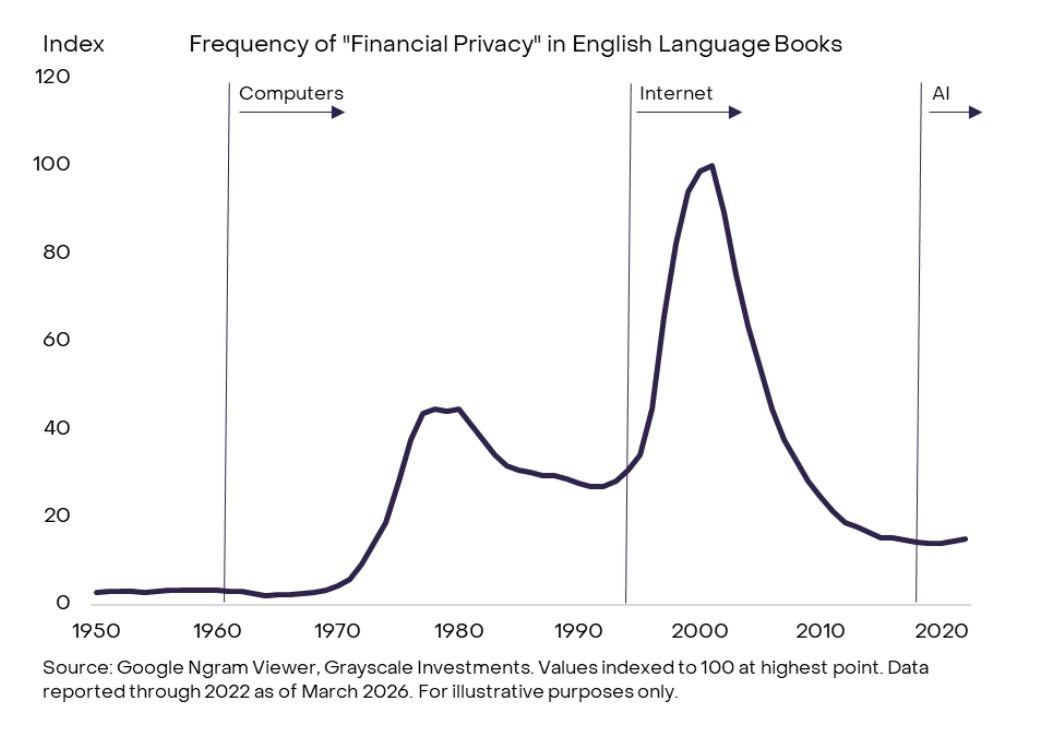
The existence of privacy in society is perpetually at risk, due the simple reality that privacy is rarely the default mode of operation. Privacy is always extra, technically speaking.
If privacy is opt-in, the act of choosing it becomes information. Simply using privacy paints a target on your back — you've self-identified as someone with something to hide.
The cypherpunks saw this early: a single envelope in a world of postcards is suspicious, but a world of envelopes is just mail.
Upgrade to continue reading
- Support the Bankless Movement
- Premium Feed: Ad Free & Bonus Content
- Daily Market Analysis & Research
- Airdrop Hunter: Guided, Vetted Projects
- Claimables: Find & Claim Airdrops + more
- Private Discord w/ David & Ryan


