Checking Out Zapper's New Farcaster Client
As Farcaster doubles down on its wallet, new clients like Zapper highlight the social protocol’s decentralization.

 Farcaster has two main arms: a backend protocol for powering decentralized social networks, plus a frontend app for making posts, using mini apps, swapping tokens, and etc.
That said, last week Farcaster co-founder Dan Romero said the project's "social-first" approach hadn't reached product-market fit and that the team would be doubling down on the Farcaster app's native wallet, which has surged in popularity in recent months.
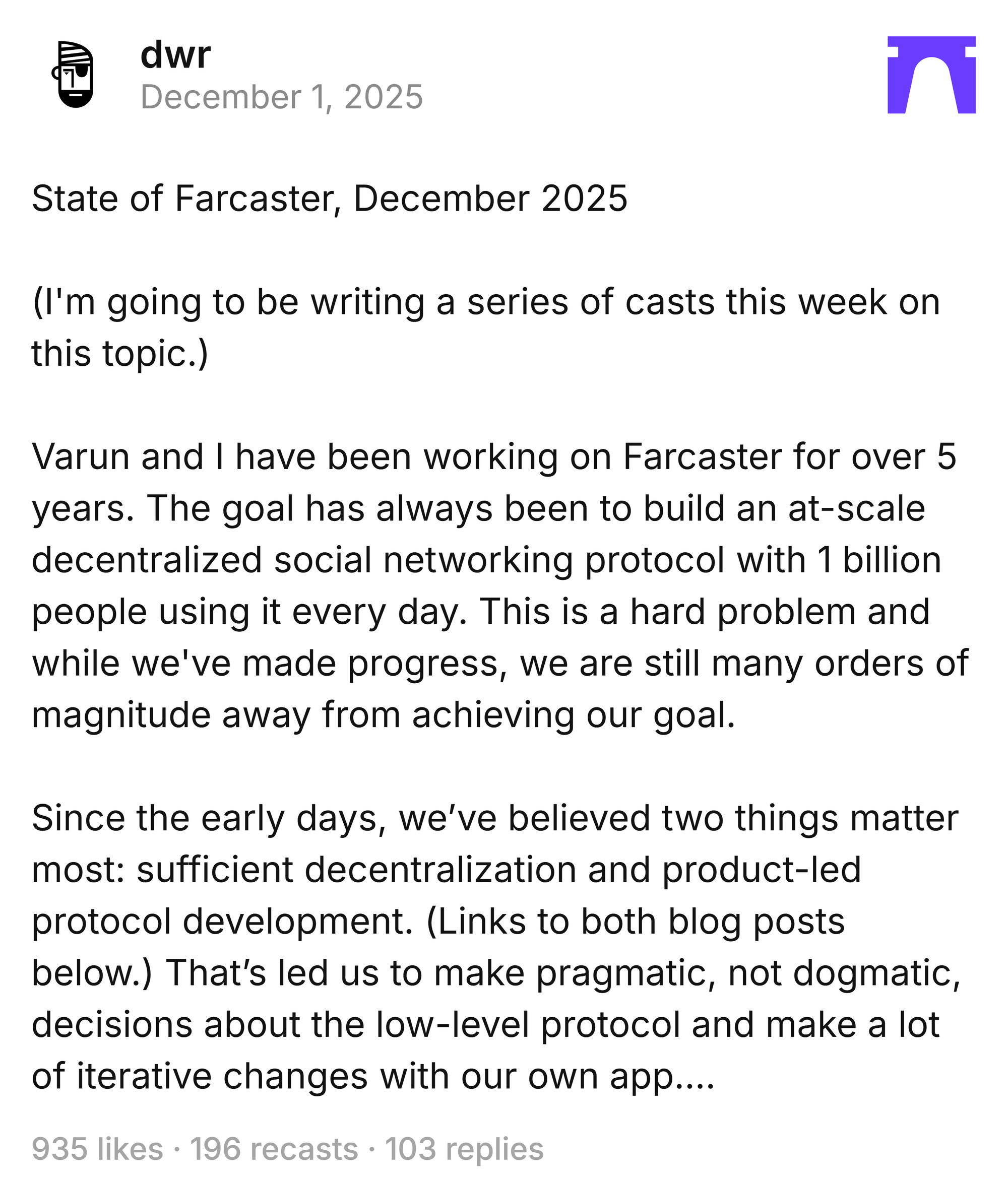
As 0xLuo recently noted in his essay "Walletizing the Social, Socializing the Wallet," this news wasn't really news to hardcore Farcaster users but more like a recap of the project's development trends. Still, some users hailed the wallet-first shift here as marking onchain social's latest failure.
The bottom line, though, is that the underlying social protocol will continue to hum along, and it's open for anyone to build upon. This is where the advantage of client diversity comes in.
The Farcaster app itself is just one client atop the Farcaster protocol. You can still post and message on this app, of course; the team is just putting its focus toward the wallet side of things. But if you don't like this direction, or if you just want to branch out to different experiences, you can take your Farcaster social graph to other clients.
The biggest up-and-coming alternative here is the Base App, though currently there is still a waitlist to join the beta. Yet there are other options you can dive into immediately, like Firefly, Herocast, and Recaster. And now the newest entrant to this field just arrived today: Zapper.
As some of you will recall,  Zapper is an onchain portfolio tracker. It's been on my radar for years; I used it as my first DeFi base command after it launched in 2020. Fast forward to recent times, and the team's been working on embedding a Farcaster client into their app. Fortunately for us onchain surfers, that integration just officially rolled out.
Enjoying this article?
Subscribe to Bankless or sign in
What’s the new Zapper?
— Zapper ⚡️ (@zapper_fi) December 11, 2025
Zapper is built on the Farcaster protocol and combines onchain activity with a composable social graph to bring the onchain world to life.
See what's happening onchain. Discuss, trade, engage.
Onchain was meant to be multiplayer, not single player pic.twitter.com/C7QskYlKLy
Accordingly, you can now try the new Zapper on web or on Android devices, with iOS support coming in the near future.
The platform's existing bread and butter is stuff like portfolio data, token charts, human-readable transactions, onchain search, etc. This new integration weaves a social layer over these pillars, so you can now post to your Farcaster social graph (thus pushing your content to every Farcaster client) and like, recast, or comment on other people's onchain activity all directly within Zapper.
If you want to try the fresh UX for yourself, it's simple to dive in. For example, if you head to zapper.xyz, you'll be able to create an account via email (thus generating a gasless Privy wallet) or connect with an existing wallet. Then, you'll be asked to sign in with your Farcaster account or to create a new one. Boom! That's all it takes.
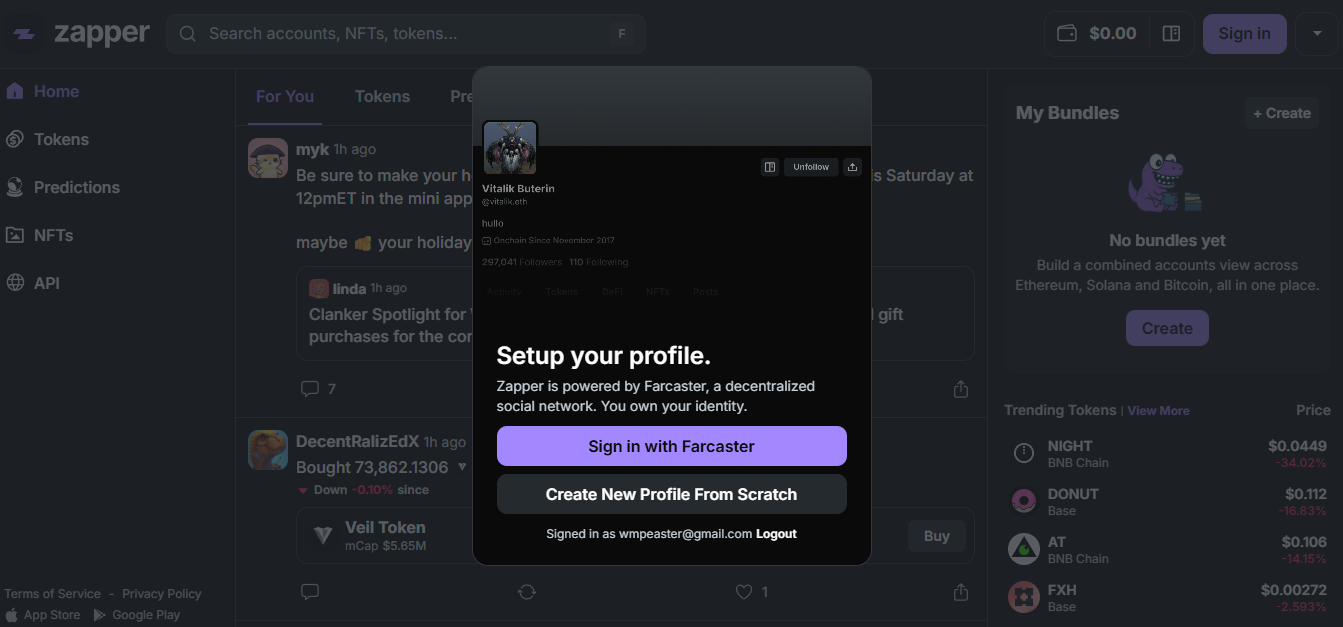
Once you're set up, you can post casts, engage with other posters on your "For You" feed, and etc. alongside Zapper's already existing asset tracking and onchain discovery features. So as every Farcaster client offers something unique, Zapper's aiming to stand out with its "socializing the portfolio" approach, as 0xLuo might put it.
The more Farcaster clients the better, I say, and I'm glad the Zapper team is stepping into the fold. The open environment in which they've been able to build here is the special thing, too. Zapper can build how they want, users can take their social graphs to whichever clients they want, and Farcaster can focus on their product goals.
This sort of "everyone gets to have it their way" dynamic wouldn't be possible with centralized, siloed web2 social media companies. It's a reality because of the decentralization of the underlying Farcaster protocol, and it's also why the Farcaster ecosystem is poised to survive changes at any one client, even the flagship app.
William M. Peaster
William M. Peaster, Senior Writer, has been with Bankless since January 2021. Immersed in Ethereum since 2017, he covers the onchain frontier with a particular interest in art, games, and other culture apps. He has a background in creative writing and writes fiction in his free time.