ROLLUP: The World is On the Clock | The Clarity Act | Crypto Mortgages | Bitmine Staking
It's Do or Die for Geopolitics.



Up next
All episodes 01:28:13
Podcast
01:28:13
Podcast
The Economics of AGI: Why Verification Is the New Scarcity w/ Christian Catalini
 Podcast
Illia Polosukhin: Why AI Agents Are Still Useless (And What Fixes Them) | NEAR Founder on IronClaw
 01:41:22
Podcast
01:41:22
Podcast
Ethereum’s Quantum Strategy with Justin Drake
 01:09:05
Podcast
01:09:05
Podcast
ROLLUP: Crypto Momentum | Regime Shift? | Payments War | Prediction Boom | SBF on Netflix
 01:21:51
Podcast
01:21:51
Podcast
Tempo Mainnet: The Race to Agentic Commerce
 Podcast
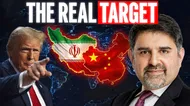
Trump's Grand Strategy: Iran, China & The New World Order | Kamran Bokhari
 01:00:34
Podcast
01:00:34
Podcast
Ethereum Foundation's New Mandate Has The Community Divided | Bankless Takes
 01:00:56
Podcast
01:00:56
Podcast
Robinhood CEO: "Gen Z Is the Most Retirement-Savvy Generation Ever" | Vlad Tenev
Inside the episode
TRANSCRIPT
Ryan:
[0:04] Bankless nation it is the last week of march time for the bankless weekly roll-up did the banks in the crypto industry reach a compromise on the great stablecoin yield debate for the clarity act that's the question today and the answer is like maybe and then there's also the question for crypto natives do we even want the clarity act at all if it doesn't give us stablecoin yield Wow,
David:
[0:27] Spicy question. Wow, how dare you, Ryan? What do you mean we don't need the
David:
[0:32] Clarity Act? I thought that was the whole thing.
Ryan:
[0:34] I don't know. I'm becoming a little less convinced, but maybe you're on the other side of that debate.
David:
[0:38] No, not necessarily. What I think you're allerting to is kind of in line with Mike Selig and Paul Atkins of like, we gave you guys clarity. And so now the importance of the actual Clarity Act might be a little bit, not as high as it once was. We're going to talk about all of that. I'm going to get Ryan's takes. You're going to get my takes too. But back into the macro front, Trump declared that the war in Iran is already won. Iran this week said, no, no, we're still fighting, actually. This is not over. You are stuck here with us.
Ryan:
[1:08] And also, Tom Lee may have just launched the biggest ETH staking platform in the world, which makes sense because he's got a heck of a lot of ETH.
David:
[1:14] He can just make it the largest platform in the world. Yeah.
Ryan:
[1:17] It seems to be what he did. The New York Stock Exchange announced its partner to tokenize stocks on chain. Which chains is the big question and who gets it?
David:
[1:26] And then lastly, Google says Q day. Q day is the day that quantum comes and messes up all of our stuff. It's Y2K, but all over again. But now it's Q day. It's just around the corner. It's escalating, making the timeline earlier. They think Q day could be here as early as 2029. Ethereum has a plan for quantum. We had the episode with Justin Drake come out this week. What about the rest of crypto? What about Bitcoin? We're going to get into all of that and more.
Ryan:
[1:54] Before we get there, I want to just do a drive-by promotion for another podcast that's coming out of Bankless Media. It's called The DeFi Report. So some of you may be already subscribed to that. If you're not, I'm going to ask you to go subscribe to that now. But before I do, maybe giving you some insight into it. So every week, every Wednesday, I read a report that Michael Nadeau puts out.
Ryan:
[2:17] He's from the DeFi report. He published it on his website. It's probably the best thing I read in crypto all week.
David:
[2:24] As it relates to markets, you mean?
Ryan:
[2:26] Yeah, as it relates to markets and fundamentals and what's happening in price. And so after I read that article... Prepare a few notes, questions to ask him, and then we get on a podcast and we hit record. And what is output is like a 35 minute episode of where he believes the markets are at a given point in time. So that comes out every Wednesday. It's a pretty brief episode. And he's become my go-to person for crypto cycle fundamentals. He gets into the more of the pricing, the prediction, and a little bit of the trading that you and I don't do on Bankless. So if you are into that, go find the link in the show notes, hit subscribe, go search the DeFi report on Spotify, YouTube, wherever you consume podcasts.
David:
[3:10] Still long time horizon trading, not short time horizon trading. So like trades over many months, quarters, quarter long trades, which I can get into that kind of trading.
Ryan:
[3:22] Yeah, I think like it's good stuff and it's a little bit different than the
Ryan:
[3:27] kind of content we cover. So I definitely appreciate it.
David:
[3:30] I mean, we'll do about 10 to 15 minutes of markets content right now here on the weekly rollup. Not Michael's full-time job is to look at these every single day and you guys do like 30 to 40 minutes of content. So if you like the market section, but you want more of it with a professional, a serious individual.
Ryan:
[3:48] You're saying you're not serious, David? No. I want you to give me a serious take, though, right now on the one question that is defining markets, which is the war in Iran. So there was like a lot of back and forth on a day-to-day basis this week. And it felt like it was lurching. It was like, the war is over. Oh, no, it's not. Oh, we have, you know, a deal. There's not really a deal. Trump was at one point, was he talking about getting like a gift from Iran?
David:
[4:13] Do you see this? Yeah, he said that Iran gave us a gift of 10 boats through the Strait of Hormuz.
Ryan:
[4:19] That was the gift?
David:
[4:20] Yeah. They allowed 10 boats of oil. Big, big boats. Great big boats, according to Trump. It was Iran's gift to us. I mean, I don't have any connections in Iran, but I bet you Iran was like, we did not do that.
Ryan:
[4:34] Okay, well, so do you have any clarity here? So give us some signal.
David:
[4:38] Okay, so to zoom out and just skip to the end, I think markets are confused. As if we are on the precipice of being stuck in Iran, while also understanding that Trump is trying to actually get off the boat. Like, we're done here. Trump wants to be done here. Iran is like, oh, no, no, no. You are locked in here with us, sir. Like, you're stuck here.
Ryan:
[5:07] Wait, this is kind of a question, though. Why can't Trump just be done?
David:
[5:10] Is he just like, call it off? Because the Strait of Hormuz is so important to
David:
[5:15] both parties, And there is no compromise here. Iran must have sovereignty over the Strait of Hormuz, and Trump cannot have that.
Ryan:
[5:26] Why? Why can't he have that? That's what I don't understand. Why can't we go back to the way things were previously?
David:
[5:33] So you remember our debt as a country, Ryan?
Ryan:
[5:37] Yeah.
David:
[5:37] It's really big.
Ryan:
[5:38] Yeah.
David:
[5:39] Ever since we've gotten into the war, yields have gotten higher, which means our debt payments are going up. The cost of our debt is becoming more expensive. The Strait of Hormuz, which is oil, which is increasing the price of oil, and it's not necessarily our debt, but the high price of oil is an input into high yields, which is an input into the cost of our debt, which we cannot pay.
Ryan:
[6:04] No, I get all that. But why does Trump need U.S. sovereignty over the Strait of Hormuz? Presumably before, oil was flowing through under some sort of Iranian sovereignty. Not necessarily.
David:
[6:17] Before all of this, the Strait of Hormuz was not ever... Iran had always rabbled about closing the Strait of Hormuz, but the sovereignty of the Strait of Hormuz, it's international waters. Dubai is right there, Saudi Arabia is right there, Qatar is right there. All of these countries with differing political allegiances are all using the Strait of Hormuz. Now Iran is like the Strait of Hormuz is the one thing that is protecting Iran from an actual decimation by Israel and the United States military and so it is their shield of sovereignty and if they give up the Strait of Hormuz it is their last big playing card that they have to play and it's a very good one it's not like it's not their it's it's their last line of defense but it's a very big last line of defense a trump.
Ryan:
[7:08] Card if you
David:
[7:08] Will a trump card yes that's right that's right okay so let's let's just speed run through the last uh like seven days so last friday, iran uh trump gave iran a 48 hour ultimatum the quote was if iran does not fully open the strait of hormuz the u.s will hit and obliterate iranian power plants starting with the biggest one burst uh friday markets if you remember ryan was a bloodbath the s&p hit new lows down seven percent since the highs of february this.
Ryan:
[7:33] All played out over twitter by the way
David:
[7:34] All played out over Twitter. The very next day, Trump said that he is having very good and productive conversations with Iran, which I was like, wow, that was fast. 12 hours? You're already having good and productive conversations? Wow. Crazy. And then he announced that he was postponing the plant strikes on the Iranian power plants. Iran responded saying, I don't know who you guys are talking to, but it ain't us. And then called it Trump's deceitful. Monday came, Monday, 8, 10 in the morning, just a little bit over an hour ahead of the Monday market open. Trump calls for a pause on all military strikes on Iran just before the market opened. Market opened up green. It kind of recovered from the Friday fear. Tuesday, the next day, the 15-point plan surfaces. Trump proposed a plan, a peace plan with Iran. It was delivered to Tehran. It offered sanctions relief in exchange for the removal of all enriched uranium and some other demands. And then also Trump declared to the Oval Office that the U.S. And Iran are in negotiations right now and that the war had been won. So Iran, like the United States, military objectives are achieved. And we're just, you know, talking about peace. We're going to move forward now.
David:
[8:49] The market really liked that day. Tuesday was a very green day in the market. Wednesday, Iran rejects the plan, offers its own plan, a full halt to aggression, concrete guarantees against future attacks, war reparations, and most importantly, recognition of Iranian sovereignty over the Strait of Hormuz. That's the hard part. The markets on that day also were still positive. I think Wednesday was also a very green day. And I think what the market was doing then was pricing in the seriousness of Trump's interest of getting out of the war. And so while negotiations are not good, Trump, the markets are pricing in that Trump does want out. And so like, this is not going to be prolonged. This is not.
David:
[9:30] Months this is maybe weeks uh but the market is like okay this this is going to become over trump clearly wants this to be over uh thursday irgc fired missiles at the united states bases meanwhile the pentagon ordered 3 000 soldiers to go to the region not exactly behavior that you want to see that's.
Ryan:
[9:48] Not boots on the ground yet is it
David:
[9:50] It is a paratrooper airborne division so these would be in theory the boots to go on the ground but it could also just be negotiation posturing as well just like placing them there just like you know look look at these guys right next to you and they would be the boots um the un has estimated 63 billion dollars in economic losses across the arab region due to the strait of hormuz being effectively closed and so just to summarize everything here's here's my conclusion we know trump wants out he is trying to get out.
David:
[10:22] The objective of defanging the iranian military and nuclear capabilities is done those were the military objectives. So Trump gets to say mission accomplished. He is now realizing that controlling the Strait of Hormuz is entirely different beast altogether. Seems like he's drawing a line there that he doesn't really want to cross of boots on the ground actually going all the way and trying to control the Strait. Meanwhile, Iran is maximizing its leverage against Trump via the Strait of Hormuz. Iran's new goal is to keep up the U.S. Pressure, pressure on the United States by keeping the Strait of Hormuz closed, the longer that Iran can keep the Strait closed, the more pain it inflicts on the United States. So this puts the United States versus Iran in conflict kind of between Iraq and a hard place. Putting boots on the ground from the United States to control the Strait of Hormuz would likely cause a bloodbath in the markets, which we know Trump is sensitive to, and would also increase U.S. bond yields to something probably unsustainable. And also the Strait of Hormuz is now fundamental to Iranian sovereignty and regime integrity. It is, as you said, their trump card, and it's a really good one.
Ryan:
[11:25] Yeah. And I guess the economic fallout is primarily in the price of oil. So Brent oil prices, and that's the oil coming out of the Strait of Hormuz, that's worldwide oil prices. They've been oscillating a little bit this week, but they are above 100 on news that, you know, all the news that you'd said, basically. And it's not just the US and Iran and Gulf states taking the economic impact of this. The cost of this war is actually higher outside of America, at least it seems that way. Asia is getting hit notably hard. So nearly 90% of the oil and gas passing through the Strait of Hormuz is actually bound for Asia. So what's happening around the world is governments are ordering employees to work from home, some Asian countries. In India, people are panicking over fuel shortages. The Philippines has actually declared a national emergency. They're saying that they're considering grounding flights. In Australia, they are considering rationing fuel throughout the country. So there was news that over 500 gas stations in Australia have now run out of fuel. So this oil shortage challenge coming from the Strait of Hormuz is affecting not just the United States, It's slightly affecting the United States. It's affecting the whole world and all global markets right now.
David:
[12:48] It's like a United States sneezes and the whole world becomes sick. Like our prices at the pump up 30%, which I think is causing... Unhappiness, but it's not causing a pause on the economy.
Ryan:
[13:00] Yeah. Noah Smith had a take on this, that this is not good for a perception, global perception of America, right? It's kind of, well, what's America doing? They're a force for chaos. They didn't really have a plan here. They're just a bully who smashes things and the rest of the world has to deal with the consequences. So there's that too. So I guess oil and energy is a limiting factor for Trump. I want to zoom in on what you were talking about with respect to bonds and make sure we understand that. So you said 10-year yields are up. And indeed they are. The 10-year yield note has passed 45 basis points since the war began.
David:
[13:38] That's up 10%. So 3.9% to 4.4%. That's a 10% increase in the yields.
Ryan:
[13:44] 10% increase. So 4.3%. I've seen it as high as this chart looks like almost 4.4%. And that indeed is what it is at the time of recording. What does that mean? Like when 10-year yields go up, why is that constraint on Trump?
David:
[14:01] $39 trillion in federal debt. So if yields were at 5%, which is, I think, it's not really any, there's no official line there, but 5% is kind of perceived to be a breaking point for what the United States government can handle because 5% would add $1.2 trillion in annual costs. So we have to come up with $1.2 trillion in money every single year to pay for 5% yields if we get there.
Ryan:
[14:26] About another 10% rise. So we've seen a 10% rise since the start of the war. If we get another 10% to 15%, then we're at 5%. And that's like, it feels like it's a round number for a breaking point here. But what breaks?
David:
[14:38] Kind of everything pins on that. Like we must pay our... Our interest payments. But this also has like downstream to like the rest of the economy. Mortgage payments will also go up. When yields go up, everything becomes more expensive. And that, well, that also just hits the Republican Party, the party in power, which Donald Trump doesn't want because the cost of living goes up. It affects the domestic economy.
Ryan:
[15:02] Yeah. I mean, just getting to 5%, that adds, adds another 1.2 trillion in annual interest costs and paying for that $39 trillion in debt, right? And that's money we don't have in the budget. That's a broadening deficit, right? And it starts to create this downward spiral of more debt, more interest, U.S. can't pay its debts, right?
David:
[15:26] Inflation, dollar devaluation, yeah.
Ryan:
[15:29] When there was the tariff scare in April 2025 and 10-year rates shot up to 4.6%, That felt like the point in time where Trump started to back down. Yes. Right? And so you kind of wonder if maybe 4.6% is around the mark where Trump really gets spooked and markets cause him to react in a certain way. And we're right on the cusp of that.
David:
[15:57] Yeah, that's right. Well, and let's see, in November 2023, it got all the way up to 5%. April 2024, 4.7%. And then January, the tariff scare of this year, it was 4.8%. So yes, somewhere in the 4.6 to 4.8% is where Trump folds. And we are getting there. We're getting there.
Ryan:
[16:22] How about the AI trade? Will that save investors? Well, investors have not been enjoying returns, at least from all-time highs. This is the MAG-7 and the drawdown. So you see Apple is down 12% from all-time highs, NVIDIA 15.5%, all the way down to Microsoft is down 33% from all-time highs. The NASDAQ cumulatively is down about 10%. So all of the AI hype and incredible things that are shipping on really a weekly basis have not been enough to save the NASDAQ.
David:
[16:58] Yeah. And all of these are, the highs were in February. And so I think it was really when Trump announced or we just saw all of the United States military being pointed towards Iran. That was the highs of the market. and we have not recovered. So broadly, my understanding is people who are buying now, who are buying the dip now, are kind of betting for a smooth de-escalation, a smooth off-ramp. But the trend of the S&P, the NASDAQ, the QQQ, the trend is trending down for six weeks now, six, seven weeks now. And the trend is trending. That's where it's going. We are not out of that trend. And so like if you're bullish, it's because you believe in like a smooth de-escalation of the Iran war, which I don't know if we're necessarily going to get because Iran's not letting us.
Ryan:
[17:51] Yeah, right. Is this a buy the dip moment for stocks or is this how maybe we were feeling back in December in crypto where some people were like, ah, it's buy the dip. December feels good. You know, we're going to resume the pump in 2026. And well, we're in for a deeper bear. That's the big question. Bitcoin is still outperforming gold. Less so on the week, though. On this week, Bitcoin is down 5% versus gold. But since the start of the war, it's still up 28% versus gold. So some people have said, yeah, this is great news. And this is why Bitcoin is actually bullish. So Bitcoin has bottomed. So let's give the bull case for that. The best I saw was a report from Bernstein, an analyst named Chatham Chugani. So he is a prominent Wall Street analyst covering crypto. Pretty consistently bullish, but now especially so. And his take this week in a report that they issued to investors is the bottom is in. He called this the weakest bear market in history.
David:
[18:55] That gives me PTSD. I've heard those words before.
Ryan:
[19:00] They said this in the report, we believe Bitcoin has found its trough and is now heading higher. Bitcoin corrected in Q126 on fears of a four-year cycle peaking in 2025. Retail sold on a series of headline risks. These risks aren't real, basically. So the sell-off was fear-driven. It's more retail, not having the diamond hands. The institutions, the smart money, they never left and they've continued buying. And he's got some receipts of this, right? He's showing ETF inflows, very strong, nearly reversed all year to date, outflows. And he's saying new structural buyers are coming in. So now it's sovereign wealth funds buying these ETFs. Okay. So he's like, the diamond hands have entered. TradFi has got it. We've got a structural difference this cycle versus last cycle. And we're not going to hit the lows of last cycle. That's his reason that Bitcoin has bottomed. So he's calling for 150K Bitcoin price the end of this year, 200K next year. And then, of course, you get to the Michael Saylor, you know, a million Bitcoin by the early 2030s.
David:
[20:06] Does this feel like opium? I i kind of like it's the same kind of narrative of like that i would see from like hopium moon boys on twitter it's just like the institutions they're diamond hands like they know to not sell the bottom it's like actually institutions are just humans just like you and me yeah.
Ryan:
[20:27] Well maybe that's just your retail speaking david maybe you're the weekend secure okay the the other take was given uh by michael nato earlier this week on uh the tdr and he wrote a report up but Basically, he thinks that equities are in for another dip. So, you know that 10% down on NASDAQ? Yeah. He thinks we're in for a 20% to 25% down.
David:
[20:48] Whoa!
Ryan:
[20:49] Yeah. Oh, yeah. 25? Yeah. Like global liquidity down. You know, he's looking for deep value for Bitcoin, basically. 25%?
David:
[21:00] That's 15% more down in the indices?
Ryan:
[21:04] Mortgage up, liquidity downturn, oil, energy, you know, persists. He can't get out of the war this easily straight of Hormuz. Have you seen consumer sentiment by the way? Look, consumer sentiment is absolutely worst we've seen.
David:
[21:16] Yeah, but that's because AI is scary to consumers.
Ryan:
[21:20] Maybe. Maybe that's part of it. So you remember Kyla Scanlon's her thing in 2022 when we saw consumer sentiment like this, the vibe session?
David:
[21:27] Yeah, yeah, yeah.
Ryan:
[21:28] Maybe this is an AI vibe session?
David:
[21:30] Yeah, like social media I think is showing up in consumer sentiment. Like the negative ill effects, the mind warping of social media, I think shows up in consumer sentiment.
Ryan:
[21:39] Yeah. I guess the biggest thing for me was some of Michael's data points on Bitcoin itself, which is like, we're still not at the 200 week moving average. We still haven't hit some of the cycle bear type indicators that he looks at on chain. And the Bernstein analyst wasn't looking at any of these. He was just like,
David:
[21:55] Didn't talk about the cycle.
Ryan:
[21:56] Didn't talk about the cycle.
David:
[21:57] What's that Lin-Alton mean? Like, nothing stops this train.
Ryan:
[22:00] Nothing stops this cycle.
David:
[22:01] The train is the cycle. Like, until, like I was a cycle hater, I tend to be cycle haters because like, come on, dude.
Ryan:
[22:09] You don't want it to be true.
David:
[22:11] Why should it be true? If markets are supposed to be efficient, if we all know it cycles, then like why will it be just another cycle? But nonetheless, here we are. And so like don't stand in the way of the cycle.
Ryan:
[22:21] Don't fade the cycle. Number one rule of cryptos, don't fade the cycle. I mean, I feel like the cycle has humbled me too many times to ever question it again.
David:
[22:30] How many times do we just cycle, man?
Ryan:
[22:33] Yes, I do. I'm probably on the side of Michael Nadeau on this, but I'm hopeful. Look, it'd be great if we hit 150K by the end of 2026. That sounds fantastic to me.
David:
[22:43] Let's just split the difference and call it good there. Split the difference? It's not going to be...
Ryan:
[22:47] 75K?
David:
[22:48] It's not going to be... No, it's not going to be down 15 more percent. The S&P is not going down a total of 25%. It'll go down from here where it is now at negative 8%. Maybe it bottoms at negative 12 to 15% where it starts to hurt, but we're not going any worse than that. and we don't get deep value, but we do get the cycle. How about that?
Ryan:
[23:09] Well, Mr. Hoffman, I look forward to reading your institutional reports, sir.
Ryan:
[23:13] Coming up next, we got to talk about the stablecoin yield issue and the Clarity Act. There was a big proposed compromise between the banks and the crypto industry. Should we take this deal? Also, why is Coin and Circle down double digits on this news? All this and more. But before we do, we want to thank the sponsors that made this episode possible.
David:
[23:32] Galaxy operates where digital assets and next-generation infrastructure come together, serving institutions end-to-end. On the market side, Galaxy is a leading institutional platform, providing access to spot, derivatives, structured products, DeFi lending, investment banking, and financing. With more than 1,600 trading counterparties, Galaxy helps institutions navigate every phase of the market cycle. The platform also supports long-term allocators through actively managed strategies and institutional-grade staking and blockchain infrastructure. That scale is real. Galaxy has over $12 billion in assets on the platform and averaged a $1.8 billion loan book in late 2025, reflecting deep trust across the ecosystem. Beyond digital assets, Galaxy is also building infrastructure for an AI-powered future. Its Helios Data Center campus is purpose-built for AI and high-performance computing, with more than 1.6 gigawatts of approved power capacity, making it one of the largest sites of its kind. From global markets to AI-ready data centers, Galaxy is serving the digital asset ecosystem end-to-end. Explore Galaxy at galaxy.com slash bankless or click the link in the show notes.
David:
[24:32] Why does managing investments still mean juggling multiple apps, accounts, and currencies? Crypto trades around the clock. Stocks, ETFs, and commodities are moving on-chain. Yet most platforms still keep everything split apart, turning diversification into unnecessary friction. BitGet is delivering a different kind of experience with its universal exchange. One platform where users can access crypto, tokenized stocks, ETFs, and other assets in the same place, all traded directly using USDT. No constant transfers, no currency conversions, just a single account built for how markets actually move today. As the line between crypto and traditional finance continues to blur, BitGet's goal is straightforward. Make trading and investing simpler, not more complicated than it needs to be. Learn by clicking the link in the show notes. This is not investment advice. This week there were rumors going around that the banking sector and crypto companies have agreed to a truce on stablecoin yields around this idea of no passive investment. Yield. So the thorny issue of the Clarity Act is, do stablecoin holders get yields? Can you pass on yields to stablecoins? Banks don't want it because that is essentially their business model. Crypto does want it because, for obvious reasons, it's good for us. And there seems to be a growing truce that if you are just a passive holder, so if I have passive USCC deposited to Coinbase or anywhere...
David:
[25:52] You cannot just naively simply pass on yields. You have to be an active participant in some way, shape, or form. What I think this would look like is that market makers on Coinbase that have large amounts of stablecoin supply, they do get yield because they are being active with it. Consumers doing spending. So long as the stablecoins are moving, you get the yields, but not if you are just passively holding. So a line is being drawn there, and that is the truce that is being proposed. Again, a splitting of the difference. That's kind of my summary of it. Anything to add?
Ryan:
[26:26] Well, the banks want to keep their yield, right? And so you said this was a thorny issue. I want to make two points there. It's only a thorny issue because the banks have made it a thorny issue. This is called the Clarity Act. It's not called the Bank Incumbency Yield Monopoly Act. All right? So we have the ability to pass on rewards, not interest, but non-issuer rewards to users of stable coins via Coinbase today through the Genius Act. And now the banks are coming back and saying, no, that's a loophole. We want to patch that loophole and we're going to pork it in, stick it into the Clarity Bill. It's not even what the Clarity Bill is about. So the fact that we're even talking about this implies that the banks have some sort of negotiation power in DC. They kind of like run that town. And I'm kind of, it's pretty frustrating to be in this position in the first place, to have to talk about yield of the stable coin bill, when actually we're talking about the Clarity Act, which is completely unrelated. The second point is, you said that crypto wants it because it's good for us. I'll just point out, it's good for US citizens. Right now, the banks keep the yields.
Ryan:
[27:41] In the world that crypto wants and is proposing for stable coins, users get it. Citizens get it. Instead of the 0.015% that you get at your Wells Fargo account, you can get like 3.2% 5%, 3.7%.
David:
[27:57] And if the war continues, you could get 4% or 5%.
Ryan:
[28:01] Well, I mean, yeah, that depends. I don't know where Fed fund rates are going. So anyway, the banks are not having it. They're not going to put their support on the bill unless they get their yields back and they block stable coins from parceling that out to consumers. And because they have such a strong lobby presence, it seems like they've bashed
Ryan:
[28:21] that the compromise was that but you said no passive yield. So basically if it's sitting in a savings account-like location, like the way on Coinbase right now, if you get your rewards, but just sitting there, Coinbase wouldn't be able to pass those rewards. But if you had a narrower program where you're passing these rewards to market makers, as you said, people with high trading volume or payments, maybe that would still be allowed. Okay? So there's a narrow way that they can pass on some of these rewards, but that's kind of undefined and we don't have the details on that. Nick Carter tweeted that the Clarity Yield deal is a bad anti-consumer bank bailout. Banks rewarded for paying 0.4% on savings accounts will force stablecoin innovation offshore and stymie business models domestically.
David:
[29:13] Matt Hogan from Bitwise, he tweeted out, with stable coins, the banks aren't worried about deposit flight. They're worried about profit flight, which I really, really enjoy that reframing. It's never about deposit flight. It's just about protectionism over banks. The protectionism over banks, I think, is kind of the issue. And that's why the banks are in the deal here. In our deal around the Clarity Act, our bill, there's this one thing that talks about the banks. And so the banks are bringing in the full force of their lobby into fighting this deal.
Ryan:
[29:45] But David, guess who weighed in on the side of the banks this week?
David:
[29:49] I hate that I had to watch this man in this place. Because I hated it so bad, I'm going to make all the listeners listen to it too. All right.
Ryan:
[29:57] This is our old pal, Gary Gensler, on this specific issue.
Gary Gensler:
[30:01] I do have some concerns about what, with interest being paid on these new forms of money, stable coins, does it undermine the banking system? And that's something that Congress is sorting through now, really. Do they want to destabilize the banking system by allowing the interest to continue to be paid on these so-called stable coins?
Ryan:
[30:24] I love that he's still calling them so-called stable coins, even though there's legislation that defines exactly what a stable coin is that has passed by the U.S. And signed into law, and he's still calling them so-called stable coins.
David:
[30:37] And what's that meme of the Japanese soldier that was still fighting World War I in the 60s? It's like, give it up, Gary. You lost my dude. You're out. You're done. Just go take a hike, man.
Ryan:
[30:49] There were some implications, though, in the markets around this news. News of the compromise, news that yield would be limited to... No passive yield would be allowed in the clarity bill. And And that is Circle, Stablecoin stock, fell 15%. Yeah.
David:
[31:06] Circle took a big hit. So did Coin. So did Coinbase.
Ryan:
[31:09] Coinbase, 11% down?
David:
[31:12] 11%, yeah. Which owns a very significant chunk of a circle. And I mean, it kind of shows you that Brian's on like kind of the right side of his own interest because if he's arguing against the banks and his stock goes down, if the banks get it, then you kind of- If he loses the argument.
Ryan:
[31:28] His stock goes down.
David:
[31:29] So clearly he's on the right side to something as determined by the market.
Ryan:
[31:33] His fiduciary duties, I guess.
David:
[31:35] But like people were asking the question, like I kind of actually don't get it, right? Because if the banks get what they want, Coinbase and Circle, they get the yield instead of having it to pass on to their consumers. So they're more profitable. They're more revenue. So why is this not going down? Like what gives? My analysis, because you asked, Ryan, thanks for asking, is that stable coins under this truce, under this compromise, stable coins are being pushed into like the payments form factor. And they are pushed away from a savings and bankings form factor. So with stablecoin yield, your USEC balance, wherever it's held, acts like a savings account. Your bank account on chain, a bankless bank account. Without stablecoin yield, We can't really have that as much. And so the utility of stablecoins comes from being a medium exchange, not a store of value. With stablecoin yields, stablecoins are also a store of value. Banks, as they are today, banks are valued by their revenue. Circle and coin are valued by growth, not revenue. These are growth stocks. They are tech stocks that want to have hyper growth and grow into like hundreds of billions of dollars. So without stablecoin yield, the market, as my interpretation is, well, they're not going to grow as much because stablecoin utility is going to be neutered.
Ryan:
[32:58] Right. So without the stablecoin yield portion, maybe we only get to 500 billion rather than many trillions in stablecoins. And that's a cap on the growth story here is what you're saying. Even though profit per stablecoin might be higher with not passing on the yields,
David:
[33:16] Still.
Ryan:
[33:16] The growth story
David:
[33:17] Is- The TAM shrinks for stablecoins without yield.
Ryan:
[33:20] Yeah, I think that's part of it. I guess another take I have generally is back to what we were saying in the intro is with the no passive yield in place, there's a question in my mind as to how much crypto really needs clarity to pass. And also the question of like, maybe the banks needed to pass more than crypto. Because think about our status quo right now for crypto, right? So A year ago, we didn't have any clarity with respect to which assets in crypto were commodities, which are securities. The last week, we just talked about this on the weekly rollup. The CFTC and the SEC did a bang up job, an A to A plus job in terms of providing the industry the clarity we've hoped for all along. Like we have a defined taxonomy for this. That's written in the clarity bill, but we already have that aspect of the clarity bill by way of regulator. All of the enforcement has been dropped.
Ryan:
[34:20] The US is now a much friendlier country to crypto. Our developers are no longer fleeing. We've got full steam ahead on tokenization. What I'm saying is, yeah, that's not codified in a legislative act of Congress, but for all intents and purposes, at least right now, we have clarity. And sure, it would be good to codify that so that Gary Gensler V2 doesn't come in and try to reverse everything that this administration is doing. Yeah. But do we need that now? And if you get Gary Gensler V2, could he actually reverse things to this extent? Because there has to be some continuity from administration to administration with respect to how they treat the crypto industry. And if you're writing reports and you're saying, oh, full steam ahead, this is all legal, and you're a regulator, and then the next person in that institution comes in and says, nope, reversed, all of this was illegal, haha forgot to tell you and takes you to court judges will like the court will laugh you out of the system in this administration
David:
[35:18] Precedent is being set that is it's not you can't just undo it it's precedent it's real precedent.
Ryan:
[35:24] That's right so if we're not if we already have the thing the bulk of what the clarity is providing we already have it what are we getting oh we're getting a stable coin yield blocker no no we don't need that the banks need that all right so the banks really need this to pass more than crypto. Now, I will caveat by saying there are some other nice things, really nice things in the Clarity Bill, which is developer safe harbors, some explicit protections for open source protocol developers. There's DeFi carve-outs, so non-custodial developers aren't ever going to be subject to broker exchange registration requirements. There's self-custody protection. There's stuff like that that I would really love in the Clarity that we don't have by any regulator right now. But that stuff aside, I just kind of wonder how badly we need the clarity bill.
David:
[36:19] Uh, I don't know all of the implications of clarity passing or not passing. I agree with you that we are getting components of the clarity bill here and there with the CFTC, with the SEC. Uh, and we're just getting it from the free market, right? So NASDAQ and Kraken partner to tokenize stocks. We're going to talk about in a hot second, the New York Stock Exchange and another company. That's right.
Ryan:
[36:42] We're kind of Wall Street doing this.
David:
[36:44] We're kind of getting it bit by bit, incrementally elsewhere. And so the center struggle of clarity, which is stable coin yield, seems to be the only thing that is of true issue. Again, I could be naive here. I'd like to talk to somebody like Jake Stravinsky to really get these takes here. But it's becoming the main thing, and it might be worth playing hardball with the banks here. I'm kind of becoming partial to strong-arming the banks.
Ryan:
[37:12] Yeah. Another reason, by the way, you were talking about Circle being down. Another reason they could be down on price is some of this Tether news. So Tether, this is great news for Tether. They signed an engagement with a big four accounting firm for its first full audit. This is something that people have been asking Tether for for quite some time. It's been a massive source of fun.
David:
[37:35] Tough day to be a tether truther.
Ryan:
[37:36] Yeah. It's like you haven't been audited or once they were audited, it's like you have an auditor that's not a high quality auditor and is not disclosing everything. Well, now they have the big four, so they're kind of fully in the boat. That might be another reason that circle is down. But back to the clarity bill, another important detail is that it seems like Coinbase has come out and once again, withdrawn their support.
David:
[38:01] Reaffirmed that we ain't doing this. We're not backing down against the banks. Yes.
Ryan:
[38:06] So I kind of wonder if they are making a similar calculation that I just made, but also it's even more in their interest. I mean, there's probably more benefit to the broader crypto industry in passing clarity, but there's probably negative benefit to Coinbase for for passing clarity if it has the stablecoin yield blocker. Yeah.
David:
[38:28] Yeah. That's going to be interesting because like Donald Trump got really pissed at both sides for not coming to an agreement. And there is potentially an agreement. And now Coinbase is once again being like, we're not taking it.
Ryan:
[38:41] Well, who's he going to be more pissed at? Jamie Dimon or Brian Armstrong, right? We'll have to see. Where's the Legion slides?
David:
[38:48] Yeah, it's a good thing he's busy with the war. Let's check in on the Polymarket market about the odds of the Clarity Act getting signed into law. Also some volatility there, but it's bouncing around between, in March, it's bounced around between 50 and 77%. We're coming in at a middle of the road, 61% as of this week. It dropped down to 47% earlier this week, but it has since come back up but I guess to your point like maybe maybe we don't care.
Ryan:
[39:19] I don't know. Look, I don't have a strong opinion on this necessarily. I understand what Tommy is saying from Delphi. I really respect how much Coinbase has done to advance crypto within the government, but I disagree on draw a hard line in the sand here, Brian Armstrong. We need a bill. We need clarity before the Democrats take back the house. Once crypto and stable coins 10x, we can revisit this down the road. One of the things I don't think will be possible is to ever revisit this down the road. So that part might be naive. Although Tommy is making a good point that, look, if it's going to pass, has to pass now, probably conditions, if you have a Democrat controlled House and Congress, then conditions to pass this will get much more bleak.
David:
[40:07] Yeah. Speaking of passing a law, lawmakers from both parties have introduced the PREDICT Act. This is an act to bar lawmakers partisans people in government from trading on prediction markets so this is members of congress spouses and dependent children of members the president and the vice president as well as political appointees and senior executive branch officials so if you are any if this bill passes and you are any of those you are not allowed to trade on prediction markets which i think is totally fine right some kids that's fine some.
Ryan:
[40:42] Some Senator's kids are going to get their parents in trouble, I'm sure, right? You know, trading on some things. It's bound to happen. Bound to happen if this passes. Coming up next, two weeks ago, it was NASDAQ that announced a partnership with
Ryan:
[40:54] Kraken to tokenize stocks. This week, it's the New York Stock Exchange. Who is the issuer of this? We'll talk about that also. David, do you know you can now get a mortgage, a home mortgage from Fannie Mae using crypto as your collateral?
David:
[41:10] Wow. Wow. Wow. What an endorsement. It's a full circle from the Occupy Wall Street movement.
Ryan:
[41:17] Yeah. Let's talk about that and whether you should actually do it. All that and more. But before we do, we want to thank the sponsors that made this episode possible. Some exciting news. We are launching a new podcast to help people figure out the crypto cycle, how to navigate it. The best crypto cycle investor I know, his name is Michael Nato. He runs the DeFi report. This is the guy that sent me a sell alert before the 10-10 price drop happened. His cycle analysis has been absolutely on point. I've been following him for years. And this year, we started recording weekly podcast episodes. Each one, we get into his portfolio, what he's holding, the market structure, entry targets, fair market value of Bitcoin and Ether, and where we are in the cycle. There's new episodes that are released every Wednesday. They're 30 minutes, they're short, they're punchy. I think this crypto cycle is harder to navigate than most. So let's do it together. Go subscribe to this podcast. Search The DeFi Report wherever you get your podcasts, YouTube, Apple, Spotify, or find the link in the show notes. There's a new episode waiting for you now.
David:
[42:11] Stocks are continuing to get tokenized, this time by New York Stock Exchange, who has chosen Securitize to tokenize its listed stocks. So Securitize is the first digital transfer agent to issue and track real stocks and ETFs as on-chain tokens. So what does this mean? Normal equities will trade on the New York Stock Exchange as they normally do. But if the receiver of those tokens, of those equities wants to turn them into tokens, the New York Stock Exchange is building out that pipeline with Securitize to have those trade on blockchains. Which blockchains, might you ask? They did not answer the question, but they are open to...
Ryan:
[42:51] Where is Securitize deployed?
David:
[42:54] Securitize is the issuer of BlackRock's Biddle Fund on Ethereum and Arbitrum. I think also on Solana. I think you could probably just imagine they did just go on chain. It's probably chain agnostic.
Ryan:
[43:06] Yeah, all the chains they have.
David:
[43:07] Probably starting with Ethereum.
Ryan:
[43:08] Yeah. I mean, Securitize has been a big player in this. They have already tokenized over $4 billion in assets. There was also talk of securitizing IPO-ing at some point this year. I'm not sure if they still plan to do that by route of SPAC or something like this. So I'll have to be on the lookout for that. But that could be a pretty big IPO if they catch this narrative wind.
David:
[43:28] Yes, yes. Yeah, it could be the circle IPO of security tokens or tokenized securities.
Ryan:
[43:33] David, we talked about this, I believe, in October of last year. And this felt like big news to me at the time, which was the idea that JP Morgan, the biggest bank in America, is now enabling clients, was preparing to enable clients to borrow against their spot Bitcoin and spot Ether. Basically treating those two internet magic crypto monies as collateral sources through which their clients could borrow. So there was an announcement that would happen. Well, now this week, they've actually ruled that out. So if you are an institutional client, like a hedge fund or trading desk, you can now pledge your Bitcoin or your Ether, not ETFs, the actual spot Bitcoin and Ether as a loan collateral. And you can use this to, I don't know, do other things with- Buy more Bitcoin. Buy more Bitcoin, buy whatever. So this is Bitcoin and ETH now formally in JP Morgan's bank-grade collateral stack. There's not every asset in the world gets to be there, but now our digital monies are there. And I think that's a pretty big milestone.
David:
[44:41] I wonder what the yields being offered are because it's a very big difference if the yields are competitive, like 5%, 6%, 7% versus egregious, like 12%.
Ryan:
[44:49] You mean how much you're paying for that?
David:
[44:51] How much you're paying for that, yeah, exactly. That collateral debt? That very much matters. Do you think Michael Saylor strategy had because like their Bitcoin is free their Bitcoin is not collateralized they could in theory take their.
Ryan:
[45:04] I think he's got way better credit sources than this like this is you know you get a 30 to 50% haircut on volatility he taps every credit source I think he's way more advanced than this. I think JP Morgan is like, yeah, he's got way better terms than what the terms JP Morgan's providing. But what's interesting about this too is this is what the BlockFi's of the world were doing last cycle.
David:
[45:28] This is BlockFi just now in JP Morgan.
Ryan:
[45:30] Now it's in JP Morgan, the biggest bank in America, which is insane.
David:
[45:33] Could have been BlockFi if they just, you know, were a little bit more risk averse.
Ryan:
[45:38] Responsible. Yeah. So also this on the week, which is more proof that crypto is becoming store value money. Fannie Mae, all right, this is a government institution, says they will now
Ryan:
[45:51] accept crypto-backed mortgages for the first time ever. So this is a historic first, David. You can now take out a mortgage on your crypto assets.
David:
[46:00] The crazy thing is, is like Fannie Mae was like the subject of the 08 financial crisis, like the poor underwriting that caused the financial crisis, which created the Occupy Wall Street movement, which Bitcoin got some of its first supporters in. And now Fannie Mae is accepting Bitcoin as collateral. As an institution. It's just like, Bitcoin's winning.
Ryan:
[46:21] It's incredible. It's not just Bitcoin, I should say. It's other crypto assets as well, though I don't have a list.
David:
[46:28] I think it's just Bitcoin and ETH.
Ryan:
[46:30] Really?
David:
[46:30] Bitcoin and ETH.
Ryan:
[46:32] So the problem though is, if you get margin called on this, David... They take your house. Oh, no. All right?
David:
[46:40] It doesn't really sound like it's solving the original problem.
Ryan:
[46:42] Right. So the terms around here, if you're pledging something like Bitcoin, the initial collateral value must be 250% of the fiat down payment. So if you're looking for $100K, a down payment for a mortgage, you have to pledge $250K. That's to stay above that amount too, or else you're going to get a margin called there and be out of a home.
David:
[47:04] I don't know if I could feel very comfortable in my own home like that.
Ryan:
[47:08] Great that this option is available for those who need it. And I think further institutional credibility to the idea that these crypto assets are institutional stored values.
David:
[47:17] The idea is the value of Bitcoin and Ether, these crypto monies, are being used as crypto money. It's like the capital efficiency is being unlocked here. And that's good for
David:
[47:29] the moneyness of the assets.
Ryan:
[47:30] Exactly right. Did you see this news on the week? BitMine is launching what will probably be the largest ETH staking infrastructure in the world. They're calling it MAVEN, which stands for Made in America Validator Network. The VA is where you get the V-A-V-A-V-A-V-A-V-A-V-A-V-A-V-A-V-A-V-A-V-A-V-A-V-A-V-A-V-A-V-A-V-A-V-A-V-A-V-A-V-A-V-A-V-A-V-A-V-A-V-A-V-A-V-A-V-A-V-A-V-A-V-A-V-A-V-A-V-A-V-A-V-A-V-A-V-A-V-A-V-A-V-A-V 7. I say maven
David:
[47:51] Maven maven reads like m-a-v-e-n.
Ryan:
[47:53] Yeah i see what you mean we'll have to find out i've just seen the press release i haven't actually heard tom lee pronounce it but bit mine of course is tom lee's eth treasury uh company makes a lot of sense that they would launch their own in-house institutional provider yeah yeah so all of that ether which is how much now david at it like uh 3.7 percent yeah so we're talking about what like 4 million in ether supply something like this yes
David:
[48:21] Yeah four million each i think that's.
Ryan:
[48:22] About right so you take all of that and you stake it and in his own staking institutional provider that could be throwing off cash of like 300 million um per year yeah in dollars yeah
David:
[48:35] But then he's also going to take other people's ether because that's what you do with a staking platform and then he's going to take a share of the yield off of that ether too.
Ryan:
[48:42] Yes and uh maven or what'd you say maven maven maven Maven Movin also plans to expand beyond Ethereum as well so other on-chain staking of course it could expand into that as long as you have the infrastructure set up
David:
[48:58] Aave is launching a, WAP Treasury. Also don't know how to pronounce this one. W-H-O-P WAP, I guess. WAP is a, what is WAP? Social Commerce and Payments Platform. Just like a regular kind of fintech. I'd never heard of it before. Creators and online businesses sell digital products, memberships, communities, services to a marketplace. It's got 21 million users, 3 billion in annual payouts across 144 countries. So I guess pretty, pretty damn big. inside of WAP, they are launching WAP Treasury. So, I mean, assuming they're with all of these $3 billion in annual payouts, they're just giving their customers, consumers the ability to like not pay it out and instead deposit it, which will go into Aave to generate yield. And so it's just a, you know...
Ryan:
[49:42] It's a DeFi mullet play. It's a classic DeFi mullet play, but it's kind of like a Web2 company doing this. So WAP apparently, I had not heard of it either, but it's kind of like... A membership type of service. So like think of Shopify, met Discord, met Gumroad, that kind of combination for creators. And they kind of combine it all in one platform. So there's a lot of payments, a lot of assets on this thing, and they're DeFi mulleting it, which is just like 6% yield if you sign up. So pretty cool expansion there. David, let's talk about Google and Qday and Ethereum and Bitcoin. So this caught my eye. This was March 25th. Google released a post saying quantum frontiers may be closer than they appear. We're setting a timeline for post-quantum cryptography migration to 2029. They say, as a pioneer in both quantum and PQC, it's our responsibility to lead by example and share an ambitious timeline. They said they're doing this to accelerate timelines across the industry because they think quantum is nigh and it's coming closer than people think. 2029, they plan to have all Google infrastructure updated to post-quantum cryptography that of course wouldn't be susceptible to a quantum computing attack.
David:
[51:02] Now, if they are just updating it because they want to be ambitious and aggressive, that's one thing. If they're updating it because there's evidence to say that they needed to update it because QDay is actually sooner than it may appear, which is kind of what the headline alludes to, that's a different story, which has much more significant implications.
Ryan:
[51:18] I think it's kind of both of that and more the latter, actually. I mean, they are one of the pioneers in quantum computing.
David:
[51:24] So if anyone, they would know. Google would know, yeah.
Ryan:
[51:26] They would definitely know. I mean, Nick Carter made the comment that the notable thing about this was that Google, he says, are getting absolutely apocalyptic in their putting down a 2029 deadline. The Ethereum Foundation this week actually released a post-quantum roadmap website. It's called pq.etherium.org. And it really specifies the plan and the milestones to get all layers of the Ethereum stack. So the consensus and the data and execution layer to post-quantum security. We did almost a two-hour podcast with Justin Drake on this very subject, released that earlier this week. Justin Drake's timeline for all of this was the early 2030s. He thought Ethereum and the entire ecosystem could be fully quantum ready, ready for Q day by what do you say 2030, 2031, 2032, somewhere in that time range. He had a plan and Ethereum has a plan in order to get there. And it's all published on pq.etherium.org. So it's good to see this artifact. I do feel like though it's going to be a difficult journey, Ethereum has thought this through and has a plan and that this is achievable in the way, let's say, the merge was achievable, going from proof of work to proof of stake. But it's a pretty big forklift.
David:
[52:45] Yeah. Do you remember Justin Drake's most hated slide at DevCon in Bangkok in 2024? Yes. And everyone's like, well, rabble, rabble, rabble, this is going to... Four years, five years for that? First off, that was two years ago. So we're already two years into it. Almost two years ago, year and a half. And it was the quantum plan. In addition to other things, it was, this is how we solve quantum. And so like, Ethereum has always been taking quantum seriously. And so Ethereum, in my mind, can only benefit from QDate as the ecosystem leading the charge here.
Ryan:
[53:20] Yeah. And someone who's leading the charge on the Bitcoin side of things is Nick Carter. He's always been a Bitcoiner, is still a Bitcoiner. But he tweeted this, and this was notable to me. Elliptic curve cryptography is on the bleak of obsolescence, whether it's three or 10 years, it's over. We need to accept this. This is, of course, the cryptography that underlies all cryptocurrencies, Bitcoin and Ether. Of course, ETH people have already figured this out. Everyone else seems to be petrified in fear. Unless something changes quickly, the ETH-Bitcoin ratio will start to reflect the divergence in prioritization. My God, David, in all my years, I've never heard Nick Carter speak like this about
David:
[53:59] The ETH-BTC ratio going up.
Ryan:
[54:01] No, but I don't know if he means it or if he's just using it to try to scare Bitcoiners into actually doing some work here.
David:
[54:08] Oh, he absolutely means it because exactly of what you said. He's like, Bitcoiners, get your head out of your ass. The things that Bitcoiners hate the most is ETH-BTC going up. They do. So what do they hate more? Is Nick Carter being right about Bitcoin's quantum fears or the ETH-BTC ratio going up? Nick Carter knows this. And so he's just poking them where it hurts, which is the ETH-BTC ratio.
Ryan:
[54:34] But he also believes it. I mean, he says there's been no progress from Bitcoin developers on quantum. And he contrasts that to Ethereum. He says Ethereum gets its act together, announces a specific detailed post-quantum roadmap. You could see it here, sets it as their top strategy. Meanwhile, Bitcoin devs deny Gaslight, Gatekey, bury their heads in the sand, say the community will decide and really just don't have a plan around this. He may be right about the ETH Bitcoin ratio, but we're not seeing it yet.
David:
[55:03] Yeah, it's no coincidence that we don't really talk about the ETH BTC ratio in the market section that much anymore. If you're curious, it's at 0.03, which is halfway between the bottom of the ETH BTC ratio when Tom Lee was buying and then it surged up to 0.4 something. Now it's down to 0.3. So we are right in the middle of Tom Lee buying to Tom Lee peaking. If you wanted the context as to where we are.
Ryan:
[55:30] That's good. I haven't had eyes on that, David. So I appreciate that context.
David:
[55:34] It sounds like we've been worse. Yeah, we have been worse. We've also been better.
Ryan:
[55:38] Yeah. Last story of the week, it keeps with stable coins and Circle freezing some accounts. So some criticism coming from ZachXBT to Circle. How come Circle froze the USDC balance of 16 unrelated hot wallets late yesterday for a civil case? A basic review of on-chain activity makes it obvious that they are operational wallets. You recall with stable coins like a tether or like a circle, all stable coins, of course, have Clarity Act style stable coins anyway, not the purely decentralized ones. They have the ability to freeze assets in someone's address. They can do this for any reason that they deem necessary.
Ryan:
[56:16] They often work with authorities to do this. generally they're doing this for like um serious cases like terrorism money laundering yeah oh fact sanctioned russian oligarch federal issues federal issues in this specific case they were doing it over a civil court a u.s federal silver civil court we don't really know the details of and um long on the brink poster says soon they'll even freeze funds over petty divorce cases and other such disputes, okay? So the fact of the matter is these stablecoin issuer companies, they have the ability to freeze whenever they want. And there's not necessarily a policy or legal structure or I guess transparent process for when they choose to freeze and when they don't choose to freeze. And many people are criticizing this, including Taylor Monaghan. If you can and convince the US federal court to sign off and freeze, then the funds will be frozen. This is the worst of all worlds. There's no accountability. There's no responsibility. There's no recourse here.
David:
[57:25] There is a big difference between a federal court and a civil court. Civil court is just like, that feels like that can even be griefed and gamed. Like if we really wanted to, it was like a very weak precedent to go and start freezing accounts left and right. Yes. I think your warning here, the message that you're saying is like, this is not, you know, not your keys, not your coins. Like these are your keys, not your coins though. Yeah. Yeah. Yeah, it's not very bankless money.
Ryan:
[57:50] It's just a reminder, right? That this is not bankless money. That stablecoins are not the reason we're all here. They're great. They're a fantastic open finance tool. They're good for the world. They're on stablecoin rails. There's a lot of benefits. But it's not censorship-resistant freedom money. It's not bankless money. Coinbase or Circle as the issuer is someone who can freeze and censor these accounts when they want to or when a government asks them or when a judge asks them or for whatever reason they deem that they should do this. And store value assets, crypto native assets, the Bitcoins of the world, the ethers of the world, Those are true monies that can't be censored, can't be frozen. It's the reason we're here. And I feel like in 2026, with all of the institutions entering and BlackRock and ETFs and real world assets and stable coins kind of just taking off, we can't lose sight of the store of that, like the censorship resistant money. That's the reason we're here. That's the reason crypto started. And we don't have that if we settle for just stablecoins. Yeah.
David:
[59:01] I always feel okay taking the stablecoin apologist position, which is, let's remind ourselves about what we had before stablecoins, which is like PayPal, where in PayPal, all parties in the network needed to be signed up, email address, KYC, government ID registered. With stable coins, these are non-KYC dollars. And so you can send permissionlessly. And it's not completely permissionlessly because you can get frozen, but like all addresses are valid until they are frozen. So it's valid by default. And you can send a brand new address that no one knows who that is. Somebody who's outside of the network, you can send them stable coins without KYC information.
Ryan:
[59:46] I agree. I guess I think the take is stable coins are a great replacement for dollars they are not a great
David:
[59:53] Replacement window in the direction towards ether and bitcoin they are not replacements for there.
Ryan:
[59:59] But they make the
David:
[1:00:01] World's financial system closer to that and so i will i will generally apologize for stablecoin blacklisting when the time comes because at least we got the technology.
Ryan:
[1:00:11] I'll keep all these things in mind uh guys we've got to end it there of course you know crypto is risky you could lose what you put in but we are headed west this is the frontier It's not for everyone, but we're glad you're with us on the bankless journey. Thanks a lot.
Transcript
Bankless Nation, it is the last week of March time for the Bankless weekly roll up. Did the banks in the crypto industry reach a compromise on the great stablecoin yield debate for the Clarity Act? That's the question today. And the answer is like maybe. And then there's also the question for crypto natives do we even want the Clarity Act at all if it doesn't give us stablecoin yield?
Wow, spicy question. Wow. How dare you, Ryan? What do you mean we don't need the Clarity Act? I thought that was the whole thing.
I don't know. I'm becoming a little less convinced, but maybe you're on the other side of that debate.
No, not necessarily. I kind of what you're I think you're alluding to is kind of in line with Mike Seelig and Paul Atkins of like we gave you guys clarity. And so now the importance of the actual Clarity Act might be a little bit not as high as it once was. We're going to talk about all of that. I'm going to get Ryan's takes or you're going to get my takes too.
But back into the macro front, that Trump declared that the war in Iran is already won.
Iran this week said, no, no, we're still fighting, actually. This is not over. You are stuck here with us.
And also, Tom Lee may have just launched the biggest ETH staking platform in the world, which makes sense because he's got a heck of a lot of ETH.
He can just make it the largest platform in the world, yeah.
It seems to be what he did. The New York Stock Exchange announced its partner to tokenize stocks on chain. Which chains is the big question, and who gets
And then lastly, Google says Q Day.
Q Day is uh the day that quantum comes and
it?
destroys everything. Messes up all of our stuff. It's it's Y2K, but all over again, but now it's Q Day.
Comes around and it's just around the corner. It's uh escalating, making the timeline earlier.
Uh, they think Q Day could be here as early as 2029. Ethereum has a plan.
For quantum, we had the episode with Justin Drake come out this week. What about the rest of crypto?
What about what about Bitcoin? We're gonna get into all of that and more.
Before we get there, I want to just do a drive by promotion for uh another podcast that's coming out of Bankless Media. It's called the DeFi Report. So some of you maybe already subscribe to that. If you're not, I'm gonna ask you to go subscribe to that now. But before I do, maybe
Giving you some insight into it. So every week, every Wednesday, I read a report that Michael Nato puts out. He's from the DeFi report.
He published it on his website. It's probably the best thing I read in crypto all week.
As it relates to markets, you mean?
Yeah. It's uh as it relates to markets
and fundamentals and what's happening in price. And so after I read that article,
I prepare a few notes, questions to ask him, and then we get on a podcast and we hit record.
And what his output is like a 35-minute episode of where he believes the markets are at a given point in time. So that comes out every Wednesday. It's a pretty brief episode. And he's become my go to person for crypto cycle fundamentals. He gets into the more the pricing, the prediction, and a little bit of the trading that you and I don't do on Bankless. So if you are into that, go find a link in the show notes, hit subscribe, go search the DeFi report on Spotify, YouTube, wherever you consume podcasts.
Still long time horizon trading, not short time horizon trading. So like trades over many months, quarter, quarter long trades, which
I can get into that kind of trading. Yeah.
Yeah, I think like it's uh it's good stuff and it's um a little bit different than the kind of content we cover. So I uh I definitely appreciate
I mean, we we'll we'll do about 10 to 15 minutes of markets content right now here on the weekly roll up.
Uh
not Michael's full-time job is to look at these every single day. And you guys do like 30 to 40 minutes of content. So if you like the market section, but you want more of it with a professional, a serious individual,
that's what I like.
you're saying you're not serious, David.
No.
I I want you to give me a serious take though right now on the one question that is defining markets, which is the war in Iran.
So
g there was like a lot of back and forth on a day to day basis this week. And it felt like it was lurching. It was like like the war's over. Oh no, it's not. Oh, we have you know a deal. Oh, there's not really a deal. Trump was at one point was he talking about getting like a gift?
From Iran, do you see
Yeah. He said he said that Iran gave us a gift of 10 boats through the Strait of Hormuz.
the gift?
Yeah. They allowed it. They allowed 10 boats of oil. Big, big boats, great big boats, according to Trump. It was Iran's gift to us.
I mean, I don't have any connections in Iran, but I bet you Iran is like, that was we did not do that.
Okay, well, so do you have any clarity here? Like, so g give us some signal.
There, okay, so it's to zoom out and just like skip to the end. I think markets are confused as if we are on the precipice of
being stuck in Iran
while also understanding that Trump is trying to actually get off the sh off the boat. Like we're done here. Trump wants to be done here.
Iran is like, oh no, no, no. You are you are locked in here with us, sir. Like you are stuck here. Uh so let's
Wait, this is a kind of a question though. Why can't why can't Trump just be done? Is he just like
because
cut off?
the Strait of Hormuz is so important to both parties, and there is no compromise here. Uh Iran must have sovereignty over the Strait of Hormuz, and Trump
cannot have that.
And so why
Should he have that? That's what I don't understand.
because
We go back to the way things were previously.
so you remember our debt as a country, Ryan?
Yeah.
It's really big.
Yeah.
Ryan Sean Adams
Crypto investor going bankless.