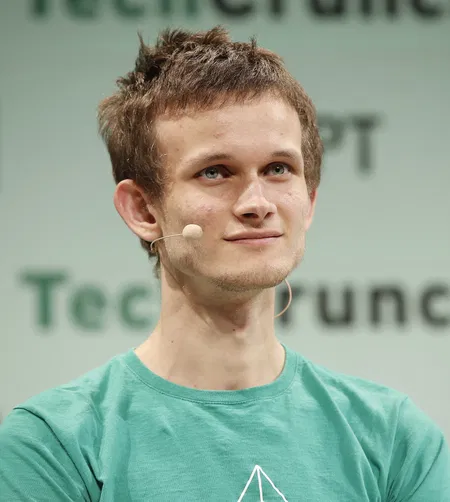
21 - Ethereum: Past, Present, Future | Vitalik Buterin
Discussing with Ethereum co-founder on the past, present, and future of Ethereum
Up next
All episodes 01:51:18
Ethereum
01:51:18
Ethereum
20 - Ethereum Opportunity | Chris Burniske
 01:26:48
DeFi
01:26:48
DeFi
19 - DeFi vs. Banks | Hasu
 01:28:01
DeFi
01:28:01
DeFi
18 - COMP Growth Hacking DeFi
 01:04:58
Podcast
01:04:58
Podcast
17 - A Bankless Nation (Part 1)
 01:40:16
Ethereum
01:40:16
Ethereum
16 - What's an Etherean | Nic Carter
 00:52:27
Ethereum
00:52:27
Ethereum
15 - ETH is undervalued - Bonus Episode
 01:26:30
DeFi
01:26:30
DeFi
13 - DeFi's Mainstream Wallet | Itamar Lesuisse
 01:19:03
DeFi
01:19:03
DeFi
12 - The Protocol Sink Thesis
Inside the episode
Ethereum turns 5 on July 30th! That's 5 years of history. Five years of progress. Time enough to change the world?
We sit down with Vitalik Buterin and walk through Ethereum's past, present, and future. Has the vision changed? Has ETH earned its price? What about monetary policy? How's Vitalik feeling about the future?
Is ETH a triple-point asset?
It seems clear that Vitalik believes the Ethereum community is its strongest asset. This band of Athenians isn't just here to vanquish foes, it's here to build a digital civilization for the world. Not burn it down. Build it up.
Vitalik believes crypto is standing strong as one of the few remaining things that are genuinely international. And as we witness the balkanization of the digital world, the open door to cooperation that Ethereum provides is exactly what humanity needs in order to thrive in the 21st century.
Happy 5th Birthday Ethereum! 🎂
The world needs you now more than ever.
TOPICS
How Vitalik's feeling about Ethereum
PAST:
Times when Vitalik was far less optimistic
Has Ethereum matched the original vision?
Identity in an independent digital civilization
PRESENT:
Does Vitalik like or hate DeFi?
Vitalik's biggest concern for DeFi
Thoughts on liquidity mining
The goods & bads of speculation
Have we earned the price?
FUTURE:
3 problems we face now
Spartans vs Athenians - who wins?
Is Ethereum a nation, a religion, a technology?
How Etheruem is like Briton
ETH THE ASSET
Is ETH a triple point asset?
Solidifying ETH's monetary policy
LIGHTNING ROLLUP ROUND
Gas fees are too high?
ETH flippening BTC?
Low hanging fruit?
His favorite ETH killer?
And more...
RESOURCES
Transcript
welcome to banquets where we explore the frontier of internet money and internet finance this is how to get started how to get better how to front run the opportunity this is ryan sean adams i'm here with david hoffman and we're here to help you become more bankless david we've been waiting a long time for this episode it seems like well 20 episodes i suppose we've been waiting because this is episode 21. we have vitalik buterin on the show what did you think about this so
banklessness is a journey right so it's a journey that we're all going on together and i i feel like the last 20 episodes were really our collective prep work for what we wanted to ask vitalik uh and so we kind of bucketed this conversation into a couple different camps we talked about ethereum past present future ether the assets and then and then we had a pretty fun uh rollups round at the very end but really what collectively we were trying to get at uh and we asked him directly this question which i enjoyed his answer
and i'll leave that teaser there but really what we're trying to get at is like what are these systems uh collectively like what when we have like the bankless nation and we have the ethereum blockchain and we have defy and then we have the community we ask questions around all these different topics and so it's really a conversation that hits the different points of what these systems are from different angles and so that's what i really enjoyed about this conversation with vitalik you know he asked a question at the very beginning and we didn't get a chance to
uh answer his question in the podcast but i i'd love your answer now david so his question was would ethereum be okay now if i left it wasn't the case probably you know four years ago but would it be okay now if i left i being vitalik what's your take on that yeah so ethereum's still in like beta right that i think that's the right way to view ethereum1.x even though we are doing just a massive amount of economic activity and people's lives are being
changed uh with ethereum one we're still in beta and you know i people criticize me whenever i say this on like pov crypto pod or elsewhere but like i trust vitalik like i trust him he seems like a trustworthy guy and so while these systems are supposed to be leaderless in this current ethereum 1x uh version the beta version of ethereum where we have this guy who is is obviously intelligent and obviously has the best interest of ethereum at heart and is
pragmatic in the way that it is both good and bad for the world i'm glad that vitalik is here and so while if if vitalik left now i think ethereum would carry itself into the future perpetually it would be slower and it and having that leader that where we can rally behind i i think is still valuable in the present version of ethereum now i also hope that changes uh and and i and i think vitalik hopes to that it has already changed but i hope it changes and complete kind of
completely finalizes a an independence from any one uh single person when ethereum 2.0 is rolled around and completely matured you know what it reminds me of is maybe this is because i just watch hamilton but it reminds me of like george washington right kind of the the general that led the early republic in the beginning uh and took a first term as president but then uh stepped away and some people wanted to make him a king but he stepped away and let the republic
govern himself i think that's what vitalik is doing in a way is he's gradually been sort of stepping aside and letting other leaders letting the community kind of fill the gaps of his leadership and that's been on a steady trend since you know 2015. eventually i think he'll just step away from this entire thing like you i think he's he's sort of a george washington character and that he's not here to set himself up as king of anything uh he wants to see the success of
the ethereum nation uh and the republic uh essentially um and you know i think it would be in a much better place if he stepped away now than it would have been previously but it's his leadership is still uh super useful now as george washington's was in in the early days of the united states of america yeah and he also has other interests too right like he doesn't only work on ethereum and i think there's there's been a more and more emphasis that vitalik has started
to to expand his interest into other realms we didn't really get into that that on this episode but if you follow vitalik he's an avid member of the radical markets movement uh and there is obvious intersection there between ethereum and the radical markets community but it's also separate uh and so yeah i think when ethereum 2.0 rolls around like he'll still be present but i i think he would largely his interests have largely would have moved on to perhaps building something on top of ethereum but not ethereum itself yeah absolutely and i think this
was a key time to get vitalik on the bankless podcast too because it's going to be ethereum's fifth birthday on july 30th so this is five years so you talked about ethereum being in beta you know in human years ethereum is just a toddler like it's just learned to walk and now it's getting ready for some preschool but it doesn't know a lot and it certainly hasn't grown into what it is going to be as an adult so
you know i think you'll find in this conversation that vitalik realizes that and a lot of his conversations were about a lot of the conversation was about how ethereum grew up what its values are what the future looks like it's really a fantastic mind that we're speaking to and it was a fantastic conversation so we hope you enjoy it now before we begin we want to talk about our sponsors as we all go westward we need to get our values into the crypto world but
hopefully escape the tyranny of centralized rent-seeking institutions and that's where monolith can help you get your value into the crypto world while skipping over the crypto banks monolith coming soon to monolith is an on-ramp directly from your old world bank account into your smart contract wallet on ethereum and for those that don't know monolith also has a defy card which uses dye in your smart contract wallet but on the visa network so you can go to your grocery store swipe your defy card pay for your groceries like a
normal person and still be part of the crypto bankless cryptoeconomic future that we are all excited about so you can get your value from your bank account directly into your crypto visa card without having to go through any crypto bank intermediary which is just absolutely fantastic so in order to get started go to monolith.xyz and get your bankless visa card today so the biggest thing that's holding crypto back is actually getting fiat into the system moving from that old world to the new crypto world what you
have to do is create an account with an exchange you have to wire funds that's also holding your app back if you are a d5 developer and are building something on a network like ethereum what that means is in the fiat process your users drop off when they're signing up and you're limiting your market to the hardcore crypto people but what if you could make it super easy to on ramp to your application using a fiat on-ramp ramp is that it is a delightfully easy a
fiat on-ramp it lets first-time crypto users get eath and die usdc whatever asset they want in five minutes or less so this reduces the dropout rate and lets you build products for the real world xerion is using it ethereum is using it taurus is using it d5 apps that you probably know and use today are using it what you need to do is check this out and visit ramp.network to see how easy it is you can get set up in 10 minutes or less and 100x your addressable market size as
a develop this is like the ultimate growth hack and when you mention bankless they'll on ramp the first 100k in us dollars for free so go to ramp dot network mention bankless and get started all right let's go ahead and get right into the episode with vitalik buterin we are incredibly excited to have our
next guest who needs no introduction we've got vitalik on the bankless podcast today vitalik it's almost ethereum's fifth birthday how are you feeling about things how are you feeling about ethereum i feel like it's come really far and i feel like uh the ethereum of uh 2020 is much more mature and kind of much bigger and very different um in just so many ways from
ethereum as it was even two years from now let alone what it was back in 2015 when the project first launched like uh what ethereum was just uh first starting and the project is maybe less than one year old and you know there was the ethereum core team there were the ethereum developers um ethereum research was largely myself of vlad and gav wood and there were things happening but and
there were fewer things happening and and you could tell there were fewer things happening uh just by looking at the kinds of things that we would get excited about like uh just microsoft announcing that they were doing things relating to the ethereum ecosystem was just so amazing to hear for the first time and now that's the sort of thing that we just hear every single month um from the technology point of view i think just a huge number of things have come uh so far uh so like for example on the
research side um you know maybe five years ago uh research felt like a very open field in a lot of ways where we just didn't really know where a lot of the paths that we were taking would lead and what other paths exist but uh in 2020 like it's definitely not close to complete but it feels like a lot of the territory has been explored and it feels like we kind of have the map roughly laid down um so one example of this is in proof of stake for example like we figured out how to
combine together the benefits of chain-based proof-of-stake with uh and more traditional proof of stake based on pbft like algorithms with the two-thirds thresholds uh we figured out how us how to do a cpc casper we've figured out a lot of the economics around like things like weak subjectivity things like how to optimize a lot of the economic incentives um results in terms of what we can and what we can't do on the layer two side we kind of
understand how state channels work we understand how plasma works and we understand how roll-ups work and we kind of have an understanding that those are basically the only three categories that can exist um which is kind of amazing um and we have an understanding of you know what are the precise properties of each category what are the limits of each category um on the development side and you know eth 2.0 is no longer just a kind of
thoughts that keep on getting renewed every three months it's a code that's been implemented and that has an active test net at least for the proof of stake side that i actually think is the bulk of the complexity um on the layer 2 side you know it's not just ideas we actually have loop ring and we actually have zk sync and we have omg plasma that's i think on a test that and going to go live very soon could be could be wrong i forget the details but definitely kind
of uh done it did an excellent job of rising from the grief after it seems like a lot of people are going to forgot about it for some time um there's uh on the optimistic roll-up side things coming out soon privacy is much better zeke's darker research has just come forward with leaps and bounds um and the ethereum community has done i think a great job of uh kind of cooperating with the and zero knowledge proof and academic cryptography space on that regard and you know now we have the
pre-compiles that we've had since byzantium for the last couple of years we have actual running privacy preserving applications like tornado cache for example and things like aztec um just uh the theory around how to make uh snarks and starks i had just made a huge kind of hockey stick like leap forward some somewhere in the fall of last year when things like blank and polynomial commitments uh kind of base systems started to come out so feels like technologically it's been making huge
progress on every point in terms of the community and i feel like uh is far more kind of independent of myself for example than it was five years ago like i mean i'd be interested to hear kind of your opinion of like you know how much would ethereum have suffered had i disappeared five years ago versus like if i were to disappear today um or even two years ago also the ethiopian ecosystem has gotten much more independent of even the ethereum foundation
so now we have a lot of these other kind of very established companies that are building clients building applications uh just building and doing a lot of things uh there's a lot more kind of independent voices in the community and even like projects like ether one good example of this so lots of progress on all fronts like i i feel no longer worried that ethereum is no longer going to be around a year from now
you know you also vitalik sound uh pretty bullish pretty optimistic about things in your answer uh we and has that always been the case have you always been just as optimistic as you are right now i i feel like uh there's definitely been times historically when i was much more worried um i was much more worried in um definitely the first half of 2014 when it was not even clear when the sale
would happen i was much more worried um pretty much uh through the first half of 2015 when the test nets were taking a really long time and uh you know i was i remember through april may and the first part of june i was kind of sitting in china and visiting the chinese community for quite quite some time and people were just wondering you know hey okay ethereum's cool but when's the thing actually going to be released once the thing actually going to be released and then of course it got released um but then through the
second half of 2015 and i was really worried because uh i was uh just concerned the ethereum foundation would run out of money before it wouldn't be able to actually finish anything uh interesting uh throughout 2016 and um the dow fork definitely scared me a lot uh so end of 2016 the dos wars um scared me a lot uh i mean the price kind of dropping down to like six or seven
dollars briefly uh scared me to some extent as well and there was definitely a time there when it felt like ethereum you know might just get forgotten um so i've definitely felt scared a lot but i feel considerably more confident than i did at pretty much any point in ethereum's history so vitalik that was an insanely holistic sit rep of the ethereum ecosystem uh at now and we kind of want to go in this past present future path in this podcast
so starting with uh you know the past back to 2014 2015 how has the current state of ethereum lined up with what you uh could imagine it to be back then like when you were writing the white paper before the genesis block was mined what did you think ethereum would produce for the world and how much or how little has that lined up with reality well it depends on when right because uh at the beginning of 2014 and end of 2013 the vision for ethereum was definitely kind
of very broad and there wasn't like a very specific set of things that i definitely wanted to have happen and it was jumping around a lot and you know at the end of 2013 i was talking about dios and i wrote that three-part series about dios in the bitcoin magazine then the idea for ethereum itself kind of originally evolved from basically a set of patches to mastercoin which was a protocol for the thing that in 2020 the cool kids called defy
so it was the focuses definitely ended up changing and there was also some time when i was really excited about like decentralized dropbox type protocols um and then you know naming systems stable coins and so the visions definitely are kind of jumped around a lot but it feels like most or all of the things that i was excited about happening on ethereum six or seven years ago actually ended up happening or at
least being tried to some extent so vitalik there's this meme about um ethereum being kind of a world computer and um critics of ethereum will say look it's not a world computer it doesn't do storage it doesn't you know it's not fast enough to be a world computer can you talk about the world computer narrative like uh was that the right narrative for ethereum you know or like what's your take on that so i think a lot of people
misinterpreted what the phrase world computer was supposed to mean like the intended meaning was not a computer powerful enough for the world's needs the meaning was a computer that the entire world has immediate access to um and the intention was that uh you know for applications where the entire world needs to see the process and see the outcome you would do it on the world computer but there would be lots of things that do not have that requirement and so you
would do them on all of the other computers that exist today now obviously a lot of people didn't interpret it that way and i think it's very reasonable to argue that if you create a meme and that meme gets misinterpreted to hell by everyone then that meme was a bad meme so that's totally fair criticism do you think there's something do you think there's something to the meme of ethereum being a world settlement computer at least or some kind of a you know world coordination system or you know a
public good for property rights maybe so one of my uh kind of causes for a bit of a hesitation around uh some of those kind of finance oriented terms whether it's like settlements or even property rights is that there's a lot of non-financial use cases of the ethereum blockchain um so and even ens for example and you could argue that you know the transfer of an
ens name is technically a kind of settlement but generally people in the domain name space don't really use that term like that term is more specifically a finance thing uh and there's applications around you know account management and like a reputation and like certificate registries and all of those things that don't even have to to do with property rights at all and i want to kind of preserve you know the idea that ethereum is a
platform for all of those things too so i feel like kind of designing the narrative of like what ethereum fundamentally is as being like entirely around finance good kind of risks marginalizing those other use cases and world computer and one of the reasons why a lot of us liked it is definitely that it's kind of much more accommodating of those things but then i guess you could argue that it kind of runs into the opposite flaw which is that it underemphasizes the financial use cases and it's not clear
how you know a computer is uh relevant to kind of creating the next world economy so i don't know i did i think uh you know ethereum's narrative is ultimately parolus and there's no single slogan that does an excellent job of capturing what it's about so i would like to make the argument that while there are plenty of non-financial use cases of ethereum those non-financial use cases still are like financial adjacent right so like in ens the in the name name space system on
ethereum really is just allowing or could just be viewed as a system that allows for finance to just go better right like send me die to davidhoffman.eth right that's just way easier and any ethereum that uses a system as like a land registry still using ethereum as like a value settlement systems right and so i i would still present the argument that the l1 chain is still going to be like the financial layer and perhaps the the
the less dense the less weighty economic transactions are are kind of pushed off to the l2 uh does that resonate with you or do you see it differently i guess there's definitely a lot of use cases that are financial adjacent and then i would say there's legitimate use cases that are kind of far enough from finance that it's more reasonable to call them not finance than it is to call them finance um i mean even just one example of this
that i sometimes talk about is like i talk about a lot about like accounts with social recovery for example right and how i think that a lot more people should be using like smart contract wallets with social recovery as a way of storing their crypto and i actually think that this is a use case that could apply not just to holding cryptocurrency but also potential even as your kind of primary identity that you use to sign into websites right like i want people to have smart contract wallets that they use to log into like even the centralized web
platforms that are going to continue to exist and i've been kind of increasingly bullish on this use case recently just because i've kind of learned more and more that the existing centralized and of access control and access recovery mechanisms are actually surprisingly terrible like you know you think that oh there's a company in charge and so there's people that can help you kind of solve your problems if anything a bad ends up happening but i just know so many people that have problems with you know google accounts
or twitter accounts or whatever else and the process of getting those accounts back is just a nightmare and sometimes they end up not succeeding at all and so if instead of having a single company control your identity then you know your identity would be a smart contract and that smart contract would have rules that say you know here are the five people that can uh kind of recover your account and then you use whatever cryptographic key that is stored in a smart contract to sign into things that you have the ability to change your cryptographic key inside the
smart contract um so that's a kind of use case which seems pretty far from finance if you think about it that way um now i definitely do think that especially now those use cases are in the minority um and in the short term future those use cases are going to continue being in the minority and a big part of that is basically just uh because uh the transaction fees are high and when transaction fees are high finance is the only thing that's still willing to pay
them but in the long run you know especially after we have things like roll ups or sharding that or roll ups and sharding even that equation could change so we'll see on the topic of identity do you think ethereum will make progress on that or crypto writ large on getting good even decentralized identity into these cryptosystems so what people call identity i tends to try to split up into three separate problems right so
the first problem is account access control so basically if i right now declare that you know i am vitalik um and i create some a kind of ethereum account or name or whatever that represents this identity then i just want to have the ability that i in the future will continue to be identified by a theory whatever systems i interact with as b
and metallic right and if i choose to call myself red then i'll keep being identified as fred if i uh identify as a three-legged toad then you know the system would still kind of continue to say that i'm a three-legged toad right so the point is not about uh kind of who you are in some real world sense it's about kind of persistence of identity basically that the the actor that performs one action is the same as the actor that performed
these other actions and that's basically the something i'm very bullish about smart contract while it's really improving on the second identity problem is what i call the unique human problem right so basically just proving that some particular account represents a unique human so it represents a human and not a robot and one human can get only one of them um or at least it's hard for a human to get a lot of these identities and this sort of thing is really important in applications like bitcoin quadratic
voting for example it's important in like basically any voting system it could also be useful as a form of you know anti-sybil and spam prevention and there's a bunch of projects that are doing this and i think bright id is interesting for example and then i know there's also all the centralized alternatives so it feels like a bitcoin is turning into a platform that will just be forced to experiment with a lot of these things which is really interesting and then the third aspect of identity is basically
proving or attesting to claims about other identities and them being able to prove that some attestation has been made right so i wants to prove that i am recognized by the government of canada as being a citizen i want to prove that according to this entity i have some particular age or that according to this um university i graduated from them and things like that right and those use cases are inherently centralized to some extent so
there's a limit to how much you can decentralize them but you definitely can use blockchains as a kind of base layer for basically kind of managing these identities and figuring out what all the different cryptographic keys are and creating infrastructure to do things like zero knowledge attestations for example so i think there's definitely room for blockchains to help in a lot of those areas too it'll take time so when the hopefully the ethereum blockchain but some blockchain solves this the problem of identity right and we start to have like
a social recovery system or simply contracts that represent people it really that just seems like the basal layer right like the the very first building block for what hopefully becomes a larger social graph right so you know the way the way society works the way we work as members of a community is that we have like we are nodes and then we have our connections to our family members our friends our business partners like people that we trust and then that as a web spans out and and ultimately reaches
the whole world right except it's not really defined it's very loosely defined it's it's it's not really uh instantiated anywhere and so it's uh what i'm what i'm i think you are trying to to illustrate is that perhaps one day this the actual relationships of people is somewhat like codified or instantiated in the ethereum blockchain and me and me and ryan here we talk a lot about like the bankless nation like an online digital uh nation digital civilization that is independent from
any nation state and it seems like solving the identity on on a blockchain system will allow us to have these social representations inside of this digital nation this one single global platform is that is that is that kind of where we are going with this whole identity thing on ethereum that's definitely kind of one of the worlds i'm looking forward to trying to see if we can create and then how much how much progress do we need to make to
get there how far off is this problem i mean quite a bit i think it is something that has to be kind of approached incrementally and the challenge is that it has to be approached kind of incrementally in this way where every individual step that we take is in itself useful so that people are willing to take the step like people aren't gonna be willing to you know just sign up for ideas because they're excited about getting ideas and people aren't going to be willing to provide information about some social
graph because they're excited about webs of trust like you'll get a few people but you're not going to get enough of a network effect whereas if you're tying the whole thing into even just something like bitcoin grants being one example or into some other system where you can get concrete benefits for participating then you know that could actually be used to bootstrap the ecosystem and once the ecosystem has been bootstrapped you can try to kind of take it further into doing other things with it so vitalik we we talked about the past

Ryan Sean Adams
Crypto investor going bankless.