What's the Point of Securities Laws? with Mike Selig
David continues down the securities rabbit hole with special guest Mike Selig. Mike is a crypto lawyer at Willkie Farr & Gallagher, former a regulator at the CFTC and a frequent contributor to Coindesk about the state of crypto regulation.
Up next
All episodes 01:21:46
NFTs
01:21:46
NFTs
Are NFTs Securities? with Brian Frye
 00:34:19
Podcast Premium
00:34:19
Podcast Premium
DEBRIEF - Why Are We Here?
 01:33:59
Regulation
01:33:59
Regulation
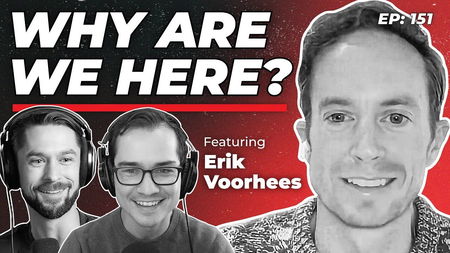
151 - Why Are We Here? with Erik Voorhees
 01:24:51
News
01:24:51
News
ROLLUP: Why Solana is Down Bad | Avi Arrested | MicroStrategy Purchases $41M Bitcoin | Gemini Sued Over Gemini Earn
 01:22:25
News
01:22:25
News
ROLLUP: SBF in the USA | Visa Ethereum Payments | Trump NFTs | Binance Buys Voyager
 01:54:33
Ethereum
01:54:33
Ethereum
150 - Bull Case for Ethereum IV with Justin Drake, DCinvestor, & Anthony Sassano
 01:41:26
Investing
01:41:26
Investing
Crypto Thesis for 2023 | Ryan Selkis
 00:20:22
Vitalik Premium
00:20:22
Vitalik Premium
DEBRIEF - Ethereum in 2023 with Vitalik Buterin
Inside the episode
Yesterday, on the show we had lawyer Brian Frye, who gave us novel takes securities. You can find that episode here
In today's episode, David continues down the securities rabbit hole with special guest Mike Selig. Mike is a crypto lawyer at Willkie Farr & Gallagher, former a regulator at the CFTC and a frequent contributor to Coindesk about the state of crypto regulation.
TIMESTAMPS
0:00 Intro
5:35 Mike's Background
6:55 Why Securities
10:20 Investing Contract
13:00 Where's the Line?
20:11 Asset vs. Schemes
24:38 SEC Regulation
29:00 NFTs as Membership
36:48 2023 Regulation
42:51 SEC vs. CFTC
47:25 The Solution to Security Laws
50:40 Centralization
55:10 Current SEC Administration
1:01:30 Decentralization Theatre
1:04:50 Closing & Disclaimers
RESOURCES
- Mike Selig
https://mobile.twitter.com/mikeseligesq
Transcript
Welcome, Bankless Nation, to a special live stream. Today on the show, we are continuing the conversation down the crypto rabbit hole of securities, which is, again, a unique conversation to have, but one that is very, very important for the crypto space. Yesterday on the show on the State of the Nation with Ryan, we had Brian Fry, who is a securities lawyer and also crypto native. And we had a fantastic discussion as to what securities laws really are, because I think the current understanding of the broad crypto industry is actually missing a little bit of the mark as to why we have securities laws. Because securities came before the SEC was even a thing. So I've been going and researching the 1929 stock market crash, the securities acts of 1933 and 34, and getting back down to first principles of what it means to be a security and what securities laws are. And this has been a supremely interesting exploration into this world of securities. And today on the show, we're bringing on another crypto securities lawyer, uh, Mike Sealig, who re also recently wrote an article for Coindesk about the current state of regulation as it comes to the crypto industry. And so we are going to continue the same conversation we had yesterday, uh, but and then also get into a little bit more details as to what the crypto industry can expect uh expect out of the regulators in 2023. What are the cases to watch? What should we be paying attention to, and how do we get out of the SEC the things that we want? Uh so I hope you stay tuned for this fantastic and hopefully very educational conversation. Uh before we get into this conversation with Mike Sealig, however, we gotta talk about our our friends and sponsors at So without further ado, we're going to get into the conversation with Mike Seelig. And just again, as a reminder
I'm gonna make the claim, and we're going to have this conversation with Mike in a second, that if we re-roll the dice of humanity over and over and over again, we will come up with securities laws over and over and over again. These securities laws are an innate fact of financial instruments and financial assets. And so understanding why that is true, I think is incredibly important for the crypto industry because what are we doing in crypto? We are speedrunning the history of money and finance. We are speedrunning the history of human coordination in securities laws and the spirit of securities laws and why they are actually bullish for our financial assets. Understanding why this is true is deeply important for building the crypto industry the right way. So that is the meta for, the overarching meta for why we are doing this episode. So I'm excited to have these conversations with Mike. But first, before we get there, a moment to talk about some fantastic sponsors to help you go banquess.
Thank you this nation. We are here with Mike Seelig, who is a securities lawyer, although not yours, at Wilkie LaFar and Gallagher, a former regulator also at the CFTC and a frequent contributor to Coindesk about the state of crypto regulation. Mike, welcome to the show.
Thanks, David. Glad to be here. I want to give a quick disclaimer. I'm a lawyer, but I'm not your lawyer. Nothing that I say today should be regarded as legal, financial, or professional advice. Do your own research, call your own lawyer.
And glad to be here.
Thanks, Mike. Thanks, Mike. I called you a securities lawyer. Is that right? And maybe you could also just uh give the Bankless Nation a little bit more of an illustration of your background.
Yeah, so I started off at the Commodity Futures Trading Commission, worked for former Commissioner Christian Carlo, also known as Crypto Dad, back when he was commissioner.
My background is kind of a hybrid between commodities and securities regulation. But ever since really 2015, 16, when crypto started to take off, I focused on financial regulation as applied to crypto assets, and that's really my practice.
Fantastic, fantastic. And you've watched the conversation that we had yesterday on the show, and I would highly encourage all bankless listeners who are listening to this that have not heard that conversation to definitely take the time to listen to that because this is a paired conversation. We're going down, we're doing the lessons of securities today, this week on the Bankless Nation. And Mike, I just kind of want to continue that conversation with you. But maybe we can start at bare bones first principles. And I think there's a lot of general misunderstanding in the crypto space as to what it means to be a security and why securities laws exist. So maybe you can put on your advocate for securities if you could put on that hat. Like, why should we uh pitch to the bankless nation why we should understand what securities are, why we need to uh and why do we would it would behoove us to be educated on this front?
Yeah, absolutely. So, I mean, taking a step back and just thinking about what the term security means, right? It is a legal term of art that is in the uh Securities Act of 1933 as well as the 34 Act and subsequent securities laws.
Um,
the idea of a security is kind of an amalgamation of a number of different types of investment instruments. So stocks, bonds, notes, and a catch all term called investment contracts. And the SEC has primarily focused on this term investment contracts in the world of crypto assets.
So that that's important uh table setting, right? Because when we're thinking about securities, we're not thinking about all types of securities. We're really focused on this term, investment contracts.
Okay, investment contracts. And and one of the conversations that we were having yesterday with with Brian was that we should be bullish on securities, or at least security like properties. And there's this innate relationship between security like properties and assets that have number go up properties. Can you can you talk a little bit about that and kind of where you see the spirit of securities laws coming in?
Yeah. So I mean these security-like features are really investment-like features, right? And there are reasons to be bullish about commodity investment-like features. Uh, you know, certainly gold, silver, other commodity assets have uh appreciated over time and have similar characteristics to many investment assets. Um, the the big difference between uh what we kind of put in the securities bucket and think of as securities is is probably just that they're they're man-made or issued by some central person, right? Um, when we look at these types of investments, like we look at collectibles, um digital collectibles, Pokemon cards. I think you were talking about Magic the Gathering and Pong's, um, all these types of collectibles and investment-like aspects, assets they have some security-like features they they appreciate over time, that they may appreciate. I think you know, Pokemon cards appreciated when everyone was stuck at home during COVID uh playing Pokemon on their Switch. And they said, you know what, I've got all these Pokemon cards, uh, let's let's trade and sell them. Um, so assets can appreciate based on efforts of the issuer of that asset, the seller of that asset, others in the marketplace, um, and then based on decentralized marketplace features, right? Like wheat might appreciate in value, or oil might appreciate in value because there's an embargo or because there is an OPEC action. So markets are decentralized. There are many things that can be produced uh using other assets, using other inputs, um, and they they can have security investment-like features, but security, again, is a term of art. And we need to really think about whether things are investment contracts, whether they are notes, stocks, bonds, other types of securities, um, or are they just commodities or other kind of collectible assets? And you know, the term commodity uh is also a term of art under the Commodity Exchange Act. So these are all legal terms that we're thinking about here, as opposed to, you know, is something an investment or something a commodity in the common sense.
And you're using this phrase term of art and I my interpretation of what what you mean by that is that there's an art to it in that it's not a science. It's all kind of like a vibe. Is that is that what you mean?
Yeah, I think the investment contract concept, that's really a vibe, right? Um, some of the other terms within the Securities Act,
they're a bit bit more concrete. So we have stocks, um, and there's some case law on that. Uh, you know, there's certain features of stocks that that make them stocks, right? There's distributions, there's voting rights, there's things of that nature. And case law has sorted that out, and it's it's not as kind of
Nebulous and squishy as the investment contract definition, which we'll get to in a minute. And then there's notes. And notes similarly kind of have an established history. There's certain features that accompany notes. And there's what's known as the Reeves tests, where we look at kind of the family resemblance to notes. But the concept of an investment contract, this was really a catch-all, prophylactic, remedial term included within the definition of security in the 33 Act that comes from a pretty long history of state blue sky laws where there were these investment schemes and you give your money to some promoter and the promoter goes out, pools the money with maybe other people's money, and runs some sort of profit generating scheme. And, you know, you're you're looking for the protections of the securities laws in that case because if they don't register that security, they might disappear tomorrow. You might have no uh recourse against them. There might be uh broker dealers and investment advisors that are touting these securities without any um, you know, controls over what they're doing to drive the price. And you know, the the securities laws really came out of England uh in like the 1700s, going back actually as early as the 1200s, there were there were some stock-related laws, but the securities laws were really a product of bubbles, like the South Sea bubble, where you give your your money to some enterprise and they're going out and you know, striking deals in South America and trying to drive up the price. And you get these bubbles. And there was a bubble act of 1720 that basically said there were a bunch of investors that were giving their money uh to these schemes, uh, and the schemes were going nowhere. They were just intending to flip these these securities. And that's why we got the protection of the securities laws in the United States after the Great Depression and the idea of
broadly defining a security and include all of these different types of arrangements and products is is to capture as as much of of the investment like products that that kind of create manias and bubbles and lead to investor harm uh that the SEC uh is designed to protect.
Yeah, and I I think that's been really the big aha moment I've had going down the 1929 stock market bubble rabbit hole. Uh it it was a it was the the resonance between what we just went through in the crypto industry and the 1929 stock market bubble is pretty strong. But that's probably only true because all bubbles have the same properties about them, more or less. Uh and so what characterized the 1929 stock market bubble? Credit and consumer credit. Uh perhaps what that was synonymous from DeFi yields and also what we're seeing at Genesis and all of that contagion. But then also there are these like assets, perhaps they're called NFTs or or uh pool twos or DeFi tokens that these teams just created. And now there's this like very now loud, noisy bull market that in order to get attention in the bull market, you need to be a promoter of what you are doing, which is uh if that if everything and then what then everything unwinds, and then people get harmed, and then the SEC comes in and we're like, well, we should have really get gotten in there, which is what exactly happened in the 1929 stock market bubble. Like consumer credit, uh unregulated promoters of financial assets all created these these reasons that we needed to create the SEC in the first place. And so this is what I want really the crypto industry to really understand is that if we keep having these bubbles.
We're going to attract regulators and they're going to do things that we don't necessarily want them to do. And so we need to self-manage and get ahead of this by, and if we want to like keep the SEC from having overbearing and overly restrictive regulation of our industry, we need to solve that problem ourselves. And that begins with education, which is why we're having these conversations here on the Bankless Show today. And so Mike, I want to throw this question to you is like you you've put some emphasis on this term investment contract, uh, but then you've also labeled a bunch of other security like properties that might exist in an asset.
Uh so but how do we know when an asset goes from just like
an art you you've you've talked about art of commodity, art of security, security like properties. Where do we know when the line is between just this financial asset that has a bunch of security like properties and an and the security that needs to be regulated by the SEC? How do we discover where that line is?
Yeah, absolutely. So let's start just with the term commodity under the Commodity Exchange Act, right? Everything virtually is a commodity except onions and motion picture box opposite receipts. So the CFDC has the broadest definite jurisdictional definition out there, right? But then the SEC regulates any commodity that's a security. And so, you know, securities are commodities as well. Uh, but if they're uh
If you know the SEC gets jurisdiction over that. Investment contract is just one type of security. There are other types we just discussed, notes being one. And the SEC has said that certain crypto assets are notes, and kind of has alluded to the idea that even Ether might be, if it's not an investment contract, a note because of the staking rewards associated with that. And so
really the exercise of analyzing crypto assets under the securities laws is one of looking at the features and uh the full scheme around the crypto asset and determining if it fits into any one of these buckets, like stock, note, investment contract. The SEC has focused on investment contract in virtually all of the cases. And the investment contract definition is defined in the Howie case, um, 1946 Supreme Court opinion, where the court found that.
Investment contract is a transaction, a contract, or a scheme
where a person invests money in a common enterprise with the reasonable expectation of profits to be derived from the efforts of others. And so
In every circumstance, you're looking for a transaction, a contract, or a scheme. And
as the court in the Telegram uh case, you know, a few years back said, crypto assets are just computer code. They're not securities in and of themselves. They don't fit within any enumerated category of a security. There is a world where they might have certain security like, stock like, note like features. And so maybe they fit within one of those enumerated categories in that sense, but there's no digital asset or crypto asset category.
Um, when you're looking at investment contracts, though, you're looking for a contract transaction or scheme. So the token might be part of an investment contract, might be offered uh together with a broader scheme, such that the scheme is kind of embodied or envelops that token. So when you trade it, uh the scheme trades with it, right? And so in the Howie case, the Supreme Court was looking at an arrangement where people purchased uh lots of orange groves paired together with a management contract. And the orange groves themselves were not securities, just like a token itself is not a security. It is that pairing of the two. It's this the broader scheme that makes it a security. And so because the Howie company sold these management contracts where they're going to manage the groves for the customer and then sell the oranges to generate profits for the customer and think, you know, crypto arrangements where there's uh certain features where there's a central operator that's driving profits for the holder, um, those types of arrangements fit pretty well within the investment contract world. But take it a step further and say that the Howie company built some technology that was going to manage the groves for the holders, right? And the technology is kind of self
Operating, maybe it's governed by all of the holders of these plots of land and they maintain it. You're not relying on the efforts of any promoter in that case. And so maybe, maybe in that situation, when you transfer uh the the two, you're not really relying on any other. It's no longer potentially enveloped within an investment contract because there's no efforts of others. Or if you just transfer the orange groves themselves, you know, you're you're just transferring maybe a token without any sort of.
management or or entrepreneurial efforts associated with it. So that might not be a security.
And so we really need to think about securities as somewhat mutable because there's a world where these tokens get enveloped within the security world for a period of time. But that might not be the case forever. And, you know, there's a famous speech by former director of corporation finance at the SEC, Bill Henman, where he said, you know, Ether, when initially sold, uh pre-sold, uh, was a security. But uh over time, you know, I was at DEF CON uh several months ago, there's thousands of developers packed into a massive convention center. You know, Ethereum is a massive project. It's decentralized. It's very much like the wheat markets I mentioned, where, you know, an action of the Ethereum Foundation might not even be as significant as an action by a significant DeFi protocol. Um, we just saw with with Solana, you know, there was there was movement of certain projects uh over to Polygon, and that caused uh, you know, movement within the price of Solana. And so these are decentralized ecosystems. You can't really pin it down to one person. Um, and that's really what distinguishes kind of these network like uh assets um from typical uh securities that are associated with a defined business enterprise.
Uh there there's a point that I really want to drill down on that that I think you made that I'll try and reiterate and correct me if I'm wrong, but uh you delineated between the actual crypto asset, be it an NFT or ERC20 token. You're you're you're separating the asset from this scheme. And what you're saying is that the asset is not the security, it's the broad scheme that makes and the asset that is a security. And so it's not just a token, it's a token that's associated with a scheme. And maybe a scheme has like a negative connotation, but I don't think we mean that. Really, we just mean like effort by a coordinated team, a sort of uh system of value capture into the asset itself. And so while the asset might be the the body of the security, it's really the the broader scheme that's around this asset that makes the whole entire thing a security. And so, to put this into more concrete terms, maybe there is an NFT project out there that has a collectible JPEG associated with it, and there's a mint price for like 0.05 ETH, and the team that is creating this mint contract for this NFT also has very large ambitious plans that these NFTs can access uh in the future, in the in the f in the future time. And so they have a roadmap and they have uh financial asset and they have a collectible JPEG, and there's a coordinated team that wants to build a metaverse. Like, where is this a scheme? Like, where how do we think about this thing? Because this is a very common pattern that we see in the NFT space.
Yeah, I mean the the NFT space has repeated a lot of the sins of the 2017-2018 vintage ICO space, right? Um and you know, the the ICOs really grew out of uh
the Ethereum white paper where you could anybody could issue a token. And so once the SEC actually ironically brought its first real um enforcement action, although it was done through an investigative report against the Dow for selling DAO tokens.
That kind of kicked off the bull run of ICO tokens, ironically. But the idea of a lot of these tokens was that let's offer a roadmap. And let's say that we're going to sell this token and it's going to have all sorts of utility. So it was kind of like SteadyLads deploying utility, like, let's build this thing up and continue over time to provide new features and functionalities. And the SEC was like, wait, like this is exactly what we're warning against, right? Because the idea is that you're relying on some team to continue to develop and uh bring value to the tokens. And there's nothing wrong with a team working on building on some open um open source code project, right? And I think that's a big distinction. And a lot of the NFT projects have moved towards CCO, which I think is a massive move in the right direction because the idea behind crypto is really open source uh community products that are permissionless, and anybody can kind of use them, build on them, and take them to the next level. And you're not relying on some specific team. The team might play an important role and contribute, but they're not the single efforts that you're looking to to drive value. And so I do like to distinguish kind of these network assets that are really distributed and decentralized. And you can't point to any single person in the middle, as Gary Gensler would say, uh, that's driving value. And they, you know, you might have OPEC driving value to oil, uh, but they're they're certainly not controlling the world's oil markets, uh, many would say at least. Um, and so I think that that's really the key distinction when you're thinking about investment contracts. Of course.
You can have other, you know, distributions. And I think this is an issue a lot of DeFi projects are dealing with now, right? You've got a governance token, but you turn on a fee switch, and now everybody's getting um distributions by holding this token. And those are security-like features. And maybe we embrace the securities laws there. And we can get to you later, you know, the complications in doing that under the current administration. But um, but that's really the distinction. I think it's it's a product design choice. You can say, like, we're gonna decentralize this project as as far as it can go, and we're gonna open it up, or we're going to go, you know, very much like security esque products where you get a distribution. Maybe you have to make periodic disclosures and offer prospectus and comply with the securities laws in that world.
One of the arguments that we were uh going back and forth on yesterday with Brian uh was that the SEC only really wants to regulate things that it wants to regulate. Uh and so if it deems that it doesn't want to regulate a cat JPEG, then it it will deem that to not be a security. Uh and so which is like an interesting I he could he called this the fifth prong of the Howie test, right? Like we have the first four prongs, like uh like efforts of a coordinated actor, investment contract, all that stuff. But then we got to this unspoken fifth prong that we that Brian was saying existed, which is like
The fifth prong being, does it feel like a security? Which is to me in my mind like invalidates the first four prongs. Because if the fifth prong is just like, yeah, but and is it really like security? Like, as in, does the SEC want to uh regulate it? And if the answer is yes, then it's a security. If the answer is no, then it's not a security. Like, do you have a take, do you have a take on that fifth prong? And also do you have a take on how much the SEC actually wants to regulate some of this industry?
Yeah, the SEC regulates capital formation, raising capital to go deploy that capital in some way to build an enterprise. Um and the the idea of the investment contract, as I noted earlier, right? It's this remedial provision or definition within the term security. And the idea is to capture these schemes with security like features that don't neatly fit in any other category. So the SEC has that authority.
Kind of chipped away at some of that authority. I mean, the Supreme Court opinion was pretty broad. It's it's been broadened by some courts, narrowed by others. Um, but the idea really is
there there are these schemes where um people give money to somebody and that person kind of raises capital, forms capital to go deploy it and do something. Like when I I've got this first edition you know, Charizard card, right? Like,
I don't care about the Pokemon company's success. Um, the idea is that I bought this collectible and
maybe they they're successful, maybe not, but I'm not giving them capital to go deploy it in some way. I don't have a contractual business relationship with them in the same way that people giving money to the South Sea company uh to go explore South America did. And the securities laws over time have have focused on these types of assets. There have been circumstances where the CFT or the SEC has regulated like canchilla farming operations and cattle embryos and all sorts of you know coin collections and things like that, whiskey warehouse receipts. But in every instance, there's been some promoter at the middle that's really organizing the efforts and you're you're looking to them to deliver profits. You're not buying some collectible. And I think if if you're looking at some of the
NFT projects, for example, you know, things like Chromie Squiggles that they're just artwork or uh cryptopunks that really have historical and cultural relevance. Um, you know, some might say other NFTs similarly have that kind of relevance. The SEC is looking into some of these projects, but the idea behind somewhere you're buying into a private Discord, maybe to kind of
scheme to whitewash trade or do things like that, like
that might look a little bit more like a scheme, but I think you have to analyze the facts and circumstances of every offering under the investment contract definition. If you're giving people dividends,
Maybe it's a stock, but otherwise, you know, you're looking at the facts and circumstances in each instance. And so I think the the fifth prong of Howie concept, you know, it's it's it's a good mental model to think through this stuff, but the SEC is really focused on capital formation. Um they're not trying to just regulate every investable asset class. The art markets have been around for centuries and they've never been regulated as securities markets. They're futures contracts on art. Like you can buy uh you know a future Coons painting that's going to be done in three years and sell the rights to that uh beforehand. Um so that there's all sorts of of kind of financial esque markets around art. Um, you know, I've been through several of these Christie's auctions with NFT artists, and the the process is is very similar to kind of doing a public offering or doing any any sort of financial um offering, right? But the the
the asset itself is kind of distinct in in a certain way, even if you get certain um security-like features embedded in these products.
Yeah. And what one thing I want I want to ask about is like there's there's a world where
like uh
I don't know why this example came to mind, but it it does. Is like Alameda's pitch deck was something along like invest in us because we have no risk returns and it goes like it goes up and up and up and that's what it does, that's what it does. If that was if that pitch deck was put into like a token mint contract, that would be the most security-like thing of all time because they're promising returns. They have this scheme where they have this proprietary trading strategy, which they claim is just a money printer, and then there's soliciting investment. Super duper security, probably. And then on the other hand of things, at least in the NFT world, there's like, hey, we have these cute JPEGs and also this fun community. And if you own one of these JPEGs, you get to go to our party. And to me, that seems much less like a scheme and much more like a club. And and so, like, there's a difference between promising future returns and not not even promising, but explicitly providing raw utility that is not in the future because they're already doing it today. And so, like, there's a there's a spectrum here, of course, and a lot of these NFT projects are just just about a a social club that you use the NFT to put out boundaries as to who is in the club and who's not. And so is that.
That seems to be pretty damn safe to me. What about you?
Yeah. So so there have been um things like seat licenses, right? Like you buy a you know an NFL um team seat license and you can go to all the games, get all the tickets, get playoff tickets, all of that. Uh there have been golf uh country club memberships, all sorts of kind of and and also other types of you know, clubs, social club arrangements. Uh the SEC's looked at some of these as investment contracts. There have been no action letters that deal with some of these types of products. And the the seat license, for example, you might get seats you can get tickets that you can sell. Uh, you might be able to sell the seat license at a profit, but the the idea is that it has some consumptive utility. And so that that's why people focused on utility over the years, because it's like you deliver enough utility and it's more of a consumptive good. Um, there's a case called Foreman that looked at uh condominiums and and said that you know, if you can use and consume the product, uh like the orange groves and Howie without the management contract, you know, that that's not itself a um an investment contract. But uh, you know, if you add on other types of security-like features, it might become more of a scheme. So if you have an investment club as opposed to just a social club, that's a little bit different. If everybody is getting together, and there are plenty of these investment club DAOs that that are done as you know, the tokens are securities like Flamingo and Pleaser and others. Um, the idea is that everybody's getting together, pooling funds and going and making investments, and that's fine. Um, but if if you're
Going with a social club.
And doing that sort of stuff, that might not be fine. And so it's it's really drawing the line between what's the purpose, why are you getting together? Um, it's a little bit squishy. You know, golf country club memberships, people were flipping them and viewing them as investments, but people were potentially just getting them to play golf, right? Um, and and they
can be transferable because look, like you get you get a pass to a community and and um you no longer want to use it, you might as well uh have have the economic freedom to go sell it at a at a profit if it's if it's valuable.

Ryan Sean Adams
Crypto investor going bankless.
.png-a616dc52961c1edd72b0c1fdf5f47e7a.png)


.png-cde5b9c0aa4838d09c634abbd1136ff2.png)