Can MEGA Defy the Bear Market?
MegaETH's MEGA token is launching into a tough market, but real usage and novel design could give it an edge.

 MegaETH launches its long-awaited MEGA token tomorrow.
It's one of the most anticipated token drops of 2026, and it lands in a brutal market that has battered almost every recent launch. But while most of these launches have been seen as grabs at additional bear-market runway, MegaETH diverges as a well-capitalized play with a novel design.
The team had gated their TGE on hitting one of three measurable KPIs. Gating their launch on ecosystem milestones marks yet another sign the chain is operating differently from the launches that came before it. Whether that difference extends to the token's future performance is the key question.

Only in Real-Time
MegaETH's pitch is straightforward.
It's a Layer 2 built for real-time execution – fast enough that order book DEXs, live games, and reactive consumer apps can run onchain without latency workarounds.
Many of the MegaMafia apps already live on mainnet show what that environment can produce:
- Hitone is a consumer perps app that the team calls "Arcade Finance," in the same vein as the highly anticipated tap-trading app Euphoria.
- Kumbaya is the chain’s primary DEX and token launchpad, bringing real-time price action and instant fair launches.
- World combines spot, perps, and lending in a single cross-margin account, aided by real-time risk updates and execution speeds needed for trading success.
- Showdown reimagines poker as a trading card game, with real-time card resolution only possible at MegaETH's speeds.
- Stomp is a fully onchain monster battler in the Pokémon vein.
Most of the apps already live on the chain, outside the MegaMafia cohort, share this “need for speed.” Together, they demonstrate a clear bent that positions MegaETH as a consumer frontend for Ethereum.
Learnings from Recent Launches
Plenty of ICOs have launched over the past few months, and most have tanked. Yet, not all of them were specifically for new blockchains. Examining the TGEs in this particular category may offer us a cleaner read on what might happen to MEGA post-TGE.
Three particularly apt cases stand out:
- Monad TGE'd in November. The token currently sits ~6% below its launch price, though it has spent meaningful stretches above it. The chain itself is the more interesting story – TVL and app revenue have both grown since launch, supported by targeted incentive campaigns that the team is still running.
- Aztec, which TGE'd in February, is the more specialized comp. The privacy-focused L2 ran an oversubscribed community sale that exceeded its $300M floor to land at $489.7M. It had no airdrop, no points campaign. The token is down only ~5% from launch despite seemingly zero chain activity.
 Aztec* doesn't appear on standard dashboards, so clean data is hard to come by, but the signal is clear enough: the token is outperforming the chain.
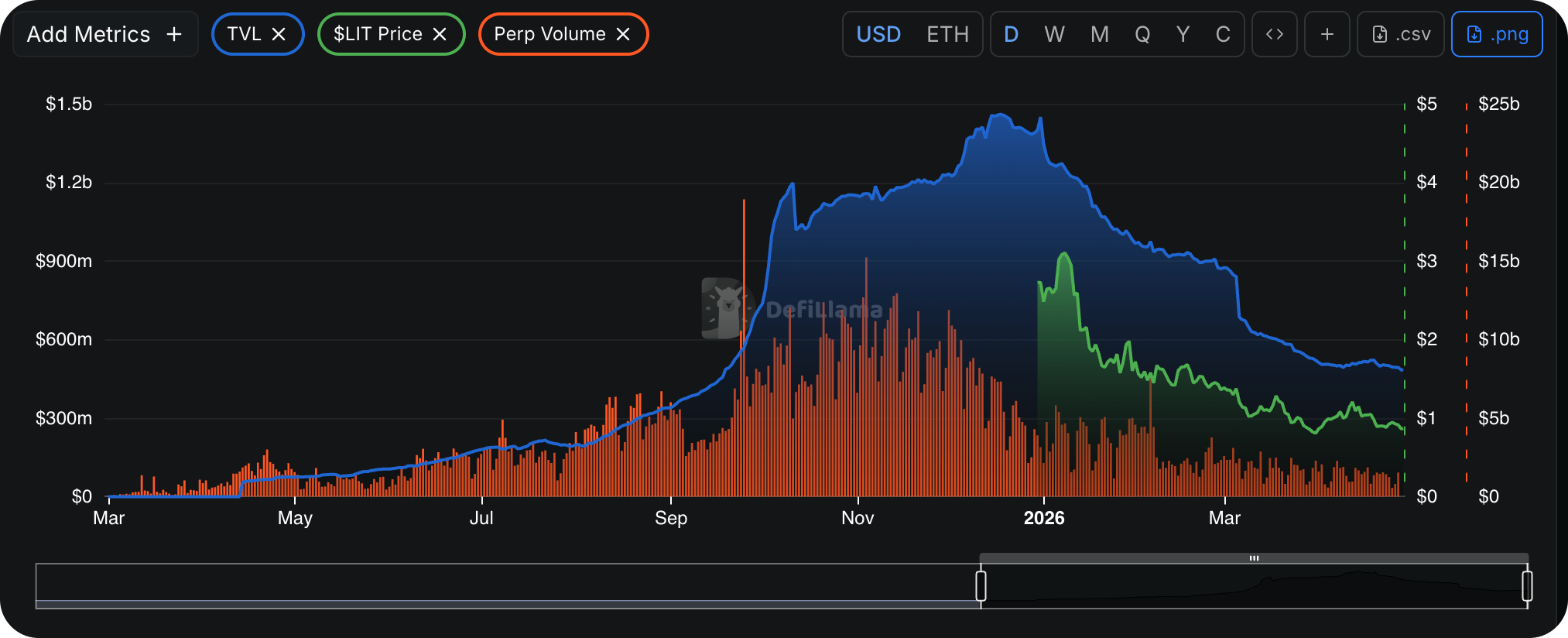
 - Lighter is the cautionary tale on the other side. The high-performance perp DEX launched its LIT token in late December behind a 25% community airdrop. Price, TVL, and volumes have declined since. The broader market downturn accounts for some of that. But the more honest explanation is that when the airdrop cleared, the farmers left, and the organic user base wasn't there to help the chain compete for market share against Hyperliquid.
Why MEGA Might Be Different
As our very own David Hoffman said in February, MegaETH made a conscious choice to let its ecosystem find its initial footing without incentives, campaigns, or tokens. This decision established an organic baseline that future incentive programs could build on top of, rather than starting from inflated metrics that would have to be defended.
Enjoying this article?
Subscribe to Bankless or sign in
That baseline now exists. TVL, including stablecoins, sits around $200M, and the chain is processing around 26 TPS over the last 24 hours.
200m unincentivized, organic, grassfed TVL https://t.co/E9zpFyT0jX
— David Hoffman (@TrustlessState) April 29, 2026
Now comes the ecosystem's first incentives campaign, Terminal, which launched yesterday and runs through late June, aiming to layer incentives on top of organic demand. This setup will shoot to fuel activity which MegaETH can translate into actual token value.
1. USDM is the first tool here. MegaETH's native stablecoin earns yield on its reserves, and the Foundation uses that yield to buy back MEGA. USDM currently has $164M in circulation, so buybacks would be small right now. But, the structure scales directly with the ecosystem: more USDM in use means bigger buybacks.
2. Proximity Markets are the second. Apps and high-frequency traders that want to colocate close to the MegaETH sequencer for faster execution have to pay in MEGA. Well-capitalized teams generating real fees will want to buy MEGA to strengthen their edge against competitors looking to be early to establish app dominance on the chain.
These choices mean that as Terminal drives activity and USDM grows, that value flows to token holders rather than getting captured at the infra layer.  Hyperliquid pioneered this for a single venue – MegaETH is the first general-purpose chain to launch with the full stack baked in.
lil 'splainer on Terminal.
— bread.mega (@bread_) April 28, 2026
It'll constantly be iterated on, so comment feedback below and we'll address. https://t.co/ig3qDWApJr pic.twitter.com/s0eZW99hTY
The Quiet Launch
The reality is that MegaETH is launching into one of the quietest crypto environments since 2023. All major tokens are down on the year. Token launches have all but ground to a halt.
While launching near the top of a market cycle can have its advantages in attracting speculative euphoria, there's an opportunity for a more sustainable buildup of value for MEGA with a TGE in a more bearish timeline. This only matters if MegaETH can deliver on its core promise by leveraging its real-time infrastructure to unlock new categories of applications.
MegaETH has plenty to prove and crypto investors are going to have their eyes glued on MEGA when it drops Thursday morning.

David Christopher
David is a writer/analyst at Bankless. Prior to joining Bankless, he worked for a series of early-stage crypto startups and on grants from the Ethereum, Solana, and Urbit Foundations. He graduated from Skidmore College in New York. He currently lives in the Midwest and enjoys NFTs, but no longer participates in them.