The Pudgy Penguins Comeback Story With Luca Netz
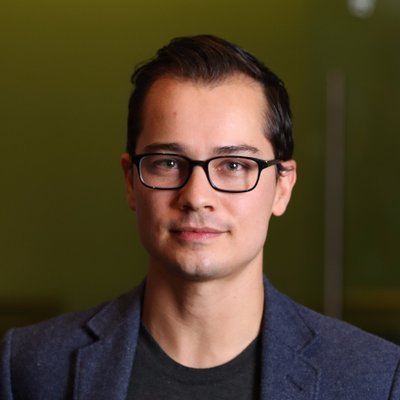
Today on the show we're joined by Luca Netz, the new owner of Pudgy Penguins. Luka walks us through his story of how he got here, from a less than ideal childhood, to a full blown NFT empire.

Up next
All episodes 00:51:37
Podcast
00:51:37
Podcast
Starknet Token Launch Is Here! ($STRK)
 01:09:51
Podcast
01:09:51
Podcast
Hasu & Hart on Oval & The Recapturing of Billions in DeFi Liquidations
 00:19:57
Podcast Premium
00:19:57
Podcast Premium
DEBRIEF - Why e/acc Is Right with Beff Jezos (Guillaume Verdon)
 01:53:52
Podcast
01:53:52
Podcast
209 - Why e/acc Is Right with Beff Jezos (Guillaume Verdon)
 01:01:28
News
01:01:28
News
ROLLUP: Solana Outage | Restaking Wars | Dencun Mainnet Date
 00:54:25
Vitalik
00:54:25
Vitalik
Restaking Summer & What it Means For Ethereum
 01:32:48
Podcast
01:32:48
Podcast
Farcaster's Big Moment with Founder Dan Romero
 00:16:15
Podcast Premium
00:16:15
Podcast Premium
DEBRIEF - $1.5T Franklin Templeton's Massive Bet on Crypto
Inside the episode
Today on the show we're joined by Luca Netz, the new owner of Pudgy Penguins.
Luca walks us through his story of how he got here, from a less than ideal childhood, to a full blown NFT empire.
In addition to a massive new deal with Walmart, he also lays out the case for why he thinks the bright future for Pudgy Penguins has only just begun.
TIMESTAMPS
00:00:00 Start
00:07:36 Intro To Luca
00:11:09 Building an NFT Brand
00:17:00 Deciding to Buy Pudgy Penguins
00:19:43 Earning the Money For The Purchase
00:23:35 What Did Luca Actually Buy?
00:26:03 The Masterplan
00:30:44 Post-Buy Learnings
00:38:57 First Steps Of Action
00:43:03 Licensing
00:45:46 Royalties
00:50:19 Walmart Deal
00:59:33 What's Different About Web3
01:03:54 Managing Expectations
01:09:43 Pudgy World
01:16:01 zk Sync
01:18:19 Lightning Round
01:22:59 Wen Flip Apes?
RESOURCES
Luca Netz:
Pudgy Penguins:
Transcript
Welcome to Bankless, where we explore the frontier of internet money and internet finance. This is Ryan Sean Adams. I'm here with David Hoffman, and we're here to help you become more bankless. Guys, we have Luca Nets. He is the founder. I shouldn't say the founder, David. He is the recent acquirer of Pudgy Penguin's IP. And this is an NFT, if you've not seen it, of literally a penguin. It's like this cute little cartoon of a Pudgy Penguin. And it has like absolutely rocketed up to number three on the top NFT list. And this is kind of like a uh, I don't know, uh you know, bringing something back from the dead, from the brink type of story. And I was pretty blown away by Lucas' description of how he executed this and why and his vision. I didn't expect to be this um interested in an NFT story as we're getting this episode. But David, you scheduled it, and I understand you are a former Pudgy owner, not current Pudgy owner. Yeah, we don't have to talk about that. Well, I was never one, so I just like I have no losses here, no wins here. But yeah, what's kind of the context the bankless audience should know going to this episode?
Yeah, I think Luca has really carved a path forward, not just for Pudgies, because he did that, but just for the entire NFT industry. A lot of promises were made by NFTs through the industry in 2021. Most of those promises were not held. But then in comes Luca, who acquired Pudgy Penguins in the middle of 2022 and really steered the ship straight for what Pudgy Penguins could become, and I think has carved a path forward for many other NFTs to follow. And so who is Luca? Why did he have so much conviction in his ability to execute here? What was his plan for Pudgies? How did it change after he met the Pudgy community? What is his plan now? Pudgy plushies are in stores. There's physical stuffed animals being sold in Walmart and on Amazon, and they connect to a blockchain, to a ZK Sync layer two called Pudgy World. That if you buy a plushie, you automatically have on chain assets to play with. What is Luca up to? And what is he pioneering for the whole entire NFT Web3 industry? Guy is a man with a plan, and he definitely articulated that here on the episode today.
Yeah, absolutely. And I think if you're looking at how a brand, a digital brand, can execute in the web three world, this is like a perfect case study for that as well. We have no disclosures. Neither David nor myself hold any budgy penguins.
I fumbled some Puggy Penkins. That was my disclosure.
You sell them, David, you sell them during the bear.
Literally, I think it was like one week before Luca acquired it and it went from like one ETH floor at the very bottom to like a three ETH floor like that. And I was like, oh great, that was the bottom.
I'm sorry for your loss, David, but uh, you know, you can still buy a penguin, it's just a little more expensive this time.
It would be 18 times the price I sold it at.
Guys, we're gonna get right into the conversation with Luca, but before we do, we want to thank the sponsors that made this episode possible.
Bankless Nation, I'm super excited to introduce you to Luca. Nets, the leader of the Pudgeys. Luca has a history of internet entrepreneurship before he acquired the Pudgy Penguins IP in mid-2022 for two and a half million. Ever since then, Pudgies has been on an up only tear in floor price to say the least, but also in public awareness and brand recognition. Under Luca's leadership, the project has expanded into physical products and major licensing opportunities and has carved a path forward for the NFT industry, which seems to have lost its way prior to Luca showing them the way. Luca, welcome to Banklist.
I'm super happy to be here, David, Ryan. Thanks for having me.
Look, I want to start with this conversation around the promises that the NFT industry made in 2021. The 2021 bull market was really driven by NFTs and really emerged as society shifted online due to the pandemic and perhaps also like the low interest rate phenomenon. It led to this surge in this metaverse concept, and the metaverse started to influence beyond crypto into the wider world, with major companies like Facebook renaming into Meta and social platforms like Instagram and Twitter actually integrate NFTs. And this period in crypto saw a dramatic influx of new people, primarily through the PFP NFT phenomenon. These types of NFCs, the valuation skyrocketed, fueling grandiose visions of digital realms with avatars and artifacts. And as you know, these valuations of NFTs really hit their peaks, we even started to like speculate on JPEGs with text because we thought that metaverses would spawn out of them. However, this bubble burst as interest rates rose and NFT prices plummeted, revealing these metaverse visions to be something closer to hallucinations. And the public perception of NFTs has shifted from positive to overwhelmingly negative. Luca, you were in the crypto industry at this time. You were watching all of these shenanigans unfold. What did you think at the time? What was your perception of the NFT industry as it developed throughout 2021 and 2022?
I think it was pretty clear as a physical collector that this was the future.
I had personal frustrations that began to fester over the course of time because I thought that so many projects were claiming to be brands and building brands at the highest level for the last six, seven years.
I thought to myself, well, some of the obvious things that are necessary when you're brand building, you know, even the best of the best weren't doing.
And I think that kind of led to our purchase of Pudgy Penguins at the time, shortly after that run kind of coincided.
Though prior to it, you know, the uh mechanism of digitally collecting, I think, has a slew of pros that physical collecting does not.
There's no inauthenticity issues, there's no spoofing issues, there's no friction when buying or selling, there's no insurance when you know selling a product and shipping and all of the logistics that come with it. And when you look at the $440 billion collectible market, 99% of it is in physical collectibles and 1% of it is in digital collectibles. Now we're not going to argue what that spread should be, but we know that spread should not be 99 to 1, figuring there's a slew of pros that digitally collecting has that physical collecting is not.
And I think eventually that number will shift. And so whether it's 80-20, 70-30, 50-50, we don't know. But it should not be 99 to 1. And whoever is leading the charge on what it is to, you know, build a digital collectible brands that are predicated on this technology, I think are going to win pretty big.
I'm wondering if you could help us there. What does it mean to build a brand? We say like these NFT communities, they they all said they were building a brand, but they weren't really doing it. Like I think that people saw the success maybe of crypto punks and things like that, projects like this. And they didn't see a lot of like quote unquote brand building. It certainly wasn't like a Disney level, you know, company that was just pushing a brand out there and doing like marketing, doing commercials, all of these things. So they just thought all we have to do is issue the NFTs. When you say brand building, you say you've got all this experience with brand building. What does that mean? What does it take to build a brand?
I love that you said that. I think there's a couple different facets that we'll break into. I think when you're looking at the 2021 projects, you're completely right in your notion that CryptoPunks was the North Star. Everybody was doing, you know, replicating that up until Yuga Labs came around. And Yuga Labs really reinvented the whole model.
Yuga Labs actually, I think, with Board Ape were the closest to building a brand out of the lot. And I think they did it really well. I don't even think close. I think they did build a brand and they built it in a really amazing fashion. I think everybody else kind of then used the keywords that Board Ape was using to then try to solidify their place, but they were not doing what I felt like brand building entailed. And so what I think brand building entailed is probably a couple facets. I think first and foremost, product expansion, right? Like what does that look like? I think in a digitally native brand, you can't just stay there. I think you have to kind of meet consumers where they are. And so developing robust product lines and expanding to hearts and minds of everyday consumers outside of your current base, marketing, I think is really huge. Like what brand succeeds without a really great marketing arm? If you kind of look at Bored Ape success, something that I studied really early on is actually was a masterclass in marketing. And that's why, you know, for us, marketing is probably top of the totem pole in terms of priorities for PUDGI. You know, if people, you know, when they think penguins, if they think Pudgy penguins, that alone will make us a billion dollar business. I think there's enough people that love penguins and enough affinity towards that animal that if that's the case, that we will win.
And so, you know, storytelling, content distribution, actual community building, and not just leveraging the fact that everyone's spending money on an expensive NFT, and that's what it means to community build. That's not, there just seems to be a community because everyone's financially invested, but there's actually a community to build on top of that. I think one of the beautiful things about Padju penguins up until this point is it's not hyper-financialized. Like I think most of the other PFPs, people are their penguin, their penguin is them. And it doesn't matter if the price is 10,000 or 50,000 or a million dollars, that will remain the case. And I think that's really powerful. Messaging, positioning, like, you know, what is the message and the positioning of 99% of these NFT projects? You couldn't know unless you just guessed. I think if you looked at Pudgy Penguins, you could understand what our messaging and positioning is. We're an uplifting brand. We're a brand for the family. You know, one of the things that I really want to accomplish is how do you bring crypto to the family? I mean, why is no one thinking about that? That is the highest TAM of the bunch when I think crypto right now is a pro culture for the either super smart, nerdy bros or the cool bros and the rich bros. But uh, if that's all we are, then we have lost and we should might as well give up now. But I think we're more than that. And Pudgy Penguins, I think, is helping spearhead what I believe that revolution is. And so, you know, what does it mean to build a brand? Tons of things, like I said, product distribution, content distribution, branding, positioning, messaging, you know, really community building outside of just having a hyper financialized asset that, you know, naturally brings people together.
I think would probably be to name a few. Uh, you know, one of the obvious ones is I've never heard of a brand that doesn't post on Instagram. Before Pudgy Penguins, nobody was posting on Instagram really. That was like uh unbelievably strange to me.
Wait, you mean crypto projects were not pay like NFT projects were not posting anything on Instagram?
And they would do it once a month, right? It was
Install Twitter?
it was all Twitter.
Yeah, so it was a once a month thing and you can fact check me on that and you'll find that that will reign true. You know, the best of the best in Borde's case, you know, once a month, once every three weeks.
I mean
You know, we almost lost Twitter there for a second. You know, right after Elon's acquisition, it looked a real looked pretty shaky. Imagine if that thing would have gone down. I mean, every NFT project's community would have been screwed. You cannot be dependent on any which platform or any which lever to completely destroy your business. In this case, I felt like every NFT project before Pudgy Penguins, if Twitter would have gone, their business would have failed, and that's never a good sign. So just obvious things, right? You know, though we're digitally native brands to assume that there's two approaches you can take here. One's a proactive approach, one's a reactive approach. The proactive approach is creating mass adoption and not waiting for it and meeting consumers where they are. That was the thought process behind our toy line was you know, we can wait for people to become digitally native, and that will happen over the course of time. I think it's almost preordained at this point if you kind of just look at human behavior and how humans are interacting with their phones and digital. But, you know, in the interim, it's gonna be 10, 15, 20 years before we're living in metaverses. Meet consumers where they are and you know, give them a source of credibility and trust with the toy line. And then the other side of it is just like reactive approach, which is just sitting and twiddling your thumbs and just waiting for liquidity to come and price to go up. And then you can monetize and you know, leave when the monetization isn't there and then come back when it comes back again. And so I think the space needs a more proactive approach. We need to try to actually get rid of this intimidating and taboo narrative that our industry has. And I believe being proactive is the way to do it.
So, Luca, we'll get to the conversation about actually purchasing the PUDG IP in April of 2022. But I would imagine that that was not an impulsive move. I would imagine that you were looking at the landscape. You were looking at the brands or the attempted brands, the PFP NFT projects. And I think you came into this industry with some set of experiences that you had from a past life. Maybe you can kind of walk us through the thought process that you had as you maybe decided, like, oh, I want to play in this arena. This arena is for me. I have a strategy here. I can bring something to the table. What were you seeing teams doing or not doing that you gave yourself conviction that you could actually enter this game of PFP and brand and IP?
Yeah, so I actually tried to buy my friend's project before Pudgy Penguins. And so I kind of had like a little I stood up like a three man unit, little marketing arm. And so if somebody wanted like marketing services in this industry, kind of went there and I'd helped him with it. And I fell in love with that community and that brand. I tried to buy it. He wasn't budging. And then ultimately he ended up doing his thing with it. But that kind of got me first excited about potentially buying or like even the thought of buying an NFT project.
And then the universe just gave me a Twitter post where somebody was bidding on Pudgy Penguins. I was a really early Pudgy Penguin collector. It was actually one of the only NFTs that I called, you know, I sent to my friends and said this is the one. I mean, my natural immediate reaction to seeing a Pudgy Penguin in 2021 was this is the most universal IP out of the bunch that I've seen. And, you know, NFTs are very interesting in terms of how they work and I think how they succeed. It's as simple as a simple supply and demand model. And so what I thought was, okay, we have 8,888 Pudgy Penguins. They are the most universal IP that I think exists in the PFP space. Why that matters for demand is because the more universal it is, the more likely it sticks with certain groups, whether it's interest groups, ethnic groups, all types of demographics. And so it has the most potential for the most demand. And obviously being a finite collectible on the bottom of the funnel, enough demand, enough awareness, small enough supply, which I think 8,888 is not that much. Eventually you have moments where the supply and demand curve kind of kick in. So just from a trader's perspective and a collector's perspective, when I first saw the Pudgy Penguins, I texted it to my friend group. I said, this is the one, buy it. It was like $100 at the time. Obviously, it did its thing and went to $10,000, $15,000 or $12,000. I think it was its peak.
And then, you know, the universe gave it to me in uh December of 2021, I believe. Uh I saw the tweet, I made the bid for two and a half. Uh took three months for the deal to close, and the rest is history.
Okay, so this is so fascinating to me, Lucas. So you saw this big opportunity. And like importantly, this is interesting. That seems kind of more unique to your story, though many entrepreneurs might repeat it. You're not the founder of Pudgy Penguins. You didn't come up with the art. First, you were just like a collector that saw a vision for the brand that apparently the founders maybe didn't see the full vision or didn't have the ability to execute. And so your strategy was just to like you got two and a half million dollars. By the way, where'd you get kind of two and a half million dollars? Not that you have like this isn't the IRS, you don't have to disclose, but like, have you been successful in brand building and businesses before? Like, where'd you get the money? And what is it like to buy IP to an NFT like collection? Right. I think people listening are like unaware that you can actually do that. Tell us the details here.
Yeah, I think not to bore you because I've said the story a couple of times, but to give you the 30 second version for the bankless audience, you know, I grew up homeless with my mom and my brother. I was fortunate enough to start my first business when I was 18. I found product market fit pretty easily and became a self made millionaire when I was, you know, end of my 18 years, 19 years old. So
I've been able to find some success in pretty meaningful ways up until that point. You know, some of my big wins include bringing back Von Dutch in 2020. So Von Dutch is like a pretty famous clothing brand that was basically going under and then had a huge run in 2020. And I was responsible for that and had a pretty lucrative deal with them. And then I was a CMO and one of the biggest shareholders in a company called Gel Blaster, which was North America's fastest growing toy company. And I also have been like just a pretty elite internet marketer and opportunist, though probably not my biggest accomplishments. I've been able to do well in certain sectors and just, you know, leverage my marketing prowess to find opportunity and monetize on that opportunity. One of which was, you know, working with some NFTs in the past. And then once the opportunity came to buy PUDGI, I thought to myself, well,
Everyone's raised so much money off of community and venture, yet nobody has done anything that I think is relatively impressive.
So, how about we come in here and set the bar? And obviously, being an entrepreneur, I know what it is to build a great business. I see the total TAM and the growth of where I think this industry can go, specifically with NFTs, but it needs somebody to shape it and it needs somebody to really care.
I really care. I love this stuff. I love collectibles. I mean, I grew up with nothing, so the second I had money, all I did was forward cool shit.
And I think it is something that I believe is ultimately going to be the future of consumer products or at least direct consumer. I think there's a huge category in direct consumer in collectibles and other categories in which this completely disrupts.
And I felt like all of the approaches up until this point felt a little lackadaisical and lacked real, you know,
too much reward was given for too little output. And I think that behavior
created a level of complacency that is too hard to reinvent for the existing groups. I think the existing groups are already programmed and not their fault, not that they're bad entrepreneurs or bad builders or bad executives in their companies. I don't think that. I think it's just when you've made so much money doing so little.
You are now, it's hard to go the other route.
And so we came in. Honestly, I had just talked to the team about this before. The bear market was the best thing that could have happened to this acquisition. I don't think things happen the way that it does if we don't literally buy this right before like the day of the bear market started, is when we bought Pudgy Penguins. And I don't think this thing shakes out the way that it does without that, you know, actual grind to get to where we are today. And obviously we have a lot further to go. But
that was kind of the thought process and the ideation behind this.
Okay, okay. So when you're buying an NFT collection or the rights to the IP for an NFT collection, you're not importantly buying all of the penguins, of course. That is continuously like it's owned by the community, right? This is crypto, this is web three. So like what are you buying? Are you buying some copyrights? Are you buying some licensing? Yeah. I mean, different projects are licensed differently. So just clarify like what like how did you do this? What did you actually buy?
We bought like 50 different things from social handles to contract addresses to penguins in the treasury to the rights for, you know, certain uh
you know deliverables that we had to execute on. It was,
you know, 40 or 50 different things. Probably the most important is, you know, the trademarks around the IP and the naming conventions. And,
you know, that's probably the most important details. And obviously the contract addresses and things like that are probably the most important things. But we try to put anything and everything under the sun except for the liability of the previous founder.
Yeah, so it's just an asset purchase, straight asset purchase. And then like to clarify, what rights, what IP rights does an individual PUDGI holder kind of like own? What can they do with their penguin? What can they do with the brand?
They have the right to monetize up to $500,000 a year, leveraging their Pudgy Penguin. But this is really just a caveat because we're in the business of doing real business at PUDGI. And so I told our community members: if I know you're a community member and you have, you know, aspirations to build significantly, you know, and make significantly more money with your Pudgy Penguin, you're more than happy to. This stipulation is really just there so that when we want to do a deal with Disney, Disney doesn't just buy a bunch of penguins and circumvent doing a deal with us because there's endless upside and they can do that. And so that stipulation is really there because we are in the business of licensing. We're in the business of being in the biggest retailers in the world and being on Hulu and Netflix and maybe you're a local AMC theater and you just can't have a complete free-for-all, though I will extend the license every single time a community member asks. And I actually encourage, you know, community members to try to go above and beyond. And then obviously, like we're a brand for everyone. We want to be, you know, inclusive. We want to represent the space well. I'm a firm believer that we will be the face of NFTs and the face of Web3. Uh hopefully we're the face of the entire blockchain and crypto industry. I think it would be nothing but a net positive for this entire ecosystem. And so you can't go do things that are racist and sexist and, you know, you know, some you know pudgy penguin in a Nazi suit or something. I have the right to take that down.
Well, Ethereum at least is known to be a place of rainbows and unicorns, but maybe with the success of Pudgy Penguins, you could add penguins to that list as well. At least that would be the success scenario. Luca, when you bought the Pudgy Penguin IP, you kind of sound like a man with a plan. So what was the plan? Even before the deal was inked and things were official, what did you know that you wanted to do with it? You know, day one, month one, year one. What was the early low hanging fruit that you wanted to tackle first?
So I think like in the simplest terms, I wanted to win. I wanted to be number one. I'm a super competitive guy. I'm just how I find enjoyment in getting up every day. And fortunately, there's a lot of competition, not really inside of the space, but outside of where we want to go, at least in the IP realm. I knew we wanted to build a legacy IP, but our vision for what we wanted that IP to actually look like was a lot different to what it actually ended up being.
And so to give you guys some context, when I first bought the project, I spent seven days for two to three hours in the Discord talking to all the community members. And why I did that is because I knew this wasn't a democratic process and I knew that half of the community actually didn't want me to buy it. They were kind of in favor.
Oh, so people were pissed.
Yeah, totally.
Ryan Sean Adams
Crypto investor going bankless.