Jim Bianco on the Health of the Global Financial System
We welcome back Jim on for his 4th time to help us navigate this next wave of macro chaos.
Up next
All episodes 00:58:26
Podcast
00:58:26
Podcast
Polygon zkEVM Launch with Mihailo Bjelic and Jordi Baylina
 01:16:51
Investing
01:16:51
Investing
Ben Hunt says, “Cut the BS! The Banks Are Solvent!"
 01:09:07
Podcast
01:09:07
Podcast
zkSync Era Mainnet Launch & NEW zkEVM with Alex Gluchowski and Anthony Rose
 01:31:25
News
01:31:25
News
ROLLUP: $ARB Airdrop | Do Kwon Arrested in Montenegro | Coinbase Wells Notice | SEC Charges Justin Sun
 00:28:06
Podcast Premium
00:28:06
Podcast Premium
DEBRIEF - The FBI Agent Who Took Down the Silk Road
 Podcast
164 - The FBI Agent Who Took Down the Silk Road with Chris Tarbell
 01:15:40
Investing
01:15:40
Investing
Arthur Hayes Says, “Get your Bitcoin, and Get Out!”
 01:41:03
Bitcoin
01:41:03
Bitcoin
Balaji Bets the Dollar will Hyperinflate to Zero. NOT A DRILL!
Inside the episode
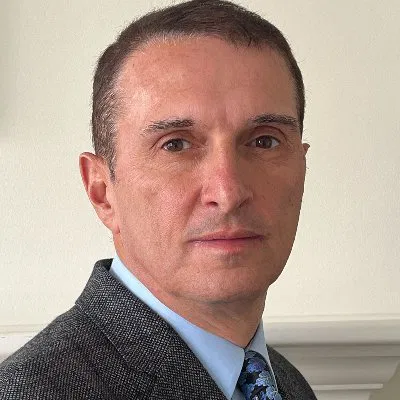
Jim Bianco is the Head of Bianco Research and owner of BiancoResearch.ETH, Jim is our go-to source of macro analysis from someone who also knows crypto.
Jim was early and loud about the initial Fed pivot into rising interest rates, all the way back in March of 2022, before much of the crypto industry really understood how significant interest rates can be.
TIMESTAMPS & RESOURCES
0:00 Intro
8:10 Balaji's Bet
10:48 Arthur Hayes & Ben Hunt
14:30 The Fed's Balance Sheet Chart
18:00 Deposits in Banks Chart
27:20 BTFP
36:09 Raising Rates & Insolvency
38:35 The Long Tail of Banks
47:09 Treasury Returns?!
54:45 Uncertainty & Bond Market
58:20 Phase Change
1:02:24 Signs of Health
1:06:55 What is Jim Doing?
1:10:40 Closing & Disclaimers
------
Resources:
Jim Bianco
https://twitter.com/biancoresearch
https://twitter.com/biancoresearch/status/1638995201770536961
https://twitter.com/biancoresearch/status/1639004727001358339
------
Not financial or tax advice. This channel is strictly educational and is not investment advice or a solicitation to buy or sell any assets or to make any financial decisions. This video is not tax advice. Talk to your accountant. Do your own research.
Disclosure. From time-to-time I may add links in this newsletter to products I use. I may receive commission if you make a purchase through one of these links. Additionally, the Bankless writers hold crypto assets. See our investment disclosures here:
https://www.bankless.com/disclosures
Transcript
I'm gonna talk about what's going on with the banks. David, this has been uh, I think a running series for us ever since Bology uh put up the bit signal and started a conversation around the bank's insolvency, the dollar hyperinflating, Bitcoin going to a million dollars within a 90 day period of time. Of course, this is on the back of a few bank runs that we've had in the United States. Uh, Silvergate Bank led the charge, then Silicon Valley Bank led into signature, all sorts of intervention going on with FDIC and US government, and we're trying to figure out.
What's going on? What is actually happening?
Truth.
So we have Jim Bianco here today, and I think this is maybe the fourth in a series of episodes. So our first episode with Balaji, uh, where we we actually talked about his thesis for bank insolvency in the United States, and it was a very bleak, pessimistic uh outlook. And then uh, but but he brought lots of evidence. And then we had a conversation with Arthur Hayes, who took kind of a trader's perspective. He also sided with Bology and this entire uh in his thesis, except he thought it would happen over a uh longer time frame. So rather than 90 days to a million, maybe Bitcoin takes like two, three, four years to get there. Then we had Ben Hunt on the podcast who gave the complete opposite take, rejecting both of those uh takes with a counterpoint. And now here we are with Jim Bianco today. Jim is somebody who I think you and I both respect quite a bit because he's got one foot in the traditional finance world and one foot in crypto. I think we're gonna ask him, David, to just make sense of this whole conversation and everything that's going on.
Yeah, especially when all of these other conversations that we've had find themselves at the far ends of the spectrum, like Bology's uh Bitcoin to 1 million in 90 days, calling for more or less doom as we know it, um, triggered a lot of people, made people very uh upset and really didn't uh you know whether or not you believe it, you either are scared because you're of what is what that means, or you're just upset because of just how doomer that that whole perspective is. And then on the like you said, on the flip side of things, we have Ben Hunt who's saying that is just a complete farce.
And I think we need to bring somebody that you and I, Ryan, are familiar with that the Bankless Nation is familiar with, because we've had Jim Bianco on three other times. So Jim feels like home for us. He feels like known, a known quantity. And so I'm assuming he has a a stance in this debate, a stance in this conversation. But regardless of this crazy debate that's going on in the crypto world, also just regular old macro is back in season as it's in people's brains. And so we're going to get Jim Bianco's take about what is going on in the macro world and hopefully uh shine a light for us in these uh dark and chaotic times.
Guys, before we get in, I gotta shout out to our friends and sponsors over at Guys, this is uh gonna be a live stream today and we're gonna bring Jim on in just a second. But before we do, we wanna thank the sponsors that made this episode possible, including
Bankless Nation, we are here with Jim Bianco. Jim Bianco is a frequent returning guest to the Bankless program, head of Bianco Research and also owner of Bianco Research.eth. Jim has become more or less our go-to source of macro analysis from someone who also knows crypto. There is not that many of these people out there, and Jim is definitely one of them. Uh Jim, I remember was early and loud about the initial Fed pivot into rising interest rates all the way back in March of 2020, uh, before much of the crypto industry, including myself, really understood how significant interest rates can really be. Now we are having Jim back on for his fourth time to help us navigate this next wave of macro chaos. Jim, welcome back to bankless.
Well, thank you. Bankless is now becoming a cultural movement here with these banks in the last couple of weeks.
Yeah, the word bankless is uh meaning a little bit different things these days. That we're gonna be able to do that. Yeah, the banks are taking
literally, I think.
Yeah.
More literally than we intended. This wasn't exactly what we had in mind, but uh either way, it's becoming hastened.
Uh so Jim, as you heard in the intro, uh, we there's this debate going on in the crypto world. And I know that you've got your own macro takes that are independent from all of our shenanigans in the crypto industry about who's right and who's wrong about this like one million dollar Bitcoin bet, but I do want to start the conversation there. You know, Bology thinks the United States' dollar is going to hyperinflate inside of 90 days. Arthur Hayes directionally agrees with him, just isn't so rapid and doomer about it. He thinks $1 million in two to three years. Ben Hunt says that this is completely irresponsible and overly doomist, which is also a sentiment shared by many out there. I wonder uh do you have a position in this debate? Like, where are you in the spectrum of million dollar hyperinflation Bitcoin to this is shenanigans?
I'm pretty close to where Ben Hunt is right now. And full disclosure, he's a fishing partner of mine in Maine. We go every August uh with some others. Yes. Uh and uh
I let me let me come down on on what I think is happening with the banks and where
I think we need to have this debate.
For a bank, an asset is a loan or securities that they own.
If they hand out bad loans and if they buy securities that lose value a lot,
then they're unable to meet their obligations, and that is a solvency crisis.
But on the liability side for a bank is deposits, your money, my money.
If we all decide that we want our money back,
then that is a liquidity problem or liquidity crisis. And that's what we're having right now.
People want their money back from the banks. The problem is banks don't hold 100% cash.
Custodia would like to do that, but they won't let them. But that's a whole nother issue altogether. The banks have loans, the banks have securities that can't be immediately converted into cash. So if too many people show up at once and say, give me back my money,
you have a liquidity crisis. That's what we have going on with the banks now. Now, a liquidity crisis can become a solvency crisis if you squeeze the banks hard enough. A solvency crisis was 2008. If you squeeze them back bad enough, you can turn that into a liquidity crisis.
But I do think it's a liquidity crisis. And really, the question we need to be asking
is why are people asking for their money back? What is it that is motivating them
to ask for it back and then put banks in a bad place?
Seems like we're going through the letter S right now between Silvergate, Silicon Valley, and Signature as well.
So Jim, I I want to ask you because so uh did you get a chance to listen to the Ben Hunt uh conversation um and also the Arthur Hayes conversation, for instance?
Yeah, I listened to Ben Hunt conversation. I heard some of the Arthur Hayes one.
Okay, so can can you give us some like I guess context here? So my my my take was that Arthur Hayes uh was making the claim, and Bology was was kind of making a similar claim that this is akin to maybe not quantitative easing because we can't use the same turn, but um the money printing that was going to happen as a result of um the bank term financing program, the BTFP, was going to result in sort of the same thing, which is the Fed balance sheet increasing. And then I I kind of line that up with uh like tweets, tweets like this, which is from your uh Twitter, and this is uh a graph. The Fed updated their balance sheet, and you say now two-thirds of quantitative tightening, that's the quantitative tightening that they've been doing kind of post-COVID, um, you know, early 2022 up till now, has been reversed. And so this looks like the Fed balance sheet going back up, which seems to like indicate that the the Arthur take is is is correct, or at least the Bology take is correct. Now, Ben Hunt was saying, no, no, no, this is all uh temporary. This is all kind of liquidity that the Fed is injecting. It's not something that's going to be permanent. And this is sort of where the conversation at Bankless has kind of left off. Like,
I don't know who is right. I don't know who to believe on this. Can you help us make sense of this?
Well, let's let's put some um uh concepts on this. Uh quantitative easing. Let me start there. That is the Fed printing money to buy bonds, to go into the market
and try to manipulate the price of interest rates lower. In fact, they refer to it as permanent, they use the word permanent, open market operations. So they just invent some money, they call JP Morgan or they call Goldman Sachs, they say, we uh uh sell us some 10 year notes and they agree on a price and then they pay for it with the printed money. I'm simplifying it uh for our purposes as well.
What you're seeing here
is not quantitative easing by that definition. It is an expansion of loans.
So the banks are showing up at the Fed discount window, which is a lending facility, and they're saying, look, everybody wants their money back, and I don't have cash, but I do have a billion dollars worth of other securities and loans and other assets. Will you take them as collateral and give me a billion dollar loan?
And that's what's been happening with this expansion of the balance sheet.
Now,
you know, I to
kind of you know square the circle between Ben and Arthur,
the Fed thinks this is going to be temporary. They intend
on it to be temporary.
Um, we'll have to see whether or not it turns out to be temporary. But I have a feeling that.
If it's not temporary,
then it is going to continue to, if it's not temporary, then the balance sheet is going to continue to go up and up.
And that could be very inflationary for the economy as we go. Not necessarily hyperinflation, like Balagie's talking about, but maybe more like
2022 inflation type levels that we could see come back into the market. And that would be a big problem for the TradFi markets. Otherwise, if the problems with the banks
This liquidity problem with the banks subsides, then you should expect these loans to get paid off by the banks. And then you can expect the balance sheet to go right back down again. So it remains to be seen what kind of level of problem that we have with the banks.
So, okay, the the the take that I've heard about this particular uh line, this graph, this chart, uh, is that the line's going up and to the right extremely quickly. And while it might not technically be QE, it's something else. Uh, I think a lot of people are just advocating for the perspective of never mind what they call it, never mind their fancy language about this. Look, it is stimulus, is stimulus. And so the net effect of whatever operations that they're doing into the market is increasing the Fed's balance sheet. The net effect of that is stimulus, risk on asset, favorability, uh, inflation, and uh, you know, capital asset appreciation. Basically, you know, the bull market that we're all hoping for, right? Uh, and so, like, never mind the names. Uh, that's kind of what some people are.
Uh, thinking about or perhaps crossing their fingers and hoping for. And I think what you're saying, what you just told us, is like, hold on. Uh, yes, it is that, but no, it's still not that. And the reason why it might not be that is that because there is a chance that these loans being made by these banks are going to pee be paid off. At least that's what the Fed is hoping for. And if they are paid off, then we're just not going to see that inflation. We're not going to see a growth in the balance sheet. Is that the right, is that the right uh perspective to take here, Jim?
Yeah, remember, these loans that the Fed is handing out are collateralized. They're not just printing money and hand it to the bank. The bank is giving them in the BTFP. Um, you know, the bank basically is saying, or the Fed is saying, you got to give me a billion dollars of securities.
Um paramount, yes, maybe it's a little bit less, but and then I will give you a billion dollar loan.
So it's like
lateralization that's really unique.
Right. Uh well, it's not unique for the Fed, but it is unique in that they are not just printing up money and handing it out to everybody like we did in 2020.
Or if I had actually shown you a balance sheet from 2008, it actually the balance sheet in a couple of weeks after uh Lehman Brothers uh went bankrupt actually doubled. The entire balance sheet doubled. This is not a double. You can see the the scale is at 8 trillion right now. So this is.
Not quite what we've seen in the past. So

Ryan Sean Adams
Crypto investor going bankless.
.png-336efc5e35995e6b184e7e830baa688b.png)


.png-a616dc52961c1edd72b0c1fdf5f47e7a.png)
.jpg-48bb3b8a9a7a83dee5836f716023f733.jpg)