Building Power Structures with Parker Jay-Pachirat | Layer Zero
Parker Jay-Pachirat is a founding member of Boys Club and a venture capitalist at FinTech Collective.
Up next
All episodes 01:46:25
News
01:46:25
News
ROLLUP: Kim Kardashian vs Gary Gensler | Credit Suisse Crisis | Celsius Foul Play | ENS NFTs
 01:52:37
Podcast
01:52:37
Podcast
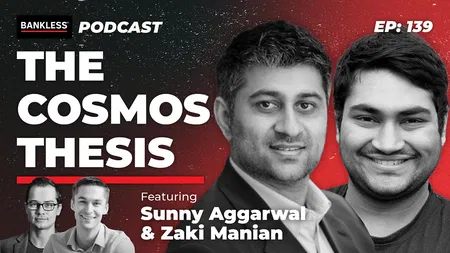
139 - The Cosmos Thesis with Sunny Aggarwal & Zaki Manian
 01:23:41
DeFi
01:23:41
DeFi
What Happens Next in Crypto? with Fiskantes & Matti
 00:48:50
NFTs
00:48:50
NFTs
The Current State of the NFT Market with Garyvee
 01:06:34
Ethereum
01:06:34
Ethereum
What’s It Take To Be a Crypto Journalist? with Coindesk's Eli Tan and Casey Craig | Layer Zero
 00:44:57
Vitalik
00:44:57
Vitalik
138 - What's Next? Vitalik Buterin | Part II
 01:46:25
News
01:46:25
News
ROLLUP: NFTs Are Hot Again | Macro is Breaking?! | CFTC Prosecuting DAO Token Holders
 01:04:26
Ethereum
01:04:26
Ethereum
Why Crypto Needs Boys Club with Natasha & Deana | Layer Zero
Inside the episode
Driven by data and challenging assumptions, Parker takes a deeply individual approach to the crypto space, studying systems and power structures at a broad scale.
Join us as we dive into the basement level of crypto, the philosophical and ideological levers that lay foundation for this political, cultural, and economic movement.
TIMESTAMPS
0:00 Intro
4:00 Parker Jay-Pachirat
7:30 Critical Theory
12:20 Governance and Power
15:01 Historical Connections
19:30 Tribes
23:30 The Regulation Example
29:05 What are our Values?
34:00 Diversity and Unity
43:00 Making Rules
52:25 Enabling Change
59:50 Law and Culture
1:07:40 Expressing Values
1:16:30 Looking Forward
RESOURCES
Parker Jay-Pachirat
https://twitter.com/parkerjayp
Boys Club
https://twitter.com/BoysClubCrypto
Fintech Collective
https://twitter.com/fintech_io
Transcript
Welcome to Layer Zero. Layer Zero is a podcast of unscripted conversations with the people that make up the Ethereum community. Crypto is built by code, but it's composed by people, and each individual member of the crypto community has their own story to tell. The cypherpunks understood that the code they write impacts the people that use it, and Layer Zero focuses on the people behind the code, because Ethereum is people all the way down, and it always has been.
Today on Layer Zero, I'm talking to Parker J. Patriot, who is a venture capitalist at FinTech Collective and also a core member of the Boys Club. And Parker and I resonated with each other when we found that what we're interested in in our backgrounds, people think are actually like very far away from crypto. My background in psychology and hers in what is called critical theory. We're talking about college majors here. But actually, there are things that are very directly related to what is vet at the basement level of crypto. And so Parker and I had this hour-long conversation, just unpacking what is critical theory and what are these things about like power structures in crypto and how crypto is changing the form factors of power structures and what a power structure really is and what it means to be a power structure in crypto. Conversations like this and how things like DAOs and social movements and NFTs are allowing for new power structures to be expressed.
But still not by changing the rules of how power structures begin in the first place. So I think you guys are really going to enjoy a conversation that is very close to the metal as to what we are doing here in the crypto space, which is disrupting power and also creating new power structures, hopefully ones that are fundamentally better and more expressive and are more aligned with the people that are inside of them. So without further ado, we will go ahead and get right into the conversation with Parker right after we talk to some of these fantastic sponsors that make the show possible. What's up, Parker? How's it going?
Hi, great. How are you?
Good. Good.
Parker, what would you say that you do in crypto?
I am an early stage investor in both crypto startups and tokens. And I also am on the founding team of Boys Club, which is a social club, DAO, and community focused on women and non binary builders in Web3.
And how would you say you got here?
Great question. It's been a long and wild journey, I would say.
Mm-hmm.
I grew up in a very activist family going to protests, super lucky to be super well traveled and attended a school that was very liberal, liberal art school, and took a major there called critical theory.
Yeah, and that is how you came to be here uh in the studio with me today.
Yes, indeed. So within that major, we were really interrogating systems of power. Most people in the major go on to work for a nonprofit or start their own or do some kind of activism lawyering. But around my second year in uni, I somehow stumbled across an article about the ethics of AI.
And that led me into this deep tech rabbit hole. I was like staying up every night researching, reading about brain machine interfaces, tech, space, a lot of like bleeding edge tech. Started working for a few startups, worked for VC, and I think one thing to note here would be
Most people that I was surrounded by at the time were actually very anti tech and anti capitalism, anti entrepreneurship. And I actually started making a lot of connections between what I was studying in school and the opportunity that I saw this tech present to create better systems in the world.
Eventually,
I knew about crypto for a while. Like I knew it existed. I knew tokens were a thing. My light bulb moment really happened when I started looking deeper into blockchain technology. And I had this moment of really realizing, wow, just like all of these other innovations and inflection points that have come before it, right? Like the internet, AI, the World Wide Web, all of that, blockchain technology presents not only a tremendous opportunity to reimagine our financial system, but also to reimagine how we coordinate, how we exchange value, how we mobilize, how we express identity and privacy. And yeah, that that made me want to get involved.
Okay, so the valence of what you were up to before crypto was liberal upbringing, very s like uh politically motivated, but also unlike your peers or cohort perhaps, more tech accepting or tech optimist than the people that you surrounded yourself with. And also I'm getting the gist of somebody who's perhaps a little obsessive and futurist and a little sci-fi, and also can connect things like things like political science and tech and AI and the current state of like society. This is kind of like the gist I've gotten from you from talking to you just now, but also previously. And this light bulb moment for me came when we were talking about your major critical theory. Maybe we should go down that rabbit hole first because I think that will help define the rest of this podcast. What is critical theory? I had never heard of this major before, and and how did you just resonate with it so much?
That's a great question. So the major actually is only offered at the university I attended. So it's like very niche. And like I said before, at its heart, it's an interrogation of systems of power. It's very interdisciplinary in the sense that it draws upon everything from philosophy to anthropology to political science, so a lot of social sciences. And it aims to combine different kinds of methodology with practice and practice. And I'd say its overarching aim is to explore, interrogate, and uncover systems of power that are widely taken for granted and challenge a lot of the normative assumptions in our society with the ultimate goal of you know fostering students who can create social change. And I actually think back to that time, right? And think back to, you know, like I would say I am at my heart and core like a sort of activist person. Like I'm very opinionated, I have very high conviction about the things I believe in. And I think the connection between that and also, you know, being excited about the future, right? And being excited about the opportunities and sort of thinking about okay, where is the world going next? And also like how do we want to shape it? And I think that really led me into the path of what I'm doing now, both with the Boys Club and with FinTech Collective, my fund.
So the study of systems of power is a interesting phrase because it's not totally like descript, like it's very broad. Like
Yes.
the study of the systems of power. And you I mean you said it was multidisciplinary, of course, and it must be, but maybe we could unpack that a little bit more. Like what is a system of power and what does it mean to like study these things
That's a great question. And I think it's one that people have been trying to answer for centuries.
I think power is very multifaceted. There's so many different kinds of power. Some are visible and explicit, some are invisible. And I think there's a wide range, right? Like I would argue that power exists in any situation. But I think
in any context?
In any context. It exists in this conversation. It exists in our society. It exists in the way we're going about our day to day lives.
So just as a small microcosm, I'm the one managing these cameras right now. And that is a form of power that I have in this particular context. And so that's what you're saying at a very small scale is perhaps what power is. Look, now we're looking at you. But then we can also like what you're saying exists in many, many contexts. So, you know, the president of the United States also has power. And so like critical theory is power at all scales, is kind of the idea.
So that's the idea, like that's the framework that it's operating in and focused on, right? So everything from like sovereign power to individual power to soft power, social power, right? Social capital, all of these things are related. And I think the goal with critical theory is to make or to attempt to make invisible or assumptive forms of power more explicit and to understand, right? I believe that too, that we need to understand the systems of power that we are operating inside of in order to be able to essentially break out of them, right? Which is where I think crypto comes in.
One of my favorite episodes that we've done on Bankless was with Joel Monegro from Placeholder. It was called, I think, Governance and Power. And we were talking about like, why do these governance tokens have value? We were trying to answer that question. What's the association with governance and price on the secondary market? And he really like destroyed my previous intuition as to what capital was. Like capital, it's like the money that you have in your bank and also the net worth of your combined portfolio. That's what capital is. And he was like, yes, but also incomplete. There's also social capital, right? Like how many favors do you have stored in the bank with your friends? Like how much can you like move the needle of something? And I think perhaps what you're talking about with critical theory is like, okay, if we can figure out how to identify all forms of capital, not just financial capital, not just social capital, political capital, whatever you want and whatever, whatever you want it to be, that starts to look something like critical theory. Is that a good definition?
I think that's a good definition. I think that's pretty accurate in terms of really getting at this idea of like capital is so much more than is what's obvious.
Mm-hmm.
I do think like the sort of ideologies that critical theory comes from does come with some political
Mm-hmm.
Motivations, at least in the major that I was in and in the environment that I was in. But I think like one really interesting learning, right? Like some people come to me and they're like, How did you start there and get here and do what you're doing now? And I'm like, I actually see, you know, a kind of a straight line through, right? Like I grew up in a family where challenging authority was encouraged, which I'm really grateful for, and where there was a lot of value placed on not just, oh, what is the answer to the question, but what kinds of questions should we be asking, right? Like the key is not in the answer, but in the question itself. And so I think like within critical theory, I took a lot of what I learned and the way that I learned to approach the world from a framework perspective, and you know, after sort of exposing myself to many different kinds of people and beliefs that strayed far from my own at the time, I was able to really see, like, okay, you know, there's a lot of values in crypto that I think transcend like politics, right? So, like within our society and culture today, we're living in a very polarized time, like a polarized two party system. I think crypto presents values that can unite both like libertarians and like abolitionists.
Mm-hmm. And I think if we're talking about critical theory, which again, I'm still learning what this thing is, we do have to have like a historical perspective as well, because we can't just understand systems of power without seeing how they've like changed and adapted. And again, you've already said that how this is like a very multidisciplinary thing. I would imagine history is one of these things that you must study to understand like critical theory. How do you see crypto as like?
a continuation of this whole thing of systems of power. Like and you said like critical theory and crypto is a direct correlation. It's not like a long meandering road. It's actually a direct first critical theory, now crypto. What do you see is so direct about this?
That's a great question. I think it goes back to the sort of framework and approach, right, of challenging your assumptions. I think crypto is obviously super new and exciting, and it's full of people who are mobilized or united around not accepting right the system that we're currently in and being able to imagine a different, better one, right? And so I think like these modes of not just accepting kind of what we're told is right or what we're told is the normal thing to do, and trying to imagine like a system outside of that is really where I see the connection. Although I do see within crypto, definitely, you know, I'd say the crypto community departs a lot from some of those ideological roots of critical theory, which I don't necessarily think is a bad thing. I actually really like the diversity of thought that I've seen within this space so far.
Would you say that critical theory doesn't have diversity of thought? Or is that a
Is that an invalid question?
Um, that's a loaded question to ask. I think within my major
Mm-hmm.
there was no diversity of thought. It was very, very
liberal and woke. And I definitely still like hold some of the beliefs that I did at the time. But like I said before, like I really took the initiative once I started learning about all these other things. Like I was never exposed to growing up or in my school, right? Like tech or finance or any of that. So I really just like it was a totally new world for me. And once I started exploring that, I started challenging my own assumptions because I was like wow everyone else around me has been saying like tech is bad, capitalism is bad, like all this stuff is bad. So we shouldn't engage. But I was like, no, this this is awesome. Like I was like you know when you have a crush and you have like butterflies and like they're all you can think about. That's literally how I felt like every single night like staying up every night still have like my notes and my notebooks like just learning a bunch of stuff. But anyways like going through that, I also started you know realizing like okay what things was I sort of taught or not just taught but expected to believe within this major and within this institution school like how much of that actually resonates with me right and so I mean we talked a bit a few weeks ago about thinking for yourself right and I think for me at the moment like I once again like see we're in a very polarized system. And there are some my beliefs that would fall far on one side and some that would fall far on the other and I'm comfortable with that. And I actually think it's a really good thing that you know to be able to not just like loop all of your beliefs or positions on certain issues into one bucket right and to actually try to like discover for yourself like what do I believe. And one sort of moment in that journey has been surrounding myself with people across the spectrum. Like I'm friends with many different kinds of people who would fall on both extremes in the middle and I think we're like kind of losing that as a norm in our society right now.
Mm-hmm.
One of the interesting things to me about crypto is that everyone who understands crypto, there's like a secret handshake that people have, like, oh, you're a crypto person. I'm also a crypto person. And like you get to in the same way that like religion played this role way back when where like if you, I don't know, I'm guessing a world that I never lived in, 1500s Europe, where like maybe you lived in Spain, but then you traveled across to like what is Germany. Again, these countries didn't exist back then, but you get the point. But if you're under the same banner of the same religion, you can shake hands with that person, like, yeah, we're on the same page here.
And that's what it's like to be a crypto person. It's like, oh yeah, you also are crypto. Like we know the same stories, like haha, Michael Saylor. Like we have the same like cultural memes. And all of a sudden there's like a connection here about like what values that we have, because they're largely going to be similar, but then they can also diverge. Like, okay, you're a crypto person, sweet, like Federal Reserve, haha, money printing, ha ha ha. Yeah. But also, wait, what kind of crypto person are you? Like are you a Solana crypto person? Are you an NFT crypto person? You're an Ethereum crypto person, you're a Bitcoiner. And so, like, there's this one part about crypto where people have broken out of old society. And if you're a crypto person, you have all gone on the same journey as all these other crypto people, which you've broken out of like what is kind of like Plato's cave of society. It's like we're no longer in the cave, we're kind of woke to the way the machinations of the world works because we're crypto people. And then you enter crypto, and then like there's a new set of like societies to go into. Like you have the Ethereum societies, the Solana societies, the Bitcoining societies. And so it's always been interesting to me that crypto offers like a new like slate of understanding, like a new scaffolding for people to like map on new understanding to and then like pick a different route. And so, like, where a lot of people previously might have identified as like a Democrat or a Republican, liberal, conservative, you get into crypto and people tend to lose a little bit of those older identities and then they pick up new ones.
Я.Гм.
How would you say that this relates to critical theory or does it at all?
Um great question. I'd love to take it in a little bit of a different direction though because you actually just touched on this massive thesis that I have at the moment.
Mm-hmm.
So I've been doing a lot of like research into political polarization. Like studies show Pew Journal has a lot of great studies on this that I think deserve a lot more attention. Like if you look at the charts, it's kind of insane. Like over the last 10 years, political polarization has skyrocketed. Now, more people than ever before say they wouldn't be in a relationship or even want to be friends with someone who has a different political sort of identity as them. At the same time, over the past 10 years, we're seeing religious affiliation in extreme decline. And just like you said, right, like religion in the church is where people used to go to find their community, to find their value system, to find a shared ideology and a shared identity that they like passed along to their children, right? Now people are losing that. They don't have that anymore. And I think they're turning to political parties to find that. And don't get me wrong, I think it's a really good, healthy, and positive thing to be politically active and to care about these issues and pay attention to them. Where I think, you know, things might go a little wrong is like when you're in a two party system, and America's, you know, one of the only countries that does this, it's not working great, is those two systems can only work in opposition to one another.
And so I think the question then is like how do you solve the issues that you're trying to solve if the way you're trying to solve them is always by relying on this othering?
Right. And just to unpack that a little bit more, what you're saying is that larger and larger part of our political system in America is that I'm a Democrat because I need the Republicans to fail. Or vice versa. Like I'll be a Republican because like the Democrats can't win. And it's not necessarily like you pick a tribe because of what you believe in, it's that it's what you don't believe in. And so like
Exact.
Can a community exist simply as like being an antithesis to another community? It doesn't seem like a very strong foundation for communities to exist upon.
It seems like a negative flywheel effect. Yeah, exactly.
And what are the consequences of this? Why is this bad?
Well, I think it prohibits progress. I also think it sort of sets up the landscape where there's only two buckets, right? Like if I'm a Democrat, I believe XYZ about these certain issues. If I'm a Republican, I believe XYZ about the same issues. Like it buckets all of your belief systems and like all of your beliefs into one category. But like if you look on an individual level, like humans are so complex, right? And they also change over time. And I think there should be more room for that. Like, how can we progress as a society if we're not tolerant of or open to being challenged and changing our beliefs? And, you know, we're operating in a very like binary, fixed system, I would say. But I think there should be more room for flexibility and discussion.
More diversity of thought.
Yeah, more diversity of thought, exactly.

David Hoffman
Co-owner at Bankless. Optimistic storyteller of frontier technology.


.jpg-48bb3b8a9a7a83dee5836f716023f733.jpg)
.png-336efc5e35995e6b184e7e830baa688b.png)
.png-a616dc52961c1edd72b0c1fdf5f47e7a.png)