170 - Burning MEV with Justin Drake and Dom
Ethereum is getting yet another economic upgrade!


Up next
All episodes Podcast
ROLLUP: Will FAILING Banks Bring Down the Economy?!
 00:51:29
Regulation
00:51:29
Regulation
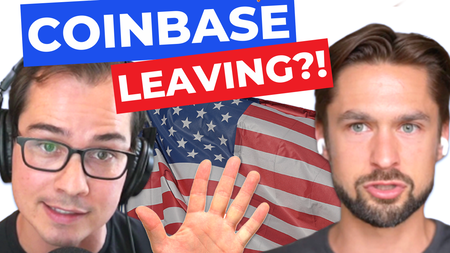
Coinbase Moving Offshore?! with Tom Duff Gordon VP, International Policy, Coinbase
 01:11:16
Podcast
01:11:16
Podcast
AI and Web3 | Mohamed Fouda & Qiao Wang of Alliance
 Podcast
Axelar's General Message Passing Launch with Sergey Gorbunov, Zaki Manian, & Steven Goldfeder
 00:36:16
Podcast Premium
00:36:16
Podcast Premium
DEBRIEF - Power Games in the 21st Century
 01:37:05
Podcast
01:37:05
Podcast
169 - Why We’re Dumb: How to Think in the 21st Century with Tim Urban
 News
News
ROLLUP: Coinbase is Suing the SEC
 00:53:20
Regulation
00:53:20
Regulation
Why Coinbase is Suing the SEC with Paul Grewal, Coinbase's Chief Legal Officer
Inside the episode
Ethereum is getting yet another economic upgrade! The scarcity engine is getting a massive level up with the advent of the MEV Burn.
With Justin Drake and Domothy, they walk us through the research and reasoning behind this next upgrade.
Just when we thought we couldn’t get any more bullish…
TIMESTAMPS
0:00 Intro
5:30 What is MEV?
12:00 MEV is Subjective
15:45 The Oil Analogy
19:45 The Benefits of Smoothing
27:05 Builders and Proposers
37:15 Forced Centralization
43:05 Rug Pool Protection
47:00 Distribution
54:40 Pros of Burning
1:02:00 Burning on Overdrive
1:06:15 Does this Hurt Stakers?
1:10:40 Too Deflationary?
1:20:00 Monetary Premium
1:25:00 EIP-4844
1:28:00 The Engine
1:32:30 Wen?
RESOURCES
Justin Drake:
https://twitter.com/drakefjustin?s=20
Dom:
https://twitter.com/domothy?s=20
Hildobby's Dune Board:
https://dune.com/hildobby/eth2-staking
Ultrasound.Money:
https://ultrasound.money/
RELATED EPISODES
EIP-1559:
https://www.bankless.com/-eip-1559-hasu
https://www.bankless.com/-eip-1559-expert-panel-tim-beiko
MEV:
https://www.bankless.com/-cryptos-existential-threat-mev-panel
https://www.bankless.com/125-matt-cutler
Ultra Sound Money:
https://www.bankless.com/-sotn-44-modeling-ultra-sound-money
https://www.bankless.com/-ultra-sound-money-justin-drake
https://www.bankless.com/-moon-math-the-bull-case-for-cryptography
Justin Drake:
https://www.bankless.com/134-ethereum-unsensored-with-justin
https://www.bankless.com/shanghai-capella-eth-staking-withdrawals-with-tim-beiko-justin-drake-and-anthony-sassano
https://www.bankless.com/150-bull-case-for-ethereum-iv-with-justin-drake-dcinvestor-anthony-sassano
https://www.bankless.com/devcon-2-justin-drake
https://www.bankless.com/15-bad-eth-takes-with-justin-drake
https://www.bankless.com/the-pow-vs-pos-debate-lyn-alden-and
https://www.bankless.com/-layer-zero-justin-drake
Transcript
we have this positive feedback loop going on because the more coming back if you have the more decentralized stable coins we have the more economic activity we have the stronger the shelling points become of scarcity and security there is going to be in my opinion one asset that's going to win the the beauty contest basically of being the most attractive asset and right now E30 asset is the number one you know Contender to winning this beauty contest
welcome to bankless where we explore the frontier of Internet money and internet Finance this is how to get started how to get better and how to front run the opportunity this is Ryan Sean Adams and I'm here with David Hoffman and we're here to help you become more bankless did you know bankless listener that in the not too distant future it's likely not 100 but very likely that ethereum is going to get yet another economic upgrade that will burn even more eth David did you know that before this episode I do now I mean we learned a lot in this episode this is going to be the biggest
potential upgrade to eth since eip1559 at least when it comes to the burn of course you remember eip1559 we talked about it a lot on Bank lists in the days before the Bert the burn and in the days after the burn but that was the first of two potential Burns that are coming we're going to talk about the second today this is called the Mev burn and the guests today call this ethereum's second business model a few things we're going to cover number one why Mev that is maximal extractable value is so
annoying to critical devs number two why eth is not only money but it's also like oil Justin uses the analogy of crude oil and petroleum and jet fuel you find out what that means number three why Justin Drake says all validators are losers but there's a way we can fix it and number four we talk about this metaphor Birds bread and Mev burn what do they all have in common what is ethereum's second business model David I just when you thought thought you couldn't learn more about ether and the economic potential you couldn't get more bullish on either
the asset of course Justin Drake comes in with another episode this time he's accompanied by another protocol Dev whose name is Dom David why is this episode so significant this episode is going to apply a lot of previous bankless content so we are going to layer on the lessons here in this episode and I think we did a pretty good job of of referencing those lessons that we talk about in the episode so some previous episodes that we are going to to need for the bank listener in order to understand uh the episodes about
eip1559 either with Justin Drake in the ultrasound money episode or the one that we did about eip1559 with hazu understanding eip1559 as a mechanism will be a core building block for this also Matt Cutler's blockchain supply chain how and how a block comes to be mined on ethereum or minted on ethereum which leads into the conversation of proposal Builder separation there's a lot of pre-existing knowledge that culminates in this new upcoming EIP I
don't think we have a number for this yet but this new protocol changed to ethereum that what is what Justin and Dom say is a logical continuation of eip1559 and so there are two main patterns two main mechanisms of eip1559 that are being continued one about eip1559 is that it actually places an oracle of ethereum into itself what do I mean by that through eip1559 ethereum is actually able to see how much block space is
being demanded it is is providing itself with information about how much demand there is for its own block space and through that mechanism eip1559 allows ethereum to price itself a very important mechanism and then of course the second is the burn these two mechanisms are being extended here in Mev burn two great benefit for many different parties in the ethereum ecosystem but primarily the etholder and so really the significance here is about the economics of ether and the other
thing to pay attention to is this part of the conversation where we focus on how ether is actually the most decentralized part of that stack and so the choice to place emphasis on ether is a choice in decentralization so these I would say are the themes of the episode to really pay attention to and if the banklessness or need to pause and go acquire some knowledge from other bankless podcasts before diving into this one I would definitely recommend you to do that because they are all very valuable podcasts yeah I would definitely say this is maybe 300 level
content and you know we thought we were going to do one ultrasound money episode with Justin Drake but it turns out this is like the ultrasound money never stops because uh we keep improving the products more ultrasound I mean if you're curious about what this Mev burn uh is how much eth per year it might burn you know Justin Drey comes in with numbers so he's got estimates of that when is it coming we have all of that information the podcast and David I am super excited to actually do the debrief with you after this episode because I
learned some things about ethereum I didn't know and I want to pick your brain about those so of course our debrief episode is the episode we record right after the episode it's on the bankless premium feed you can access that if you're a bankless citizen and some citizens have told me recently that this is actually their favorite part of the bankless podcast and some of the episodes they're just like you know the episode is good uncut no I know we just you kind of ramble and people enjoy that but like maybe the
debrief is for you maybe uh that's a good uh addendum to the episode anyway that is available for you click the link in the show notes to upgrade guys we're gonna get to our episode with Justin and Dom on Mev burn but before we do we want to thank the sponsors that made this possible including our number one recommended crypto exchange that is of course the one the only Kraken go check it out Baker station I would like to introduce you to Justin Drake he is a cryptographic beam Lord a researcher at the ethereum foundation and creator of ultrasound Dot Money a website that illustrates the metrics and data around
the world's most interesting financial asset eth Justin has helped the bankless nation navigate the world of cryptography crypto economics and today he returns to bankless with a brand new course of study to teach us this time in the world of Mev Justin welcome back to bankless thanks for having me again we also have Dom aka damathy the robin to Justin's Batman also a researcher at the ethereum foundation and has a comfy seat aboard the ultrasound train as well he's also played a big role in today's subject behind Mev Byrne research Dom
welcome to bank list for the first time it's an honor to have you yeah I'm happy to be here I'm really excited for this uh conversation especially when Justin gave me the line that Mev burn is simply The Logical continuation of eip1559 uh we've got a great conversation mapped out for the for you bankless Nation but first I think we really need to start at the highest of levels before we map out that conversation just so we can set the stage Justin what is Mev burn okay so MVP band is a a very simple idea is this idea that all the excess Mev
that's being generated on ethereum that is currently going to proposers through what are called Mev spikes um no longer go to the proposals in the form of MV spikes instead these spikes get kind of smoothed out and so that's one aspect of Mev brand is this smoothing of the spikes and then the second aspect is the redistribution meaning that the if is burnt and it's essentially redistributed to all the eve holders Justin can we really quick for
people who even Mev was too much for them I think we have to Define what This Acronym actually means m-e-v so if you're deep in the crypto weeds you've probably heard crypto folks talk about this a lot in different contexts can you define what Mev is for us and tell us why it's important why are crypto people always talking About This Acronym Mev right so Mev stands for maximal extractable Value it's basically the
value that can be extracted by the participants that are running some sort of economic system from the participants the activity on top of that economic system so in the case of ethereum we have a blockchain that's the economic system the participants behind it are the proposals the testers the block Builders The Searchers Etc um and the activity is transactions and it turns out that these participants that are making ethereum move forward block
by block have the opportunity to extract value from the transactions now I'd kind of distinguish two forms of of Meg one is what I call contentions or congestion fees is the more people want to use the chain um the more you have to pay in terms of Base fees for eip1559 and that is the the most common use of uh ethereum and it it leads to again these these so-called congestion fees
but there is a a second thing going on which is contention so sometimes you don't only care about getting your transaction confirmed getting your transaction included on chain you also care about specific ordering and this is for very sophisticated actors for example arbitragers that for example want to be at the very top of the block um and it turns out that what eip1559 did is that it took um these congestion fees that were
previously going to the consensus participants to the proposers and now it's giving it to the system itself to the if holders and what Mev burn is all about is basically continuing this story of eip1559 but for contention and so now um you know we have this potential opportunities you have two separate business models for for ethereum both in terms of revenue from congestion fees but also revenue from contention and it's not just about all sorts of
economic advantages that we get from that but there's also Security benefits from this moving that I was talking about so right we're definitely going to talk about the you know the the smoothing and the security benefits and all of those things but but really quickly while we're still on the topic of Mev and bankless listeners you can there's a library there's a library of previous Mev episodes if you still need to catch up on Mev itself but just the ethereum posture that from a protocol perspective on Mev what is Mev is it is
it good is it bad is it something we're trying to squeeze out of the system is it something we're trying to harness and manage um trying to form an opinion on Mev if it's if it's good or if it's evil right so Mev just is it's a emergent Behavior so it's something that emerges from the economic activity on top of this economic system and from the perspective of a protocol designer it's kind of annoying and the reason it's annoying is because it distorts the
incentive that we put in place right so we we have these crypto economic incentives you know for example issuance is this thing that we control as a designer of a blockchain and the Mev comes and distorts these incentives and so on the one hand from the perspective of the protocol we kind of want to tame and we want to mitigate the Mev but it turns out that not only can we mitigate some of these negative externalities of Mev but we can actually embrace them we
can harness them and Mev can actually make ethereum stronger it can provide more Economic Security it can provide more economic bandwidth and ultimately it can help ethereum succeed it in its mission of becoming a settlement layer for the incentive value so when as a podcaster one of the reasons why I love doing podcasts with Justin Drake is because he provides very robust agendas which makes my job very very easy so Justin we've got four parts that we're going to walk through um just part zero the intro setting the
stage uh part one uh the mental model congestion and contention which you've already established and then after this we go into smoothing which we're talking about the security benefits for ethereum and then redistribution which are the economic benefits and so the way I see this conversation going forward is uh we're just going to start to set the stage continue to Define some terms a little bit and then we're going to really unpack that mental model of what Justin calls congestion versus contention and both of these are block space demand but one is just congestion
is just like basal block space demand the average transaction and then contention is the demand to be first in a block and these different demands have different properties smoothing is Mev smoothing and redistribution is Mev burn redistributing it to all etholders but Dom I'm wondering where do you fit inside this conversation where have you specialized uh what What's your your role here when you do a lot of the ethereum research uh what are you specifically researching and and what should we know before we we go through this conversation yeah I'm mostly interested in the way we
quantify Mev we're working with the auction model or having proposers like impose their view of bids from block Builders so this is like step one of Mev burn is actually quantifying the the bids and the because MVP is very subjective when you think about it like an arbitr using putting a transaction first the blog to extract like one eth from like two different decentralized exchanges that's not something the protocol can be aware of because that's
all application Level stuff so we have to use the subjective view of blog Builders and how much they're willing to buy proposers and if we can then turn that in the protocol then that's the that's the way for the protocol to be aware of of what's going on like the most objectively it can even though it's still application Level and once we have this way of establishing the biz in the protocol then we can proceed to the burn and doing whatever we want with it the same way eip1559 has this on-chain Oracle for the
base fee uh this is what we want for Meb this makes me really excited because one of the beautiful things I think that got a lot of the ethereum community excited about Mev was the Elegance in the mechanism of actually being able to instantiate what is the market rate for gas on chain so that now that that kind of becomes like an on-train oracle of sorts like the ethereum protocol knows something about itself because of eip1559 and that thing is what is the net demand for my block space that it
becomes an output that is what the output of vip1559 the mechanism is and I think what you're saying is that we've got this new mechanism and this new mechanism actually allows the ethereum protocol to come up with some quantification of what the level of Mev is going on on top of it is that my understanding Dom yes it's all external demand that the protocol can be aware of and then do whatever we want with it and tweak the incentive for security and economic properties which is all exciting stuff
and this is a really important part of this conversation because when we talk about uh the two things that are Downstream of that um the uh smoothing and the redistribution it first starts with understanding how the ethereum protocol actually quantifies Mev because we need to know how much to burn and how much to to smooth correct yes okay cool all right um so let's where do we where should we start here uh do we Justin do we have any more definitions that we need to get through before we
get to congestion and contention I mean on the topic of uh congestion and contention I kind of have this this metaphor that I came up with this morning let's let's see how how well it sticks so I kind of think of three uh forms of of of oil of uh for for E30 assets so this kind of crude oil which is the the unrefined format and this is what you're holding in your wallet in large quantities you know in barrels and
barrels of oil you know stored in cold storage and you're not using on a regular basis and then you have this more refined form of oil which is petroleum that you use on a day-to-day basis to go drive your kids to school or to go to the to the grocery store and what happens there is like basically you take a few liters of crude oil and then there's this digital refining process which turns it into petroleum and then you go burn it and this petroleum can go in like most
engines for most transactions so that's the transaction base fee that get that gets burnt and now basically Mev is this Ultra refined type of oil is this high octane rocket fuel jet fuel or Formula One fuel that is used to to to fuel a very sophisticated engine which is this Mev engine which has this very high performance Pistons that are driven by Searchers and and builders um and really what Mev burn is is all
about is about recognizing that there's this Ultra you know refined form of oil that you can harness to improve ethereum security ethereums economic bandwidth that ethereum itself as a system can be aware of and can have an oracle for Mev and not only that but we can remove a lot of negative externalities from from kind of leaving this on on this super refined oil just explode nearly Willy and potentially affect chain stability
okay so to to put that I really like that metaphor so like uh the average consumer the average operator of a combustion engine uses the average gas and when I send uh ether from David hoffman.eath to Ryan Sean adams.eath that's actually not Ryan's ether uh ens name um I just use normal oil and uh that's fine that's great that's what I need to do to get from point A to point B what you're saying is like the contention part of a block which is that first slot in the block is a insanely efficient
place in the block because of this um what you're calling an engine because you're with you the reason why you're using that word is because you're looking at the Mev landscape as a system as a whole we have we have transactions and then we have transaction bundle Searchers who search through the transactions to make a bundle and that bundle gets uh uh conversion to a larger group a larger bundle and that ultimately becomes a block and we have Mev Bots we have liquidation Bots we have people people that are micro arbitraging uniswap we have everything
all the Mev that's all happening a massive industry and they're all fighting for that one block that one excuse me that one slot that in the block the top transaction uh slot because that is where they fight for that's they fight for all of that economic activity and you're saying that that one slot consumes uh Mev consumes ether to get into that one slot and that's just a highly refined version of ether even though it's the same ether that we all use it's still highly refined because of the net output of that one slot is this massive explosion
of economic activity inside of that one block that's that's the metaphor correct right that's correct it's money to purchase oil I suppose and then there's and then there's a flip side which is just contention uh excuse me congestion but I think that's not the subject of this podcast that was the subject of our older podcast that was just about eip1559 right so this podcast about Mev Byrne is just primarily about the activity in the contention part of the block space correct
right that's correct Okay so we've defined congestion we've defined con contention as well congestion is sort of the basal level of block space demand that was EIP 1559 it burnt that now we have contention which is the desire to be the number one transaction and any Mev burning is uh going to solve this I I'm wondering if you could get us to the higher level because in the next part we're going to talk a little bit about um smoothing and redistribution so the
actual burning of Mev itself but why are we doing this in the first place like what problem is Mev smoothing and burning actually trying to solve Justin you were talking about earlier that the desire of the protocol as a protocol researcher uh Mev is this annoying thing that we have to tame at the protocol level so Mev smoothing in the burn is is one way to sort of tame Mev but describe to us what problems are we actually trying to solve at the highest level
here as we get into these next sections right that's exactly right Ryan so when I you know first came into this problem the I was trying to fix some of the negative externalities of what I called Mev spikes what is an mvv Spike it's basically when you get randomly chosen as a proposer and you receive some unknown amount of Mev you know it could be a very small amount of enemy it could be like 0.01 if or it could be a massive block it could be
hundreds of if of Mev so you participate in this Lottery and that's why we say it's spiky because there's these big spikes and the the small spikes now what are some of the negative externalities of Mev spikes well one of the first ones is this chain instability so the metaphor that I have in my mind is you have a piece of bread and you throw it in a park or you throw it in a pond and then you have like ducks fighting for it or birds fighting for it or I mean fish fighting for it yeah and it's it's
complete chaos and it's a lottery because you know if you throw the bread slightly to the right then you but this bird gets it and if it's played to the left the Cyber bird gets it and it's it's just clearly from Britain I used to do this all the time you didn't do this David I would always Target the you know that one bird or that one duck that that seemed a little weaker than the rest and try to yeah the bread directly in front of that one the benevolent me V bot yeah yeah that's what I tried to do it sorry I love this metaphor Justin continue please and you know what it means in practice
is that there's uh these various participants that try all sorts of attacks so they're going to try ddosing each other they're going to try Eclipse attacks they're gonna try chain reorgs and proposal equivocations and they're going to try anything to basically catch the Mev and that's because some birds have teeth and Claws that the other birds just don't got yeah exactly you're incentivizing people to come in with their teeth and their clothes and their guns to try and hit each other but you know if there isn't a reward you know we don't need to be hitting each other we can all live in
peace and have a table first stable chain and like one maybe you know Vivid example is you know what happened historically with binance binance got hacked for many many you know hundreds of of if uh sorry of Bitcoin it was I forget the exact amount and one of the things that they were considering doing is revealing the private keys for those Bitcoin thereby incentivizing the miners to go back in time to reorg the chain and to basically fight the attacker take a cut for themselves and return the book
uh to to binance and the the Bitcoin Community was very scared about this because you know it would lead to you know potentially massive chain in instability now the good thing is that if an equivalent scenario happened you know binance was hacked but this time it was if not BTC and we had Mev burn then the mere fact of releasing these these public Keys would effectively burn uh all the if and so there wouldn't be anything to fight over so and this goes back to I think when I was
just first trying to wrap my head around Mev a very clear articulation of why MAV is fundamentally can be fundamentally bad insta like small my new instances of Mev like you said Justin just is but from a chain stability perspective they can be okay like they can be massively chaotic and I think that the simple example is that ether um just to use nice round numbers ether every single block ethereum every single block issues two ether per block as reward and then there's Mev like gas fees on top of that and because of uh
defy and in smart contracts we have these opportunities that oftentimes can be much larger than the value of a single block and so if the rewards for mining a particular block are like 10 eth and ethereum isn't is only issuing two e's per block then that block that has a 10 eth reward isn't actually considered secure until there's 10 more eth issued in Block rewards for the next corresponding blocks to lock that value into the chain and so until if a very
large block gets fine and sometimes we've seen blocks in the ethereum world get mine that are like 60 to 100 ether and so you can't really consider these blocks finalized until there's a sufficient level of weight of economic weight in front of those blocks to like embed those of the Big Blocks into the chain and this was like the original way to understand the dangers of of Mev and so this is a mechanism just in what you're saying Mev burn and smoothing that directly goes after this phenomenon
which takes Mev spikes and Smooths it up and hence Mev smoothing right I mean this is especially true with Bitcoin where they only have proposals not our testers and so if there's a very very large bounty to go back in time then you need to take these bounties into account in addition to the to the issuance in ethereum we have this other mechanism where the attest has come in and they provide economic weight and don't they don't really have a dog in the fight and so they're a little bit more neutral and so if they're you know
will converge you know eventually even if there is like this this big MAV Spike but kind of locally it could lead to this these chain instabilities which are Justin back to the bird analogy rather than just throw one big hunk of bird and then watch how the birds kind of fight what you're doing with Mev smoothing is you're just dividing that chunk of bread into all of these bitty pieces and you're somehow letting all of the birds take it at once uh and I guess maybe the bird just been a bird yeah you just and
so that that feels very nice that feels very egalitarian it feels like the um you know some of the weaker words actually get a shot at getting fed rather than the big birds with you know the teeth and you know just plowing their way to the front don't get all of the food that would make childhood me very happy if I had that sort of protocol in a bread distribution and just to be really specific this is the weaker birds are the lower capitalized hobbyist solo stickers and then the big birds with guns and teeth and claws are like the data center birds that have
fiber optic connections just to make that extremely specific so Dom I think this this conversation now needs to turn to how Mev smoothing and burn actually happened and this is I think where where your role and your research at the ethereum foundation starts to play in here because we're going back to like we actually the protocol ethereum the protocol needs to do this autonomously therefore the ethereum protocol needs to be able to measure the size of the breadcrumbs that are being thrown out to all of the the minor the the validator birds so can you walk us through that
process how does the ethereum protocol come to under understand the size of the bread man I love this metaphor all right so today there is no mechanism for that at all all the Mev the pro we need we would need proposer Builder separation enshrined in the protocol because today we have math boost which has this PBS but out of protocol with the relays acting as the Brokers to receive bids between Builders and relay them to proposers and then brokering their
relationship and having the having all the trust to them but what we wouldn't want is enshrined PBS for not only removing the stress and having a fully trustless and unconditional payment between Builders and proposers but also having the protocol be aware of the bids so one way to do that well first there's all these designs proposed for insurance PBS which is the first step for Mev burn and there are a few mechanisms to do that one of which is having simply
bids be a part of the beacon chain having a structure for what where Builders are supposed to send their bids instead of having relying on external protocol like math boost and once we have that then we can have the attesters impose their view of bids on the proposer so that if they say they're they're all hearing Builders bid one is to eat and then the proposer says okay I'm gonna bid zero and then I'm gonna just steal the mvv then that's not gonna
work because other adjusters are just not gonna vote for that block so that's like one high level overview of how we can have not only be aware of bits but also impose this view on the proposer so Dom are you saying that um PBS by the way a bankless nation if you're not familiar with that term it's not the broadcasting network uh in the US PBS stands for um proposer Builder separation we've done entire episodes on this and we will include links in the show notes uh to get you caught up this is a future ethereum protocol roadmap item that
we've been wanting to achieve and it's not going to happen this year it's in the more distant future than this year protocol or proposer Builder separation are you saying Dom that that PBS some version of it is a requirement to get us to Mev Byrne and Mev smoothing that we're going to talk about in the rest of this episode so yeah first things first we need PBS at the protocol layer we need to deploy that then we'll have visibility into the Mev is that what you just said yes
got it okay that's understood and I think the really the the the episode that we did with Matt Cutler from block native talked about the ethereum uh blockchain supply chain which is fun to say uh and really the proposer Builder separation proposers are people who are proposing a block that's ether stickers dressing correctly if I'm wrong but proposers and ethers acres are largely synonymous um and then before that are the block Builders so instead of the ethers takers again which we want the supply chain of

Ryan Sean Adams
Crypto investor going bankless.
.png-cde5b9c0aa4838d09c634abbd1136ff2.png)
.jpeg-086509d9392f686b9db58146fb6ce1b7.jpeg)


.png-a616dc52961c1edd72b0c1fdf5f47e7a.png)