124 - Is Mark Cuban Buying the Bear?
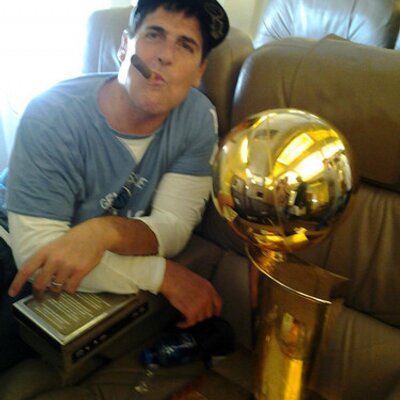
Mark Cuban of ABC’s Shark Tank, owner of the Mavs, and seasoned entrepreneur and investor joins us for Round Two of Bankless.
Up next
All episodes 00:52:00
DeFi
00:52:00
DeFi
Hayden Adams on Uniswap's Announcement?! | State of the Nation
 01:08:05
Ethereum
01:08:05
Ethereum
Monolithic to Modular DAOs with Julz Rosenburg | Layer Zero
 00:13:05
Podcast Premium
00:13:05
Podcast Premium
Debrief - Investing in The Chainsmokers
 01:30:16
NFTs
01:30:16
NFTs
123 - Investing in the Chainsmokers | Drew Taggart & Alex Pall
 01:51:27
News
01:51:27
News
ROLLUP: Crypto Crash | Celsius Insolvent? | 3AC Su Zhu | Interest Rate Hike | Jack Dorsey Web5
 01:19:16
Podcast
01:19:16
Podcast
How Bad will Inflation Get? | Jim Bianco
 01:12:32
Analysis
01:12:32
Analysis
EMERGENCY BEAR MARKET LIVESTREAM
 01:11:10
Podcast
01:11:10
Podcast
Luke Burgis | Layer Zero
Inside the episode
Hear what Mark’s been up to since his first Bankless appearance, how he explains crypto to noobs (hint: he doesn’t), what he envisions next for crypto, how long he believes the bear will last and so much more!
TIMESTAMPS
0:00 Intro
4:50 What Mark’s Been Up To?
6:20 2017 vs. 2022 Cycle Differences
7:10 Mark’s Crypto Interest Development
16:56 How to Explain Crypto to Noobs
20:21 Macro Components to the Bear
26:10 ETH vs. BTC
30:37 Payments
32:51 What’s Next For Crypto?
34:20 How Long Will the Bear Last?
38:50 Where Mark’s the Most Optimistic
45:50 ReFi, Positivity, & Advice
RESOURCES
Mark Cuban
https://twitter.com/mcuban
1st Appearance on Bankless
https://youtu.be/l3ptz8qvZcg
Transcript
Welcome to Bankless, where we explore the frontier of internet money and internet finance. This is how to get started, how to get better, how to front run the opportunity. This is Ryan Sean Adams, and I'm here with David Hoffman, and we're here to help you become more bankless. Guys, we got a special episode for you. We just pinged Mark Cuban and said, Hey Mark, do you want to come on the podcast sometime? I know the playoff season is over for the Mavs and you want to talk some crypto? We're in a bear market. And he said, Yeah, sure. Right now
No.
give me 30 minutes. Let's get
And so we jumped on and we did it. And David and I just recorded an episode with Mark Cuban, picked his brain about a number of things, how he feels about the current crypto bear market, how he thinks we're going to recover, if we will recover, and where do we end up on the other side in particular, what he's looking for from an application perspective from crypto. So it was all of Mark Cuban's thoughts on where we are in this market. Of course, you know, he's been deep down the rabbit hole in some of these protocols, messing around with DeFi protocols. You guys heard in our original episode with him. He's into Axie Infinity and the game fi market. He's also doing things with carbon credits and Clima Dow. So, like he is deep in a number of these things. David, what were some of your thoughts going into this episode?
Yeah, it's interesting to hear how Mark Cuban thinks about these things. And you can definitely like try and put yourself in Mark Cuban's shoes as like a Shark Tank investor, right? The external investor. He's coming from this with a like a business mind, right? He's got this experience coming from the world of traditional finance. And when he talks about the bear market, you can hear him put it into these terms and ideas that he's familiar with. But then it kind of clicked at me to what he was saying. It's like, oh, you're waiting for like layer ones to like band together and merge because in times of bear markets and times of struggles, things like have mergers and acquisitions. And so I like putting myself into shoes of Mark Cuban and trying to understand how he thinks about the crypto industry via more traditional routes, I thought was pretty interesting. And again, from the external investor who's always in the mindset of utility for the customer, utility for the user. What product am I actually going to go out of my way? And even though crypto is hard, I'm still going to go out of my way to use it. And so it's always a refresher talking to Mark Cuban about the external reference point for how people like Mark Cuban look at crypto and what they see when they take a peek inside of our industry.
Guys, we're gonna get right to this episode with Mark.
Mark Cuban, we had you on the Bankless Podcast a little over a year ago, and so much has happened since then. How's it going, my man?
Well, like everybody else, I'm getting torched.
Yeah, well.
But I'm
It's one one big club, absolutely. And so, yeah, dude, we had you on a live stream as you were going down the DeFi rabbit hole. You're into NFTs, you saw the potential. We even learned that you were learning about solidity and right doing your own contracts. And so I kind of want to just get a speed run of what you have done since then. So can you like speed run us through the last year of Mark Cuban in crypto?
I mean, just a lot of investments, a lot of research, a lot of learning, a lot of losing, a lot of optimism still.
But just like everybody else, you know, you learn from all your experiences. You learn or you get burned. And and so that's what I've tried to do. I don't have any one thing or two things that really stand out. I mean, I'm still doing well overall, but like everybody else, you know, my Ethereum and my Bitcoin have gone down a little bit.
Yeah, so I believe this uh that makes this your first cycle. So congratulations, you get your first cycle badge.
I was around in 2017, but I actually I think this is a lot, there's some similarities, but there's a lot of differences.
Sure, yeah, let's go into that. What do you think are the differences that stand out to you the most?
You know, in the ICO craze
and the first real push of Bitcoin, that's where you started to get the early interest, but there weren't a lot of mainstream applications. There were companies trying to do some things with smart contracts, Crypto Kitties among them. And there were a lot of different ICO type approaches, but nothing really was already mainstream. And that was the big difference. You know, it was just about people getting into crypto, not crypto getting into people's lives.
Amazing. And I'm wondering how has your interest developed? Like I kind of alluded to, I remember talking about Euler beats when you came on and just you were generally super interested in the way that artists can receive automatic dividends. How have your interest in crypto developed since then?
No, I mean it's just continued, right? I mean, I think.
You know, where I caught a lot of flack early on was, you know, the focus on the utility of whatever it is I was looking at.
You know, how was it going to be used? What was the value proposition? And like you just mentioned, what was exciting to me back then with NFTs was the fact that artists could receive royalties. You could create a textbook NFT. You know, we did a lot of things with NFTs with the Mavericks, with Mavscollectibles.com. There's just a ton of applications, but there's got to be utility for them. They can't just be about speculation. And I think when, you know, there's an old saying everybody's a genius in a bull market.
And so when everything was going up, everybody was smart, right? And when everybody's smart, everybody thinks they can do anything and not lose money. And then that obviously changed multiple times over the past 15, 16 months.
And so now, you know,
I continue to look for applications, but you know, it's interesting that,
you know, so what's really changed over the past 15 months is, you know, we were looking at DeFi. There was the DeFi summer, and then there's DeFi, and you know, but there was really DeFi on just a couple blockchains.
Right. You mostly Ethereum is where all the action was. And there was a lot of subsidies. It's again, it's like, you know
People were approaching crypto and DeFi in particular, like they did software applications, where there were, you know, back in the day, VCs would subsidize apps or applications and offer them for free, and knowing that they were losing a boatload of money just to get users to try it. And we saw that with DeFi as well, where on Ave, wherever you went, there were all kinds of rewards that were just handouts that somebody had to subsidize. And that subsidy was coming from investors, they were coming from misperceived tokenomics, or they were coming from just buyers who were just wanted to play the game, just trying to go as DGEN as they can. And you know what we've learned since then you go to Ave now and you see what the real rate should be. And it's all algorithmically driven without the reward.
And once you took out the rewards,
The whole perception of DeFi changed. And I think that's also one of the reasons why DeFi has kind of survived a little better than C Fi has survived.
Because C Fi's essentialized business has tried to run with rewards more and subsidies more. And that catches up to you real quick.
Yeah, sure, of course. And as the steam in the NFT market has really dried out, and like you've alluded to, the yields have gone down to their very base primitives. Mark, is your conviction on crypto shaken? No. Or are you gonna hang out with us during the bear market?
No, it's not at all. It's not shaking at all. I mean, it I think this is a good thing. It's painful to lose the money, right? But it's really, really good because.
You know, one of my favorite sayings is first there's the innovators, then there's the imitators, then there's the idiots. And what's been happening in crypto over the past 18 months, or actually the past six months, I should say, is when something worked on Ethereum,
then it went to an L2 of Ethereum. So you saw DeFi go from Ethereum, oh, it's too slow, it's too expensive. So then you go to an L2 of Ethereum. Well, it's cheaper now. That's a good thing, right? Then it went to another chain and the same, you know, and then another chain and another chain and another chain. Sounds like a song. It sounds like um something DJ Kalley would do, and another chain, and another chain.
you know, but
what would happen is
What will
happen is
because blockchain, for the most part, is a zero-sum game,
there's not a whole lot of differences. We can argue the trilemma, right? And the nuanced differences among all of them. And Bitcoin Maxis argue a whole different story. But the reality is if those chains don't get
enough volume,
they're gone.
And because a lot of the competitive aspects of you know Ethereum competitive chains are cheaper and faster, you've got to get a whole lot of transactions in order to survive.
And so what they all did, and they all did the same thing, let's go get DeFi. So they all put together grants and funding and subsidies to go out and get LPs and others that
would support, you know, DeFi on their platform,
DeFi on blockchain X, you know, fill in the blank.
And then they did the same thing with NFTs. We're going to go get this celebrity and we're going to go subsidize it, and we're going to put it on our chain. And that's how we're going to get enough traffic and we're going to show off why our chain is better. And then they go through the long list of, you know,
Blockchain X Maxi, you know, things they would say. And what they found out very quickly is that doesn't work.
When you're a copycat, even if you have your checklist looks a little bit better, it's really, really hard to get somewhere. And so all that said,
we've gotten to the point now where all those chains realize they're in deep shit.
You know, there's just no there there. You know, and these are multi-billion dollar capped companies. Now, obviously, the market caps of the companies are convoluted and kind of configured the way you want them based off of your float versus your total allocation or your total mint.
But now,
what are they going to do?
And so you're starting to see some of the fissures in these chains that really don't have any traffic and really don't have anywhere to go.
And to me,
that's just part of the cleansing that's natural. I've, you know, I've said before that this is a lot like the early days of the internet, and when we went, you know.
94, 95, you know, my company, we started streaming. We were the first company to do, you know, commercial streaming and this and that.
And it was a race because the next thing you know, there are 20 companies, 30 companies, 40 companies trying to do streaming. And, you know, 39 of them died, or 35 of them died. And you saw the same thing. And then when the 2000 and 2001 hit and the bubble burst.
95% of companies were gone. But the ones that were able to survive

David Hoffman
Co-owner at Bankless. Optimistic storyteller of frontier technology.



.png-cde5b9c0aa4838d09c634abbd1136ff2.png)