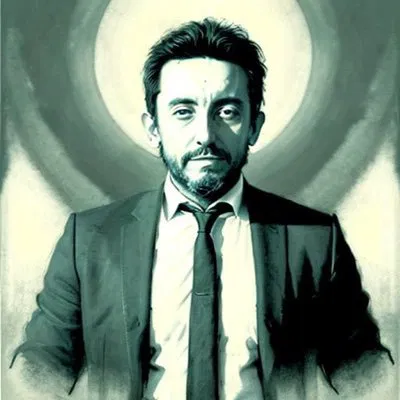
42 - The Global Game of Crypto | Bruno Maçães
Chatting about the future of crypto with world-renowned political philosopher, Bruno Maçães.
Up next
All episodes 02:08:27
Ethereum
02:08:27
Ethereum
41 - Crypto Civilization | Balaji Srinivasan
 01:12:21
Investing
01:12:21
Investing
39 - Grayscale's $10B Bridge to Crypto | Michael Sonnenshein
 01:38:50
Investing
01:38:50
Investing
38 - The World Is Waking Up To Crypto | Raoul Pal
 01:30:01
Podcast
01:30:01
Podcast
37 - Crypto is Empowering | Phil Bonello
 01:24:58
DeFi
01:24:58
DeFi
36 - The DeFi Blockspace Cycle | Nic Carter
 01:59:01
Ethereum
01:59:01
Ethereum
35 - Designing Ethereum | Vitalik Buterin
 NFTs
NFTs
34 - The Ownership Economy | Jesse Walden
 01:46:50
Ethereum
01:46:50
Ethereum
33 - Slaying Moloch | Ameen Soleimani & Kevin Owocki
Inside the episode
Bruno Maçães is a political philosopher, the author of several books surrounding the different types of cultural civilizations that define the globe.
Bruno has a strong familiarity with crypto and recently wrote an article called “The Crypto State?” which explored the emergency of a new civilization in Crypto
We brought him on to help us understand what’s going on with the geopolitical shifts of the world, and what this means for crypto.
RESOURCES
Read up on Burno’s previous work
Bruno on Twitter
Book Trailer of History Has Begun:
The World Game, Bruno's newsletter
Transcript
welcome to bankless where we explore the frontier of internet money and internet finance this is how to get started how to get better and how to front run the opportunity this is ryan sean adams i'm here with david hoffman we're here to help you become more bankless david banger of an episode who do we have on what are we talking about we had bruno massage who's a political philosopher and has written a bunch of different books that attempt to characterize the disposition of
different parts of the world and that's why we got him on to the bankless podcast today because bruno really has his finger on the pulse as to what makes the different parts of the world tick so we wanted to get him on so he could share that with us but also we wanted to have a broader conversation about the disposition of these different parts of the world and how they are going to relate to a crypto first world that we see coming how is europe going to deal with bitcoin and ethereum are they going to be adversarial or are they going to be integrative what about america what
about china and so we the first half of this podcast we take a decent amount of time to go through each different part of the world and really give it a character give it a personality and then we turn to the conversation of crypto where bruno actually kind of turns it around on us and asks us some questions is how we see the different parts of the world integrating with crypto or being adversarial to crypto and so bruno is an absolute scholar and he really does a great job teaching us and carrying you along for the journey and so this was just an absolutely crazy informative
episode that i'm sure you're going to enjoy the first part of this is really interesting and phenomenal but the second part of this where we start talking about crypto i think the last 35 40 minutes or so is just straight fire because bruno applies his political philosophy framework that we we talked about and he applies that to crypto and takes he asks us some hard questions uh to be honest david like questions that have been in the back of his mind that quite didn't
quite make sense about crypto we do our best to answer those and then he provides his geopolitical interpretation of all of this and it's quite a salient perspective yeah really the first half of the episode was a means to an end to get to the second half of the episode so you really need to listen to this and thing in its entirety so without further ado we're going to get right into the episode with bruno but first we're going to talk about some of these fantastic sponsors that make this show possible if you are looking for a mobile wallet
to hold and access your crypto assets you need to go to argent.xyz and download the argent smart contract wallet onto your android or ios device arjun is one of the most secure ways to hold your crypto assets on your mobile device while still being able to access all the d5 products and services that we know and love arjun has enabled one tap access to all the device applications that we all use the most and recently onboarded into the arjun app is the yearn vaults you can now access yield from a specific vault
from iron and then wire handles the rest also new to argent is balancer and being able to supply liquidity to balance or pools and also receive bowel rewards for doing so all from your arjun wallet one of argent's newest features is the ability to route trades and swaps through the various liquidity pools in the ecosystem ensuring that you always receive the best rates when you trade inside of argent argent has done a ton of effort into making sure that your assets are as safe as possible they have social recovery
options with their guardians feature making sure that any trusted friend or family member can restore your access back to your argent wallet if you were to ever lose or break your phone and there's also some simple account features such as sending limits and whitelisted accounts making sure that your money doesn't ever do anything that you don't explicitly approve in order to see the argent while in action go to argent dot link bank lists and download the app when you own crypto what really matters is the security and ownership over your assets
being a part of the bankless nation means having complete sovereignty over your crypto the easiest way to do that is with a ledger hardware wallet a hardware wall is a little device that manages your private keys for you so you don't have to worry about proper private key management your ledger hardware wallet keeps your private keys private but still lets you have easy access to your crypto the combination of my ledger hardware wallet and metamask lets me store my crypto assets in the most safe way possible but still lets me easily access uniswap or all the other defy
apps that i use on a daily basis if you already have a ledger wallet you can use the ledger live app to participate in some of the money verbs that we discuss in the bankless program the ledger live app is your headquarters for managing your personal crypto finance it's a great tool to manage the assets you hold on your ledger as well as receive a portfolio summary of all the assets that you have stored using the ledger live app you can buy bitcoin ether and stable coins and have it sent directly to your ledger hardware wallet
skipping over the trusted exchanges and getting your assets into your control you can even use the ledger live app to swap crypto assets natively inside of the app so you never need to send your crypto assets away from your ledger to make a trade buying a ledger is like buying a fire extinguisher the best time to get one was yesterday especially if you're doing something silly like holding your crypto in a hot wallet that's always connected to the internet if you haven't gained full control over your crypto yet go to the link in the show notes and get your ledger today all right guys i hope you're excited let's
get right into the episode with bruno bankless nation we are so excited to introduce you to bruno massage he is a political philosopher and author of several books including a latest book called history has begun the birth of a new america he actually has a really strong familiarity with crypto uh he
wrote this fantastic article i read a couple of months ago called the crypto state with a question mark at the end and we brought him on to help us understand what's going on from the political philosophy mindset the geopolitical shifts in the world and what all of this means for crypto this is going to be a stellar conversation bruno how are you doing today pretty good it's great to be here you know i'm just going to open things up that's like we this is what we would like to do at uh bankless is open up with a interesting
starter question is crypto a rival to the nation state from your perspective yeah i think it is um you know that there's been an interest as you can imagine from political thinkers for quite a while to try to think about what comes after the current um structures that we have particularly those people who are not convinced that we've reached the end of history so what's the next big change and if you're a political philosopher by training and
particularly in my case a historian of political thought that's that's how i started uh you're very much attuned to these um historical changes um i think if you've brought up in your college and grad school years reading about uh the whole tradition of western but not only western political thought you immediately uh understand that the changes have been dramatic radical you know you read aristotle you'll read plato it has nothing in common with the liberal democracy so i think that's an advantage
that one has if you come from that tradition and you're also very aware of the differences in in the way societies organize themselves i think pretty much everyone has a mental model of this story tribes empires than the modern state a huge debate about what is distinctive about the modern state but we know something is the bureaucracy perhaps the element of civil society whatever it is it's very different from other forms and then you're interested in thinking about well what comes after
the state as it exists today and there's been different theories about this different intellectual wagers let's call it that a world state would seem to fit with a certain narrative of globalization uh then technology of course introduced a very interesting debate about this and there's been some stuff written about how facebook in some respects mimics the structure of a nation state a global nation state zuckerberg himself has been interested
in this idea from the very start i have started to think about this how you can fit technology into this narrative and it seemed to me that where the real historical development the big breakthrough can be found is actually in crypto because crypto and in fact if you go back to the founding papers of crypto that's obvious there crypto changes some of the fundamental assumptions about political thought i say in my piece that um satoshi is uh is very politically aware
and i think that's true it would be possible to try to look at those papers and and and see them as political philosophy papers what crypto introduces a radical change is in the idea of trust of course and trust is the basis of every political structure that that's existed in the past if you move towards a trustless environment then you're really introducing a fundamental change in the way you think about politics now i don't want to go too far and all this has to be thought about and tested
but in a way you could say that the break if this works out is more fundamental uh more essential than even the break from medieval straits state structures to modern state structures because they were both based on trust so that's how i get to that and how i get i got interested in that i want to think about crypto and i needed a convenient framework um to think through it and and for me what really works is this idea well perhaps we're creating fundamentally new
structures of political power so bruno a lot of your work in your library is focused on uh re-organizing a or rehyb proposing a way to view the world specifically from a political philosophy mindset and and you have characterized different regions of the world using different political philosophies and i kind of want to get into your heads like how do you draw the world map in your head in ways that other people don't like where are the dividing lines is it an east first
west type world are we in a developed first underdeveloped type world uh how do you draw the lines of the world right i think there's two fundamental elements there that sort of guide my my thinking and writing first you know when i was grad school at harvard uh 15 years ago i was already very frustrated with this idea that all you could do as a political thinker was to interpret ideas from the past but that was really nothing new to create you know the fukuyama narrative but it takes many
forms and i don't even think fukuyama is the most important name here it's much older than fukuyama this idea that a liberal democracy is the end of political development i was very frustrated with that um and actually lost interest in in in becoming an academic in large measure because of that what i think started happening in the last few years and that's why i with a renewed passion turned to writing which i hadn't done before in my life i think it's actually now become possible
to think about what comes next uh it was very difficult 20 years ago the almonds were not there the material was not there the the mood was not there but the last few years the last decade has really been pregnant with change you know and i think that started to happen in 2008 i remember giving a seminar one of my last professional seminars at university in 2007 whereas expressing to the students are really there was nothing on the horizon of
particular historical significance that one could think about by the way back then china's him pacified and globalization was thriving and then of course 2008 you had um you had the financial crisis and since then uh every year or every couple years you have something that makes you think about whether the current framework is really stable or not i think those processes have been accelerating that's how i see the pandemic as well but of course crypto is part of this
china and the new china much more aggressive much more self-confidence is another part of that so for someone like me who was waiting for this moment then i think when it came you really want to grab it that's the first element the second element is you know i like to think of myself as in some respects a traveler it's my favorite thing in life and now put on hold unfortunately and if you combine a philosophical interest with traveling i talk about this in my first book
then you're necessarily interested in trying to explore the deep differences between different parts of the world i don't believe that you can be a good political thinker without traveling you simply don't understand the differences you assume the whole world is is the same by the way i also don't think you can be a good traveler if you don't if you're not a political thinker in some way because again you're gonna miss what is interesting about a society and what i love to do is to go to a different part of the world for an extended period and really
try to explore how different societies are organized what makes them tick how they operate how they work try to build a model of that society from scratch without priors without preconceptions and that's um you know my favorite thing in terms of intellectual work and by the way it's my favorite thing in terms of intellectual work because it combines with things that are not work meeting people talking to people visiting places tasting the food and so on so it's great
intellectual work and what i've been trying to do in my books is precisely that is to try to think of the world as being divided into let us call it different civilizational areas and what i mean by that what i mean by civilization very roughly is different construct constructs of looking at the world which are really fundamental because they they involve everything about about life uh everything about the way you approach the world you look at the world you think the feelings you have the way you
interpret facts around you and i'm fascinated by this idea that in fact the world is much richer than one might think at first and that different parts of the world have to be interpreted on their own terms so my first book is essentially an attempt to to make a call for this approach uh and to abandon the much more natural approach for us in the west to think that everyone is converging to our model if they haven't converged is because they failed or because they're slow in the process but the whole world is
essentially converging to the same model now i don't believe in that and and one reason i don't believe in that is that i actually think human beings want to find their own path and they're not convinced by the idea that they have to copy others so those two elements i think are present in all my work uh so you find both a great attraction to the future to what next and a great attraction to the difference to to what is different from us uh gets me in trouble a lot the second element by the
way um then i only realized in the last couple of years the pressure for uniformity to um subscribe to our values is so strong if you try to understand turkey or russia or china on their own terms you're immediately accused of the worst possible things you know you you might even be accused of being paid by those governments to to make to make that effort as if they care about that as if they care about some foreign trying to understand the cultural patterns of china as if the
chinese government would be interested in that or are you accused of moral turpitude in some way that you don't believe in our values so that helped me in the last two years those kind of reactions to understand why it doesn't happen more actually the pressure not to do it is quite quite significant it's it's so funny to hear you talk because there are so many analogies in an analysis situations that i think we see on the on the bankless journey uh within crypto right so like i guess a few points liberal democracy not being the end of
history is super interesting because that obviously poses the question which i hope we get to is what supersedes it but your other point about traveling how can someone comment on a civilization area without having been immersed and engrossed in that civilization area we say the same thing at bankless basically it's like if you want to understand a crypto system and even the the political philosophy of that crypto system you actually have to use it so like the best way to understand bitcoin
is to immerse yourself in bitcoin culture and buy some bitcoin the best way to understand ethereum is to start using d5 protocols and actually like understand what they're about and why they're useful and why various ones work and others don't i think that's uh super analogous to what you're saying and we do want to get to crypto in a minute but i think it's important for our listeners to have this mental model of the civilization areas that you were mentioning like we want to
understand what's happening in the world i think bruno and what if we sort of take it by region because that's sort of what your your books seem to do can you take us through the important things we need to know uh with some of the the major i guess civilization areas or regions of the world maybe starting with europe and then we could take america and then china and get to some of the other places but but tell us what do we need to know about what is changing in europe these days right so that's the kind of exercise
that i've been trying to do a book for each of these areas it's pretty tough uh and it will take a couple decades to complete but it's a good thing you're asking and by the way you have to be open to change your ideas about what you think is fundamental about these different areas um and what is difficult is that you actually want to go in depth you want to find the active principle of each of these um civilizational areas but obviously that's very difficult and very prone to error so you always have to be open to
to to revisions and and to change your mind about this but when i think about europe and in some respects it might even be more difficult for me to think about europe because you're not outside and um sometimes it's it's more difficult if you if you have to look from the inside and if you're brought up in that intellectual environment but uh some things seem seem important to me so obviously uh second world war the fascism experience and the nazism experience is um determinant here
uh i i'd like to talk about i'm trying to write something actually today the the mystery of fascism and what i mean by the mystery of fascism is i mean no one saw it coming you had the the narrative of the enlightenment in europe which was uh moving in the opposite direction commerce was supposed to make people tolerant open to difference um the enlightenment was supposed to be uh indifferent to to religious difference or to or or even to to racial
difference in many languages thinkers societies were supposed to be more rational less based on on passion uh or hatred uh or other forms of uh of political animals um and then why why do you get the fascism experience and to be honest i haven't found a good explanation of this i'm reading a book that was praised a lot just came out a couple months ago called the perfect fascist um by an american historian-american italian historian and one of the reasons i was interested in the book is that actually is not a theory book
it's a history of um one of the most important political men around mussolini and his american jewish wife and so i thought you know it's interesting experiment here we just go deep into the life of that individual and try to see what moved him towards the fascist ideas and towards mussolini the book has been a bit quite disappointing so far but still you know that remains a question that hasn't been answered it's uh really fundamental for european consciousness uh even today
when i look at the european union i i tend to interpret it as fundamentally a response to auschwitz in the sense that the values that are foundational for the european unions are the sort the the exact opposite of of the nazism experience so a certain cosmopolitanism which is present there technocracy the rule of experts no borders nationalism is considered political evil so you build a project that is supposed
to move you beyond fascism respond to fascism and prevent it in the future to the point where and if i wrote a book about europe which i will do at some point to the point where i think politics at the european union level has become a form of algorithmic politics you build very sophisticated algorithms and the logic of that is again the logic of creating political structures that are completely impervious to uh the rule of the individual of the
leader of the viewer um completely um impenetrable to political arbitrariness because they are in fact algorithms they operate by themselves without human intervention and if it's without human intervention and then you're safe from the fascist temptation or fascism drift by the way fascists themselves the italian variety and the german variety were very interested in recovering this human ailment they thought that the enlightened
political model was too mechanical and they wanted to recover the element of human decision making now when you get to the to the european union you actually go to the ultimate conclusion in this process of making political rule mechanical so all over the european union you see procedures that are automatic procedures that are based on fundamental algorithms it could even be about relocating refugees it could be about budget rules
it's by the way one thing that is criticized about the eu all the time that is not flexible that is rigid mechanical automatic let me give you an example now with the with the pandemic president macron the other day announced that uh the restrictions will remain in place and they are pretty harsh in france right now they will remain in place until the number of daily covet cases falls below 5000. why would you do this right actually you have to think ahead to the
future you have to project you have to plan you cannot create a structural political decision maker that reacts to data from the past whether yesterday was 5000 or not you have to make political decisions that anticipate the future but in europe that's so difficult because the question everyone asks immediately is who are you to make these political decisions where does your legitimacy come from and democracy is actually not an answer to that so what i see in europe fundamentally is
this is this hyper rationalism where in fact you have a form of artificial intelligence in charge of political societies so so okay so these moves it's almost as if you're describing a centralized bureaucratic but almost algorithmically bureaucratic sort of europe that has i guess counteracted or gone to the polar opposite of fascism does that serve to defend europe against a future fascism or do you think it could
actually have the opposite effect what are sort of the the strengths and weaknesses of europe in the 2020s as it's set up right now so that's a that's a very important question and what we've what we've seen so far is the problems that the eu is facing constantly since 2009 are very much related to this inability to respond to the external environment think of the eu as a very sophisticated machinery uh really
sort of high-tech which precisely is very vulnerable to environmental disturbance it could be you know high-tech machinery that is very vulnerable to thin sand in the desert so anything that comes from the outside and that is not pre-programmed into the algorithm is a form of disturbance it could be china it could be a financial crisis in the u.s it could be refugees it could be turkey it could be russia invading ukraine every time something unexpected from the
external environment takes place the machinery grinds to a halt and then it has to be repaired but what is interesting is that it's repaired and then set to work automatically again there hasn't been so far any great interest in replacing the machinery with the human beings making decisions now we're in the middle of something similar both with covid but more recently the last week unexpected political decision made in hungary and poland to veto the recovery
plan that was supposed to start very soon again you see that political decisions if they are sovereign political decisions are a source of great disturbance to the machinery now the question is is this a process in a certain is this a step in a certain evolutionary process could you become better at this you could try to make an analogy to how robotics is developing you also want your robotics to be able to deal with an uncertain external environment you want
to build better algorithms and particularly as you move towards forms of robotics that interact with the external environment so one solution would be okay let's keep on this path and let's try to build a u that is is even more sophisticated along the same path another solution would be you could try to remove some areas from this algorithmic decision making and make it more human-based which by the way is also something that is done you
know i i would be attracted to the analogy where you think about the you as a self-driving car and then the question is do you keep working on these algorithms or do you actually create a hybrid vehicle where some parts are automated but not everything and when there's still a role for human beings that could be a model for the you or then you know perhaps the the whole machinery will break down at some point and then you have to the return of sovereign human based decision making which of course will be very disturbing because that's what we thought we have gotten rid of it's it's a fascinating portrait of the eu that you're painting
it's like um from from the way it sounds it is not at this stage very what uh telev might might say anti-fragile um against these kind of major events uh in history whether these are geopolitical events or even technology change events but let's uh turn our focus across the atlantic and talk a little bit about america what's happening in the united states right now what do we need to know about america over the next decade so that's the topic of my latest book and it's almost the
exact the reverse of what i've just described about the eu by the way just to conclude what i was describing is the european union now you have the national states which are different what's been happening in europe is in fact this combination of completely automatic decision-making at the eu level and then still human-based decision-making at the national level and when nation states think they are ready to move decision making to the european level then it's automated to become
a eu competence means to become automated in my view but what's happening in the u.s is almost a reverse opposite of what you have in brussels because what you have in brussels is hyper rationalism where you know everything has been planned everything has been thought out everything works uh independent of human capres and whimsies in the u.s you have a form of
post-reality and post-truth i think there's something quite accurate about that kind of description in my book this this latest book called history has begun i described the united states as fantasy land as a country rooted and based on the pursuit of fantasy life on the pursuit of the wildest forms of fantasy life as if almost everyone is living inside a movie or a novel and conducting their
lives as the screen the scriptwriters or the authors of their own story i think this is present across american society i think it explains a lot of what silicon valley has done i see it as a form of virtual experience even we're not talking about oculus quest we're talking about everything i think twitter we can talk about it i see twitter as a kind of virtual french revolution where you replicate the experience of
being in the middle of political turmoil um but in a virtual way of course i'm talking about the core of twitter that people who use twitter as they use instagram to share some photos but what makes twitter move and what stern twitter such an important institution in in american society in particular as we saw in the election i saw president trump is this political element of twitter it's a it's a virtual french revolution because every day you wake up you can pick a victim you can agitate a
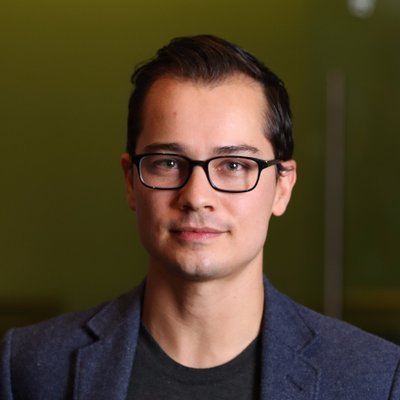
Ryan Sean Adams
Crypto investor going bankless.