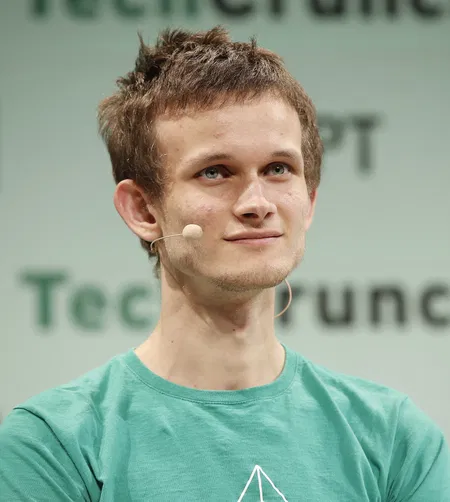
35 - Designing Ethereum | Vitalik Buterin
Chatting with the founder of Ethereum on his design choices for a global financial network

Up next
All episodes NFTs
NFTs
34 - The Ownership Economy | Jesse Walden
 01:46:50
Ethereum
01:46:50
Ethereum
33 - Slaying Moloch | Ameen Soleimani & Kevin Owocki
 01:48:09
NFTs
01:48:09
NFTs
32 - The Bull Case for NFTs | Jake Burkhman & Andrew Steinwold
 01:42:14
DeFi
01:42:14
DeFi
31 - Nexus Mutual to Billions | Hugh Karp
 01:52:56
Podcast
01:52:56
Podcast
30 - Synthetix to Billions | Kain Warwick
 01:50:27
DeFi
01:50:27
DeFi
28 - The Bull Case for DeFi | Vance Spencer
 01:43:58
DeFi
01:43:58
DeFi
27 - DeFi in the Eth2 Metropolis | Haseeb Qureshi
 01:39:29
DeFi
01:39:29
DeFi
26 - Investing in DeFi Paradigms | Charlie Noyes
Inside the episode
With Ethereum 2.0 on the horizon, we bring Vitalik Buterin back onto the podcast to discuss the 'why' behind many of the design choices of Ethereum 2.0
Why Proof of Stake? Why Sharding? What are the core org principles?
We also go over what has been discovered and added between the 2015 launch of Ethereum 1.x and where we are now. Things like:
- EIP1559 (where ETH is burned per block, and gas fees are more predictable)
- Rollups for scaling Ethereum
We also chat about Vitalik’s view on 'rollup centric Ethereum'.
We also discuss the process of getting Ethereum 1 onboarded into Ethereum 2.0 and a rollup round of questions towards the end.
RESOURCES
Transcript
welcome to bankless where we explore the frontier of internet money and internet finance this is how to get started how to get better and how to front run the opportunity this is ryan sean adams i'm here with david hoffman and we're here to help you become more bankless david how are you feeling after this episode absolutely stoked for the future of ethereum as i usually am ryan when we started this podcast the first 10 or so episodes was really about getting people onboarded into the bankless world into
the world of crypto monies and you know protocols as financial institutions and then d5 blew up really hard really fast and we had to uh you know we had to we had to answer for that there was a lot of excitement going on but we never got to the topic of values as they are baked into the systems that we are using at specifically at the base layer of ethereum itself right and this is what that episode was for this episode is about learning about the design choices of the ethereum protocol and how
different values have been baked into how we have chosen to build ethereum and how we have chosen to build ethereum into the future yeah if you're looking to understand what ethereum is and what its future road map is this is the episode for you i i hope this becomes kind of a canonical episode for anyone who wants to learn about uh ethereum and who better to explain it than vitalik um he has fantastic explanations sometimes they go into some technical detail but hang with that and you'll get a perfect picture as to what the value system is
for ethereum and how it's going to shape up in the coming years you know one thing i was struck by david is we call it eth 2.0 this whole new initiative the like the next i guess phase the phases of the ethereum roadmap but there's really no ethereum 2.0 it's all one ethereum network it's all one ethereum value system and social contract and the thing that we call eth1 and eth2 will eventually merge anyway and i saw that very clearly as we talked to vitellik
that that was that was going to happen there's one ethereum there's one community there's one a set of value systems that we all kind of abide by and uh it's just really exciting to see that level of unity yeah i really like that framing there's one collective of the ethereum hive mind right and the blockchain is just one component of that you know the the off chain component are you know people like you and me people like the listeners of this podcast people that discuss and communicate values around sort of as this like super layer upon what we all
perceive ethereum to be which you know right now is ethereum one dot x and then also is about to be phase zero of ethereum which you know as you alluded to will start off as a test net and then slowly kind of roll into actually being real life ethereum uh so that's a that's a good point there isn't one canonical version of ethereum there's just the values that we have and the code that we use to express it you know david i'm really proud of something too at one point we asked the question of vitalik like hey who decides what our values are as ethereum like we keep using this term
our values but how do we know what our values even are and you know i'm really excited that the bankless nation has been part of that structuring of of value systems right i think the bankless nation our value systems are very clear we want self-sovereign money we want to remove intermediaries we want to remove the bankers that control your life and we are part of the value system we determine partially the values of a system like ethereum it's just one big social contract uh in one conversation
and bankless absolutely plays a role there so thank you listeners for keeping these values close to your heart communicating them spreading the word spreading the message that what we want and what we need is a decentralized money system for the people by the people this is our longest podcast yet it goes on for almost two hours and that's because we really take our time going through every single facet of ethereum proof of stake sharding eip1559
rollups the transition and then we also do a fun uh rollups around at the end where we ask some vitalit we ask vitalik some some quick questions so use this episode as a tool to reference it's long because it is dense there should be something in here for everyone so i hope you guys enjoy this episode all right david before we jump into the episode let's talk for a minute about our fantastic sponsors one of the tools i've started to use recently is zapper for those of you that were part of the 2017 bull market it was characterized by just opening up
blockfolio and refreshing it over and over and over again and also anytime you ever made a trade you would have to go into blockfolio and manually input that trade information to make sure that your portfolio that you think that you have matches what you actually have with zapper you don't have to do any of that anymore because all you have to do is zapper is input your ethereum addresses and then zapper will give you a really elegant report as to where all your money is so there will never ever be any disconnects between the money that you think that you have and the money that zappa reports to you zapper looks
directly on chain and gives you a nice portfolio summary of all your assets and how many assets and all of your debt and all of your lending positions all of your positions all at once so there's no more editing your portfolio because zapper just does it for you one thing that i thought was really useful about zappers was when i plugged my wallets in i found that i had submitted liquidity to uniswap forever ago and without zapper i would have probably lost that forever because zapper knows where your money is better than you do it's also the gateway to investing your money into this ever expanding list of available d5
platforms like curve balancer uniswap yearn in the bankless nation there is this growing number of money legos and keeping track of them all is just super overwhelming which is why you could just go to zapper and zapper will will solve the problem of there just being too many money legos to choose from so check them out at zapper.phi enter your ethereum addresses and check out your portfolio and see if there's anything that you missed nation do you want to go fully bankless but in the real world monolith is the
defy account that you need it wraps your eth address in a bankless visa card and it does so much more it closes the loop from fiat to d5 so you can onboard fiat to die on monolith with zero fees then you can convert that die to a die which is an interest bearing savings account again zero fees and then you can spend that interest in the real world on a visa card so you can finally buy your cup of coffee with interest earned in d5 guys this is magic this is the closest thing to the holy grail crypto card and
monolith gives you all of it you need to download the app at monolith.xyz to get your bankless visa card it's optimized for european listeners they'll be coming to the us soon and when you get that visa card the monolith card tweet about it when you do i love seeing people on packaging they're beautiful bankless visa cards it makes me realize that the revolution is here search monolith in the app store okay let's get to the episode with vitalik bankless nation we want to welcome back
vitalik buterin who is the founder of ethereum a researcher at the ethereum foundation of course he needs no introduction to the bankless nation he's been here before i'm sure you know of his work we brought him here to talk about the why of eth2 though we want to dig deep into the design decisions that were made and also the values that were embedded in ethereum 2.0 it is coming up fast and why we care about these values vitalik it's great to have you welcome
to bankless thank you very much ryan it's good to be here again all right well i'm gonna start with this skeptics have been saying eth2 will never ship for a very long time about as long as i've been in this space before that they were probably saying eth1 wouldn't ship um i think they're wrong but my question is a little bit different is ethereum 2 going to ship as advertised i think so um and i think each two yeah and so first of all a phase zero is uh
in test that has been in tested for a while is a very close to being released and phase zero offers everything that phase zero was always stated that it would provide and it's got the proof of stake it's a chain it's uh running you can use it um and then phase one uh provides a shorting and shorting is uh going to be there um as uh advertised and then scalability from applications and you just uh combined together the sharding with uh
roll ups and i know i've got 100 000 tps which is i think almost exactly the same as among the crazier of the numbers that i've uh thrown around during the good old days around 2050 into 2016. so both an end to a mining and an introduction to a stake based consensus and ultra high scalability are both going to be within the hands of ethereum users i think much sooner than a lot of people think so we want to uh zoom out
and have this be sort of a canonical like what is eth2 episode and why so i want to want to zoom out and talk about this question what political values is ethereum going for in eth2 and how did that really constrain the design space for eth2 architecture there's uh two ways to look at what eth2 is trying to accomplish um one is to look at what it's trying to add that each one doesn't have and why
and number two is what is that if too unwilling to give up in order to achieve that right uh so uh from the first uh point of view uh so what is youtube trying to achieve that eth1 does not have uh and the two major parts to this are one is a proof of stake and the other is uh sharding and i mean proof of stake is a fairly uh kind of philosophically complex thing that does combine together multiple
objectives uh one of the really important ones i think is just moving away from the extreme levels of uh waste and energy in inefficiency that uh you can find in proof of work systems i'm also trying to move away from some of the centralization risks that we've been seeing in uh i mean both ethereum and even more so in bitcoin with its kind of much more mature asic ecosystem uh and also a proof of stake tries to be
kind of maximally democratic and open to participate and not just as a user but also as a staker all right um sharding is a scalability solution and so the goal is to try to just increase the number of transactions that the ethereum blockchain can handle from the status quo which is about 15 if uh we're talking about actual transactions that are on average that people send or 45 if we just assume everyone only cares about
sending youth transfers up to uh some number between 1 000 and 100 000 depending on which phase you're talking about and uh what kind of application it is and increasing scalability is valuable because we believe in ethereum as being this uh kind of publicly accessible open uh global architecture that people should be able to interact with without um and of doing so through centralized
intermediaries right like we believe that and if the base layers of the new internet should be a kind of open thing that is expected for regular people to be able to participate in uh and if you don't do a scalability then the alternative is to basically take some approach where you know you have some master networks that only a fairly powerful institutional actors participate in and then you start having trusted kind of side chains and most
people would live in trusted side chains and that's not really the kind of world that i wants to be building i mean just basically because i think if intermediation becomes the norm there's a lot of uh just historical examples of how intermediate institutionalized intermediation can very easily be kind of seized and that turn into a tool of control by people that the original creators of
those systems were absolutely not expecting and so that's why a kind of increasing tbs is valuable um and then the uh the next question is and what what properties are we not willing to sacrifice so one of the properties that we really care about in eth2 and i think perhaps the level of insistence on this maybe makes ethereum stand out alone relative to some of the other chains um is this principle that you know we do
not want to have super node dependence right like we want ethereum to be a system that can run and up fully operate without relying on some kind of super powerful computer like we want this in the system to if need be be able to operate entirely just as a collection of consumer laptops and this is something that at least i personally uh strive to stick to uh very closely um because like i do
i i do believe in a lot of the bitcoiner ideas um around big things um like you know if you let the chain and just to be kind of controlled by a small number of institutions then you know you're creating a small number of actors that could uh potentially take it over and start and pulling it in unfavorable directions um i want to even encourage a enough culture of active participation in a kind of proof-of-stake uh by regular users for example uh and
that's something that if you take uh one of the these paths that just say oh let's rely on supernodes that you just can't do right like if you have a chain that relies on supernodes as a a lot of these other blockchains are doing so where you just rely on every node in the network to have a very powerful computer then you're going to have a relatively small number of participants and if a large portion of those participants come together and say you know from start next month uh starting from then
we are going to just start enforcing different rules and if you don't like it screw you there is a kind of much less of an uh sort of institutional barrier against them doing that sort of thing because there's a much smaller number of participants that would need to collude and there's a much smaller number of people whose nodes would just kind of break by default if that happens um so decentralization is in a very significant part about avoiding those kinds of situations so that's why we've been uncomfortable with supernode assumptions also uncomfortable
with honest majority assumptions um this is one of those things that i think kind of unites uh some ethereum philosophy and a lot of bitcoin philosophy right like bitcoin philosophy is all about you know you validate the chain yourself um because otherwise you're just trusting the minor majority and the minor majority is not necessarily that friendly and eth2 is also increasingly designed to offer strong kind of robustness and security guarantees even in the face of a dishonest majority right so i guess to kind of
wrap up and summarize things again i would say number one just energy efficiency not being an environmental catastrophe and all of those nice things number two making it possible for regular people to directly participate in the blockchain as a writer to the blockchain uh by which i mean a transaction center and number three making it possible for regular people to participate in the blockchain as a reader of the blockchain as a direct reading of the blockchain
without relying on any kind of trusted apis and number four making it possible for regular people to participate in via blockchain as a participant in the consensus and if you take two three and four together then you can get a very high level of censorship resistance and of robustness uh resistance to social and political attacks even at a very large scale so so you mentioned you know like i i guess a couple words i would use to
summarize some of that is permissionless uh decentralized you know non-neutral those are important values kind of embedded in the design what what type of um constraints i guess did you have like it it's trickier to design a system that embodies those values and it's easier to take shortcuts and i guess some of the question that that some of the eth killers and other alternative layer one chains are sort of asking is well do people really care about these things vitalik is it is it fine just to
have you know maybe a little bit of decentralization like why did ethereum choose to be at one of one end of the spectrum in the way that it did right i mean i think trying to take a more centralized path is the sort of thing that works well in the short term but it ends up really biting you in the long term um so like you know we have seen real live
examples of kind of centralization vectors of chains being used to do things that are very and have disapproved of by their users right and i think a lot of the most egregious examples we can see in the context of some of the dpos chains so one example of this being how steam got uh taken over by uh justin sun um and who then proceeded to kind of establish and cement control over the delegates um and one of those uh users
uh started to rebel uh the um justin and you know the people he was like colluding with uh just ended up doing a lot of just increasingly authoritarian things on the chain until eventually the users uh ended up having to fork away and and in the context of eos for example we've seen a lot of kind of bribing attacks between different delegates so i think like core participants of a blockchain
ecosystem becoming unfriendly and colluding against their users interests is something that is not just theoretical it's something of which uh we have seen in a very real examples and like there's very real things that you know people potentially might want to do right like people might want to uh push through with some unpopular and of hard fork where they and just give themselves coins for example right like that like
kind of political uh arguments and manipulation around things like developer funds is something that we have seen um so you think uh absolutely even just from the evidence that we can see yet today there's uh just a lot of signs that show that uh creating a blockchain where all you're doing is just creating a kind of voting scheme between you know somewhere between 10 and 50 fairly large actors actually in the long run is potentially a pretty
dangerous thing so you do think in a nutshell that that users in the long run will very much value these characteristics of permissionlessness decentralization and neutrality absolutely i think these the importance of these characteristics i think does sometimes takes time to reveal itself uh because like there's this phenomenon uh that when a uh and if community is harmonious and when times are good and if all governance mechanisms say tends to give
the same result and it's a good one um right so you know regardless of whether you have a market or a democracy or a dictatorship or whatever else when kind of times are happy and people are roughly on the same page uh then um you know just all of these mechanisms are just going to lead to and if the same thing because everyone knows what everyone is going for and you know there just is one result so no matter what path you take and it's and it's a fairly happy one but it's so when there are disagreements and disputes that uh you start to see a lot of these
uh differences emerge right and when there are disagreements and disputes which is something that is going to happen to every chain eventually then uh the differences between you know truly decentralized systems so like uh you know bitcoin and ethereum and things um like these much more centralized chains it just is going to reveal itself very strongly and a lot of people are going to potentially get nasty surprises are you seeing any other chains that embrace these values besides like a
bitcoin or an ethereum uh there are some um so like one example of this uh i think like coda or and it renamed itself i think because of some stupid trademark thing um so they are trying to create a blockchain that's uh you know just fully uh zk provable uh so the idea would be that instead of having having to personally verify the chain you would be able to just use one zika snark to kind of fully
verify the validity of the thing and i think that kind of approach is fully in line with those principles because it basically means that no matter how much activity is happening there is no way to sneak an invalid chain through because while you can't generate a fake proof um i mean mimble rumble is another example of this and there's a lot of smaller chains in the kind of bitcoin course um expanded universe so to speak that are trying to implement these values to
various extents um and then in the case of ethereum and i think uh ethereum classic is um also one chain that you know values these things though they're taking a kind of even more purist approach to them kind of not doing sharding for example seriously considering reducing block numbers and so forth so it definitely is a niche that some projects are going towards though i think the number of projects
that try to access that need destination that the market can sustain is a much smaller than the number of uh kind of quote unquote feature projects that the market can support and basically because if you make a future project there's lots of different features that you can go after but if you kind of embrace neutrality and you embrace user sovereignty and embrace freedom then there's like a much more limited number of ways in which that can happen um so i do expect that uh the number of uh you
know more decentralization focus chains is going to be small but i think the chains that can't take the path and they can stick to it are going to be very successful backing up vitalik we have these principles right that we've just gone over like we need a blockchain to be adequately decentralized for obvious reasons or else there any any centralization is a vector for attack we also need a blockchain to be scalable because if it can't be scalable then then as you alluded to that leaves room for you know a new form of
centralization to come in you know usually through some form of of intermediary and you know it back in 2015 when ethereum 1.0 was was rolled out we had we the the the social contractor around ethereum had picked out some long-term solutions to you know changing ethereum from what it was about to be in uh to what it wanted to be in the long term mainly proof of stake and sharding and if it you know correct me if i'm wrong but i think proof of stake and charting were kind of more or less uh chosen as uh
strategies for improving ethereum even before ethereum 1.0 was rolled out how how did we have such strong assurances that these were the right solutions at the time um so i definitely think that uh you know a large portion of the community considered proof of stake in charting to be part of the social contract from all the way back in 2015 or potentially even earlier the dow fork might have been the moments that have cemented those things because uh a lot of the people that really seriously oppose that
proof of stake in sharding um ended up also really seriously opposing the dow fork and so they ended up going to the etc side um as for why we are sure uh i think one thing that's important to note is that it took a while for us to be sure right like if you go back to the very first uh proof of stake related blog post that i made uh this is the blog post that's uh introducing slasher then um and you read what that blog post says so you know you see a disclaimer right at the top the purpose of this
post is not to say that ethereum will be using slasher and voice of dagger as its main mining function rather swasher is a useful construct to have in our war chest in case bureau of stake mining becomes substantially more popular or a compelling reason is provided to switch uh swash may also benefit other currencies that wish to exist independently of ethereum thanks to taco time for inspiration and for jack walker for improvement suggestions so now if you go back to january 2014 we're absolutely not certain that proof of stake does not have fundamental flaws in it right um and um if you look at the posts uh that
we had are trying to figure out shorting and shorting was uh described as an unsolved problem and it was described in a list of unsolved problems along with other problems that we recognize today are you know either unsolvable or unsolvable without very fundamental tradeoffs um so the post i'm thinking about here was uh one from 2014 uh that was called something like hard problems in cryptocurrency uh so this was early 2014 then all the way throughout 2014 uh the big kind of
philosophical expedition that we went on is like trying to figure out basically whether or not proof of stake can get around the nothing at stake problem and eventually um we came to this conclusion that uh i expressed in my blog post called the how i learned still of week subjectivity and basically said no no it's not possible with proof of stake to get exactly the same properties as a proof of work but it's possible to get something that's reasonably close and
here are some strong or strong arguments for why i think it's close enough right and so that was probably you know the first major step and then the second major step was uh around 2016 to 2017 when we kind of really wrapped our heads around how the kind of other major class of a consensus mechanism sort of academic um you know import uh d dworkland chess stockmeyer pbft style bft consensus algorithms worked and and
really kind of deeply understood like basically how they actually work and how they fit into a proof of stake security model in a proof of stake context so i think after those two discoveries uh together uh proof of stake was kind of basically set and the question was just discussing the details and on the sharding side it was uh largely a question of like what security models that we were comfortable with uh so around 2015 or so this when
we started thinking about random sampling which was the first step major and of breakthrough toward making sharding work and then in 2017 there was that major breakthrough of data availability proofs that allows the shortened blockchains to be secure even in a dishonest the majority i'm sorry uh context so even in the co in the context of a 51 attack an attacker can't force an invalid chain throw so after those uh discoveries i think we were pretty set that you know sharding is a reasonable strategy and at that
point and i think people were broadly comfortable with both of those i mean major pieces and then if things kept proceeding from there so if you could put yourself in your own shoes of your 2015 version and in july july 2015 the ethereum blockchain rolls out at that time uh how far away did you think that proof of stake was going to be i think we were definitely expecting something like one to one and a half years um which is of course uh proves to be
wildly over optimistic as uh a lot of timing things ended up proving to be wildly over optimistic in all parts of uh the crypto space um you know whether it's uh things in ethereum or things in the landing network or things in some of the quote ethereum killer projects um but i think uh in 2015 we were definitely and of confidence that uh we will arrive at a proof real estate system and be able to implement it and also also at that time i do want to hang on proof of stake uh for a little
bit more but also at that time when the ethereum blockchain was just rolling out what was the sort of uh consensus around the you know monetary policy of ether or the issuance schedule or was this even like a big subject at the time uh it was uh and the conclusions that we had then are actually quite different from the conclusions that we have now so if you go back and read the ethereum white paper and there's a proposed issuance schedule that basically says that there would be about 16 million if it gets issued every year
and this issuance would continue forever and the rationale for this was uh one there is a belief that you need ongoing issuance for security um there was definitely no certainty that proof of stake could come in and offer security at a much lower cost than proof of work we were assuming proof of work forever um and three there was this fairness argument that said that um you know we want uh if to be accessible to people who exist in the future and not just people who exist in the present and

Ryan Sean Adams
Crypto investor going bankless.
.jpg-48bb3b8a9a7a83dee5836f716023f733.jpg)

.png-336efc5e35995e6b184e7e830baa688b.png)


.png-a616dc52961c1edd72b0c1fdf5f47e7a.png)