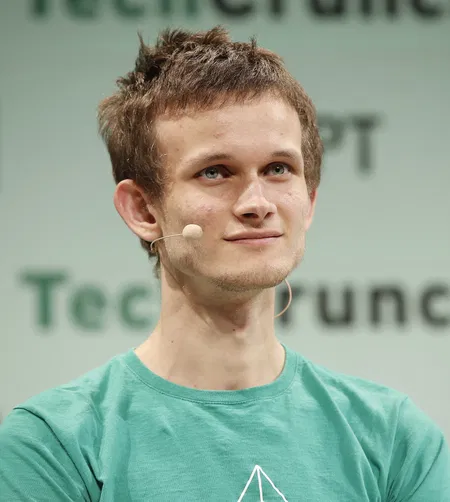
46 - Why Proof of Stake? | Vitalik Buterin
Ethereum co-founder lays down an economical case for why PoS
Up next
All episodes 00:53:44
News
00:53:44
News
ROLLUP: 5th Week of December
 01:47:12
Ethereum
01:47:12
Ethereum
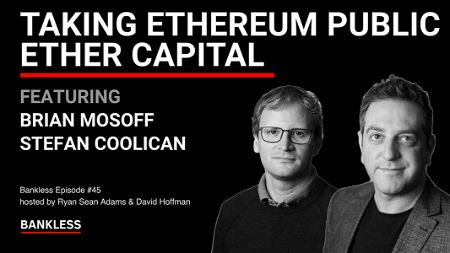
45 - Taking Ethereum Public | Ether Capital
 00:55:17
News
00:55:17
News
ROLLUP: 4th Week of December
 01:22:35
Regulation
01:22:35
Regulation
📺 Ethereum vs the STABLE Act
 01:58:17
Ethereum
01:58:17
Ethereum
44 - The Bull Case for ETH | Ethereum Community
 Podcast
🎙️ Crypto from the Outside | Demetri Kofinas
 01:38:20
Podcast
01:38:20
Podcast
42 - The Global Game of Crypto | Bruno Maçães
 02:08:27
Ethereum
02:08:27
Ethereum
41 - Crypto Civilization | Balaji Srinivasan
Inside the episode
Vitalik Buterin comes to the Bankless to discuss a number of topics surrounding Proof of Stake!
We begin discussing the Beacon Chain launch, and the Ethereum's road so far up to this point. What were the unexpected obstacles along the way? How does it finally feel to be at this point?
We also discuss the theory and thought-process behind Proof of Stake! Vitalik recently wrote a blog piece 'Why Proof of Stake', and we walk through this piece with him! It does a comprehensive analysis as to the theory behind why Proof of Stake is so strong and lays down economic arguments behind Ethereum’s new consensus mechanism.
Lastly, we discuss one of Vitalik's blog pieces 'Concave and Convex Dispositions’, and how these different personality types characterize Bitcoin and Ethereum, as well as the design of social groups and human governance organizations.
RESOURCES
Check out these resources from Vitalik
Transcript
gemini is the world's most trusted cryptocurrency exchange i've been a customer of gemini since i first got back into crypto back in 2017 and it has been my main exchange of choice to make my crypto buys and sells gemini is available in all 50 states and over 50 countries worldwide and on gemini there are markets for over 30 various crypto assets including many of the hot d5 tokens like wi-fi ave uni and also they are one of the few exchanges that has liquid die markets having both the
option of logging into thegemini.com website or instead opening the gemini mobile app has allowed me to be able to access any and all exchange and on or off-ramp services that i've needed to on a moment's notice with instant deposits and fast withdrawals i'm able to make my money do the things i want it to when i wanted to you can buy crypto safely and securely on gemiini with the peace of mind of knowing that your investments are insured and protected with industry leading cyber security you can open up a free account in under three minutes at
com gemiini.com go bank list and if you trade more than a hundred dollars within the first 30 days after sign up you'll be gifted a free 15 bonus check them out gemini.com go bankless synthetics is ethereum's decentralized derivatives liquidity protocol what does that mean synthetics is a platform for creating and trading synthetic assets which are assets that are priced via an oracle rather than bids or asks traders can use the quenta exchange which hosts
and trades all of the synthetic assets created by synthetics traders on cuenta can trade synthetic tokens like sbtc s oil or sd5 because quinta is powered by synthetics traders experience zero slippage on their trades no i didn't mean low slippage i meant no slippage because that is the power of the synthetics platform no slippage on your trades you can also easily short assets with isynths which are synthetic assets that move inversely to their target asset synthetics isn't just for traders
developers can build on synthetics to access the infinite liquidity offered by synthetic assets or investors can stake collateral to the protocol and earn fees that the protocol collects if you're a trader and you're looking for a trading platform and not found in the legacy world check out cuenta.io if you're a developer or you just want to earn yield on your collateral go to www where you can stake your snx or eth and earn fees from synthetics
agless nation we are pleased to bring you vitalik buterin again in front of the nation we are talking about a few things that are top of mind vitalik great to have you how are you doing thank you very much uh david and ryan that's um great it's uh great to be on bankwest again it is fun and i feel like this is a really good moment to be on bank list the first thing we want to talk about with you actually is this pretty momentous maybe monumental in the history of ethereum achievement which is
we hit the number 524 thousand 288 eth now deposited in the staking contract how does that feel it definitely feels great um okay and i think like for a long time in the first few weeks and we were definitely a bit worried because i know that the deposits were coming in slowly at the beginning and it seemed like oh no with only four days left when we had 20 percent and
you know what the heck is going on here uh and i mean we even saw right that and there are a lot of people who are starting to get worried like and on our github thread and i saw eric opened up um that github issue basically suggesting you know hey just in case there's never enough deposit so let's set a maximum date and there is a bunch of arguments around that um but um you know no the ethereum community came in and the ethereum community delivered and just like within the last 24 hours we
ended up having more deposits than we had in the entire period before that like it's it definitely feels a little bit surprising though in retrospect it it should not be too surprising i guess uh the one kind of events that happened in the past that this reminds me of is um if you were here during the original ether sale back in 2014 um if you remember that uh whole event uh it was it was this kind of six week long
sale but then the first two weeks were this most important period because that was the period during which you could get the most favorable price for your if uh and there was like some amount of amount of deposits on the first day uh less on the second day and then it seemed like it was going really slowly and almost petering out at a couple of million dollars and then just suddenly in the last couple of days everyone just like whooshed in and uh pushed the whole thing up to close to 18 million dollars uh so and
and like the curve feels kind of you're very similar to that um and i like i guess to some extent you should expect that because well why would someone participate earlier if they can just wait until the end um but you know just seeing that if spike you just come first slowly and then all at once is definitely amazing and it's definitely a great testament to the uh ethereum community as a level of confidence that first time in in ethereum itself
and then the second time in the uh proof-of-stake and charting uh stuff that we've spent so many years working on so vitalik what does this tell you uh about the ethereum community like as a result of this and because we like we hit the 524 thousand each but then we just blew past it by 200 000 more each like what does this if this is a litmus test for the community what is it telling you what like what are your big takeaways about the ethereum community as a result of this event
i i mean i think like first of all there's a definitely wide community buy-in and confidence in ethio in general and that's something that i think i definitely believes the whole time but it's uh definitely good to have just such a clear sign of it um no no 300 million dollars worth of uh people just locking up their ether potentially never to see it again unless the thing um you know either delivers or we find or or we
find some kind of further thing to do um to do to make those their coins in the in in the deposits actually valuable again so you know in some sense it's the ultimate bet on progress and and i think like uh i bet on progress is uh to some extent what ethereum is about i feel like it happened in the perfect way like in a very um like climactic way and really like fired the ethereum community up when it actually happened in the way that it did like it's almost fitting i would say
that it that we weren't sure we were going to cross the threshold until the last you know 48 to you know 24 hours but i i'm curious about this number itself why was the number selected what kind of drove that number to begin with was it fairly arbitrary that we have to have some amount of stake and so you know why not this particular number or was there some sort of rhyme or reason behind it i i guess uh like 524 000 was the end of the power of two that seemed like a
relatively minimum acceptable threshold for an amount of deposits that we could have to ensure that the chain would actually be safe with that amount so like to give one example it's the smallest power of two that the ethereum foundation could not individually 51 attack uh so that was uh or you know the theory foundation has like slightly uh slightly above that but no it would have to put everything in and even then it would only be only be around 50 percent um so if we
had less than just the number of actors that would have enough money to be able to uh take over the thing individually it would just get higher and higher and so it actually would be like the chain would just not be that secure with a lower amount but on the other hand like at this level it's getting to the point where like there's a really very few individual actors that actually have the ability to and have put in um the funds to take over the chain and aside from the the foundation there's also obviously
the major exchanges and maybe like consensus and a couple and and i don't know how much they have and a couple of whales and but and then if you go well if you go ahead of higher and we hope to go higher then it is going to get an out of reach of even those largest holders but like realistically we don't have to and get up get up to those much higher levels immediately like this is still you know just the phase zero beacon chain there's nothing kind of completely
relying on it and so we start at a and if a immediate level of safety and then and go up to the higher level over time as people naturally become more confident in the system so this uh process this getting to that number and exceeding the threshold of eth that sort of initiates the the rocket launch sequence right but um the the chain is not yet launched that will happen december 1st 12 correct 12 12 o'clock utc time um so
what what kind of happens next what's the next milestone in the beacon chain launch and in staking now that we've filled up the the deposit contract to its minimum threshold so the next milestone is obviously the thing that's happening in five and a half days after i'm saying this um december first the the launch itself um you know just it's you know we've done lots of test sets but this is still larger than any test that it's a different set of stakeholders than any test debt so just
making sure that all goes smoothly uh then after that uh we would hope the proof of stake chain just to run smoothly for some amount of time and at some points we want to just uh start getting on to the task of kind of upgrading it and bringing on all the full functionality that we want youtube to have so the big ticket items are one is sharding the second is and if the merge so bringing uh eth one into uh the e2
system removing the proof of work chain and kind of properly floating the uh the system back together and then there's also some smaller things that we want to do so like for example we want to add white client support uh fairly quickly so if you go into the uh give two specs at github there's already a uh pr that's uh we've been working on for about a a couple of weeks to add light client support uh and then there's some just efficiency improvements and some
possible kind of economic tweaks um like one example of a like a type of economic tweak we might want to make is just that making the chain more friendly to uh people who validators who stay online during in an activity week but don't stay online perfectly so like basically if you have ninety percent of performance during an activity a week where the people who are completely online who is forty percent like you should not lose four percent right really you should lose much less than four percent since you really were doing
the best that you can so i have a proposal around fixing that uh just general efficiency improvements uh so basically the ef2 chain is uh just going to kind of get into this this you know progressing and upgrading uh mode and it's uh uh basically preparing for the the moments when uh the existing ethereum ecosystem can they have properly and fully fold into it are you feeling a little bit vitally because so this is like the the uh
launch sequence initiated right but but at some level we're all kind of standing close to the launch pad watching the you know the spacex rocket and it hasn't quite launched yet and that of course is maybe the the most nerve-wracking part right so are you is there any element of like you being nervous about december 1st or i mean what could happen december 1st uh could could we have a a failed launch could there be some issue i mean
issues are always possible right so this is i think why uh we should hold off the full cell operation until yes it gets off the ground um but like you know like we've seen know what we've had with different test nets um some of them launched perfectly some of them had issues even the ones that had issues they definitely all uh have managed to fix themselves within uh either a couple of hours or a day or so um i expect uh that in this time
there's definitely more participants and potentially less less experienced participants so also maybe more experienced participants because like the people who participated in the test sets are also going to be in the main net and it's not going to be a first time for the for them anymore um we're not we're i don't think we're going to see the thing that we saw in some of the test that's where 40 percent of people just never showed up uh because um you know this time we actually have a a profit motive um
i yeah there's just always the possibility of random technical risk i suppose um but and you know we've done lots of testing at this point like the quality of the test nets has definitely just gone up and up over time um but um you know figures crossed and uh you know if it's it hasn't happened until what's happened uh so we're definitely hoping and eagerly awaiting everything going well so vitalik the eth2 research team recently
did a uh a reddit ama that i thought was really fantastic and there's one question i recall in there i think somebody asked you the question about maybe um you know eat issuance or something i created the context for the question you had this really i thought reflective reply where you talked about ethereum being you know while while ev2 is launching it's also a a technology and a network that is is
somewhat in motion right there are going to be a large set of improvements over the the next two years right it's not necessarily going to be like instant scalability is here and both genes merge it's going to still be a process but at the end of that time um like the eth2 chain will be in a much better place i was wondering if you could i'm not presenting it the way the way you did the way you answered that question but i'm wondering if that jogs your memory and you could talk about um maybe that
answer to to the question like what's the future for issuance what's the future for stability these two where are we going to be on the other side when all of this stuff is done and why should we hang with ethereum yeah no and i i definitely think i made that comment for a reason and and i think there's an important kind of insight to keep in mind there so like there's a lot of uh people uh who have been recently commenting about how oh you know i guess this ethe doesn't
have a finalized issuance schedule or oh you know you can't calculate what the current total supply is or what is the max supply and or you're now you're now you're changing things and and there's definitely at some extents to which like those uh queries are coming more from the bitcoin community than the ethereum community itself and so you know we should definitely kind of not uh i guess overrate the extents to which we uh care i
really feel the need to kind of respond and satisfy all of those requests um but you know like the thing that we i think we need to just keep in mind is that just kind of being until actually honest about the state of ethereum like if you need a system which uh um satisfies the property that it will stay the same as uh as it is today and it has existing properties that it's um that it's going to preserve then ethereum as
it exists in 2020 is just as a matter of fact not the system for you for at least the next one to one and a half years right there's just a reality that there has been this big massive 2.0 transition that's been planned pretty much almost since the project's launch and now it's finally happening and then at the same time there are these massive transitions in economics so eib 1559 is a big one and also just uh activity moving from layer one to the layer twos uh is another big one and
these things are going to fundamentally change how a lot of economic and technical properties of ethereum work uh and so like any property of the ethereum or blockchain today may well change in those one to one and a half years and so if you're interested in long-term economic properties of the ethereum ecosystem like it matters less what are the properties of the system today and it matters more you know what are the properties of the thing that's uh slowly being built up over the next one and a half years right uh
like and like what even is the point of uh being able to you know verify the current like the current proof of work issuance uh schedule like perfectly if uh the thing that we really should be verifying is the economic properties of the proof of stake schedule that are going to be um you know guiding uh ethereum's economics for the 20 years after uh 2020 um two or you know one uh whenever the merge ends up happening uh
so i think like just explicitly understanding that yes ethereum at the moment is a system in flux and yes if you want something that's not a system in flux then you know bitcoin may be the thing for you ethereum classic may be the thing for you though and ethereum classic itself is a kind of i think influx as a matter of necessity because it's immutability is being threatened by all these 51 attacks um but so that's one example where um you know in order to protect people's uh enough property rights you actually have to do
something other than standing still um so so vitalik if this is successful if we cross the bridge if we make it for the other side to the other side for for those that kind of stick with the project stick like the builders who who kind of stick with it the community that that sticks with it what's left for us on the other side what do we get in terms of issuance in terms of improvements in terms of uh security enhancements what's the reward there i i think great things are on the other
side uh so number one is obviously proof of stake uh so much more um efficient much more secure much less re-killing uh form of like a much less issuance demanding uh form of consensus um so uh you know issue and so is going to potentially go down by significant amount the efficiency of the network will go up by a lot and again ethereum is i basically are going
to become what i think the 2020s will expect a modern blockchain to be uh so that's number one um number two is sharding um so sure and at the same time the layer 2 ecosystem so those things together are going to give us scalability in the tens of thousands of transactions per second which is a hugely important because ultimately mail we're looking to create a platform that can achieve mainstream adoption create a platform that actually
can provide enough security interest that guarantees to its users and actually scale that up to millions and potentially tens or 100 millions of users and not just like a very um a very small number like a couple hundred thousand that per day and i just prove of stake and sharding are the things that needs to be done to make that happen and so that's number two uh number three is um that uh just a better protocol economics uh
so eip 5059 is the really big thing um i think the more you use ethereum the more you realize that like just gas estimation is such a stupid and archaic concept like i really think uh that if all goes well in five years time like blockchains that rely on this first price auction model is just going to be looked at like caveman economics uh so i can i i'm really and i'm really looking forward to it and it seems like the model is already working well and
increasingly being validated in flowcoin it's increasingly working well on the test net so really looking forward to that uh hitting the mainnet i think that could be one of the big stories of 2021 um also adjust general efficiencies within the ethereum system uh so replacing the hex tree with binary trees like uh allowing stateless clients um it should make it much more efficient to process and sync the chain um
it's a much more uh uh some of virtual machine improvements uh that would allow us to just not need any more pre-compiles and have and be able to have all the advanced cryptography that we want inside of uh ethereum so basically just everything that you could want if you're you know building some like privacy preserving application or some kind of more complicated smart contract system or something or some or roll up for scalability like you know
the tools actually are going to be there and you'll have and you're not going to have to use kind of clever tricks to anywhere that's anywhere close to the same extent as you do now um also like client support uh so if you were making taking a go at making it explicitly much more like client friendly uh and so um you know hopefully break the dependence on and if you're uh and uh kind of actually uh have uh you know make it so that other people's wallets actually can't be like clients
uh so and vitalik do we get to that place not fixed issuance obviously like the bitcoin model but do we get to ever get to a place where we have more predictable issuance on the other on the other side what does that look like yeah uh so i think uh realistically if gold wants to wait around um you know one or two years after and probably even like the caucus starts ticking next week uh so just after phase zero and just verifying that the current economic structure of proof
of stake is sustainable i'm verifying that that economic structure can survive the addition of sharding the addition of the eth1 chain uh verifying that eibu 1559 is working as expected and then once all of those pieces are in place um then i think people are going to just have a much more clear and visceral understanding of you know this is how high um proof of stake issuance is this is how high the ap 59 burn is the this is the kind of historical variance of those two
parameters and so um like the uh issuance in general and kind of change of the total supply level is going to look i think much more predictable a couple of years from now and i think people are going to be very happy with the results last thing for you on this vitalik then we'll move on to something that is equally exciting in a way um if somebody is just built on the eth1 chain right now has all of their ether on the eth1 chain um do they have to worry about any of the stuff that
like we were just talking about or does this merge somehow in the future good question uh the answer is they absolutely do not uh so one of the big compromises that we made for and of practicality is that while ethereum's consensus layer and scalability and all of these things are getting massive kind of revamps from the ground up ethereum's execution layer is actually remaining remarkably constant throughout the transition so transactions that were valid before
will be valid after uh smart contracts that executed in one way before will execute the same way after basically all applications contracts everything will just be kind of migrated from the one side to the eastern side automatically right and so you as a user or as an application developer basically do not need to worry i mean there are a couple of corner cases like for example if you relied on block hashes for randomness before then in proof of stake block hashes stop being secure randomness and so instead you
would have to use like the rant out output as randomness but you know like these are block times are going to work slightly differently but no these are generally like issues that only affect a very tiny portion of users so for basically it like the fast mass and fast majority of the of the user base i think they'll experience and have close to no change from an application perspective so vitalik the conversation about proof of work first proof of stake was really really big from what i can remember in in 2017 in 2018 or it should probably
even bigger before that but i came into the world of crypto in 2017. and i actually think it's really valuable that people understand this debate and why and and understand the merits of proof of work and also understand the merits of proof-of-stake in order to understand like why is ethereum so committed to proof of sake like why do we want this and so you wrote this article on your blog vitalik.ca everyone should check it out called why proof of stake and we kind of want to go through some of these points so we can help help the bankless nation like kind of come to understand the the terms that you use
here and the the arguments of why proof of stake is inherently uh the right i'm not going to say superior but the right uh consensus mechanism for ethereum right because many bitcoiners will still say to the state that proof of work is the one true consensus mechanism um so let's go through some of uh some of the points that you that you wrote here proof of stake offers more security for the same cost like what does that mean and how does staking offer that so the basic uh idea here is that if you
try to quantify security so the easiest way to quantify security is just how many dollars you need to spend to break the thing then if you look at the ratio of security to cost where cost just means like how many rewards you have to put um you have to push out to the participants then the ratio of the security level to the two of the ecam amount you pay for the security just is much more favorable on the previous state side than it is for any version of proof of work uh and i think the way that you can look at
this right is that if you look at just first of all start off with a comparison between gpu based proof of work and asic-based proof of work uh so this is a comparison that and even bitcoin people make all the time right when they defend why the their asic-based group of work is better than the basic resistance algorithms it's basically that in the gpu case the cost of mining is only operating costs and there's basically no capital cost right because like you can rent gpus um if you buy a gpu you can always sell it after even if the blockchain disappears
gpus continue to be useful and so if he wants to attack a gpu based chain all you have to do is just rent some gpus for six hours or what however long he wants to do an attack and so the cost of an attack is basically going to be just exactly the same as the cost of the rewards during the time period that you're attacking and and if you as an attacker receive block rewards then the cost of the attack even drops to zero or it becomes profitable all by itself right so for gpus like while gpu proof of work mining has a big advantage
in terms of being decentralized from a security perspective it actually is quite weak and we've seen this right as i mentioned in an ethereum classic has been getting a lot of 51 attacks recently now if we look at asic-based proof-of-work asic-based proof-of-work is considerably more secure because asic-based birth of work has not only ongoing costs but also capital costs right and an analysis i did a few years ago suggests that it's about one-third ongoing cost and about two-thirds capital costs um maybe that ratio changes over time i
actually have no idea which direction it's going to change into but like that's roughly what it is approximately right and if u.s then if you uh kind of make some assumptions about how long an asic lasts you can actually kind of reverse engineer what the capital costs are kind of from the amount of money that you're paying for rewards right so the idea basically is that if your your chain is paying one dollar a day in rewards uh then out of that one dollar one third will be operating costs two-thirds of the capital costs
and you can think of the two-thirds capital costs as being a kind of amortized over the entire period of time during which that miner is mining right and so if you assume that an asic lasted about two years i think now it's a little bit more it's a little bit more than two years um but you know moore's law in increasing efficiency wear and tear all of these things and so at the two year level right all you have to do is you basically take the amounts per day that they're spending on the asic and then multiply that by the number of days in two years and that's the cost of
the asic right and so if your model of an attack is that an attacker just has to buy up as many a successful legitimate network then you can use this to kind of get an estimate for the cost of the a6 needed to attack the network and so here you get about fortunately 86 dollars and so that's the cost of breaking proof of work if you have asics right so already much better than gpus but asics have a cost of centralization so now if we go to proof of stakes before we

Ryan Sean Adams
Crypto investor going bankless.
.png-a616dc52961c1edd72b0c1fdf5f47e7a.png)

.jpg-48bb3b8a9a7a83dee5836f716023f733.jpg)

.png-336efc5e35995e6b184e7e830baa688b.png)