Up next
All episodes 00:23:51
Podcast
00:23:51
Podcast
Announcing the GREEN PILL Podcast | Kevin Owocki
 01:16:35
Podcast
01:16:35
Podcast
ARK Analysts call $1M BTC, $180K ETH | Bullish Crypto Price Predictions
 00:27:36
Regulation Premium
00:27:36
Regulation Premium
DEBRIEF - Crypto in Washington | Congressman Tom Emmer
 01:06:53
Regulation
01:06:53
Regulation
🎙 105 - Crypto in Washington | Congressman Tom Emmer
 01:20:35
News
01:20:35
News
📺 ROLLUP: Bitfinex Hack | Super Crypto Bowl | Aave Social Network | Vitalik Supports Assange DAO11
 01:13:26
Podcast
01:13:26
Podcast
📺 Will MetaMask Drop a Token? Breaking Down the Biggest Wallet Merge Ever
 01:09:01
Ethereum
01:09:01
Ethereum
📺 Finding Common Ground | Solana, Avalanche, & Terra Panel
 01:09:39
NFTs
01:09:39
NFTs
🎙 Behind Axie Infinity's Engine | Jiho (Layer Zero)
Inside the episode
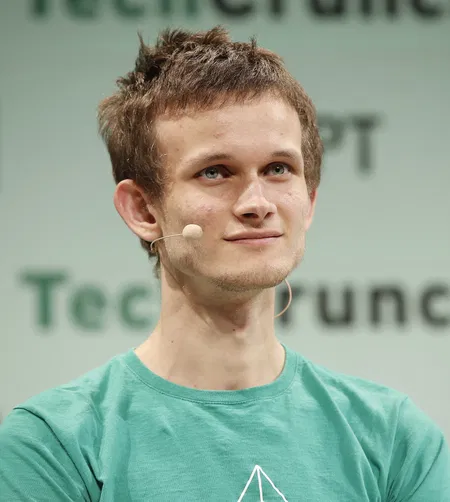
Vitalik Buterin is the founder of Ethereum and a researcher at the Ethereum Foundation.
As the visionary behind the network, Vitalik's values are embodied within the ethos of Ethereum's community-centric nature.
Exploring quadratic funding, pluralism, and sybil resistance, we dive into why Vitalik cares about public goods and how we can utilize novel mechanisms to fund them elegantly.
Take the Green Pill, anon.
New Green Pill episodes released weekly!
🎥 GreenPill Announcement Episode
iTunes | Spotify | YouTube | RSS Feed
RESOURCES
🏴 JOIN THE NATION 🏴
Subscribe: Newsletter | iTunes | Spotify | YouTube | RSS Feed
Follow: Twitter | Instagram | Reddit | TikTok | Facebook
Not financial or tax advice. This newsletter is strictly educational and is not investment advice or a solicitation to buy or sell any assets or to make any financial decisions. This newsletter is not tax advice. Talk to your accountant. Do your own research.
Disclosure. From time-to-time I may add links in this newsletter to products I use. I may receive commission if you make a purchase through one of these links. Additionally, the Bankless writers hold crypto assets. See our investment disclosures here.
Transcript
hello and welcome to the green pill i'm kevin walke and this is the podcast about public goods and regenerative crypto economics today we've got vitalik buterin the founder of ethereum and a research scientist at the ethereum foundation on the episode obviously vitalik's influence on the space is massive having delivered the original white paper for ethereum and being the visionary behind the ethereum network and one of the things that i wanted to do on this episode was dig in on why vitalik cares
so much about public goods i think there's a counter factual world out there in which say vitalik wasn't into public goods as much as he was and i think that the ethereum community would be missing some of its vibrancy and community-centric nature that it has these days because vitalik's champion uh because vitalik has been championing public goods we don't have that world so really wanted to dig in on how he views public goods why public goods are good and which experiments in the community
he thinks about having the most promise for funding public goods and the just salt of all of those things together obviously vitalik beyond just being a champion of the ethereum ecosystem also wrote the quadratic funding white paper with glenn weil as you all know quadratic funding is a foundational part of bitcoin and uh i think that there's a lot of interesting surface area between git coin the implementation of quadratic funding and the research that vitalik and glenn have done on quadratic funding so this was a fun episode for me i hope
that you enjoy this episode with vitalik buterin founder of ethereum enjoy alchemix is a defy app that offers self-repaying loans that lets you spend money and save money at the same time alchemix allows you to deposit the die stable coin into its faults which earn some of the highest yields that defy has to offer you can then take a loan from alchemics of up to 50 of the deposited die and that loan automatically pays itself back from the yield that is generated from your deposit it's a savings account that the banks don't want you to know about alcoholics also
has ease vaults available so you can get a self repaying loan that's denominated in eth coming up in alchemix v2 is a bunch of cool new features such as credit delegation multi-chain expansion endow revenue sharing and vote boosting alchemix lets you get your interest payments on your deposits paid to you up front check out the power of alchemix at alcomix dot fi and make sure to join their extremely vibrant discord if you want to participate in governance or have any questions about the project banklist is proud to be sponsored by uniswap unit swap is a new paradigm in
asset exchange infrastructure instead of a cumbersome order book system where trades are matched with other humans uniswap is an autonomous piece of software on ethereum that lets you trade any token at the current market price no human counterparties or centralized intermediaries just autonomous code on ethereum input the token you want to sell and receive the token you want to buy the uniswap grants program is accepting applications for grants do you have something of value that you think you want to contribute to the uniswap ecosystem no matter how big or small your idea is you can apply it for a
unique grant at uniswapgrants.org and help steer uniswap in the direction that you think it should go thank you uniswap for sponsoring bankless all right welcome to the show i am here with vitalik buterin the founder of ethereum and research scientist at the ethereum foundation welcome vitalik um thank you kevin it's good to be here great to have you vitalik your background and how you came to found ethereum is well documented in the infinite machine book and elsewhere so in this space i want to focus on your advocacy for public goods
and your talk things that matter outside of d5 that you gave at ecc this year um i think that the natural starting place for me and you to start talking about these themes is quadratic funding bitcoin grants is built off of the research paper you did with glenn weil on quadratic funding uh how did you come to conceive of quadratic funding with glenn and how do you see it evolving in the future um and i guess like well glenn originally came up with the idea for quadratic voting um and
that well he was one of the people who came up with that idea actually um there were uh it turned it later turned out that there were a whole bunch of uh historical papers that pointed to uh very similar ideas which uh actually happens really often for the uh for for the best ideas and there's uh one from i think 1980 um talking about why quadratic voting is like the theoretically optimal voting rule there's a whole um there might be a couple of other ones um about glenn made kind of the
best and most detailed exposition and um i think it was a paper that he yeah published like sometime between five and ten years ago um and quadratic funding was uh an adaptation of the ideas behind quadratic voting to the context of uh public goods um so i think one of the really big differences between quadratic voting and quadratic funding is that in quadratic voting the uh the number the issues that are being voted on are still fixed and you still
need someone to choose what the issues are and it turns out that there is actually a lot of power in being the issue setter right um just like basically yeah like if you are a majority that cares about something um less and then some minority and you want to like beat out the minority what you can often do is you can just like raise that the same issue in the different forms a huge number of times and just like basically drain the other side's voting credits um so quadratic funding
is a bit different in that it's kind of fully self like a complete system and that even the choice of questions is uh not something that needs to be kind of enshrined they're like pretty pre-mind or whatever word you want to use for that right right like anyone can create a project anyone can get your bto project and based on the quadratic funding formula and based on how many people donated and how much the the projects get matched um so this uh idea that like even like what questions
people are deciding on so in this case like which public goods to give money to is also an emergent part of the mechanism is something that's really powerful um so gwen and i wrote the initial paper um iem also came up with a modified version called a pairwise bounded quadratic funding which just uh works a bit like is a bit more robust against um collusion and against attackers like controlling a small number of accounts
um and right i guess quadratic voting and funding have just gone from there right of course well it's um i mean for me having built git coin with the mission of growing and sustaining open source software and having that be a primary focus for us uh and then launching git coin grants which use quadratic funding as the foundation uh it's it's amazing to hear about the history the back history of how we got here i'm wondering uh i'm wondering how you see quadratic funding evolving from
here quadratic funding on git coin we're using pairwise as a way of preventing collusion on the mechanism i know that there's other projects out there that are doing really great stuff like clr fund that are using macy on the mechanism do you envision future iteration on the mechanism or is it just kind of down to solving civil resistance uh or other other adjacent problems with quadratic funding i could see some of both um but like what modifications there would be to the
mechanism it's uh like i do feel like we need to keep an open mind like i i can't think of any that we would apply right now except maybe like tweaking the pair um the pairwise matching uh coefficient and um like one possible direction would be to try to go further in the direction of um like trying to identify um
like which which projects have uh uh support from the same group of people in which projects have really diverse support like prwise matching already does some of that but you can you could try to like i guess push even harder in that direction um another direction is obviously to like go back to exploring this question of uh negative votes at some point which is i mean obviously super controversial but like on the other hand
there are i do think that there's a risk that there are some things that will just that like there needs to be some kind of negative feedback responding to right like especially if um you know bankless dow or bitcoin or whoever like starts really good like getting into media like there are you know there is such a thing as like media that that just actually reduces the quality of uh public discourse right um so yeah but that's like the first time it was tried in round find five you know there was a lot of uh
controversy for um obviously um and so that's the sort of thing that would be good to try carefully um but uh like that like it could even be like very different mechanisms for doing positive and doing negative it's possible that anything negative would just require much more privacy so that's one of those areas that probably should kind of keep being experimented in slowly and carefully at some point aside from that i would say yeah obviously civil
resistance i'm obviously privacy with mesa um uh it's yeah i mean otherwise it's just a bunch of small tweaks so like i actually think keeping the mechanism relatively simple and keeping the tweaks a low is the right is the right thing to do like it just you know it builds more confidence that kind of sets the precedent that uh the mechanism is what it is um amazing well um it's great to hear sort of that purview from the author of the quadratic funding paper one thing i wanted to run
by you is that we're actually having a little bit of a hard time scaling the pairwise mechanism at get coin right now because we're doing hundred thousand contributions per quarter and with pairwise you have to pairwise bond each contributor to each contributor seven hundred thousand contributions how many contributors i think it's on the order of like thirty thousand enough to double check but but yeah it did scale uh exponentially at two with the size of the contributor set quadratically it should be yeah yeah so um 30 000 by 30 000 that's still 900
million like that seems like the sort of thing that like maybe you'll have to write it in like c instead of python um but or okay i'll i'll keep that in mind we'll try and think if there are like algorithmic tweaks um totally yeah we're looking for i think instead of n squared like log log n or or linear would be great but uh yeah c plus plus or maybe moving into a gpu in memory or something like that is is something that we'll be exploring an upgrade well i mean i think uh the you know other thing is that eventually like with macy all of this stuff is gonna have to be snarked and so
the efficiency will kind of go back down and so i do think that there is room for algorithmic tweaks of some kinds but now this is a good intellectual prompt i will uh think about this more great well i just found the exact number it's 27 000 contributions or contributors in grit clean grants around 12. so amazing okay so you have a yeah a lovely 27 000 by 27 000 matrix with 729 million entries almost all of which are zeros yeah yeah recording this for a broad audience
but to the engineers on the bitcoin team who are trying to scale that uh i'm sure they'll feel seen that we that we uh talked about this very briefly um we'd love to would love to zoom out and um go from quadratic funding which is i think where you and i have the most in common to the entire set of areas where where crypto and web3 can be used for good and for public good so i guess i want to know um since i've been following you vitalik and since i've seen your talk about about uh crypto you've talked a lot
about public goods i think as long as i've as i've as i've been reading your writing so i want to know how did you get green pilled what got you into public goods um um i think uh it was just uh looking at the crypto space long enough and seeing um that like there's basically these two big uh problems in the crypto space that where one of them is that a lot of things that are public goods like will really do get underfunded and you see these crazy
imbalances where there's uh projects that are spending hundreds of millions or billions of dollars on security or liquidity mining or whatever but then like they can't uh um grab together you know a few million to pay for some research or development um and then the other thing is that when proper public goods don't get funded what happens is that the market comes up with uh centralized substitutes um and you know you basically create an ecosystem that like actually becomes
much more much more centralized than it needs to be um even open source software is a good example of this right like the open source stuff is a public good and so it's uh more difficult to come up with the incentives to contribute to it but then if general often what happens is that someone just creates a yes software package that like works halfway but it's but it's because it's closed source and so it has a business model to actually keep paying developers and trying to come up with a yet better
solution to those problems uh was uh definitely something that i have been always at least for a long time fairly passionate about um another way to look at this is that i've been like really interested in this concept of daos um and i guess dac well they were called dacs before i called the daos to be more general decentralized autonomous corporations organizations and and figuring out how to actually do a decentralized governance like what
same decentralized governance mechanisms would look like and it just so happens that the public funding public goods is like one of the most important governance problems or at least one of the most important things that any sane governance mechanism would inevitably end up doing and so to some extent they just end up being the same problem so i mean it's amazing to hear from you the example of open source software because that's why i founded git coin was to grow and sustain open source software um and i think that these the underfunding of our
digital infrastructure leads to these systemic imbalances between people who can create value and those who can capture value so i guess i'm wondering you know what do you think the endgame is for crypto and public goods like do you think it's possible that we'll do a better job of funding the underfunded public goods in the ethereum ecosystem and what would have to be true to expand that out to all digital public goods or maybe all public goods in the world using mechanisms that have been innovated in crypto yeah it's a good question um i do think that like more going out further into
more and more digital public ads is important um i guess the two main challenges that you're going to have um one of them is like scalability i mean actually yeah i forget it's like the new like the d grants was that on polygon right now or um yeah it can be deployed to any evm compatible network but it's on right deploy to an even compatible right but basically i think even though the lawyer too is doing needs to keep getting cheaper right and keep getting more scalable uh before
because like the crypto space i think is uh you know made up of uh fairly wealthy people who are fairly comfortable paying transaction fees that are like quite high by most than normal people's standards but people outside the ecosystem are not and like i personally do actually believe that like doing the macy thing and actually sticking kind of the encrypted record of the votes on chain is uh something that's uh really valuable um it really improves the security properties of the whole system
but um if you know like it needs to actually just be made that be made technically sustainable right uh and then the other issue um would probably be um let's see well one is just that people outside the ethereum ecosystem are less familiar with quadratic funding and the other big one is that blockchains have um like very uh these very big pools of money that are
almost like seeking for incredibly neutral way to deploy them right right like it's uh like for a big project it's a easy to come up with a yeah and a half a billion dollars and it's uh harder to come up with a mechanism first for figuring out how to spend it that the community would actually accept and that's not a problem that like that's not the problem that most people have right like most people don't even have the way of getting half a billion dollars
um like i guess uh governments like um like have a look local taxation and all of them and um all of those things um though even there like you know you'll have to get pretty far before people are going to be willing to experiment on the same scale as i think even the ethereum ecosystem itself is willing to experiment uh but maybe it can happen i mean if if it does happen then great uh there and then ecosystems that like don't have uh either a cryptocurrency or
a government behind them like some like a non-cryptocurrency um open source software package like there's this question of um you know where does where does the funding coming from and uh realistically you'll have like if that's the big problem then the way you'll have to end up compromising is by finding uh funders who uh or the the the most eager funders you'll find are funders that have um strong opinions about what should be funded and and so the quadratic
kind of everyone contributes to deciding thing that like would not get a chance to shine as much um so though like those would be the worries that i predict um but at the same time i i do think that there is a lot of promise um and uh i so you know and strongly yeah support any efforts to keep expanding and ultimately like the only thing the only way this thing ever succeeds is by just like basically powering through the issues and like some of it might take one or two one or
two more years of uh working on the technology or working on the memes but like that's fine you know like the the us as uh in a uh 225 year old constitutional framework so uh sometimes uh these kinds of things take time um right did i say 225 year old i made 245 year old wow um yep yeah a lot of uh experimentation and iteration and evolution uh over that time frame over the years and and and that actually is like a good segue into my next question which is you know how
do you see uh in the ethereum ecosystem we talk a lot about client diversity which is making sure that the base layer clients that are going to power the network once we move to proof of stake are diverse in implementation which prevents any sort of fault in the network if one of the clients has a bug in it or a security hole and i'm wondering how you think about pluralism of mechanism and of implementation when it comes to the public goods stack over the last year you've been talking to the optimism team about retroactive public goods funding which
i think is an amazingly complementary mechanism to what bitcoin grants is doing and uh within the quadratic funding ecosystem there's obviously git coin their clr funds and uh and you get an amount of diversity in the public goods funding stack from that and there's also other inter-subjective consensus tools that are starting to be built in dials like coordinate that are meant to help build mechanisms for how you fund your contributors to a dow i'm wondering how you think about pluralism
of mechanism and of implementation in the public goods funding stack for the ethereum ecosystem and how does that relate to the client diversity and the pluralism of youth clients that we want to have in post youth 2. so how do you think about pluralism generally and in those two subject matters actually like there's two different like types of contexts where uh pluralism is important right like one of those contexts is where something that's too powerful going wrong can cause a lot of
problems and the so the thing like the thing that you're risking from not have having pluralism like basically just is like this kind of this this downside risk from one thing being too powerful and then the other situation is where your risk is missing uh uh out on an opportunity to do something right right and i think uh a lot of public goods funding especially in the software space are a lot of the second right like it's uh often much less bad to waste uh 10 million
dollars on funding the wrong thing than it is to miss out on spending 10 million on something that turns out to be quite important and so like that is a yeah like a really big argument for for pluralism as well right um so i guess uh in the sec like that's which is exactly why like i support there being many different kinds of mechanisms right like you know you have bitcoin grants with its quadratic funding you'll have optimism retro funding um you know we can have uniswap dao and some various other taos a couple
of centralized organizations um that are led by um you know hopefully high quality leaders that are trying to execute on their own coherent visions and really we we as an ecosystem only need like one of them to uh kind of be right um in order to get the important stuff covered um so that's um so that's one way or one of the kind of reasons why i think it's important and then the other thing the reason why it's
important this lessons about um kind of creating the more diversity in order to prevent like this risk of what happens if uh you know what one client gets too powerful and that's uh obviously in the case of east of you clients uh that's uh a really big deal or i guess sorry they're consent to sawyer clients and uh executioner clients right i mean it's a big deal uh because uh you know if you have prison that has more than two-thirds and if prism is wrong they could just immediately finalize a block that's wrong and that's
going to be really hard for the ecosystem to get away from and then another example of this might also be like political balance of power right because uh like if there is uh one very concentrated political elite that has a lot of power and like figuring out like how a protocol moves forward or even um or even has like a lot of veto power um then that ends up kind of really constraining things and constraining the protocol's
uh ability to evolve in a different vision or recover from the possibility that that group of people is wrong so yeah so both of the yeah both of those are just like really important to um keep in mind and uh and really important to foster so you know i'm happy that we have all of these these two clients and that there's just big movements to try to get like people and not just people also applications like things like dapnode that a lot of seekers to rely on it too i support all of them right um
and then obviously the uh more distributed public goods funding efforts i i feel like they have improved things in the ethereum space quite a bit already right like even you know bankless was a major early recipient of uh git coin grants right funding yeah so you know we need both we need uh a lot of this public pluralism right amazing yeah i'm wondering other than the mechanisms that i mentioned uh which
just to refresh the audience's memory were retroactive public goods funding coordinate clr fund bitcoin grants quadratic funding what other mechanisms are you excited about and do you think are underexplored for funding public goods if any one of the ideas for public goods funding that does not depend on a central funds allocator that i've tried to push on a couple of occasions it was like actually doing a better job of having like using nfts to fund public goods um
yeah like we yeah like so far it feels like um you know we have these really expensive uh nfts that uh often support things that like are often actually interesting and fun uh but it would be cool if we have the get of teens that support things that are interesting and fun but also meaningful um there is uh i think they're like they're the model that i had supported back when i wrote that post on legitimacy a while back right was this
idea that you could have nfts that were kind of a ah an artist partnering with a charity where the artist kind of provides the art to the charity and provides some legitimacy and end up being split between the two and uh you know the nft becomes kind of both art and a way to like show that you care about a particular charity um i know that um opti-punks right it's like a spin-off of crypto punks for optimism i saw that they were spent like putting some of the
revenues from selling the punks into the yeah the retro funding pool or something like that yep that's right they did they did fund around and we're very thankful for that um and we've also been experimenting with this project called moonshotbots at getcoindao which is uh an nft where all of the sales of the primary sale went to public goods and then worked with nouns dow on releasing an nft that was for public goods so actually bitcoins have been kind of experimenting with fundraising in in this category uh a little bit so it's interesting to hear you say that
especially with the explosive growth of nfts in 2021 well it makes me really happy to hear great well yeah we're always um you know i say that quadratic funding is just this really amazing elegant mechanism but the two kind of catches that come along with it are solving the civil inclusion problem which is somewhat complex and then also the continual need to fund a matching pool are just like the two kind of like adjacent things that you need to do in
order to keep that steam engine of quadratic funding rolling and um you've traditionally been sort of an advocate for let's not choose spend too much money in each round and let's make sure that the community knows that there's that continuous quadratic funding that's going to happen over time so that they can start to expect it and adjust their behavior to work more on public goods from there so um i'm wondering if you think i got those two mechanisms those two sort of like catch is right with quadratic funding it's the ability to innovate on how you
fund the matching pool and the ability to innovate on on fraud detection is there anything else uh that you would include in that category of of like quadratic funding adjacent uh implementation problems those are probably the big ones right um yeah like there's uh the kind of making sure the mech what category one is uh making sure the mechanism is sounds which would include like the
cryptography all of that stuff and then the other one is finding funding sources if you don't have anything to add there i was going to sort of pull on the threat of civil resistance and um i know that you recently spent some time in argentina with santi we talked about that in his episode a little bit proof of humanity i think is an amazing protocol for creating civil resistance on the ethereum ecosystem and i'm and i'm wondering what you think the
ecosystem what kind of new mechanisms the ecosystem could invent once civil resistance has proliferated across the ecosystem so basically moving from one token one vote dows which i know you've said one to one coin voting can be plutocratic two more one human one vote type systems how excited are you for civil resistance to be widely available and what kind of new mechanisms do you think that will enable in the ecosystem lots of things in governance uh definitely mm-hmm um another aside the main non-governance use case that i
think is important for crypto has to do with coin distribution um i think that there is uh right now um you know obviously there are air drops um but also there's a bit of a backlash against air drops for a couple of reasons so like one is that they don't discriminate between people who actually care a lot about a project people who barely care at all um and like that's not like that won't be solved with um like proof of personhood that might require some other solutions like i'm
increasingly a fan of the learn to earn stuff um like as a substitute for just like unconditionally giving people coins um the other one is but then the other problem is that they just get farmed to death by vc funds and like whatever airdrop mechanism someone comes up with it can basically only safely be used once and like that's a problem right um so i think uh like having airdrops that are gated by proof of personhood is uh something that could really uh help and
uh improve things and like it could even be a hybrid right it could even be like the number of coins you get is the square root of how of how many dollars of liquidity you contributed so yeah more things like that um i think could help projects a lot because i do think that there is a very genuine desire to have a very wide distribution but at this end at the same time a very genuine desire to have a meaningfully allocated uh distribution where you're not just uh throwing coins away and there's like increasingly
.png-a616dc52961c1edd72b0c1fdf5f47e7a.png)