Onchaining Reinsurance
Onchain capital is entering one of finance's oldest and most opaque markets: reinsurance.

| 24h Majors & Movers | ||||||

|
BTC $62.7k | ↘ 3% |

|
HYPE $67 | ↘ 6% | |

|
ETH $1.7k | ↘ 3% |

|
BP $0.63 | ↗ 27% | |

|
SOL $69 | ↘ 5% |

|
MEGA $0.06 | ↗ 12% | |


Enjoying this article?
Subscribe to Bankless or sign in
- 🛫 Hsiao-Wei Wang has stepped down as co-executive director and board member of the
 Ethereum Foundation. Her exit is the latest in a string of high-profile departures from the organization over the past year.
 - ⚖️ The CME Group is suing the CFTC over its decision to greenlight perpetual futures for Kalshi and Coinbase, arguing the contracts should be classified as swaps under current U.S. law.
- 🦑
 Kraken rolled out native onchain trading inside its existing app today, letting users across dozens of countries swap 1000s of Solana-based tokens including pre-CEX listings.

Stablecoins started as trading collateral, then became payment rails. The next thing they may become is capital markets: large pools of liquidity routed into businesses that need it, returning yield to holders.
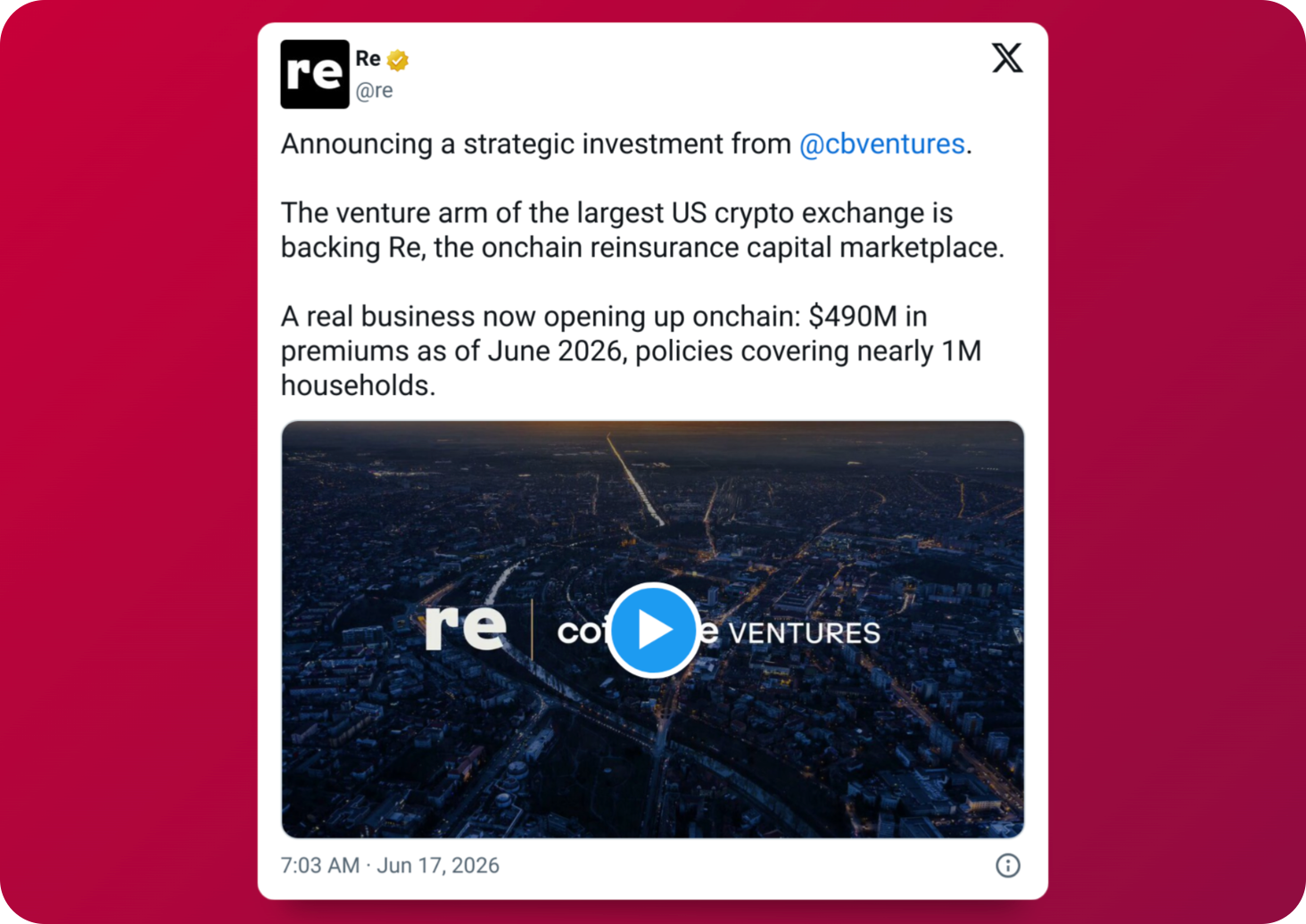
That is the bet behind Re, the subject of this week's episode with founder Karn Saroya and Electric Capital's Avichal Garg. Re is an onchain reinsurer (more on this soon). Stablecoins go in, that capital helps back insurance companies, and premiums return to depositors. Karn says Re already backs 35 of them, does around half a billion in business, and expects to near a billion in the coming months.
Crypto's at its best modernizing finance's oldest and most boring systems. This is one of them.
Insurance for Insurance
Reinsurance is very meta: it's insurance for insurance companies.
Say an auto insurer sells thousands of policies. It collects premiums but takes on the risk that drivers crash and need paying out. To write more policies, reduce its risk, or prove to regulators it has enough capital behind those promises, it buys reinsurance.
A reinsurer absorbs part of that risk in exchange for a cut of the premiums. It’s a market Karn pegs at roughly a trillion dollars in premiums a year. These are returns most people can't touch, having historically gone to pension funds, sovereign wealth funds, family offices, and institutions with the capital and access to play.
But Re believes stablecoins, and their holders, could become a new capital source here, opening those gated premiums to onchain dollars.
What Goes Onchain
Reinsurance is a promise backed by capital, and that promise is only as good as the money behind it. In the traditional system, that capital sits behind opaque balance sheets and murky plumbing. It’s not a setup that inspires trust.
But put the capital layer onchain and that changes. Regulators, insurers, and depositors can see that the money behind the promise exists. This is how Re competes: cheaper capital formation, transparent infrastructure, and access to a new pool of onchain dollars.
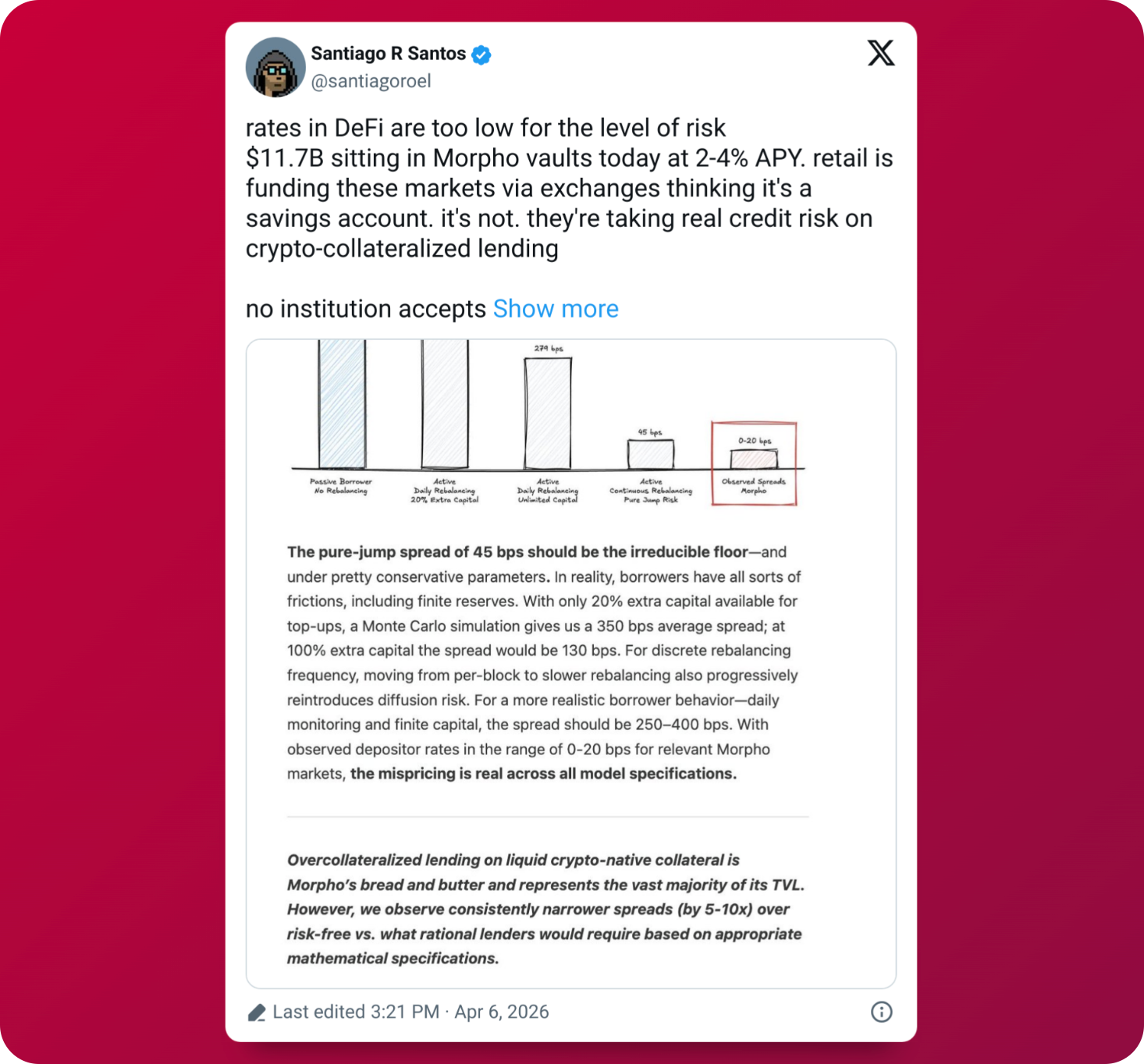
This reaches past reinsurance. DeFi's yields have increasingly been underpaying for the risk behind them, with M0 founder Luca Prosperi’s pricing work showing protocols don't compensate users for what they actually take on. Re's yield is priced differently, coming from insurance premiums and real-world demand for capital rather than token emissions or onchain activity. And its guardrails come from an already regulated industry rather than an onchain venue still finding its footing and riding DeFi's cycles.
Where RE Fits
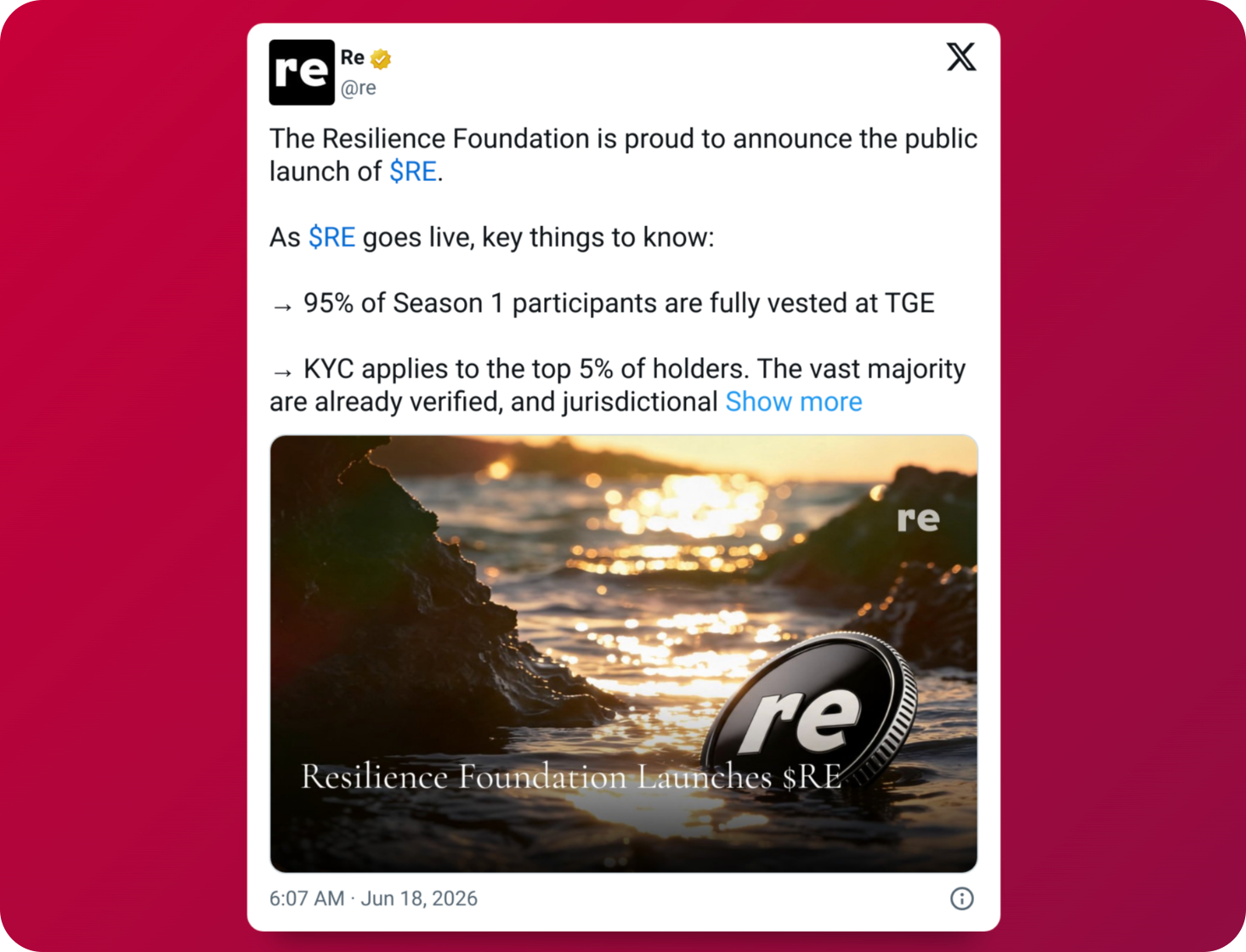
If Re becomes the onchain capital marketplace for insurance it's aiming at, governance over that system becomes valuable. That's where the RE token comes in.
RE determines which partners and counterparties it works with, which lines of business it supports, what capital requirements apply, how the pool is managed, and how the economics accrue. That is the token question at the center of the episode: if Re succeeds, how valuable does governance over that system become?
The full conversation answers it, with more on Re's inner workings and why Avichal thinks this mullet architecture could define the next generation of fintech.
If the thesis holds, Re marks crypto's entry into a new branch of finance, where opaque balance sheets give way to inspectable capital pools and gatekept yields flow to stablecoin holders rather than private institutions.
 Avichal Garg on Bankless
 Bankless
Bitget’s Stocks 2.0 brings 500 major equities and ETFs (like Tesla and NVIDIA) directly to your portfolio. Enjoy 1:1 mapping, deep liquidity, and USDT dividend payouts with ultra-low 0.04% fees.

Bankless
It’s time to break up with your bank, and join the movement for a better world.