Starknet Token Launch Is Here! ($STRK)
The Stark token is here! After waiting for almost 6 years we're thrilled to share that one of the earliest and most promising layer 2's has just released official details on their token, $STRK.

Up next
All episodes 01:09:51
Podcast
01:09:51
Podcast
Hasu & Hart on Oval & The Recapturing of Billions in DeFi Liquidations
 00:19:57
Podcast Premium
00:19:57
Podcast Premium
DEBRIEF - Why e/acc Is Right with Beff Jezos (Guillaume Verdon)
 01:53:52
Podcast
01:53:52
Podcast
209 - Why e/acc Is Right with Beff Jezos (Guillaume Verdon)
 01:01:28
News
01:01:28
News
ROLLUP: Solana Outage | Restaking Wars | Dencun Mainnet Date
 00:54:25
Vitalik
00:54:25
Vitalik
Restaking Summer & What it Means For Ethereum
 01:32:48
Podcast
01:32:48
Podcast
Farcaster's Big Moment with Founder Dan Romero
 00:16:15
Podcast Premium
00:16:15
Podcast Premium
DEBRIEF - $1.5T Franklin Templeton's Massive Bet on Crypto
 01:20:23
Podcast
01:20:23
Podcast
$1.5T Franklin Templeton's Massive Bet on Crypto with SVP Sandy Kaul
Inside the episode
The Stark token is here! After waiting for almost 6 years we're thrilled to share that one of the earliest and most promising layer 2's has just released official details on their token, $STRK.
They are provisioning it to users of Starknet, to stakers in the Ethereum ecosystem, open source developers and so many more. A total of 1.3 Million wallets are eligible to receive the $STRK token, are you one of them?
Joining us today is Starkware founder and CEO Eli Ben-Sasson, and Starknet CEO Diego Oliva who are here to walk us through all you need to know about the big launch.
TIMESTAMPS
00:00 Intro
05:28 Timing Of The Launch
07:36 Denominate Fees in Stark Tokens
12:29 Starknet Readiness
16:53 Starkware/Starknet Company Design
21:24 Distribution of $STRK
26:01 Total Supply of Token
27:12 Provisions For Stakers
32:16 Provisions Via Staking Pool
33:10 StarkEx Users
36:44 Release Dates
40:26 What's Next?
43:43 Exciting Community Narratives
48:19 Closing Thoughts
RESOURCES
Check Eligibility Here:
https://provisions.starknet.io/
Eli:
https://twitter.com/EliBenSasson
Diego:
https://twitter.com/jdiegooliva
Starknet:
https://twitter.com/Starknet
Transcript
Bankless Nation, the Stark token is here. Well, just about, actually. We have the release details. We've been waiting for this event for almost six years. Starknet has been one of the earliest and most promising layer twos, and they have just released the details of their token. They are provisioning it to users of Starknet, to stakers in the Ethereum ecosystem, and to open source developers. We get into who's getting the Stark token? How much of the Stark token is getting distributed as a percentage? When does claiming actually begin? David, I just used this term provisions. Could you explain that for a minute?
Uh that is what a Starknet version of an airdrop is. It is a provision. Uh, users will probably hear provisions, but they'll think airdrops, that would be correct. Uh, these are just the terms that they have elected to use. Uh, on the show today, we have Ellie Ben Sassen and Diego Olivia. Diego is the CEO of the Starknet Foundation. Ellie, of course, is one of two Starknet dads. Uh, these people have been with uh the Econo system for years now, especially Ellie, who's been working on Starks since before Ethereum was even a thing. Uh, and so we get into all the details that Ryan mentioned and more. Overall, just a long time coming for Starknet. As soon as we knew that Starknet was a thing, we all kind of knew that a token was going to be a thing. Uh, I went to the Starkware sessions a little over a year ago in Tel Aviv, Israel in February of last year. And it was just very clear that this Starknet, this network was being built upon the shoulders of this community who just really loves to be there. This very technical, low-level devs, Stark Maxis, I like to call them. Uh, and so this network is being born on the shoulders of this community that's very ready to receive it. Uh, and the distribution of these Stark tokens, STRK, is also something that's pretty notable. And we get into all these details in the show. Uh, if you are uh in the Ethereum ecosystem, if you are an active participant, I think you'll be pretty happy. Uh, let's go ahead and get into those details. But first, I wanted to talk about some of these fantastic sponsors that make this show possible. Bangless Nation, we got an exciting episode for you here today. First, on the podcast, we got Diego Olivia, CEO of the Starknet Foundation. Diego, welcome to the show.
Thank you. Excited to be here.
Yeah, very exciting. And of course, longtime bankless listeners uh will remember Ellie. Ellie Ben Sazen, one of the two fathers of Starknet, co-founder of Starkware, overall mathematician genius. Ellie, welcome back to the show.
Thanks. Thanks for having me here, David Ryan. Always a pleasure.
So, this show I think is going to be extremely exciting. This has been a long time coming. Uh, Starkware, Starknet, and overall Starks has been a pillar of the crypto world even before Ethereum launched. Uh, and it's been no secret that eventually Starknet will decentralize and create a token and give it to its community. And today appears to be that day. Ellie, you have been around since the very beginning. Um, why now? Why is today the right day to do this? Why is 2024 Q1 the right time to do this? Uh, what were some of the decisions and calculus into making this choice? Why now?
It was the
earliest
possible in terms of uh the technical and decentralization roadmap. Uh we would have loved to do it uh much earlier, but this is when the system is uh ripe enough for it. We have now um fees enabled in the Starknet token, which is the main utility for it. Um, and we're making progress on other aspects of decentralization, like uh staking for the purpose of uh generating start proofs and sequencing uh things. So this is just the earliest possible, and we would have loved to do it earlier if we could.
So, Ellie, what were some of the necessary criteria for provisioning a token? You sort of alluded to a few of this, this being sort of the earliest necessary time, like what needed to be in place exactly?
The the main thing that just was turned on with version 13 of the protocol is that uh we now have uh the ability to submit transactions where the fee is denominated in the uh Stark token. Uh prior to this, uh we just didn't have the the protocol was not mature enough to support um this capability. So this took time to uh uh build and bake, and now the protocol is ready for it. So this is the, you know, so we we are turning on the transferability of the token for the purpose of uh paying for uh transactions on Starknet and later on so that it flows to the operators um that will stake it in order to operate the system and maintain it secure and decentralized.
We'll we'll get into a lot of the kind of the economics of the token itself, but uh since since you just brought it up, uh Ellie, I want to drill into this. So the decision to denominate fees in uh the Starknet token itself, why did you go in that direction? There are other layer twos that have chosen to denominate fees in, say, Ether. Uh, you know, some also have have chosen to denominate in their native token. That seems to be the direction that that you're taking. Why?
We need those who care about Starknet, those who build it, those who maintain it and secure it through their work and operations, we need them to be the ones operating it, um uh ensuring it, and uh also to be able to to use it. And um you see if
Fees were denominated in Ether. They would flow towards the operators, and also parts of it through things like Devonomics would flow to developers. But then all of those entities who care a lot about Starknet would have a little bit of Ether. Um, not enough to make a dent into uh who controls uh Starknet. And this does not make sense. Uh, you need the decentralized layer two to be controlled by and answer to those who care about it, are passionate about it through their actions and operations. So you really need um um the token of the L2 to dictate uh things like operation staking. And a fee mechanism is just a very good way to ensure that there's inclusivity, that uh tokens and hence power and security is flowing towards towards those who are uh providing value to the network.
And of course uh of of course a um you know a portion of the gas fees actually needs to in some way be converted uh to ether in order to purchase the block space from the Ethereum mainnet. Am I right about that? And how does that work in this mechanism?
Yeah, well, a portion is indeed uh paid to Ethereum for the security and for basically putting the proofs and the states uh differences on layer one, but all of what's called the L2 costs um are gonna be flowing to the operators and the stakers. And uh some of those are related to the capital costs for staking and also to the um you know cloud costs and other costs of operating the system. And those are going to be flowing uh rightly to the entities who you know develop, maintain, secure, uh care about uh Starknet. Um by the way, I wouldn't be surprised if other L2s, like uh happened in other cases, um, you know, we are.
Sometimes we're claimed to be unaligned, but we are truly aligned with uh you know future-proof technology and security. And I wouldn't be surprised if uh we will also be trail-basing, uh blazing a path here. And I wouldn't be surprised if you'll see other L2s also picking on this queue and uh turning on fees in their own tokens. I wouldn't be surprised.
Ellie, I think you might be alluding to a tweet that I kind of fired off from the hip maybe about a month ago about like this exact subject, Stark using its own currency as its gas token. And I just want to like uh just bring that up for a second because I called it like the most unaligned layer two, once again, just firing from the hip. And really what I just meant by that uh was just like the the strong technical differences uh between Starknet and Ethereum. Uh like Ethereum alignment is kind of a meme, but I've always thought of it as like a technical conversation, first and foremost, where you have like optimism and Arbitrum going for EVM equivalents, trying to be one-to-one compatible. And Starknet has always been um just not that's not its direction at all. Starknet, I've kind of expressed, is a Stark maxi. They believe in Starks. The whole ecosystem believes in Starks and scaling out the power of Starks. Uh, and so like alignment was meant to be just like a technical differentiator, not any sort of statement about uh being like uh misaligned with Ethereum and in spirit. And so I just wanted to clear that up with there. I'm actually having a conversation with Abdel from Stark uh Starkware Starknet on the on this very same subject. That'll be out, that'll be out soon. Um I just always thought it was like a curiosity is like what happens when Starknet leverages its own token for gas.
I think the the I just want to say that I think the Starknet ecosystem is eternally grateful to you, David, for you know raising up this meme and just giving us uh so much uh good creative power. You know, we just really leaned into this uh unaligned. You know, we're proudly unaligned. Uh uh it's a great uh so so you know, uh thank you for.
Uh uh
They're giving you the phone.
labeling label investors on the line. That really helps us a lot.
I'll I'll I'll rebrand it as uh technically differentiated, perhaps. Maybe, maybe that's a better way to say it. Diego, I want to I want to get you in here as well, CEO of the Starknet Foundation. Maybe you kind of can uh illuminate your role and the Starknet Foundation itself, and also maybe give your perspective on the choice of timing. Like, why why is Starknet ready to be born, if you will? Because there's like the incubatory period of Starknet where all it's being like spun up, but now this is like now it's going out into the wild. It's you know, those kids getting dropped off at college, parents are saying goodbye, Starknet dads are are waving goodbye like you're on your own now. Uh Diego, give us a little bit your perspective about the readiness of Starknet.
Yeah, so I think uh well uh Ellie alluded uh the readiness from a technical standpoint, so I think he covered that, but I I also think that it has taken some time for us for our community and ecosystem to get to a point where it was also ready to start this journey uh towards decentralization and and hence the creation of the foundation as well. And uh and now uh as a foundation we're trying to sort of uh help the community uh lead its path uh towards decentralization. And what that means, so uh what does the uh what are the goals of the foundation? I can summarize them um in three main points. One of them is about growth and decentralization, and growth means just getting uh on board as many developers, teams, um, applications, infrastructure, tooling uh builders uh to build on top of Startnet to make us more uh resilient and um and also to be more decentralized as we grow in terms of the number of teams and builders. Uh so that's one thing that we're gonna be doing at the foundation, focusing on bringing teams on board through uh education, obviously awareness, uh all types of workshops, hackathon, hacker houses, um, uh, and also developer partnerships for those building tooling infrastructure here. So, really orchestrating the growth of our ecosystem, so uh nurturing that growth on our own. So, that's number one objective. Number two,
Is around helping nourish our community and culture.
And here, this uh uh we believe is very, very important uh because technology itself, making it work, where uh we're now at a point where we're scaling it in terms of uh speed and reduction of cost, and that that will continue. But actually, I think the bigger, more long term challenge is how do we scale a team of teams? And I think it's gonna be very important to get uh like
you know, tens of thousands hopefully of developers and thousands of teams to work towards one mission. Uh all even if you have uh you know DeFi protocols or gaming companies or whatever it may be that and even competing ones that
We are all aligned by one goal of what we're trying to achieve with Starknet. And hence we need to figure out a way to work together, to collaborate, to bring StartMet forward. And I think that's again as a foundation, we need to facilitate those processes and make sure that we are aligned on the values that we have on Starknet as a community. And the foundation is sort of kind of leading from behind, just trying to see how we help the community find its own feet in this growth. And last uh but related, last goal would be around um governance and delivery. So
Once we build that community, that culture, then what does that mean in terms of how we execute together? So, how do we figure out processes in terms of the committees, the necessary committees or councils, how we make decisions around the product roadmap, uh, where what features should come first, what vertical should we try to tackle, how differentiate differentiate our sales, what type of research should we be engaging in, and so forth, but also being sure, like trying to help on the delivery. So, not because of governance and trying to, of course, include as many teams and the voices of many people that we lack speed because we need to be able to be inclusive in terms of decision making, uh, but at the same time, we need to deliver at pace. So we need to be as effective as I think a centralized organization. And that's going to be like a paramount, like a really big challenge. And I think if we manage as a foundation to help the community solve these three goals, I think we're we're gonna be going a long way. So it's a lot of work in the years ahead.
So this this design where we have um Ellie with the the the co-founder of of Starkware, which is uh a company, and uh Diego, you are the CEO of the Starknet Foundation. We've seen sort of company plus foundation types of uh setups in other ecosystems, uh, other layer twos have adopted this sort of uh setup. Uh DeFi protocols have, you know, with Uniswap, you have Uniswap the company, and there's Uniswap the foundation. So I think a lot of uh bankless listeners will understand uh the basics of this model, that there's two kind of entities. And and I'm wondering if it's it's sort of it works the same, or like, you know, uh Ellie, what what is Starkware going to be doing moving forward versus what is the foundation going to be doing? I mean, is is is Starkware done? Is the work finished? Is it now passed to the foundation or there's still more work to do? Just talk to us about this, maybe relate it to other foundation plus company designs we've seen in crypto.
One thing that's important to note that I think in which um the Starknet Foundation is unique is that in most cases uh you have sort of uh labs and then undergoing a mitosis, right? This uh process in biology where a cell splits evenly into two parts, and then one part is called uh labs, and the other part is called uh foundation. Um the Starknet Foundation is uh uniquely uh different in this respect, it is truly independent, and you don't see uh anyone from the sort of core founding team, and certainly not an even split. Um, it's not that uh the labs has uh
Done mitosis. And I think
um
the main thing about this, and again, it goes back to you know things about like vision and values. Um, we take uh decentralization very seriously. And the long term viability of Starknet as uh an integrity web, as something that can be trusted by the public uh all around the world, uh, really calls for this sort of uh independence. Um now regarding Stark or
It has so much to do to do.
And it's also having so much fun doing it that uh no, we're not gonna go off to the Bahamas to drink uh cocktails and bathe in the sun. Um we are,
as will be evident in the coming weeks, um,
we're all about like uh
trailblazing technology.
So we have some very exciting.
technological breakthroughs to share with the world
further on. Our vision is or our passion and our focus is on improving the technology even more. And the reason is that if you want to become
The rails for the global economy, then, you know, as amazing as uh Starknet performance is right now, um, it's not yet ready for you know the 1 million TPS and more that you probably need uh for that. Now we'll get there. There's nothing theoretically barring uh the technology from reaching it, but uh to answer your question, what will Starkware do? So alongside many other uh teams in the Starknet ecosystem, will be uh advancing um that mission and that vision of uh taking it uh really global.
I mean from the foundation, what I can say is what I would uh hope and expect is for Starquare to uh ship more and more as years go by, but their share going down and down uh because of all the other builders. So I think Star Quare we definitely work very closely and they they are really important contributors and we expect them to increase uh what they ship, but actually reduce their uh their share significantly as we grow the rest of the ecosystem, which is uh what's uh really exciting.
Maybe the differences and roles between these two organizations is actually contained in the name Starkware, as in software. I'm pretty sure that's the right playoff of words software, except for Starks. Uh and this is the model that I think we've seen other uh organizations take, where the original labs company becomes like the software service provider towards the actual network, StarkNet, net being everything else that it takes to foster and maintain and develop uh a network. Okay, so day go, today is the date where we're getting a lot of the information. Uh, and that will there will there'll be a link in the show notes on the YouTube uh for people to be able to just go read this blog um themselves. But maybe you can kind of just rattle off some of the the big specific dates. Uh, when will this provision be uh accessible towards the people that have been provisioned? Uh, and then we'll also get into some of the details behind who got what.
Yes, so uh
Today we're announcing the provisions and now you can go to our website to check eligibility. So you can go there today and then the actual claim of the tokens will happen on February 20th next week.
So let's go ahead and get right into some of the details on the the provisions here. And Diego, I'll I'll continue with you here. What what are the things that just really stand out uh as the big details about what about these this provision program? Like what uh populations of people, what contributors, uh what what do you want to highlight first before we get into some of the granular details?
Yeah, so we're gonna be distributing 700 million start tokens uh to around 1.3 million addresses, which is the largest distribution ever made, which we're very, very proud of. Uh, and I think that's very, very exciting to try to include as many people to come on board Starknet and also Ethereum journey. So we're very excited about that.
1.3 million addresses. Uh can you uh start to like unpack who are these people? Uh what are the different um uh communities or just collections of of people are receiving provisions here?
Yes, so uh over 50% uh of the tokens are going to be going to StartNet users. So those that help us really get uh we're trying the applications, getting it ready, uh uh uh uh improving the usage, giving feedback to the builders, and so forth. Uh we have also uh uh close to 9% going to the StartNet community, which includes everyone uh from developers uh to also those uh organizing meetups, uh uh helping other developers to learn, um, helping everyone get acquainted with what Stargim is about, um, all the efforts about building our community that are uh going to be receiving tokens there. We also have around 2% of the uh of the distribution going for Starknet developers, so people that have really contributed to uh uh to the tooling and infrastructure uh that makes Starknet uh possible. Um and we're also having a uh a good portion of uh tokens distributed to those contributing to Ethereum, and that is from um uh uh ETH stakers, so uh we we think that it's very important that they have helped secure the network. So we want them to be uh uh compensated as well. So we have those that are doing it via pools, and that's around uh 17% of the distribution. And we have also uh around 5% of the distribution going to solo stakers that also take a bit more risk on that, but that are again supporting uh the network. Uh, we have also an allocation to the protocol guild of Ethereum, so those that have helped um uh uh
maintain and secure Ethereum as well. Those are also been doing the EIP authors as well, have an allocation as well. And then we have 2.1% going to the top 5,000 GitHub projects as well, which we're very happy again. We're trying to welcome as many developers to come to start it and contribute to Ethereum broadly speaking.
So I encourage all of you to go uh to uh delete to our website to check for eligibility and please be aware of scams. There is no uh token available yet. Uh the claim of the tokens will be next week on on the 20th. But go check eligibility uh as soon as possible.
Well I I gotta say, with um all of the solo stakers and Ethereum developers and the protocol guild out there, it sounds like David a pretty aligned move here. I I don't know. I don't know what you tweet about this, but uh I I do think like a um a token distribution, token provisioning type of event sort of uh shows you a little bit where the network's values are and like what they're trying to incent moving forward. And um I just want to applaud um you know so some rewards for some of the groups that that uh you guys have decided to include there. But just before I know David's gonna do a recap in detail, so we make sure we capture all that detail. But before we get there, when you were talking about the percentage that are going to all these various groups, Diego, you were talking about a percentage of the 700 million uh Stark token distribution. It was relative to that, that the 700 million amount, is that correct?
That's correct.
Okay, and then the wider context of this, uh this is a new token. So uh what is the total supply of this new token so we can take even the seven hundred million into context here?
Yes, the total supply of Stark tokens is of 10 billion Stark tokens. We still are working on the overall tokenomics of it. So we are still going to be working on proposals that we have to decide also inflation, which at the moment one of the proposals is around 4%. But for the time being, we do have 10 billion Stark tokens.
Okay, so I kind of want to just rec recap the high-level categories that I see. I see four different categories here. Um the big one is Starknet users. So just users of Starknet. Uh, if you've it sounds like if you just have an address that has produced a footprint on Starknet, you are getting a provision. Um, and that's just that's just the biggest category. That's probably where a lot of the addresses come from. There's a the and then there's the second category that I want to pull out, Ethereum stakers. And can we just uh talk about this category specifically really quick? Then there's the two other categories. Um, these are both solo stakers and staking pools, correct, Diego? And can you talk about just like the parameters around? I don't know if I've ever heard of a uh um provision going to staking pools. Can you talk about the logistics behind that uh and just any dates that are uh relevant here?
Maybe I can I'd be happy to take this question. Um the first thing I want to point out is the rationale behind uh allocating to stakers. And uh remember that um um Starknet decentralization calls for having
As broad as possible, a set of uh individuals and a public that is interested in the operation and securing of decentralized networks. And if you ask yourself, okay, where can we find um people who, through their actions, have demonstrated that they are passionate about this and want to help? And one glaring answer is, of course, uh, you know, folks like miners and stakers and operators. So when you're uh jump starting um this uh broad
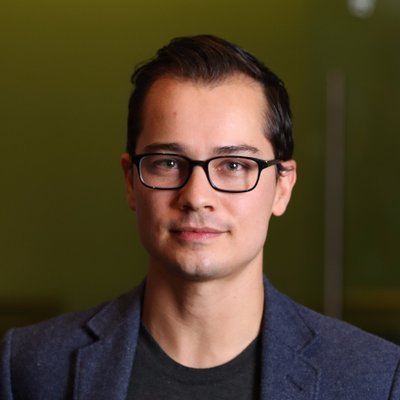
Ryan Sean Adams
Crypto investor going bankless.