
In This Economy? How Money & Markets Really Work | Kyla Scanlon
The Vibes Economy
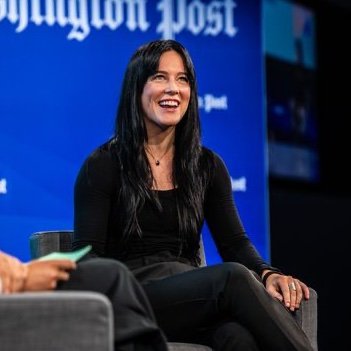
Up next
All episodes 00:58:08
Podcast
00:58:08
Podcast
Why the Ethereum ETF is Bullish $ETH | Matt Hougan of Bitwise
 01:09:44
Podcast
01:09:44
Podcast
ROLLUP: ETH ETF Approved | Crypto Politics | Uniswap Wells Notice | Airdrop Reset?
 00:24:29
Podcast
00:24:29
Podcast
ETH ETF Officially Approved! | James Seyffart
 00:25:30
Podcast Premium
00:25:30
Podcast Premium
DEBRIEF: The Timothy Massad Interview
 01:30:00
Podcast
01:30:00
Podcast
Stablecoins and National Security | Former CFTC Chair Timothy Massad
 00:26:57
Podcast
00:26:57
Podcast
PREMIUM: JokeRace: The Onchain Contest Platform | David Phelps
 00:45:31
Regulation
00:45:31
Regulation
Rep Patrick McHenry on Crypto's Big Week in DC
 00:48:41
Podcast
00:48:41
Podcast
BREAKING: The ETH ETF is getting approved?!
Inside the episode
Is it all vibes? Always has been.
Kyla Scanlon is a writer, podcaster, analyst, founder of financial education company Bread, and an all around brilliant explainer of things hard to explain.
Expect to learn why economies are vibe reflectors, Kyla’s “economic kingdom” model and an overview on the current state of economic affairs.
Financial literacy is a superpower and Kyla managed to compress this topic that people have been trying to figure out for ages in an easy to understand economics toolbox.
TIMESTAMPS
0:00 Intro
4:09 The Vibes Economy
9:24 Understanding Money & Finance
14:18 The Economic Kingdom
17:51 The Monetary Castle25:49 The Fiscal Castle
35:01 Vibes are the Economy
51:00 The Deciders
55:32 Housing Market
1:01:34 The Labor Market
1:08:12 Wealth Inequality
1:13:48 Energy
1:17:38 The Economics Toolbox
1:22:40 What’s Next for Kyla
1:27:40 Closing & Disclaimers
RESOURCES
Kyla Scanlon on X
Kyla Scanlon Website
Order “In this Economy?” Now
https://www.penguinrandomhouse.com/books/737854/in-this-economy-by-kyla-scanlon/
Kyla’s “AI Can't Plant Corn (Yet)”
https://kyla.substack.com/p/ai-cant-plant-corn-yet
WSJ “How Gen Z Is Becoming the Toolbelt Generation”
https://www.wsj.com/lifestyle/careers/gen-z-trades-jobs-plumbing-welding-a76b5e43
Transcript
The tough thing about the economy is when you talk to people about it, like I run into this all the time. Like I tell people that I work on economics education, they're like, I hate the economy. And it's like, well, you're a part of it. Like, sorry. Like the coffee that you buy, you know, the microphone that I'm talking into, the computer that I'm staring into, like all of that are components of the economy. And I think it's very similar to how we all know that the mitochondria is the powerhouse of the cell. Like, I I feel like we should know something about the economy in a similar sense. Like we should know what the Federal Reserve does and why they do what they do because it has such a big influence on our lives.
Welcome to Bankless, but this time we explore the frontier of the economy. We're not talking about the crypto economy today, we're talking about the broader economy. As usual, this is Ryan Sean Adams. I'm here with David Hoffman, and we're here to help you become bankless. The question today: how many of us really understand how the economy works? I think a lot of us have gotten our education on the economy, on money, on these sorts of things through crypto, myself and David included, but there's still gaps in our knowledge, like the labor market or the housing market, and also the reflexive nature of consumer sentiment. How do all these things fit together? Our guest today is Kyla Scanlon. She's wrote a book on all of this called In This Economy that explains how markets and money really work. I think this is a shortcut episode to leveling up your knowledge on the economy and finance in general. A few things we talk about. Number one, Kyla's term, the vibe session, she coined this term. What do vibes have to do with the economy? We talk about that first. And also her mental model for how this all works. She calls it the economic kingdom, how the deciders, like the Fed and the government, tweak the dials of our economy. We also talk about the housing crisis, wealth inequality, the labor market, energy prices, and how all this ties into the economy. And finally, we end with financial literacy, the superpower, how you can apply what you learn to make your life better and also to help those around you.
We've been watching Kyla since she, I think, just started doing some financial skits, some financial jokes about markets and the economy on TikTok. And that ultimately blossomed into just a full-blown career as an educator. But specifically an educator, I think towards younger generations. Uh, I remember when we were starting the Bankless Podcast, uh, Ryan, we would frequently talk about how there's just a complete lack of education around money and finance in the world. Like it's not taught in primary school, it's not taught in college. Uh, and even people that take business and finance like degrees are still left with like big gaps of knowledge. And Kyla is uh contributing to like filling those voids that are are left in our trip typical education paths. And she's done doing it meeting people where they are, uh, which is on TikTok, on Instagram, on Twitter. Uh, and so she's been extremely successful in just raw education of the masses about things that I think are have been neglected in in typical, um, typical educational settings. Uh, and so it's pretty cool to have been able to watch Kyla's arc grow uh and crescendo into this book that uh we are going to cover a portion of here on the podcast today.
Well, let's get right to the episode with Kyla. But before we do, we want to thank the sponsors. Bankless Nation, Kyla Scanlon is a writer. She's a podcaster. She's an analyst. She's the founder of a financial education company called Bread. She's also a friend of Bankless. Uh, I gotta say that. And she's uh been on the Bankless podcast before, and I would say an all-around brilliant explainer of things that are hard to explain. Like the economy, it's kind of hard to explain, or money. And she wrote this new book. It's called In This Economy. I actually have like uh an early edition of the book. So the edition that you can go buy pretty soon is gonna be even better than this. And uh the subtext is it's how money and markets really work. And if I were to give a synopsis of this book, it's kind of like an econtext book that you can actually read. Uh it was it's almost like um a Ray Dalio for Gen Z, I would say. And uh it's it's I would say it's literally the best resource for getting up to speed on these topics. Um, you know, money, finance, the economy, all these things. I'm gonna say some more good things throughout the episode, but uh, let's just bring her on. Kyla, welcome to Bankless.
Oh thanks for having me. Excited to be here.
Yeah, it's been it's been a long time, Kyla. And kind of just making sure uh listeners know a little bit of your lore. Uh you introduced uh the term vibe session, I think around 2021, 2022. And this term vibe session has become so widely accepted, understood, and just leveraged in both mainstream media, financial media, even in academic settings, I've heard this word be used. Uh, and to the point of which, like, I kind of consider this like the vibes economy, the vibe session, as like successfully contributed knowledge to the archive of just like human knowledge.
Uses this term all the time.
Yeah.
He will not stop using the term.
That's awesome.
Yeah, right. It's in if it's in the dictionary, you know, it's fully merged with like human consciousness. The idea of the vibe session, I think, really helps people understand the state of the financial world post-COVID. Uh, and its adoption as a term has also kind of risen alongside yourself as uh a rise of a financial and economics social media educator. Can you just like talk about this experience, the rise of this like vibe session idea and why you think it was actually so helpful uh in the mainstream conversation about like helping people understand the state of the economy and just like understand the economy at large?
Yeah, yeah. So I wrote the piece in July of 2022. And then New York Times opinion picked it up, which is kind of when it all started. Um, and the idea of that piece was to explain the disconnect between consumer sentiment and economic and economic data. So people were feeling pretty bad, even though like GDP was going up and inflation was going down and the labor market was okay. And for me, I had like hundreds and hundreds of comments every day on all my videos of people telling me that like they were feeling pretty bad, even though I was telling them that the economy was good. And they were like, Are you a psyop? Like, what's happening? And uh I was like, Am I? Um, and so I I I wrote this piece to try to to explore that. And um
The vibes really do matter and it sounds so silly, but it's just the same idea as reflexivity, which is coined by George Soros, or animal spirits, which was coined by Keynes, is that like human beings are not rational, right? Like they're not rational and we can't expect them to be so, which is the
Um, you know, what economic models rely on. And so the vibe session is just sort of like how people feel matters. Like inflation expectations really matter, how people feel about their economic circumstances really matter. And then alongside the vibes, there is a structural affordability crisis, right? Like housing is so unaffordable. Um, and you know, student loan debt is really bad. Uh, people feel like they're not able to maybe get the jobs they want. And so I think all of those go hand in hand with like the negativity that we've been seeing. And there's a lot of other reasons for the negativity, but like how people feel matters is is the sort of the takeaway from the vibe economy.
I think one um explanation as to like why this uh term got so well like well received by by people is that it it made people feel really heard. Uh and there's like a big disconnect from the world of money, finance, economics, and like the average person who just goes to work every single day. Uh people don't enjoy feeling like a metric. They don't feel like enjoying like a being like a number. But this the vibe session, vibe economy, I think also really helped people understand like exactly the relationship between people's like emotional sentiment state and the economy. And I think that this term really helped to bridge those two things. And I'm wondering if that had any sort of influence in like how you wrote this book, why you wrote this book, and the the contents of this book, because I think one one theme of the book is connecting connecting vibes to markets.
Yeah, no, definitely. I mean, I think I tried to.
The way that I describe my work is like a human-centric analysis. Um, because I try to always center people at the forefront of economic analysis because they can sort of get left behind in some of the economic models. And a lot of researchers have done a great job at this, like Stephanie Stancheva over at Harvard, Isabella Weber, Amherst. And so I think like a lot of people have
sort of reconsidered the idea that people are the economy and have put them at the forefront, even like way before I was doing it, right? Um, but yeah, I mean, I think that was the uh idea of the book is.
How do you write something that's fun? Like there's 60 illustrations. Um uh it's sort of structured with each chapter being a standalone chapter. Like you don't have to read the book in succession. And there's a lot of charts. And yeah, i I think that
The tough thing about the economy is when you talk to people about it. Like I run into this all the time. Like I tell people that I work on economics education. They're like, I hate the economy. And it's like, well, you're a part of it. Like, sorry. Like the coffee that you buy, you know, the microphone that I'm talking into, the computer that I'm staring into, like all of that are components of the economy. And I think it's very similar to how we all know that the mitochondria is the powerhouse of the cell. Like I feel like we should know something about the economy in a similar sense. Like we should know what the Federal Reserve does and why they do what they do because it has such a big influence on our lives. And so that's why I wrote the book is like to be this toolbox. And I think like centering it on the concept of vibes is important because then people don't feel left behind by a conversation, um, which sometimes economists can drift into, where it's like money matters the most. It's like, well, no, people probably do. Um, and and that's that was the goal of the book.
Yeah, we will return to the vibe economy and explain that in some more detail. But uh let's get the uh overall picture of of the book. And I I want to ask the question. I I think uh Morgan Housel actually is a bankless bankless guest. He he wrote the intro on to this. And um you know, it's a fantastic uh intro, but I want to ask the basic question from your perspective, Kyla. How come no one understands money, finance, the economy? And not only do they not understand these things when they hear these terms, they like run as fast as possible in the other direction. Why is that?
I mean, I think the reason that people run when they hear these terms like money, finance, economy, is because it's so personal. Like all of us have a really personal interaction. Like we all have a personal inflation rate. We all have a personal interaction with the economy based on our job, on our income, on our retirement plan, on our healthcare. Um, and so I I think that's kind of part of it is like people want to keep some elements of that a secret. And then I think money is like really big and confusing. Like the way that it works is weird. Like, what even is a bank like bankless, right? Um and I think like that's a that's a big part of it, is like there in the one of the chapters is this economic kingdom, which was my attempt to draw interconnectivity between all of the various topics, like fiscal policy, monetary policy, inflation, GDP, labor market, private market, VCs, um, all of those things. Because I think it feels so disparate and big and confusing, and you kind of have to like solar system it and see all the connectivity. And I think for people, is it's my like I do this all the time. I'm so avoidant. Like if I don't understand something, I avoid it. And I I think that's kind of just what people do is like they're not given the tools, and it's not their fault. But if you're not given the tools and you don't know how to access the tools,
Of course you're gonna avoid it, right?
Yeah, here's the crazy thing. I did my entire undergrad in business and I like realized at the end of that I still didn't understand the economy. Like I understood snippets, right? And I read all the textbooks. Like I was actually like a fine student. Like I did the assignments I did, but I didn't really understand until all of this works, until I kind of like took it in my own hands. And actually, like crypto is part of my my whole financial education. I had to learn all of the other bits and pieces. I I I want to uh ask you another question is some people might still like think if they if they look at your book or you know, um the the the stuff that you're publishing, okay, so um you can help me understand these things, and you're using terms that you know like I understand, but like what's the payoff? Why why is it even why does it even matter if I understand these things? Like what's what's the care? Like at some level, who cares how the economy works? Can I actually change the outcome? Is there is there a payoff to actually understanding some of the things that that you understand?
Yeah. I don't think people need to understand everything as in depth as I do. I don't think that's necessary. Um, I don't think you need to know like the calculation for owner's equivalent rent that goes into CPI. Uh, just like any industry, right? Like, you don't need to know how the launch codes work for the nukes. Like, you just gotta know that they're there. Um, and I I think that's a big part of it. But I think like in order to be an informed citizen and like make good decisions as a voter, to like engage with the labor market, to understand inflation, right? Um, like understand what why your grocery bill is going up and like why it might stabilize, to understand the housing market, um, you do need to understand the economy. Um, I think that like the way that I always talk about it is that if people understand the economy a little bit better, hopefully they'll make better decisions. And like a lot of better decisions compounding on one another hopefully would create a better society. And so that's kind of the way that I think about it is if people have um sort of they minimize the cognitive dissonance that comes with interacting with a system that you don't understand how it works, and you're able to make better decisions around that system, um, the benefits will increase from there. And so I think that's the big thing is like it's important to understand because you are you are the economy, as like silly as that sounds. Um, it's true.
I I I would add to that. I I do think that understanding like finance, understanding the economy, at least at a base level, is just basically a superpower. And if you like don't understand these things, you're almost playing behind. It's almost like playing some board game and you just just like don't know how the rules work. And you're just kind of like moving your pieces in a haphazard way. I think some level of base understanding is actually like really important, not only for society, but for individuals, like just to like plan their life and to like get ahead. And at some level, if you don't understand the dials of the system and how it might be like pushed or or even rigged in some cases in one direction or another, you are at a complete disadvantage in the board game of life that you're playing. It's something I've realized. Even just like concepts like compound interest, like if you don't understand that, my God, it is it is difficult to get through uh as an adult.
Let's start here, Kyla, with um the actual book. And so you've got this uh broken into a few different sections. You've got the deciders, where you talk about the people and the institutions, like those that that tweak the economic dials, and then you're you're also talking about the economy, so the the metrics, the marker, the the markets, that kind of thing, and then like what we can do about it. I I want to start with that that concept that you started with, and I'll show this um like for uh YouTube watchers as well. This is the economic kingdom that Kyla was talking about uh earlier. Like, first of all, did you, by the way, you do all of your own illustrations, is that right?
Oh yeah. Yeah.
Okay, so
That's all my my art. My beautiful art.
This is great. I love this. So, like, uh, can you describe what we are looking at here? This is the economic kingdom uh illustration. We have um, I'll I'll start with my description, some various castles here. We've got the the castle of monetary policy. It's a big looking pat uh castle. I guess that's where Powell and friends live. We've got fiscal policy, we've got the dollar. They're all connected, like certain things like labor market and inflation are sort of connected to monetary policy. We've got roads, we've got bridges, this sort of thing. Can you start with this mental model? What how why do you see things as an economic kingdom and like who are some of the main players here?
Yeah, so this is kinda like uh do you remember those rugs that you'd play with when you were a kid of like you would draw your finger along the road and there'd be like houses on the road?
You know what I'm talking about? Totally.
Right. Like when you were a child. So that's kind of like how I think about the economy is like that Rug model, where it's like they are all interconnected. And so I tried to do that sort of model here with the economic kingdom. So monetary policy and fiscal policy are like on their own little castle land because they're the policy land. The US dollar interacts with monetary policy. Monetary policy interacts with developed and emerging markets. Monetary policy is shooting a canon into the labor market and inflation, which are the two levers that monetary policy ends up impacting the jobs market as well as price stability. And they're using a canon because they're raising rates, which I explain uh later on in the book. Inflation impacts the housing market. And so it's just showing, like they're in the in the newest version of the book, there's an updated version of the map as well with a little bit more castles. Um but it's just meant to show the interconnectivity of all these things. There's a crypto castle going into the stock market. Thank you for that, by the way. Do you like the bright, shiny lights going off on it?
Yeah, what what are these? So okay, so on the Crypto Casa, it looks like we have some signs saying chains. Yeah, we got the stadium. We got the advertising.
Crypto co crypto.com arena.
But yeah, yeah. So this is the idea of the economic kingdom. And it's the intro to the book because I wanted to set a precedent for the connectivity of the economy. Because I this is like where I got stuck when I was learning about the economy. I was like, how the heck do all these things interact? Like, is the stock market the economy? Like what's happening? Um, and so putting it on this map, uh, I did it, I wrote this piece, oh my God, back in like 2021, The Economic Kingdom, I think. And uh I I've always used that as a reference since then. And I thought it would be a good opener to the book, just sort of like setting the stage for connectivity. And the thing is, with like the kingdom itself, you could literally draw like the biggest map in the world and it still wouldn't be big enough for all the moving pieces of the economy. But I tried to be reductive and and get it in there, yeah.
Can we can we start maybe by talking about uh monetary policy then? That entire uh kingdom. Yeah g so give give us the one on one. What does the Fed actually do?
My favorite question.
Well, you are a known Fed Fed sim. I read this in your book as well.
I read this
Um, I think that line got taken out.
There's a line for people who don't will never read this. I have an early edition of the book that says uh
Yeah, that says uh Kyla says something I like I'm a well-known uh Fed simp in air quotes. And I wasn't exactly sure what that meant. It's a are
I'm gonna go ahead and guess it's an internet uh viewer kinda being a troll on YouTube. It kinda fits like
Yeah. Yeah, because like the way that I I I so this is like one of my problems is I get excited about like monetary policy. I love like I I really like the economy as a concept, um, almost as like a video game for me. Like not that people's lives are a video game, but like just the how money moves is so fascinating. And so I can get like a little bit too animated. I think I'm like, yeah, the Fed. And um, I pretend to be Jerome Powell in some of my videos. And so people are like, You're simping, dude. I guess.
so there's there's no simping here in your explanation. Uh what does the Fed do?
No simping.
Yeah, yes, you're federal.
The Federal Reserve is the monetary policy unit of the United States. So it's pseudo-governmental. So it's not necessarily part of the government, but they do report to Congress. And they set monetary policy. And so they are in charge. One of the illustrations shows it. They're in charge of like walking this tightrope of the economy, balancing both price stability, so making sure inflation doesn't like destroy everybody, as well as the labor market. So making sure that anybody wants it who wants a job can have a job, which is called maximum employment. And so they make sure that inflation is around 2% inflation rate. And then maximum employment doesn't really have a target, but like unemployment below 4% is usually like what the Fed wants to accomplish. And the way that they do this is they have a toolkit. So they manage price stability in the labor market through a toolkit, which includes their rates, it includes their balance sheet, and includes forward guidance as well as a couple other things. But like they raise and lower rates depending on if they want the economy to slow down or speed up. So they would raise rates, which they have been doing for the past several years to slow the economy down. Because if you make money more expensive, people are going to spend less of it, less money going around means the economy slows, means inflation slows. If they wanted to speed things up, which they kind of were doing before the pandemic, uh they would cut rates. And now that's the conversation that we're having is like, is the Fed going to cut rates? Um, because if they cut rates, that'll speed things up. Money's easier to get, they get going. Balance sheet is a little bit more complicated, but basically another tool that they can use. And then they have forward guidance where they'll have these meetings where they'll come out and talk and sort of let people know what they think might happen. And so that's kind of like monetary policy in a very small nutshell, is it is a balance of price stability and labor market. Yeah. That the Federal Reserve, who is a governing body headed by Chairman Jerome Powell, as well as 12 bank presidents, ends up deciding on. The FOMC is a subset of that, but yeah, 12 bank presidents.
So um as a representative of the crypto castle in uh which is like is connected through the stock market to the federal uh the Federal Reserve and monetary policy. I'm wondering if you can kind of like uh give your take about kind of the groupthink that comes out of the crypto castle when it relate as it relates to the Fed. Uh so you have the Bitcoiners who think like the Fed are uh is a corrupt institution. It's 12 12 white white dudes, well uh 12 white people behind closed doors that just like you know control the earth. Everyone wants the Fed to cut rates so that they can pump our bags, and overall, like it's a failure of an institution. It's like maybe a a a grandiose uh like snapshot of a a classic like crypto take about what the Fed is. Uh maybe you can kind of like audit that take and and for just like the me the meme of like the crypto take's perception of the Fed. Like, how do you feel about that? And what how would you actually like uh rate or grade the institution of the Fed?
I mean
I was having a conversation with somebody earlier today, and we are talking about nuance. And like nobody cares about nuance. Everybody wants the hottest take in the world. And I think that crypto and their views on the Fed can end up in that camp a lot of the times. Um I I think that it's important to have like so okay.
The history of the Fed is like it it came around like around 1913. And the reason it came around is because we had bank panics. Like we had banks that were issuing their own currencies, like we had Wildcat banks, and a lot of
Regional b independent banks.
Yeah. And there was bank runs, like nobody's like Silicon Valley Bank, but like way worse. And so there's no insurance. Like so JP Morgan of JP Morgan Chase was like, whoa. And so he got the Federal Reserve together. And like that's kind of why we have a monetary policy unit, is because um, you know, you know, markets are good, but like uh they they run away a lot of the times. And so I think it is good to have some guardrails on that in the form of a policy unit. I think my big issue with the Fed is the toolkit. Um, I like right now they're raising rates in order to battle inflation, but we have a housing crisis and shelter is like 70% of CPI, the consumer price index, this main measure of inflation. And if you're trying to battle a housing crisis by raising rates, making it harder to build housing, that's not really gonna work. Like it's gonna only be more inflationary. And so I think that's my big issue with the Fed and what they're doing is like the tools don't work. Um, it needs to be like targeted.
More. Um, but they have such a broad hammer that it's tough. Um,
and I think too, they have become responsive to the market in some instance. Like the stock market will respond to the color of the tie that Jerome Powell is wearing. And that's that's tough too. So I I think that the crypto people, crypto people have a point. Um, that maybe like, what does it actually look like to have an institution with tools that can actually address the policies that we're facing, which are usually like supply side solutions, not demand side solutions, like raising or lowering interest rates.
Um, but I do think it's important to have a institution in place, which I know is unpopular with the crypto populace. I just think human nature makes it hard for things to be
dependent on human nature. Yeah.

David Hoffman
Co-owner at Bankless. Optimistic storyteller of frontier technology.
.png-cde5b9c0aa4838d09c634abbd1136ff2.png)

.png-a616dc52961c1edd72b0c1fdf5f47e7a.png)
.jpg-48bb3b8a9a7a83dee5836f716023f733.jpg)
.png-336efc5e35995e6b184e7e830baa688b.png)


