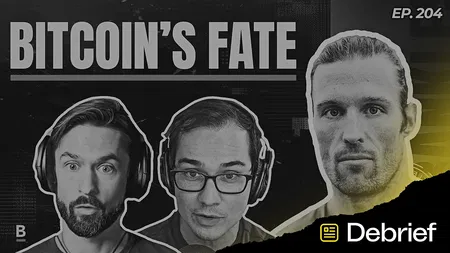
204 - What is Bitcoin? with Robert Breedlove
The bull case for Bitcoin starts with the story of money
Up next
All episodes 00:29:08
Podcast Premium
00:29:08
Podcast Premium
DEBRIEF - What is Bitcoin?
 00:58:41
News
00:58:41
News
ROLLUP: Bitcoin ETF Rumors | IRS Tax Rules | Ethereum Dencun
 00:54:56
Podcast
00:54:56
Podcast
2024 Crypto Investment Themes
 00:35:07
Podcast Premium
00:35:07
Podcast Premium
DEBRIEF: ETH in 2024
 Ethereum
203 - ETH in 2024
 News
News
ROLLUP: Top 10 Biggest Crypto Events of 2023
 Podcast
Coin Bureau’s Guy Turner Interviews Ryan & David
 01:38:41
Podcast
01:38:41
Podcast
Anatoly Reflects on Solana In 2023 & 2024
Inside the episode
Robert Breedlove is a freedom maximalist and Bitcoin philosopher. Robert is known amongst Bitcoiners to produce content that draws from ancient wisdom, and brings it forward into the modern times, with Bitcoin as the context.
TIMESTAMPS
0:00 Intro
7:02 What is Money?
30:44 The Brokeness of Money
56:44 Bitcoin End State
1:07:17 Bitcoin’s Importance
1:16:49 Explaining Bitcoin to Noobs
1:25:00 Bull Case For Bitcoin
1:39:12 The Gold Path
1:47:35 Propagating Freedom
1:52:45 Closing & Disclaimers
RESOURCES
Robert Breedlove
https://twitter.com/Breedlove22
Robert’s Podcast
https://www.youtube.com/@RobertBreedlove22/videos
Transcript
holding physical gold or holding Bitcoin is holding a 100% equity in the asset right my possession of it is indication that I own it free and clear there's no liability attached to it but in a dollar or in a fiat currency there is always a liability component that is expressed in the inflation that that asset is subject to welcome to bangas where we explore the frontier of Internet money and internet Finance this is Ryan Sean Adams I'm here with David Hoffman and we're here to help you become more bankless
guys a bankless episode dedicated to bitcoin we haven't done this yet David so we're heading into it and we've got Robert Breedlove on the episode today to tell us to answer the question what is Bitcoin in order to do that we start with the simple question what is money Robert tells us why gold failed how is always destined to become Fiat money and then we talk about what Bitcoin actually is why is Bitcoin different than other crypto assets according to Robert can Bitcoin avoid the f fate of gold and
finally why Robert thinks Bitcoin is freedom technology I think David you and I have maybe moderate views uh versus the views that that Robert expressed today but it was great to just kind of let him talk and get the perspective of a bitcoiners bitcoiner on why he is so excited about this technology I do want to save some of U my thoughts for you in our debrief episode which is available for all bankless citizens to unlock now I'm sure we have a lot to unpack and David you really spent you spent years talking to uh bitcoiners about this and
by the way when I say to bitcoiners um I would consider myself a bitcoiner but I am not a um hard bitcoiner in that I think that there are other crypto assets that have lots of other value propositions Beyond Bitcoin I'm here for for Bitcoin I'm here for ether I'm here for all sorts of the things that that crypto is bringing to the world but this was a perspective from someone who's mainly in crypto probably wouldn't even call it crypto we're just for Bitcoin uh and that that's the perspective that Robert brings today so I'm curious David
why was this episode significant to you Robert's strategy in this episode and I think many of the episodes that he records when going through the process of how to explain Bitcoin I think resembles like years of experience of learning how to articulate Bitcoin to people who don't yet understand it and that is not with explaining Bitcoin on a technical basis it is with story and history and significance and being a smaller puzzle piece in the large world and talking about the history of money
bankless listener you're about to enter an hour of a history lesson which is where good crypto starts with The Arc of technology that results in crypto as we know it today but we have to start from the very beginning we have to start from based principles we have to start from some very basic questions about what is money there's no way to explain Bitcoin without talking about the past and the learning lessons that humans have gone through implicitly our ancestors as we've uh the techn techology of money has developed and Robert does a very
good job articulating this from a non-technical standpoint and to me Robert's articulation of Bitcoin has it's an example of something I've always understood Bitcoin to be which bitcoin's an idea I think bitcoiners think bit and you're about to hear one from Robert that Bitcoin is going to take over the world he uses this phrase hyperbitcoinization which means like you know in the same way that we use and denominate everything in dollars today that will eventually become Bitcoin this is like the Bitcoin hardliner Bitcoin is going take over the world perspective and I really like I really like these
ideas these are all learning lessons and examples and to base your knowledge off of I've absorbed some of these lessons that Robert is about to take uh bring forward here on the podcast today and I consider them to be strong ideas where all the actual specific implementation of Bitcoin I think is separate from that idea um these would be my my the way I would delineate some of the content here Dave Dave is just dancing on the fact that he doesn't fully agree with everything Robert said says but he likes the way he pitches it that's for sure some fantastic ideas here guys we're
going to get right to the episode but first we disclose I should disclose I own some Bitcoin David you want any Bitcoin do not oh wow that's a disclosure in and of itself I've never owned a meaningful amount of Bitcoin there is always a link to all of our disclosures at bank.com disclosures all right guys we're getting right to the episode with Robert but before we do we want to thank the sponsors begas nation very excited to introduce you to Robert Breedlove he is a freedom maximalist self inscribed I believe he's a Bitcoin what I might say a philosopher if that's the right word Robert and he's also known amongst many in the Bitcoin
Community to produce fantastic content that draws upon ancient wisdom brings it forward to modern times with Bitcoin as the context uh Robert it's great to have you on bankless how you doing great uh thank you for having me and thank you for that wonderful introduction I am self-described Freedom maximalist not self-described philosopher but I will fair point but may maybe uh maybe listeners will find out that you're a little bit of both here today it's for them to decide um let let's actually start with the the concept because we we
for all of the episodes we've done on Bank list we've actually never done a what is bitcoin episode believe it or not so we've talked about Bitcoin uh almost I don't know infinite times so many times I don't I don't know if there's any episode where Bitcoin doesn't actually come up at least once but we've never gone back to do a Basics like 101 like what is bitcoin exactly why are we bullish so this is the episode we're we're hoping to have with you today Robert and I think you're the perfect guest for this and you have a an entire
podcast called what is money and I think that's actually the right place to start this whole conversation about Bitcoin uh what is money maybe we should ask that question to you what what is money Robert yeah I think that's the natural next question right you say what is bitcoin the typical answer answer is well Bitcoin is money and then the natural next question is okay well what is money so one I guess this is sort of start at the end
in a way like what one thing I've learned on this journey of doing the what is money show is just how limited language is like we're dealing with a very complex fluid continuous reality and we're dealing with it with these little discret data packets called words that we put in different arrangements to paint pictures you know to try and describe the the nature of this complex adaptive system that we all inhabit and it turns out most of our disagreements are over broken consensus
on terminology right I I say a word and it invokes one meaning in your mind and I'm invoking a slightly different meaning in my own and we have an argument and disagree about what the meaning of that word actually is so not to get too far astray but um it becomes very terminological was kind of the point that you get into words we get into definitions a lot we're trying to say like what do you actually mean when you say that right we're trying to reach consensus on big questions like what is money and it turns out that question is
fundamental in some interesting way it's almost like asking what is truth what is beauty what is Justice um what is love you know these very fundamental essential Concepts that also have huge definitions right people have been spent centuries writing about them and it's still kind of an unsolved thing there's many definitions that work etc etc so when you ask me the question it's like all right what is bitcoin Bitcoin is money okay what is money it's like well I've now spent 400 episodes
attempting to answer that question and I have more answers and questions than ever actually like I've accumulated many answers from many guests um I have more questions about those answers and there's not a very bright clear-cut definition so with all of that lead in let me just say any answer that I'm going to offer you today uh the document that I have I think I have over 50 answers to the question so I can't enumerate them all from memory but I'll try to enumerate some useful ones um you could always start with a
very simple one which is just what the Austrian economists have defined as the Austrian economists have defined money which is as a Universal Medium of exchange and you know we probably most of your audience probably knows this right indirect exchange is just more efficient than direct exchange um there's a problem where if you're trying to trade goods for goods you know chickens for potatoes well there's always the problem of does the guy that has potatoes want the chickens and does the guy that has the chickens want the
potatoes and if not you have the the non-coincidence of wants problem so they can't trade effic efficiently or effectively they have to find an intermediary to facilitate the trade it makes trade very inefficient so money becomes like the intermediary or the intermediate of trade itself the mediator of trade so the medium of exchange and in that way it's just like an economic lubrication in a way it just makes exchange much more efficient so it
lets us economize much better right we can execute calculate negotiate and execute trades much more quickly when we're trading through money and then it also gives us this ability to think in terms of money instead of thinking like oh this chicken costs 32 potatoes or this potato cost 132 of a chicken you can just denominate all of it in money so that everyone speaks one common language of Economic numeracy and it's it's a universal language in that way so uh which gets to another
definition of money money is like the language of value so that's one answer to the question it's well I guess two answers it's a Universal Medium of exchange and it's a language of value now when you say language of value that's kind of interesting because then the question is okay what is language well we're all today running the open source software called English right we use I create patterns in my brain that turn into patterns in my vocal cords you guys get the pattern on your ear and you decrypt it in your brain we're all running the same
software so we can transact con Concepts basically through the medium of English um that's a very useful tool obviously uh that's what distinguishes us from animals it it's uh intrinsic to thought itself right like our internal dialogue is facilitated by English so language being the medium of exchange of human conception right that we have certain ideas or concepts that we're
assigning words too and again this is a social consensus process right like whatever definition is in the dictionary is is a pretty strong representation of what the social consensus of the meaning of that word is so um this thing you know the concept is independent of the word itself right you could say the dog is dead in in English in German and in Japanese these are entirely different auditory patterns obviously the way we say it obvious VI
ly different um it invokes different neural patterns but it invokes the same concept right the same image oh the dog is dead right you could see the dead dog so it's this tool we're using to convey our Concepts through a medium right so language is the medium of exchange of human conception in the same way that money is a medium of exchange for Human Action like things that that have actually been done work
that's actually been done in the world uh favors that have been rendered into the marketplace the entrepreneur has solved problems for consumers and he has earned money or profits he can now take those profits in the form of money into the marketplace and redeem favors from other people so that's when I say language of value that's me expanding on on that definition a little bit that's fascinating so money is a language of value i' I've I've heard much more about the kind of the medium of exchange but the language of value is um I wouldn't say completely new but the way they the
way you phrased it is somewhat novel to me and I think that really fits right so it's kind of a protocol in the way that language is a protocol and then of course just as we have English uh that is only one of many languages right we also have the dollar which is one language of money we also have Bitcoin which is another language of money which we can talk about so we have different languages one thing that's fascinating to me about language is it's very much a social consensus technology I was actually having a conversation with my uh my youngest kid yesterday and we're talking about um words and she was
saying well that word isn't that word isn't in the dictionary and um yeah I said well what how do you think words actually come to be and she's well the dictionary right I like are you sure about that um so like I could create a word right now a new word to define something and uh if I get enough people to believe that word to say that word and to socially consent that that is the definition of that word then guess what happens Webster comes around and all they do is index it so who created the
word it wasn't the dictionary it was some individual actor who uh mimetically spread this particular word and there social consensus that elevated it to the dictionary and the dictionary is just an indexing system for language and I think money works the same way I I love that you called it like uh like English uh software because money is like software too and I suppose anyone can can submit a a push request in in GitHub and you know update the English language uh you
know as well at any point in time yeah do you have any Reflections on that yeah so a couple of things I agree with you first of all the dictionary is a lagging indicator of evolution of natural language right like Words will spread via mimics via social well It ultimately becomes a social point of social consensus where enough people are using the word that the dictionary says hey let's include the word right these or what are these called neologisms right new words I can't think of an maybe woke is an example that probably that came up
recently like I guess Wok's always been a word but now it has a new definition right in the dictionary um we get a lot Bitcoin the word Bitcoin me word I just going to say a lot of these neologisms come from technological Evolution actually like when we get like the word software for instance 30 40 50 years ago was not probably not in the dictionary I don't know at what point but it it comes into our common lexicon after it becomes like a technology that we actually use and we have an experience with now we do
have many different natural languages but there is a difference with money I think it's more like mathematics almost and that there's a huge advantage to having a single universal language like in mathematics today we all use the Hindu Arabic numeral system the zero based numeral system and there's a massive efficiency gain to be had by all of us using the same mathematical system and that there's no it's the most efficient way to use a protocol it's almost the purpose of using a protocol right it's a common rule set or a common
grammar that we all subscribe to and if you have different grammars or different rule sets there's always translation frictions errors cost Etc um which we would you know in natural language we call this a language barrier right if you if you're in a workplace and you're the only guy that speaks English well that makes you a lot less effective of a worker um relative to what language is being most widely spoken so although we'd say money is a language of value I think it's more like mathematics in that um it's it tends
towards like a win or take all Marketplace and the other thing that's interesting about it is that it's very much a product of social consensus so you could say it's a social construct perhaps it depends how you define social construct um when I say soci social construct I'm invoking something like the calendar right like it's this imaginary tool we use for human coordination it works to the extent that we all agree upon it but the slight difference with money is that money is also rooted in physical reality and the
way the calendar is not exactly like we're observing the motion of the planet and the the Moon and the Sun and we're overlaying a calendar on it but it's not rooted in physical reality whereas something like gold or Bitcoin like the expense necessary to produce a new supply of the money to expand the supply is like an actual physical restriction on the monetary protocol itself and that's what safeguards Savers from
artificial debasement so it is it's like language but I would say it's more like math less like natural language I would also say it has its rooting in physical reality which sort of distinguishes it from natural language this means that spoken language is very low cost when know this talk is cheap right put your money where your mouth is as we say when you send someone money it's a very high signal message and again we know this intuitively actions speak louder than words well Capital At Risk speaks higher
than actions because Capital At Risk is the consequence of many many many actions across time right especially if it's a lot of money or a lot of capital so those would be just the uh caveats I guess I would add around the the metaphor of money as the language of value going back to uh ancient times if we will I I think there's um a parallel of the development of language and the development of money and that if I can assume that if we went back thousands of years the languages that we spoke as
humans were probably much more blunt uh much more imprecise and uh as humans discover new words to be more precise the technology of language improves um and as societies come together different languages are spoken and then over time one language tends to dominate when two different societies Come Together The Arc of history is um fewer languages over time as globalism has increased uh now the world tends to kind of just be
dominated by two major languages right English and uh Chinese these are the ones that that are growing the most uh and the they're probably also growing in their Precision we're finding more words to use to discover more precise ways of expressing communication and I think the Arc of money is pretty similar uh we had blunt tools of money back in pre-recorded history like cowy shells um we had inferior precious metals uh that
were used to express value and then later we had more we discovered over time that well actually gold is the best pre pre preious metal excuse me after we tried nicker copper bronze and then we discovered well gold is the one that wins and perhaps the answer as to why gold one is rooted in physics as you alluded to uh and the in the difficulty of making new gold which is impossible and so like I think the Arc of language as a software and the Arc of discovering better monies also Trends forwards in
history and this is something that I think people when they come into the world of crypto they need to get their brain broken that well actually the money is not the dollar you thought that it was this static thing that you were born with and were raised with but no it's a something it's a technology that is in flux and adapts and yes Bitcoin as a money is not used in the same way as the dollar which is also a money but it is a money nonetheless and I think that's perhaps the first lesson that any new crypto person coming into this
industry always learns is like it's much more it has always been in flux money has always been in flux and it's in flux right now and that is the crypto Revolution yeah no it's an excellent point um one way I've used to describe the and I I didn't this is not my original thought I don't even know who said it but you could think of money more as an attribute than as a thing so if you read mingers on the origins of money he describes that in any trading Society there's always necessarily a particular
asset that is most widely tradable or most liquid or most marketable these are all also definitions for money like the most marketable good and whatever that asset is that's most liquid that's what everyone will want to trade for right because no matter what you're aiming at obtaining the most liquid asset asset will be the fastest way to get there if I can trade chickens for money I know that everyone accepts money or most people accept this most marketable good that will help me get potatoes or
whatever the thing is most quickly so money emerges naturally as a result of trade it's an emergent property of direct exchange itself that something becomes the most Exchange able thing that most exchangeable thing is then by definition money effectively so it's it's important to understand that and then assets that are less liquid they just have less degree of moneyness right so when you hold an asset with the intention to consume the asset or the good or to use
it as capital right in the the production process of other Goods that would be an industrial use demand you actually intend to either cons consume or use that thing to produce something to consume but when you hold an asset with the intent of trading it in the future for other assets that is reservation demand as money right you're holding the thing for a monetary use that's nonproductive non-consumptive so there's kind of this bright line right between a the moneyness of the asset which is your
intent to use it in exchange versus the uh good capital or good which I summarize as industrial use many people call this intrinsic value I think it's the wrong term because value is subjective you just say industrial use you're either going to consume it or use it to produce something to consume so what is gold well gold is the asset that had the most money of all the other assets or it's something that is super specific and non-liquid I always give the joking example of purple telescopes you know it's not a widely
demanded thing it's just so specific there's very few people that want it probably has a very low degree of moneyness and then you could look between gold and purple telescopes and you'll see a whole spectrum of money across these assets right like something like water would probably have a lot of money pretty widely demanded we all need it for survival Etc however it doesn't make it great money because it's in such high Supply right you want something that's SC relatively scarce to other goods and services so it'll hold value across time so when we look at gold and
we say okay to your point yes money is always changing right what does that most tradable asset well it's been a lot of different things it's been glass beads it's been cattle it's been salt it's been different precious metals um there's always a common example of cigarettes in prison you know like it they cigarettes exhibit these qualities that make good money in a limited context and so one of the most critical answers to the question what is money that I've stumbled upon and this is from
Gary North's book honest money uh the late great Gary North it's a free PDF on mis.com I highly encourage everyone to read it it's the principles of money and banking told through a Christian lens but Gary is a brilliant way of distilling complex ideas into simple language makes it very easy to digest and he Narrows down the five properties of good money uh or he Narrows down the properties of good money to five and I've I've gone into detail many times on what these are
people could check this out on other podcasts so I'll just name them here without going into depth unless you guys want to uh Gary makes a point that people seek a money that's divisible a money that's durable a money that's recognizable money that's portable and finally scarce as we said these are like the the table Stakes of money these are the qualities that market actors seek in a good monetary technology like you want the asset that that best balances these
five properties or attributes or qualities and you know to gloss over a lot of history basically of all the things we've experimented with as the best tool for the job monetary metals were the most divisible durable portable recognizable Assets in the world and then of the monetary Metals gold was the most scarce meaning that its supply curve was the least flexible like gold is basically indestructible so every ounce of gold mined across history
which is rumored to fill two Olympic siiz swimming pools today is part of the existing Supply so all the basically all the gold we've mined ever is part of the existing Supply and we're only increasing the supply of gold at an average of say 2% per year over the past uh several hundred years right there's little pops there's like the South American Bonanza it'll go up a few percentage points for a few years and it comes back down that basically meant gold was the most reliably scarce or
most predictably supplied monetary good which meant it was the best asset for preserving purchasing power across time so in a nutshell that's why people favor gold right and again if if money is like a mathematical language it's very much win or take all there's huge advantages to having one protocol versus several that's why gold became gold and then that you could import the Bitcoin argument here and say that oh that's what Bitcoin is basically doing Bitcoin
has run and won the race for digital gold so for the same reasons we had one analog gold we're going to have one digital gold and that is Bitcoin so before we get to the uh the Bitcoin story here Robert um I uh I want to tie off this this whole money discussion and I think in that that whole conversation we we got a few more insights and really answers to the question of what is money and uh it it sounds like what you were saying is one answer to that question and another answer to that question you know one of the 50 let's say is the most
liquid good is and it's a a key mental model unlock for people who are not exposed to crypto to really understand that when you think about money you can think about money and you should think about money not just as a noun but money as an adjective and things can have more money than other things and it's a spectrum and I think that's very important to unlock and the other aspect that you just unlocked is and there is a a fairly uh like well-known feature set that make
something um better money technology uh than others right and so like there can be monies that fit or products or or or uh assets let's say that that fit those criteria and others that don't and those that fit that criteria are more likely to have a higher moneyness over time but um I I want to ask a question be before we get into the story of the bull case for Bitcoin and like why Bitcoin and maybe maybe the last question is why do we even care to think about this
because one possible answer to the what is money question is probably the Normie answer what you know 95% of Americans uh how 95% of Americans would answer that question maybe folks around the world what is money dollars what are you talking about what is money I I know I got money in my bank account it's dollars Robert why are you even talking about this and I think the reason we're talking about this maybe and I'd like you to frame this is uh the crypto believes that are better money
Technologies out there than the money technologies that we've invented so far so that's like the positive framing of this maybe the negative framing of this I want you to comment on this too is we also believe that our money system is broken or has some flaws there's some some um issues with the existing money system so to answer the the question why are we talking about this is because there's something better out there and because our existing system has flaws can you talk about what is broken about the existing money system that we we have and you could frame this in whatever way what's broken about dollars
what's broken about Fiat what's what's broken about the setup that we have right now in the 2020s yeah so let's do kind of just a quick Gateway from gold dollars because I think that's an important point that many people don't understand a lot of people still think that the US dollar or other Fiat currencies are in some way backed or redeemable for gold which is not the case that's the definition of a fiat currency is that there is no
commodity behind it right it's just based that's what the word Fiat means by decree use this money because I said so basically um that's not how dollars originated so as we briefly touched on right gold was the best tool for the job when it came to money it best satisfied those five properties of money in a way that once the world was interconnected Enough by telecommunication networks
that it sort of settled on one protocol standard which was the gold standard gold became gold basically out competed all other forms of money to become the dominant uh money in the world now it operated alongside silver for a while and that's because gold had a lot of economic value per unit of volume so it was very impractical to use for day-to-day transactions so if you're going to buy a cup of coffee for instance you would be transacting in
something like gold dust which would be difficult to put in your wallet and not lose so we needed like a a a a transactional currency for small day-to-day purchases which silver filled the role for and gold was used for larger transactions right like larger settlements buying a house Etc now the the reason I guess where gold and monetary Metals in general were weak in terms of those five properties the one area where they're
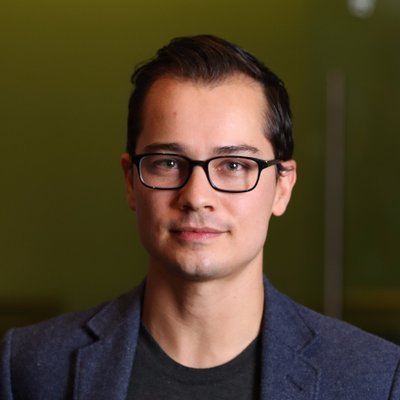
Ryan Sean Adams
Crypto investor going bankless.

.jpg-48bb3b8a9a7a83dee5836f716023f733.jpg)
.png-a616dc52961c1edd72b0c1fdf5f47e7a.png)

.png-336efc5e35995e6b184e7e830baa688b.png)