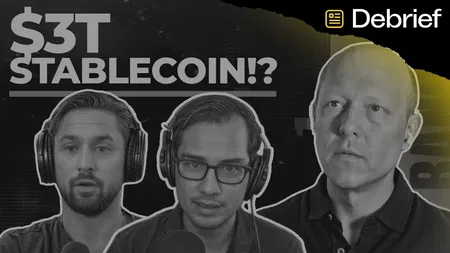
$3 Trillion in Stablecoins by 2030 | Jeremy Allaire, USDC Founder
The Future of Stablecoins
Up next
All episodes 00:15:04
Podcast Premium
00:15:04
Podcast Premium
DEBRIEF: The Jeremy Allaire Interview
 00:32:27
Podcast Premium
00:32:27
Podcast Premium
DEBRIEF: Tech Acceleration vs Deceleration
 01:42:40
Podcast
01:42:40
Podcast
Tech Acceleration vs Deceleration: ea vs. e/acc debate | Erik Torenberg & Haseeb Qureshi
 00:22:59
Podcast Premium
00:22:59
Podcast Premium
DEBRIEF: The Anthony Pompliano Interview
 01:27:51
Bitcoin
01:27:51
Bitcoin
Anthony Pompliano - Bitcoin, Portfolio for 2024, Institutional Adoption & Crypto Tribalism
 01:15:43
Podcast
01:15:43
Podcast
ROLLUP: BTC Halving is Here! | Worldcoin's New Chain | China ETF Approvals | Solana Chain Upgrades
 01:27:12
Bitcoin
01:27:12
Bitcoin
Runes: Tokens on Bitcoin | Casey Rodamor
 01:06:10
Podcast
01:06:10
Podcast
The Unified Architecture of Ethereum | DH + RSA
Inside the episode
Joining the podcast today we have the man behind the largest US based stablecoin, Jeremy Allaire, the Founder of USDC Circle.
A year ago USDC depegged in the face of major banks like SVB and Silvergate collapsing. How did Jeremy deal with that? What year is crypto in internet years? Why don’t we have a venmo for crypto yet? Fast forward to 2030, what’s the total value of stablecoins?
Stay tuned because we ask all that and much more.
TIMESTAMPS
0:00 Intro
2:56 SVB Crisis Reflections
21:09 Crypto Age in Internet Terms
28:24 The Future of Stablecoins
38:42 The Crypto Venmo
49:53 Blackrock’s BUIDL Fund
55:19 US Government
1:10:10 USDC vs Tether
1:15:35 Central Bank Stablecoins
1:21:49 Regulatory Protectionism
1:26:00 Closing Thoughts
RESOURCES
Jeremy Allaire
https://twitter.com/jerallaire
USDXX - What backs a USDC?
https://www.blackrock.com/cash/en-us/products/329365/circle-reserve-fund
Circle
Transcript
total value of stable coins what do you think by the end of this decade by the end of 2030 where where are we sitting 2030 yeah yeah I I'm I I feel comfortable saying $3 trillion welcome to bankless where we explore the frontier of stable coins this is Ryan Sean Adams I'm here with David Hoffman and we're here to help be become more bankless we have Jeremy air on the podcast today this is The Man Behind the largest stable coin issued in
the US we had so much to talk about a year ago at this time major Banks like Silicon Valley and silvergate were failing that's the last time we had Jeremy on the podcast a moment when usdc had just deeg and was in the middle of recovering operation choke point seemed to be a thing that the US government was doing to squelch off crypto companies from Banks and debank them how did he deal with all of that that's where we start the conversation and then we discuss what year is crypto in Internet terms are we in the 80s in the '90s in
the 2000s how mature is this technology how much more do we have to go we also ask why don't we have a venmo for crypto yet and then we get into the black rock and circle partnership how big of a deal is this what does the US government want from stable coins are they going to try to block it and reject it or are they going to embrace it at that point we had to bring up circle's controversial statements on their main competitor tether they made these statements in front of Congress does Jeremy believe lawmakers should prefer one stable coin over another and finally we fast forward
to 2030 this whole vision is realized what is the total value of stable coins at that point Jeremy's always such a a useful guest uh he's seen the rise of the internet and then he's also been watching the rise of crypto at the same time so it's always fun to pick his brain about comparing and contrasting these differences here uh but then he's also kind of just a general polymath he's very well-versed in macroeconomics and geopolitics and uh government and legislation and like operating being being an entrepreneur operator inside of
those confines uh while also being a very big bull of the world of defi which is strictly outside of those confines and he's kind of has his one foot on both sides of the camp of like very many different things he's inside of the world of fintech but he's also on chain uh he's inside the world of the regulatory landscape but so USC is also on chain and outside of it as well uh and so it's just a very diverse perspective and always just like such an articulate guy so whenever Jeremy comes on the pot I always listen all right
let's get to the episode with Jeremy aair on stable coins but before we do we want to thank the sponsors that made it possible bankas Nation we are on with Jeremy Lair he is the co-founder and CEO of circle which is the company behind usdc which is the world's largest us-based stable coin Jeremy welcome back to bankless yeah it's great to be back thanks for uh thanks for having me on it's great to have you and you know just to kind of complete the thread actually the last time we had you on Jeremy was uh just over a year ago at this time and it was was kind of in crisis mode I
would say so there was a literal Bank crisis at the time in in the US there was Silicon Valley Bank bank list listeners may remember this or maybe seems for yeah it seems like a long time ago uh but Silicon Valley Bank had some issues um silvergate the bank as well where usdc kept billions in funds uh was facing potential insolvency we didn't really know and usdc itself the stable coin had a brief period of of time where it was doing the thing it's not ideally supposed to do which is deep pegging from the dollars now we are in much
calmer Waters and I I just want to kick this off uh to to complete the circus the the circus it was a little bit of a circus too but complete the circuit here how do you reflect on that like was this the most stressful period of time in circle's history and and what did you learn well uh we've had a lot of really stressful times in our history so we've been working on this for 11 years and um you know like faced enormous uh enormous challenges along the way but definitely uh definitely when there are a rapid
succession of bank failures large scale government regulatory actions um and uh and and all that in a rapid succession of a matter of weeks it's it's pretty wild I mean I think the um the context setting you did I think is pretty good right I think we uh you know going into 2023 you had the start of the Year where basically the the bank Regulators said don't touch this they basically gave an order to all banks do not touch any of this uh which was then caused uh I think
a lot of banks to begin to say okay you know we need to kind of pull back there was sort of this operation choke point 2.0 kind of narrative that was sort of out there and then you know really starting in in later in January but going into February you had uh a a a wave of enforcement actions uh principally by the SEC against an enormous number of of us-based companies and some International companies all Sweeping in uh and so the market itself was like what what's happening in the
United States uh and I know it's topic you guys have have addressed many times and then you had in the matter of seven days you had three distinct banks that were completely separate from from from one another um fail or be seized um and and then the threat of a broader Regional banking crisis that then ultimately had you know secretary Yellen and the and the uh the federal government basically saying we will stop any uh defaults of any uh uninsured
deposits at any major regional Commercial Bank and and it was sort of a a view that you know this was um you know a much broader Financial stability risk so it that is all happening obviously and I think um what is also really important to remember is during that period of time that one to two weeks um virtually every single company in the entire crypto industry was debanked they were debanked they lost their transactional banking uh because
silvergate was failed uh Signature Bank was shut down and so even you know thousands of companies including International companies lost their ability to transact so it caused this just enormous kind of set of challenges oper what does that mean to be debanked Jeremy meaning meaning um if you if you are a company let's say you're uh you're a firm in in the market and uh you had the the primary way that you were able to access the uh you uh trading markets
or other things was through a bank like Signature Bank or silvergate bank which was you know probably 5 to 10,000 companies um those Banks stopped like they literally went away and so like your accounts went away and so literally every company in the world that had some any interaction with digital asset markets was like I just lost my ability to function and so just the the the Fiat world uh kind of was breaking down so it was a really um special time um now I I think uh when I look at at at a year
later I mean it's for us it's been it's been pretty it's been pretty amazing I think when we talked a year ago what was fascinating to see was there was sort of this flight from safety uh which is this idea that effectively like you know generally it's like oh you have regulated companies in the US you have like uh the the US dollar system and the regulated banking system and you know there's sort of a a view that that's like that's safe and then you know the rest of the world was saying like I I actually don't know if the United States
is safe and so you had a kind of flight from safety um and um that was that was pretty dramatic and that went on I think for for many months has the whole industry around the world kind of recalibrated um I think uh for Circle specifically we've we've come to the other side of this just in a far stronger Place fundamentally from an infrastructure perspective I mean we we built up the most transparent Reserve structure in the industry so you can literally look at the reserves in usdc
uh daily uh through a publicly listed vehicle usds xx and you can see and that's independently audited independently verified SEC regulated and that is a the circle Reserve fund structure and you can literally see every single T bill every single repo uh uh agreement and you can see their precise maturity Etc and so it's just a level of transparency that does not exist anywhere else um and then obviously you know what we've been able to do is actually significantly evolve
the banking infrastructure and I think this is an important piece piece of what's been going on which is um we have taken the path of working with Regulators around the world since we started I think both Circle and coinbase have have really tried to always be like strong compliant organizations and that's allowed both of our firms to have really excellent access to the Fiat banking system and and and that's the you know for us it's the best it's ever been we have a Global Network of
transaction banking now we have we have the ability to create redeem usdc in the domestic Bank networks in the US in domestic Bank networks in Singapore in Hong Kong in the EU will'll soon be launching in in markets like Brazil and Mexico uh We've announced initiatives to to enable on and off ramps for usdc in Japan so it's like a whole Global infrastructure and we've added multiple what are called GBS Global systemically important Banks as reserve banks that
hold the cash piece of what we do not the not the the the t- bill kind of part of what we do so that infrastructure is you know far more redundant far more Global with you know very strong global scale infrastructure players behind it and then we just continue to ramp up the transparency and and so that is now I think you know playing out very very good as like major companies want to build on top of this infrastructure now yeah Jeremy maybe to kind of summarize the the big changes here that happened
in the wake of that that banking crisis um uh correct me if I'm wrong but my understanding is like Silicon Valley silvergate these were um uh banks that would Bank crypto companies that were like quote unquote like on the margins from the perspective of maybe like The Regulators uh and they they were banking Circle one of one of uh circle's banking Partners uh and now like kind of the before after of the uh whole banking crisis is now Circle was maybe like banked by like banks on the margins but has now been brought closer to the fold
you've gotten like stronger more like inner Bank uh banking Partners I think JB Morgan is one of them uh is that how you would kind of describe the before and after of the effect of the banking crisis is that like Circle has been like given a route into like more of the center of the financial system so I think well before svb you know saw its challenges we had been upgrading to the Black Rock based uh Circle Reserve fund structure and in fact even at the time around 85%
uh of the uh of the circle Reserve infrastructure was actually custody in Bank of New York mland which is the largest custodian in the world like $ trillion dollar of assets and the Black Rock um uh funds so and then the the the cash piece you know I think every company in this industry has struggled to get major Banks to work with them and and in fact the number of companies in this industry worldwide that have major Banks um is extraordinarily limited and so um yes it's true we've continued to
upgrade the the kind of scale of the banks that we work with but you know some of the other players can't get US bank accounts uh have to depend on on Shadow banks in you know uh jurisdictions with no real regulation and so it's um I think we we're in a good place so when you know Black Rock decides you know they want to work with a company to enable stable coin transactions with a tokenized fund or when the largest retail bank in uh in in
Brazil newbank which is an extraordinary company decides to like launch digital dollars they're working with the companies that have that really deep um infrastructure integration um into the financial system um and that's you know that's a huge part of the role that we play um one thing to note though is you know I think um Banks like Signature Bank and Silicon Valley Bank actually were like Darlings of Wall Street uh extremely well-rated Banks some of the fastest growing banks in in in in their
time uh and quite large so the these were not like Niche banks these are major banks that uh were institutional in size and scale and and had Decades of of being fundamental Banks to huge parts of the technology industry almost every Venture company in the world most Venture Capital firms um you know a huge amount there and so these are not like you know I I you know a a a nichy Community Bank in San Diego uh you know the these these were actually major you
know some of the largest regional banks in the United States and so I think that's why at the end of the day we saw this first Republic which is another huge uh huge Regional Bank huge asset manager failed and was taken over uh by JP Morgan you had you know one of the largest banks in the world credit s failed uh right at the same time so you're having these very large Banks failing um and so you had and you had basically central banks say sort of stepping in to say you know we're we're
we're not going to let this happen I think one of the unfortunate things um that happened from that is that you know while we now hold the cash pieces of of usdc almost entirely with these Global systemically important Banks it's just concentrating more money in these in these GBS it's sort of concentrating effectively those funds in these too big to fail institutions that effectively have the taxpayer uh kind of uh backing them whether they like it or not and prior to that we actually had a program
called Circle impact where we had deployed billions of dollars into Community Banks minority depository institutions and Community Banks because we wanted those Banks who offered you know fundamentally credit to important communities um and that was part of our like social impact uh commitment but those were all deemed too risky um and so we had to pull back billions of dollars from mdis and Community Banks which was really disappointing um and uh and so I think at this point though when you know we we think about just looking
at usdc specifically um you know our our our goal here is that this uh is as close to like government obligation money as you could have as a digital dollar and so we've kind of reached that from a fundamental um uh risk perspective and so if you're going to have a base layer of money on the internet that you're building software against You're Building protocols on you're transacting and you you want that to be as as lowrisk and as transparent as as possible yeah I hear you it feels like uscc is now much uh close like much
more connected to the Mainframe I guess of the the dollar banking like uh ecosystem right and what's interesting is and and by the way I was looking at the US dxx which which I I think I can go see this if you Google USD XX you can go uh Google and see your your question is what backs usdc you can kind of like see it here right right here and so uh in usdc you see a lot of um treasuries it sounds like there's still an element of of uh cash Reserve but now that cash Reserve is one in one of the big Banks
and like if I'm just to Layman interpret what you were saying Jeremy is like the reason you couldn't spread the cash throughout all of these uh Community Banks and kind of like quote unquote decentralize it a little bit is because it's just too risky if these Banks go under and they could go under as a sector uh for instance then there's no FDIC Insurance like on the books kind of protect protecting the cash Reserve in those Banks and so if you're Circle you got to get close to the main frame and you got to park it in kind of like the I I'll use my term for this that the quote unquote too big to fail type like major
Banks basically and like that's effectively what you've had to do I think that's that's right and and it raises like a bigger philosophical question which is something that that we've pursued and I think it has an enormous amount to do with ultimately what defi is trying to accomplish which is in a world where you have a technology these blockchain networks that effectively can can lower the cost of storing and moving value the marginal cost of storting moving value to effectively zero where effectively you
can transact at the speed of the internet you can settle transactions with very high degree of of of security and settlement Assurance in a fraction of a second and now for a fraction of a scent in many cases um you're you're you're creating like one of the highest utility forms of money that's ever existed you're creating this sort of um and and in that world you're actually increasing the velocity of money there's this concept in in monetary you theory around money velocity and the velocity of money has this huge impact on
economic activity the more the higher the velocity of the money the sort of more economic activity and and that can drive growth and historically central banks use interest rates to try and slow down or speed up the velocity of money but today the the way in which that velocity is constrained is is essentially through the leverage and risk-taking of banks so you know you you know effectively I put you know a million dollars into bank a I don't actually have a million dollars there I have a liability and that liability is
um to to that bank that bank then is an investment company and they make loans and they leverage your Capital so you have a 12x leverage position that's the average leverage in a bank deposit so you have this 12x leverage position and that's super risky and so in a world where basically money is going to like move like data on the Internet it's just going to move everywhere at this incredible speed having that the underlying asset itself be built up on these stacks of Leverage is really really problematic and so I think you
know not only do we want like this like hyper efficient uh like high utility money you want the base layer that that payment stable coin as people refer to these the kind of fundamental payment token you want that to be as close to the as possible you want that to be basically as close to government obligation as possible because then everyone you know will will feel comfortable interacting with it and using it whether you're like a Trader settling a $100 million do trade or you're an individual and and where defi comes in is my belief is that onchain
markets are going to do a far far better job at allocating capital and risk than traditional Banks and so if I could build an onchain credit market and and that onchain credit Market has the ability to have different types of Underwriters of risk that have highly specialized knowledge and who are able to actually be like the credit pool Underwriters and people can basically sweep in into those pools they understand like you're it's still it's still lending um but it's actually on
100% transparent infrastructure 100% real-time auditable infrastructure all the risk management that's embedded in the credit infrastructure is transparent The Source code's transparent you know you you build a a dramatically more open and transparent model that can drive lending and like right now a lot of that lending that happens in defi is sort of Leverage lending margin borrowing for speculative purposes it's not you know for for for real use in the real economy people are not saying hey I would like to borrow usdc to uh open a new
restaurant or hire more employees although there is more and more of that and you do see some of these D5 products that are kind of designed around this kind of onchain credit intermediation but fundamentally like philosophically we believe in full Reserve money full Reserve banking where you separate the activity of lending from the payment utility and that's like a core core philosophy behind behind Circle and and usdc as well full Reserve money a payment coin I I we want to get back to that later in the conversation the context of like does the US government
want that and what does the US government want but like let's hold that side of the conversation because you you opened up something else which is like Defi and crypto and block chain and like like money at the speed of information money at the speed of flight and kind of this idea of um you like Global frictionless uh you know kind of payment transactions so a question we often ask in crypto is what year is it in uh internet terms okay so uh I know Jeremy this is not your first uh like company that you're building you're not your first startup you saw the birth of the
internet you built protocols on the tcpip Internet Protocol and now you're building circle on kind of like uh Crypton native protocols uh it's interesting because crypto just hit 15 years old uh and Bitcoin started in in 2009 as many people know the internet's birthday if you go Google this uh the internet like Google says the internet's birthday was uh in 1983 and 15 years after the birth of the internet was 1998 okay so if you like project that forward yeah are we in the the late
1990s in terms of uh like blockchain I I was curious cuz I know you have a take on this you've been you've been through the the early internet cycles and now you're here for the internet value cycle what year is that are we in are we in the early '90s and the late 90s is this post.com bubble I mean certainly 2022 felt to a lot of people like it was a bubble and then a pop yeah so I I think about this a lot and and um I I um it's I think it's very different than the evolution we saw from like the basically these unconnected networks in the 80s
and connecting those into sort of the birth of the HTTP protocol which then kind of gave rise to the web and SMTP protocol which gave rise to email which were really in 1998 like the killer the killer apps they were still pretty difficult to use and it was it was it was all dialup modems it was it was a pretty pretty um pretty awful infrastructure but you could build things like you know we built an app server you could build apps in a browser and that was like a really powerful thing and people were were were you know on this decentralized infrastructure setting up these nodes and just like everyone was publishing so you had a
sense for like wow this is you know this is amazing I think we're further than that though um in in crypto and um I actually think where we are is is very similar to um where we were in like 2003 um and yeah and and so my view is is so um you have like multiple convergent things happening at once and and it you know back in 2003 you had basically like client software on the internet got much
better like you could build good user interfaces and in browsers and and the like like the standards got better for ux you had Broadband basically taking off uh so you didn't have Broadband really until 2002 um and so then you had residential Broadband really starting to take off which created the ability to have these faster pipes and so not everyone had the faster pipes but the faster pipes were there wi-fi came out like Wi-Fi didn't exist before then or it was like super Niche and then people started to be able to connect devices uh that could connect to the broadband and
then you could then tell teleport like the digital media or the software in different ways so you had Wi-Fi you had Broadband you had better client user uh experiences and you actually had billions of dollars of capex that had been laid out by companies who had basically invested billions into the doom boom and that capex became available and became more commoditized as well and so the ability to like deploy servers server Farms or to build what we now know as as cloud like the it
was the commoditization was was happening there so you had all these things kind of coming together um and um and it really made the consumer internet possible it made e-commerce really work much more broadly um and it made basically software as a service happen like that that basically starting in like 2003 2004 SAS just completely took off and so you had a what was interesting about it is from that point forward it was basically a Non-Stop period of progress there was no I mean there were the public markets did
different things but basically like the progress basically was just never stopped and and I think we're still there like the progress never stopped so if I think about blockchain networks like where we are today there's a similar kind of convergence that's happening you basically have like the layer layering of blood blockchain networks which is creating these like um really really powerful scalability models where you can go very app specific and you can have a deep underlying assurances of of security um
you're you're seeing the Advent of and application of zero knowledge technology which you know is a critical precondition to people feeling comfortable with their privacy and their data and their identity and other things on these networks um you're seeing ux abstraction finally arriving so basically all of the all of the really hard parts of crypto which is like I need to go buy a crypto token move Mo it to a third party wallet that I have to set up with like a seed phrase I have to
sign these transactions I have no idea what I'm doing why do I need this gas token and it cost like $7 to do this thing to get that nft it was just awful and so like the like in you know during that 2122 it's like the reality is like the ux was awful and so now we have infrastructure and ux abstractions gas abstractions like we run a gas station any developer can build with it and you can basically take away gas for users it's just like really really cool and you're seeing a a uh you know modular
smart contract accounts that are basically creating pluggable extensible kind of ux models for wallet experiences that then devs can build all kinds of modules and and wallet creators can adapt those and the ux layers basically like we're seeing that with you know a number of wallets that are out there right now and so the combination of like scalable infrastructure better ux and then finally while this doesn't necessarily feel like it's happening legal Clarity is actually happening in most parts of the world so almost everywhere in the world there's like
there's there's there's legal Clarity and when you have legal Clarity then like households and firms and and financial institutions are like oh okay I know how to I know what this is I know how to account for it on my books I know how to interact with it and it's like I now have like a trustworthy infrastructure and so all these things are coming together and the technology progress in these infrastructure layers is is speeding up not slowing down so I think this is 2003 I think we're going to see like wonderful beautiful apps that get consumer scale over the next 12
to 24 months we will easily be reach a billion users that can transact in something like usdc but also with other things I I really think we're in a very very different place and now it's like sufficient that developers can can build all kinds of other applications obviously like forecasters a wonderful example of like wow you can build beautiful apps that have protocols that have digital tokens that have extensibility and other things so I'm I'm very bullish about where we are and um and I you know I don't really care
about exactly what prices are and all that but like I really think technologically we're in a really excellent place you don't care about prices Jeremy because you run a stable coin man that's a c out yeah I'm not pumping any token that's right it's always fun to do theuh infrastructure comparisons of the 90s to what we have now in in the blockchain world uh because it it seems to be like a um I mean it's of course never going to be a onetoone comparison but there's always lessons to be learned right there's always patterns to pull out uh
but the always the big difference is that there was never any Financial Assets in the 90s and so that's always the thing that kind of breaks down the metaphor that breaks down the comparisons um one of the fuels for motivating all of this is of course like uh Bitcoin invented digital gold digital money you know eth falu like a lot of other like we all kind of are playing around with assets but I think before the Paradigm of stable coins no one actually really saw the Paradigm of stable coins coming uh but now we actually do understand that stable coins have just an insanely large role to play
in both the motivations the financing of development uh where we are going there's $ 150 billion dollars of stable coins in this space and so not only has it kind of defined maybe like the last like four to five years of development like not holistically but a very being a very large part of like blockchain velopment where do you think this goes as this infrastructure technically like on an engineering and infra uh perspective it will get more sophisticated it will get better it will improve uh but on the financial asset side of things for where stable coins
and just generally speaking like where do you think this goes in the next 10 years yeah so what I've sort of and you can ask anyone who's ever worked at Circle this question is that I my my view has always been like this is this this the the the progress in basically building an internet Financial system that is natively built from the ground up on the Internet is like a 10 20 30-y year project it takes a really long time and and um we set out a very specific Vision about a protocol for dollars on the internet that could actually be like
scalable and you could transact at the speed of the internet and you could do it for you know nearly zero cost and that would be programmable and all that that was like in the founding of the company nearly 11 years ago and like if I look at where we are today with just say usdc and and this form this new form of of electronic money um like we're basically like at the 1.0 Vision like we basically have reached like the one the the 1.0 idea and that's great and it's already like a
scaled Network and it has a lot of reach but I think like um if you talk about the next 10 years I I think the the the growth in this can be really dramatic um I I think about um the kind of Market in a couple ways I think the first is there is a market for electronic um electronic cash or electronic money and today the the market for electronic dollars is a 21 trillion Doll Market there's 21 trillion dollars of electronic dollars um in in the in most of that is is is um

Ryan Sean Adams
Crypto investor going bankless.
.png-a616dc52961c1edd72b0c1fdf5f47e7a.png)
.png-336efc5e35995e6b184e7e830baa688b.png)

.jpg-48bb3b8a9a7a83dee5836f716023f733.jpg)
.png-cde5b9c0aa4838d09c634abbd1136ff2.png)