Devcon #1 - Vitalik Buterin
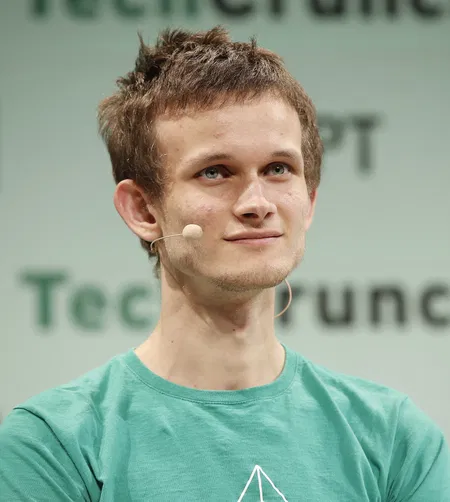
Vitalik ushers in A New Era for Ethereum
Up next
All episodes 00:57:51
NFTs
00:57:51
NFTs
Scaling Sorare's NFT Platform with CEO & Co-Founder, Nicolas Julia
 00:33:10
Podcast Premium
00:33:10
Podcast Premium
Debrief - Who Stole the Wealth?
 01:36:00
Podcast
01:36:00
Podcast
141 - Who Stole the Wealth? with Ben Hunt
 01:34:00
News
01:34:00
News
ROLLUP: Is SBF Killing DeFi?? | Aptos Launch Down Bad | Ethereum Censorship Heats Up | Reddit Onboarding Millions
 00:59:15
Podcast
00:59:15
Podcast
Massive Arbitrum Acquisition!! with Steven Goldfeder & Preston Van Loon
 00:28:51
Podcast Premium
00:28:51
Podcast Premium
Debrief - The Future is Fiat
 01:49:33
Podcast
01:49:33
Podcast
140 - The Future is Fiat | Noah Smith
 01:33:19
News
01:33:19
News
ROLLUP: Huge Binance Exploit | David Sues the Treasury | Devcon Bogota | PayPal Censoring
Inside the episode
Vitalik Buterin—of course—joins us in the first in a series of interviews we held on location in Bogota, covering the context and magnitude of Devcon, Vitalik’s conference lifestyle, and a new era for Ethereum in a post-merge world.
TIMESTAMPS
0:00 Intro
3:25 What is Devcon?
7:18 Past Devcons
13:17 A New Chapter for Ethereum
16:45 Parallel Development
19:50 Arbitrum x Prysm
24:40 The zkEVM
27:04 Vitalik’s Conference Lifestyle
RESOURCES
Vitalik Buterin
https://twitter.com/VitalikButerin
Transcript
Bakeless Nation, welcome to the DevCon 6 experience. I just got back from DEF CON Bogota, and it was my first DEF CON, and I had a ton of fun. And this is something I do every time I go to a conference, some big conference, I try and come back with as much content and interviews as possible. So this trip, I come back with about 10 interviews between 10 to 20 minutes in length from a variety of members throughout the Ethereum community.
I want to give you the experience that I had and many other people had if you were not able to make it to DEF CON. Or maybe you were able to make it to DEF CON, but you were just too busy doing the hackathon, attending the booths, and you didn't get to talk to everyone that you wanted to talk to. So I pulled in as many different people I could to get their perspective as to what DEF CON was for them, what they're paying attention to in the future, and overall, just how much fun do they have while hanging out in Bogota, Colombia.
First up in the list, Vitalik Buterin, of course. And we talk about a number of different things throughout DEF CON. He's been to every single DEF CON, so I asked him about the history of DEF CON and how DEF CON has progressed forward as Ethereum has progressed forward. And I also make the point about how DEF CON isn't really just a tech conference. It's also something much more than that. So what does DEF CON actually do for the Ethereum ecosystem? And then we just go through the list of a variety of other subjects as well, such as what are developers focusing on now, now that we are post-merch? And also what does he think about the Arbitrum acquisition of Prismatic Labs? And overall, what's he going to do in Colombia once DevCon is over? And what does Vitalik Buterin do when the sun goes down and everyone goes to parties? What does he do? Does he go to parties? So stay tuned for all of those questions and more. Bakeless Nation, we are here at DevCon 6 in Bogota, Colombia. And I'm of course here with Vitalik Buterin. Vitalik, how are you enjoying Bogota?
It's a nice city. It's a nice conference. So good.
So Developers Convention, DevCon, would give the air that it is a tech conference. But I don't really think that summarizes what DevCon really is enough. What is DevCon?
Defcon is kind of the, you know, it's a decentralized everything conference. Maybe that's what Dev stands for. Um, it's uh you know, there's just all kinds of uh different uh communities that are coming here and um, you know, sometimes are even kind of intentionally brought together here, right? Like there's the uh
a whole bunch of uh different uh developers, um, you know, layer one, layer two, cryptography, um, you know, programming languages, everything. There's uh
Local community people from you know both uh Latin America and uh plenty of other places, you know, saw a couple of people from uh Iran a couple of uh days ago, and uh you know, big shout out to all the brave people uh protesting there. There's uh people from all kinds of different industries, there's uh you know intellectuals of various kinds. Uh we kind of brought in uh Bruno Amasaj and uh Venkatesh uh Raoul this year, and uh, you know, they've been uh kind of walking around and doing some uh presentations and uh kind of babbing their thoughts on Twitter, and it's just been fun to see their outsider impressions of uh you know what's going on here. So yeah, I think in general it's just this uh you know really cool and uh weird event where all kinds of uh people get to see other people that they would uh not normally get a chance to see.
And that's certainly the experience that I've been having and you know many other crypto conferences out there pick
Cities like New York, San Francisco, Chicago, but DEF CON has always picked uh off the beaten path cities. Uh here we are in Bogota, Colombia. Previously it was Osaka, Japan, and also Prague and the Czech Republic. And what's the thought process behind how cities are selected and why are we going across the world rather than being in the United States?
I we definitely do uh intentionally try to uh move the continents around every year, I think. Uh
Part of that is a uh it's a very uh intentional strategy to uh kind of empower the uh you know Ethereum's uh global community and uh to try to give people from all of these different uh regions a chance uh to um you know be able to come to at least uh one of the uh events easier and uh you know share their side of uh you know what uh crypto is doing for them.
I think uh you know having a geographically decentralized community is uh
just has to be part of uh having a decentralized uh community in our modern world.
And uh
you know, we got an an opportunity to just see, you know, kind of talk to all kinds of people that I think uh we would not be able to if it was uh just uh happening in the same place every time.
Certainly. And Ethereum, of course, is technology, it's software.
Yeah.
But it's more than that, right? It's social coordination. And this may brings it beyond the areas of just like fintech and coding stuff and much more deeper into the world of culture. I think that's what I've really been enjoying here in Bogota and many of the other Ethereum conferences is it's one part tech, but it's also one part experience. And I think that's what really Ethereum is emblematic of here to do in this world is you know produce new technology that is really just to enable to facilitate culture. And so I think it's really important that we go around and experience different parts of the world that, you know, you don't you're not gonna get in New York or San Francisco.
Absolutely.
And so this is my first DEF CON, actually. And even though I've been in the Ethereum space for about four or five years, the other DEF CONs have sadly escaped me. But I'm wondering your uh if you could give us a trajectory of the development of the DEV CON coordination. And my take here is that
Mm-hmm.
as Ethereum has become more and more coordinated and organized, so has DEV CON. How are the previous DEF CONs and how is this one different?
Yeah, so I mean DEF CON Zero was like actually kind of the equivalent of you know what we do now with like things like the uh M4 retreat in Athens, right? It was uh um last last year it was just uh this uh you know private events, uh kind of 50 people get all of the developers together, just kind of get all of uh people working on Ethereum itself in sync. And that's uh pretty much all that we could do because um you know the Ethereum community was just uh so tiny then, right? Then uh DEF CON won in uh London, first public one, uh, which was uh exciting. Um this was also the time when uh Microsoft was uh doing lots of uh Ethereum things and uh you know they were doing their uh enterprise uh blockchain stuff, and uh they sponsored uh DEF CON, which uh was just mind-blowing for everyone at the time that um you know a company as big as Microsoft would grace a uh a tiny little uh movement like ours, by uh even to the point of being willing to sponsor it and um you know send a bunch of people to speak. And it was a lot of developers, a lot of um applications, just a lot of different tracks. Then DEF CON 2, uh Shanghai, uh definitely the uh kind of first uh you know, out of a lot of people's comfort zone one, and um, trying to make uh kind of better relations with the Chinese community. And um, you know, that was uh interesting. And uh I mean I feel like the uh you know the Chinese community has been uh kind of doing uh more and more uh you know great things in uh in in Ethereum since then, right? You know, we've got like scroll and soul wallet and you know all of these uh things uh happening now. Then Cancun, um, you know, we just uh
Wanted to be in North America and uh you know Cancun is uh more accessible from people from uh down south than uh doing it in the you know US or Canada and uh we also wanted to we always uh keep in mind um you know trying to not host events like too often in places where the visas are too restrictive and like that's you know one of the challenges that you know the US unfortunately has, right? Like there is that famous story where like Adi Shamir is like one of the you know literal grandfathers of cryptography got rejected for a visa for a cryptography conference. Yeah. Um but you know each time the events uh got bigger, there are kind of more and more tracks. Uh there's uh you know more and more attempts to kind of be intentional about promoting all of the different uh parts of the uh Ethereum community that would not naturally uh get promoted by themselves. Then uh you know, DEF CON 4 in Prague was the really big one, right? And like twice as big as anything that uh happened before. And that was uh also one that I remember sorry the first one where we made a really serious attempt to kind of bring in interesting thinkers uh from the outside, right? So Cory Doctorow was uh there.
Uh Glenn Weil uh from Neurodical Exchange was there. Uh so uh a bunch of speakers and uh you know also speakers who had uh kind of interesting and um you know not just positive but also kind of importantly cautionary things to say about uh crypto, which I think is uh important for us to engage with. Um then uh you know DEF CON 5, Osaka, and that's uh
I I feel like it was a continuation of uh things uh that were there before and uh
you know.
Also interesting people, also uh more both developers and uh all kinds of um other projects. And then uh here, this is like the first one in three years, right? So that by itself makes it really big. And um, you know, there's uh I think in efforts to really take the best from the previous ones. Um, right. So, you know, developers and uh really uh interesting and uh fascinating people getting into you know the deep end of uh polynomials and uh you know polynomials are important, right? As I said, you know, I'm a polynomial, you're a polynomial, we're all polynomials. And uh you know, people from all of Ethereum's local communities and people talking about different kinds of um applications, and then people on the philosophy side, and uh there's just all of that. The uh it feels like the venue was uh pretty successful, right? Like just uh, you know, as a venue, it was effective at venuing, which is something that has uh not always been uh true in the past. It's uh
You know
Close to hotels convenient for um a lot of people to stay. Probably the biggest weakness of the venue is that like I found myself when I get uh dragged off to like various um you know side dinners and events and so forth, like there's one specific district of Bogota about 7.5 kilometers to the northeast of here where just like everybody went, right? Yes. And uh like it just seems obvious that like if we could just teleport this place, um you know, 7.5 kilometers to the northeast, like that would have uh, you know, two likes improved it even more. But um, you know, there's uh never perfection, and uh, you know, still in the grand scheme of things, I mean, it feels like everything is worked out. I mean, obviously, uh a lot of people came in worried about issues like safety, but um you know so far I think uh there's been you know fewer like serious incidents of uh that type than uh I would say even the bulls expected. Uh so
Yeah, no, uh you know, hopefully, yeah, you know, it's uh in the event even gave uh a lot of people a chance to kind of see Latin America better for what it really is. Yeah, no, I so you know I'm happy. Lots of people, good conference. I mean I hope we can uh do more um excellent ones like this in the future.
Yeah, certainly. And this is also an interesting time in Ethereum's history that we're having DEV CON right after the merge, right after proof of stake. Uh, because this seems to be a new chapter for Ethereum. And so it's just great timing that we can put everyone into the same spot.
Mm-hmm.
And kind of come to consensus about what is the next era of Ethereum now that the proof of stake era is well underway, but also now behind us because it's done.
Mm-hmm.
Twenty twenty one was kind of the year of shipping proof of stake, ultrasound money, and now those boxes are checked. So what boxes aren't checked that we are going to be going into in 2023? That's the conversation here at DevCon.
Solving scalability is number one. Like fees have been low for the past six months, so it's uh a bit easier to kind of backburner the problem. But I think um, you know, if Ethereum succeeds, we're gonna have another bull. And uh, you know, we know what bulls mean for transaction fees, right? Uh it's uh you know you know you know from the point of view of a user, some you know, bulls uh can even be something to dread just uh because of how it makes uh transaction fees uh you know shoot up to $50 or $100 or whatever. And uh, you know, there is a uh kind of ticking uh clock on us to solve the issue. And uh, you know, we don't know how long the clock is gonna keep ticking. And uh yeah, no, it's uh you know our responsibility to really make sure that scaling is uh figured out before then. Um so
Scaling, um privacy um is uh you know another one. Um the uh base layer censorship resistance is another one, account abstraction is another one, and you know, there's all kinds of complicated ways in which these problems uh intersect and uh tie in with each other too. On the uh positive side, uh zero knowledge proofs as a uh technology have just uh you know seen a huge amount of uh progress in the last three years, right? When the uh there was kind of this big leap that started, I feel, in uh September 2019 when uh Planck was uh introduced, right? Because uh
Like, yeah.
From the user's point of view, it's like, okay, Planck, there is another Snark protocol. It looks like it's a little bit niftier than before. But like from a uh you know, like deep practitioner's point of view, it's like this very deep philosophical improvement in how we think about snarks, right? Because like we're able to basically think about, you know, converting things that we want to prove into abstract polynomial equations, and then separately figuring out, okay, how do we prove the polynomial equations? And it turns out that like, you know, both of those areas are, you know, you can do lots of deep improvements on, and uh things become you know conceptually much cleaner, becomes much easier to progress when you do really start thinking about those two separately, right? And uh, you know, one side can think about you know, how do we turn problems that we care about into polynomials, but don't thinking about the other side. And since then we've seen amazing stuff like pluck up and uh you know more and more um interesting things lately. And then on the other side, there is the problem of like, okay, you know, you we you have a polynomial equation, and uh, you know, the polynomials are big, but you know, how do we prove it? And that's seen a lot of uh progress too, and there's amazing stuff happening with Starks and uh all that, right? But this conference, I feel, has to some extent sort of been a victory lap for the uh just the facts that that technology exists and has practical use now, right? You know, everyone is uh talking about SNARKs and it's increasingly a uh default thing that you stick into um applications that you're building. And that's just totally not what the discourse was like five years ago.
Right.
The thing I wanted to check with you is before getting into proof of stake, shipping proof of stake.
It seemed to be the focal point of all of the developers. Like it was the thing we were focusing on. And now post proof of stake, I mean, we're definitely focused on proto denk sharding and denk sharding EIP4844 as like the big one, but it doesn't seem to be a monolith, right? It doesn't seem to be attracting everyone's attention. And so would you say that we're going from all of the core devs and Ethereum devs focusing on proof of stake to now focusing on a variety of things all at once? And so perhaps we're getting into an era of parallel development in Ethereum. How do you like that take?
I'd say that's true, though. I think that also uh I like underestimates how much parallelism there was already, right? Like uh even the merge. I mean, there's all this work on the execution clients, there is work from the consensus clients, uh, there is work from the MEV people, right? That's uh, you know, actually a pretty big project. And then you know there are sort of you know, sort of de facto precursors like uh the EIP 1559, which is like, you know, it doesn't have anything to do with proof of stake technically, but it kind of uh you know exercised a lot of the muscles of uh being able to make significant changes to the protocol.
I think uh one way to think about post-proof of stake Ethereum development is to think about what the uh uh kind of long-term North Star of uh like what Ethereum could look like from a technical perspective, right? And like I have this uh you know fairly simple description that I uh you know gave on stage a couple of days ago, right? Which is um like
So Ethereum in 2032, you have a node, your node runs on your phone. Every 12 seconds or 32 seconds or whatever number we uh agree on, you download 3.6 megabytes of data, you hash it, you do a couple of uh elliptic curve equations to check a snark, that's it. You know the block is valid. Wait uh 12 seconds, get 33.6 megabytes of data, hash it, do some elliptic curve operations, verify the snark, and uh valid. 12 seconds later, data, hash, elliptic curve check, valid, right? So from the point of like the whole process just becomes in you know i incredibly sleek and uh seamless to the point where like literally a phone could even do it, right? Because it's incredibly light on computation, the only thing that it's heavy on is data, and data uh just happens to be the thing that you know phones are increasingly getting insanely good at and will get even better at over the next 10 years, right? So in that kind of a world, you know, we uh
We have extreme protocol simplicity. We have uh high decentralization from easy ability to run a node, easy ability for anyone to stake. Hopefully, you know, simplify the fork choice down. We have single slot finality. Everything about accounts and abstraction and all of these things just work, right? And uh the protocol does just like get to a state to this kind of stabilized end state that just looks really beautiful, right? So, like that to me is uh what I see the yeah final uh kind of like goal being from a yeah uh protocol standpoint. And then the the challenge is like, you know, how do we figure out all these different five strands that'll actually get us there?
Sure, sure. One of the big pieces of news that happened at the Stef CON was the acquisition of Pry Labs, Prismatic Labs, by Arbitrum. And there's two takes here. There's one where, yes, we've solved funding of client teams. Like we figured it out where we can have a relationship between a layer two perpetually fund the development of layer one clients. And so that's always been a problem that's plagued Ethereum thought as history is how do we fund our client teams? How do we fund our open source public goods developers?
Mm.Mm.
The other half of that equation is there's now this commercial entity that is operating a very important piece of the Ethereum layer one client. When you saw this news, what did you think? How do you think about these two things?
Yeah, I I mean I think uh on the funding aspect, I mean it's obviously great that there are kind of non-ethere and foundation sources of uh funding for these projects. And obviously, this will give any future client teams a story that they can tell to uh investors for why they should get seated round. So it's um we're gonna help people in all kinds of second-order ways. From a uh governance uh capture viewpoint, I guess uh I think there's like multiple different things that it's important to keep in mind, right? Like one is that like Arbitrum is not kind of you know uniquely threatening or kind of you know scary or whatever here, right? Uh so you know, like Optimism had been uh helping kind of participating in uh EAP 4844 and put a couple of uh developers toward it. Consensus uh has um you know literally funded entire client teams, right? And then the question is like, well, what's the difference between buying a client team and just uh incubating um a couple of them uh yourself? Um, right? There's uh a long history of um you know all kinds of uh projects. Uh I mean, obviously, yeah, you know, the uh parody running the parody client and uh you know also having the polka dot network, right? So like this isn't unprecedented, though, I mean, at the same time, you know, like obviously what Arbor Trump did is uh kind of bigger than um what optimism has done and so forth. But it's not like you know, we're entering a scary new unknown or anything, right? But at the same time, like it is it's definitely important for us to be vigilant, right? Like the sort of dystopia that I have in mind is uh traditional internet governance, right? If you look at, you know, the depth 3C and so forth. Um there's a lot of precedent for organ public goods organizations where their funding model basically is we get funding by uh people who are buying governance leverage. And uh that does fund them, but that also leads to some often not very nice uh governance outcomes, right? Like there have been a bunch of uh scandals about like introducing uh, you know, sort of the equivalent of um you know protocol layer DRM into uh you know various uh internet protocols. And uh, you know, that gets pushed by the large corporations again that have seats at some of these um organizations. So
You know, the concern here basically is like,
can we uh avoid that, right? And uh
yeah, I'm not sure I have a a good answer. Like I think it's like
It's important for us to start thinking about the question. Like it is important to not be catastrophist about it, right? And like also just remember the reality that like all of these uh people who are participating and even, you know, the people signing the checks and buying these uh things up and funding the client teams, you know, they are uh you know well-meaning people and um, you know, they are still aligned with the Ethereum ecosystem. But, you know, we have seen how kind of like divergences of uh alignment uh, you know, happen over time and uh you know how even the internet itself sort of um you know felt like a uh you know crypto idealistic happy family in the early 2000s and then it uh you know split into all kinds of things that uh ended up having, you know, often bitterly opposing objectives. And uh
Yeah, it's time to kind of start, you know, thinking and uh being vigilant and you know at least asking the question of uh like what it means to have a governance process that's robust against these kinds of things.
Sure.
And might a positive second order consequence of this be an actual stronger incentive mechanism for more client diversity if we have shown to the world that, hey, if you build a client, you might get acquired and have a payday.
Mm-hmm.

David Hoffman
Co-owner at Bankless. Optimistic storyteller of frontier technology.


.png-cde5b9c0aa4838d09c634abbd1136ff2.png)