Circle's CEO, Jeremy Allaire on USDC, SVB's Collapse, & the U.S. Banking System
It's been a rocky week for the stablecoin. Bottoming out right around $0.88 amidst the U.S. banking crisis, it seems to have regained its peg.
Up next
All episodes 00:16:37
Podcast Premium
00:16:37
Podcast Premium
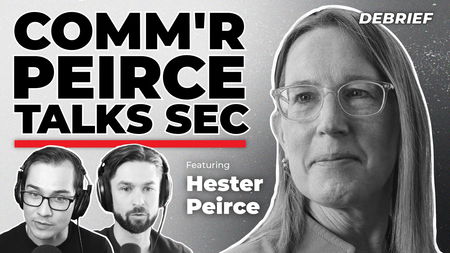
DEBRIEF - What SEC Commissioner Hester Peirce Thinks About the SEC
 00:55:37
Regulation
00:55:37
Regulation
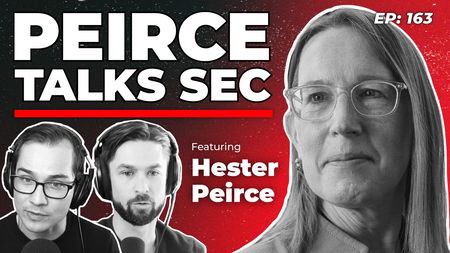
163 - What SEC Commissioner Hester Peirce Thinks About the SEC
 01:22:55
Regulation
01:22:55
Regulation
The U.S. Banking System, Federal Reserve, & USDC Post-SVB Collapse with Ram Ahluwalia
 01:09:11
Regulation
01:09:11
Regulation
SVB Banking Crisis, Fed Pivot, BTC ETH price action📈
 01:21:29
Podcast
01:21:29
Podcast
The ETHDenver 2023 Experience
 00:25:14
Podcast Premium
00:25:14
Podcast Premium
DEBRIEF - The Coinbase Long Game with Brian Armstrong
 01:28:35
Regulation
01:28:35
Regulation
162 - The Coinbase Long Game with Brian Armstrong
 01:41:04
News
01:41:04
News
ROLLUP: Silvergate Liquidate?! | Elizabeth Warren vs. Binance | Bankless 2.0 Announcement | SEC Taking Ls?
Inside the episode
Co-Founder and CEO of Circle, Jeremy Allaire, answers the question, "What's next for USDC?"
What happened behind the scenes? What regulation is needed according to Jeremy? And most importantly, what's next for USDC?
Timestamps
0:00 Intro
3:52 Update on the Past Week
15:44 Circle's Adapted Strategy
20:32 CBDCs
26:18 What Regulation is Needed?
29:02 Closing & Disclaimers
Resources
Jeremy Allaire
https://twitter.com/jerallaire
Transcript
Bankless Nation, we have a special episode for you today. What is next for USDC? That is the stable coin at uh the center of much of crypto today. And David, we brought on the perfect guest to give us the scoop and to tell us what's next for USDC and to tell us what happened last week in the crazy weekend where USDC was trading 10 cents off of its peg in the midst of
It would have happened.
banks melting down, all sorts of chaos. So, who do we have on today?
Jeremy Alaire, the CEO and and I believe co-founder of Circle, uh, the producers of USDC, uh, a probably one of the most important pieces of infrastructure in this DeFi landscape, traded all the way down to 88 cents. Uh, I've seen DAI trade off of its peg, I've seen other stable coins trade off its peg, never seen USDC trade off of its peg. So we I really just want to get the update. Uh, what
how has Circle reacted to the events of this banking crisis and what has changed for Circle moving forward? And so we're just gonna get the update from Jeremy Alaire.
Guys, we're gonna get right to the episode with Jeremy. But before we do, we want to speed run the sponsors who made this episode possible. Stick with us. Thankless Nation, we are joined by Jeremy Alaire. He is the CEO and founder of Circle, the company behind USDC. Jeremy, I know things are really busy over there. We appreciate you making the time to update the crypto community and what's going on. How are things? I mean, you feeling okay? It was a pretty crazy weekend last week. And how are things now?
It's it's um you know it it's been really dramatic. Um and you know, it it wasn't just last week. I mean, it it started as, you know, you saw a a bank failure with Silvergate Bank, which as you know,
um is a bank that many digital asset firms, crypto firms and others, you know, work with. Um it's been, you know, I I know something you guys have been talking about for a little while, uh, this sort of
you know, bank de risking, like all all kinds of impacts of the banking system on crypto. That's been kind of a theme since the start of the year.
And then, you know, of course, um,
you know, these sort of systemic financial stability issues that emerged out of nowhere or seemingly out of nowhere, which, you know, we can we can talk about what whether regulators were asleep of the wheel on that as well. Um, but you know, it's been a it's been a dramatic period of time. And so, you know, we began last week with
uh basically Silvergate shutting down and us having to like decommission rails for lots of companies and a lot of really kind of challenging situations.
And then on Wednesday, we went into a period where it was announced that, you know, Silicon Valley Bank had uh had significant withdrawals and
uh was needing emergency funding. And they were saying we're gonna get the emergency funding. And at that point, I think um,
you know, uh a lot of a lot of people began to freak out and then ask a question,
you know.
Is there a broader set of risk in commercial banks in the United States, especially kind of mid-sized commercial banks? Um, and uh, and you know, you began to see kind of panic uh emerge, and that then manifested itself in, you know, uh ultimately the closure of multiple banks uh and the Federal Reserve uh, you know, stepping in, basically saying we're going to provide $700 billion of liquidity to the commercial banking sector and insure all uninsured deposits. Uh, I think that the
the real risk was that,
you know, the the the sort of asset and liability management uh as that kind of imbalances that were really the result of.
Rising interest rates and then essentially banks holding long bonds and then having liquidity crunches against that, you know, was undermining financial stability. So that's like the macro kind of going into Wednesday in terms of what people are seeing.
So for us, pretty dramatic. And I think it's it's actually worth level setting, you know, before kind of going into that, a little bit about the way USDC operates, right? Which is when we launched USDC five years ago.
We really wanted to build something that was regulated, uh, that was supervised, and that had, you know, the approval of kind of payments and banking regulators to operate connected to the banking system. Like the key concept was we need a way to be able to seamlessly, you know, kind of create and redeem dollar digital currency connected to the banking system. And at the time, the regulatory framework for that in the US was basically, you know, what's called stored value electronic money law, which is the same law that governs your PayPal balance, your Venmo balance, Cash App, Apple Pay, and like every payment processor you use. They're sort of all governed under that, the non bank payment systems of the United States. And that's a good regime because you're required by law to hold one for one redeemability. You have a very narrow set of financial instruments that you're allowed to hold. And that's by law. You can't, if you go outside of that, you're gonna lose your licenses, lose your bank accounts, et cetera.
And you know, we we obviously also wanted to be more transparent. Like if you ask PayPal, uh, you know, what what what's in your reserves? Like people don't even think to ask that. There's $35 billion. Like, well, is it corporate bonds? What is it? No one asked that question. But in in crypto, everything's public, everything's transparent. People want to understand risk. And so we began, you know, the whole trend of monthly attestations from public accounting firms and sort of saying, yes, the money's there. Here's how many tokens, that kind of thing. So that I think was sort of the state of play five years ago. And there was really only one bank that would actually provide the capabilities needed to do this, which was Silvergate Bank. That was, you know, and in many ways, it was sort of the birth of USDC that then created the basis for Silvergate actually to grow in some ways, because you know, people who needed to get in and out of digital dollar liquidity in the form of USDC could do that 247 through there.
So if you fast forward
as this has scaled out over the past few years.
You know, our goal was we just we want to, as as uh one of my colleagues says, is sort of from our perspective, it's a race to the top, not a race to the bottom. And race to the top was like, how do we keep increasing transparency? How do we keep you know increasing the quality of the reserves with an ultimate end state, which we've we've stated publicly for years now, which is that we believe the base layer of you know, kind of dollars on the internet needs to be uh essentially straight through government obligation money, meaning.
It should be cash at the Federal Reserve and it should be, you know, these sort of T bills, these short duration T bills. And that's basically cash or cash equivalency.
And like a digital cash instrument should do that. Like we shouldn't depend on the, you know, the risks inherent in the fractional reserve banking system to underpin that. Now, legally, that has or and from a kind of technical and regulatory perspective, that wasn't possible for us. But we've been moving over time as more banks got comfortable with.
Firms like Circle to expand the number of banks that could hold reserves. We expanded the number of banks that could handle transaction processing with USDC.
And there's some big breakthroughs actually, kind of, you know, over the last six months and two really noteworthy ones. One was
we we moved, you know, essentially 80% of the reserves to be exclusively in these short term T bills, but we set it up in this structure in a strategic partnership with BlackRock. BlackRock is the largest asset manager in the world, 11 or 10 trillion ish assets. And we created something called the Circle Reserve Fund, which basically is an SEC registered and supervised reserve fund. It is a government money fund.
It it it exists exclusively for USDC reserves and it's held entirely for the benefit of USDC holders. And that allowed us to basically offer
total transparency. So anyone in the world can go any day of the week and look at the USDXX ticker.
And they can see exactly the portfolio of T bills, their maturity, et cetera. And so they can see, okay, 80% of this is this highly liquid thing. And it's also independently, it's SEC supervised, it's independently uh audited. And so that's like part of the race to the top. How do we keep increasing that? But then we have this 20%, which is in commercial banks.
And, you know, our goal is also a race to the top, race to the top there. We know that sitting inside of that is commercial bank risk. And so you what you you know, you sort of prudently you look at okay, we want to have A rated publicly traded financial institutions. We want to have like the best possible kind of quality there.
Um, and you know, I think our goal over time was like, how do we get more and more of this at like the largest cash custodians in the world? So if we're gonna have that, we have that in place. So we actually began work with Bank of New York Mellon, BNY Mellon. It's like the first you know bank in the United States. Alexander Hamilton founded it, and
they hold $24 trillion of assets. So they're they're they're uh they're a globally systemically important bank.
And that's important. So we had this relationship developing.
And actually, literally, as everything went down last week,
uh, we we, you know, it was it was kind of like, okay,
it looks like commercial banks more broadly, including banks that we worked with, were going to fall over. And so we began the process of basically moving cash
into.
Bank of New York Mellon, right? We want to be the the most solid, you know, kind of dollar cash infrastructure in the world. Um, and you know, we we began that process on Thursday and we completed that process on Friday. And in the middle of it, SPV got shut down.
And so
Wow. Wow.
yeah. So it's like, okay,
uh, we've got $3.3 billion in transit. And it's actually, we can see in the Fedwire system, like the receiving bank is acknowledging, yes, this is incoming, but it the the wires like stuck.
It just hasn't settled on chain. So it's that pending
It hasn't settled off chain. It hasn't settled on the Fedwire ledger, right? Because someone someone hit a stop button and said, no, uh, we gotta we gotta like stop the blood from flowing from this bank and figure out what we're gonna do. And so,
you know, a huge flurry of activity. Obviously, we we publicly disclosed this because we felt that USDC holders should know.
You know, as soon as we publicly disclosed what we knew and the details of what we knew, we repegged to 98 cents, which was great. But before that, it was like you said, it was like people were like, oh my God, is this over? You know, you know, just like and and you know, the way these digital asset markets and DeFi and everything, it just moves at the speed of the internet. And so it's just like that kind of thing. Now, the reality is.
Like the actual risk of that not being fully reserved and available is extremely low. And we, you know, there's only so much you can do to reassure people. And so, you know, for us, basically, um, we, you know, we we took, we took an incredible number of actions. We also, we, we were concerned that Signature Bank was potentially at risk. And so we undertook to do the same thing with signature bank.
And in fact, it turned out they were shut down by the end of the weekend. And that was again another rail that existed. So a rail for the on and off ramps for creating and redeeming USDC was essentially shuttered as well. And so
to open up minting and redemption on Monday morning, we needed to stand up multiple new settlement infrastructures over three days.
And we had a lot of that already underway because we were sort of marching towards more and more redundancy given the kind of bank risk issues that exist in the sector.
And we were able to come online on Monday and meet our obligations and everything else. And I think, you know, there's a lot of uh of plan A, plan B, plan C type of activities going on uh, you know, over the weekend. But the interesting thing is coming out the other side of this is, you know, we we certainly have survived this sort of systemic shock.
Um, and the the lesson uh that, you know, uh I don't know if I said this earlier, but it's sort of
You know, we're in this world now where everyone's talking about how we need to save the banks from crypto. And right now we're trying to save crypto from the banks. And
I mean, like quite literally. And so, and and and I think on the other side of this, though, we're now in a place where USDC is actually
the most secure digital dollar on the internet. We have cash at BNY Mellon, uh, and we have the ability to kind of you know settle through settlement banks, but we've cash at BNY Mellon. We have the Circle Reserve Fund, SEC supervised with, you know, only these T bills, with daily transparency. It is by far the best, most stable thing out there. And we've had a really positive response from regulators, from others in terms of how we've handled this, but
Ryan Sean Adams
Crypto investor going bankless.
.jpg-48bb3b8a9a7a83dee5836f716023f733.jpg)



.png-a616dc52961c1edd72b0c1fdf5f47e7a.png)
.png-336efc5e35995e6b184e7e830baa688b.png)