CFTC vs. Uniswap, Prediction Markets, & Crypto | Commissioner Summer Mersinger
Is crypto regulation evolving or not?



Up next
All episodes 01:18:05
Podcast
01:18:05
Podcast
Where is Ethereum Headed? | Mike Ippolito & Mike Neuder
 01:32:57
Podcast
01:32:57
Podcast
Defending Crypto to the Middle-Class American | Austin Campbell
 00:17:37
Podcast Premium
00:17:37
Podcast Premium
DEBRIEF: The Austin Campbell Interview
 01:09:13
Podcast
01:09:13
Podcast
ROLLUP: China's $500B Stimulus | Kamala's Pro-Crypto Pivot? | Gary Gets Grilled | EIGEN Unlock Incoming
 00:43:06
Regulation
00:43:06
Regulation
Do Democrats Really Hate Crypto? Rep. Ro Khanna
 01:23:05
Podcast
01:23:05
Podcast
In Defense of The Ethereum Roadmap | Mike Neuder
 01:02:05
Podcast
01:02:05
Podcast
ROLLUP: Rate Cuts Price Savior? | Trump’s DeFi Project | Vitalik’s Documentary
 01:14:47
Podcast
01:14:47
Podcast
Fed Rate Cut: Is It Too Late? | Macro Alf
Inside the episode
Exploring Crypto Regulation with CFTC Commissioner Summer Mersinger
In a recent episode of the Bankless podcast, we had the pleasure of interviewing Summer Mersinger, a commissioner of the U.S. Commodity Futures Trading Commission (CFTC). Appointed by President Biden and confirmed by the Senate in 2022, Commissioner Mersinger has been actively engaged in shaping the conversation around crypto regulation. With her background and advocacy for balanced and clear guidelines in the crypto space, this conversation was packed with valuable insights about the CFTC’s role in overseeing digital commodities and its relationship with the growing crypto industry.
CFTC 101: What Does the CFTC Regulate?
We kicked off the discussion by covering the basics: What exactly does the CFTC regulate? Mersinger explained that the CFTC is primarily responsible for overseeing commodities and futures markets in the U.S. While many people associate the CFTC with traditional commodities like oil or wheat, the rise of digital assets has brought a new frontier under its jurisdiction. But what exactly constitutes a "commodity" in today’s digital world?
Commodities are typically defined as basic goods that can be bought, sold, or traded in large quantities. However, not all assets fall under this category—baseball cards and Apple shares, for example, are not considered commodities. The CFTC’s task is to determine whether digital assets like cryptocurrencies fit within this framework, a process that has become increasingly complex as the crypto industry evolves.
What Are Digital Commodities?
The CFTC has been at the forefront of regulating digital commodities, a term often applied to certain cryptocurrencies. However, not all digital assets are treated as commodities, and Commissioner Mersinger helped clarify the CFTC's perspective on this. Currently, the agency focuses on assets like Bitcoin and potentially others, where there is consensus around their status as commodities. But the regulatory framework is far from settled, and the CFTC continues to work on establishing clearer guidelines.
CFTC vs. SEC: Understanding the Differences
Many people are more familiar with the U.S. Securities and Exchange Commission (SEC) than the CFTC, particularly due to the high-profile role SEC Chair Gary Gensler has played in crypto regulation. We asked Commissioner Mersinger to break down how the CFTC operates in comparison.
While both agencies have similar governance structures, the key difference lies in their focus—securities vs. commodities. Mersinger highlighted the collaborative but distinct roles the CFTC and SEC play in regulating digital assets. She emphasized that the CFTC has a culture of working to provide clarity and protect market integrity without stifling innovation. This was a subtle nod to the current tensions surrounding regulation by enforcement, particularly from the SEC.
Uniswap and DeFi: The CFTC’s Enforcement Action
One of the more prominent topics in the interview was the recent CFTC action against Uniswap Labs. In September, the CFTC settled with Uniswap Labs over allegations that the platform illegally facilitated digital asset derivatives trading. However, the settlement raised eyebrows as it targeted Uniswap Labs—the creators of the protocol—rather than the decentralized Uniswap protocol itself.
Commissioner Mersinger shared her perspective on this case and her dissent regarding the enforcement action. She expressed concerns about the CFTC’s approach, arguing that it might discourage innovation in decentralized finance (DeFi) by punishing efforts to comply with the law. She cautioned against “regulation by enforcement,” where agencies take punitive action without providing clear guidance ahead of time.
Mersinger's dissent sparked a larger conversation about the challenges of regulating DeFi protocols, which exist in a gray area of financial regulation. Her viewpoint underscores a growing debate within regulatory circles about how to handle decentralized platforms in a way that both ensures consumer protection and fosters technological growth.
Prediction Markets: Innovation or Risk?
Another fascinating topic was the future of prediction markets, a novel use case emerging from the crypto world. Platforms like Polymarket have gained traction for allowing users to bet on the outcomes of real-world events—from elections to sports games. While some see prediction markets as an exciting innovation, they also raise regulatory concerns.
Mersinger acknowledged that prediction markets represent one of the most compelling and innovative aspects of crypto, but she also noted the risks involved, particularly around potential misuse. She spoke candidly about the CFTC’s approach to these platforms and how they’re navigating the fine line between innovation and regulation.
A Vision for the CFTC’s Future in Crypto
As we wrapped up the conversation, we asked Commissioner Mersinger to share her vision for the CFTC’s future role in the crypto industry. If she could “snap her fingers,” what would she like to see?
Mersinger emphasized the need for clear, forward-thinking regulations that protect consumers while also allowing the crypto industry to thrive. She noted that the CFTC’s job isn’t to stifle innovation but to ensure that the market operates fairly and transparently. As the crypto space continues to evolve, she expressed a commitment to working with industry players to find solutions that balance risk and opportunity.
How Can Crypto and the CFTC Grow Together?
Commissioner Mersinger concluded the discussion with a message to the crypto industry: collaboration is key. For the industry to move forward, it’s crucial to engage with regulators like the CFTC. By working together, the crypto space and regulatory bodies can create an environment that encourages innovation while ensuring that consumers and markets are protected.
This interview with Commissioner Summer Mersinger provided a deeper understanding of the CFTC’s approach to digital assets and how it differs from other regulatory bodies. With a commitment to clear and balanced regulation, Mersinger’s insights suggest a future where the CFTC and the crypto industry can grow together, shaping a more innovative and secure digital economy.
Transcript
even just three or four years ago you had members of Congress saying this is all this is all fake, it's all money laundering, it's all criminals. Maybe there's a few that still say that, but but very few. And people are recognizing that these is legit this is a legitimate market. These are important markets and that we need to make sure we're we're not, you know, pushing all this activity offshore.
Welcome to Bankless, where today we explore the frontier of commodities and the government agency, at least in the US, that regulates them. This is Ryan Sean Adams. I'm here with David Hoffman, and we're here to help you become more bankless. We have a CFTC commissioner on the podcast today. And the reason David and I booked this uh episode is because we're sort of wondering what is the status of the CFTC? Are they a friend or foe of crypto in the United States? There was this case that we saw, I think it was two weeks ago, David, which is uh a Uniswap versus CFTC settlement case. And uh we get into the details in today's episode, but it kind of raised our eyebrows. And the question is is the CFTC emerging as a crypto ally or are they going the way of the SEC and Gary Gensler? So we had Commissioner Mersinger on the podcast today who actually
dissented from the settlement action with the CFTC. And she gives the reason for that dissent and the broader context. We talked about uh Uniswap, we talked about leveraged tokens, we talked about prediction markets, all of the things that are adjacent to this important regulatory agency in the US and crypto.
There's a lot of uh similarity between the CFTC and the SEC. Uh, I think uh our listeners are gonna be more familiar with the SEC simply because it's been more of a player in our world with Gary Gensler. Uh and then also the commissioner that we've had on the podcast before from uh the SEC has been Hester Peirce. And I think uh Commissioner Mersinger, I think, has a lot of simil similarities to Hester Peirce, like first principles driven, uh free markets, uh reduced government, very first principles oriented and and kind of just like true to the purpose of these organizations and uh also interested in coming on a crypto podcast, uh, and frequently dissents with some of the enforcement actions from the overall organization. Uh and so we get into a little bit of the differences between the CFTC and the SEC, uh, along with all the uh current events that that Ryan just put out just a second ago. Uh so let's go ahead and get right into the episode with Commissioner Mersinger. But first, a moment to talk about some of these fantastic sponsors.
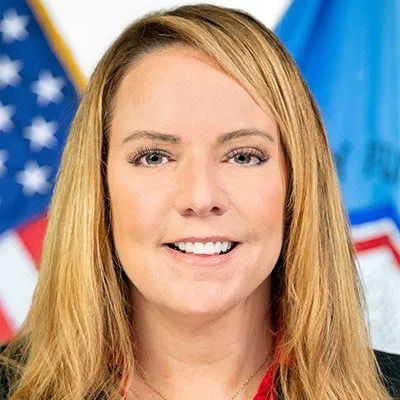
Bankless Nation, we are very excited to introduce you to Commissioner Summer Mercinger. She is a commissioner for the U.S. Commodities, Futures, and Trading Commission. That is known. I'll give you the acronym. That is the CFTC. That's probably what you've heard it as. She was nominated by President Biden and confirmed by the Senate in March 2022. And I would say regarding cryptocurrency, at least so far, Commissioner Mercinger has emerged as uh more on the advocate side. She's got a clear and balanced view on uh you know regulation and crypto and how these things intersect. We'll talk about one of her most recent descents in the course of this episode. But Commissioner Mercinger, welcome to Bankless for the first time.
Yeah. Thanks for having me on.
Well it's great to have you. So it's been a while since we've had a uh somebody from the CFTC on. I believe David, if like you might recall this. So I think we had Brian Quintens on. That had to be like two or three years ago.
Logo.
And then we had a former chair, Chris John Carlo, on the episode. He wrote a book actually about crypto, but we sort of um like talked to him post being at the CFTC. So uh it's great to hear from the CFTC again. And I think we should start here. Um, like just by way of recap, can you tell us what the CFTC regulates in the US?
Yeah, that's always a good place to start. Um, I do have to give my standard disclaimer, which is the views I share today are my own and not necessarily those of the CFTC or my fellow commissioners. So, kind of the basics of the CFTC. Um, it's a mouthful to say the full name, but we regulate markets. So those markets span just,
you know, it's crazy how far when you think about it. Everything I would say from cattle to crypto, literally. We have markets that are, you know, determining the the future price of live cattle. We have markets that are looking at, you know, what what will be the potential price of Bitcoin? Um and
we really are just overseeing the market. So we're we're
probably more product agnostic than than maybe this this SEC. So we
Our regulator or our markets are also, they have a lot of what we call self-regulatory functions as well. So the idea is let the markets operate. We kind of there to make sure it's a level playing field, make sure the rules allow for, you know, fairness in the markets. But at the end of the day, we really just want these markets to show what the price of commodities will be in the future. And also where it's necessary, people can use our markets to hedge their costs. So that's the idea behind it. We really did start in the agricultural sector. We
you know, corn, cattle, um, and we have come very far from there. But it's uh, you know, and we have, you know, markets now that are looking at everything from,
you know, um kind of the the interest rates to prediction markets. So we we cover a lot of ground.
So covering markets i is a lot of ground. That's a a very broad thing. Um how do you differentiate between what you guys regulate, what you guys cover, and what the SEC regulates? Because I think maybe somebody in the SEC is like, well, we also regulate markets. Uh where is that line? Where's the line between the CFTC and the uh SEC?
So I'll probably answer this as the, you know, what is it a commodity or is it a security? And that's uh it's a simple question with a complicated answer.
What I try I try to simplify it to, you know, everything that's bought and sell, sold in commerce is a commodity.
Um, and it's a commodity until somebody calls it a security, essentially. So uh, you know, we can deem something a commodity under our jurisdiction, except for onions and movie theater tickets, which is a long story. Um, but we it everything that's gets bought, sold is a commodity.
But if the SEC comes in and says, you know what, we think this fits our tests and this is a security, then it becomes a security. So you can actually securitize our commodities. So I think this gets this is where it gets really complicated when people are saying, you know, what's in your jurisdiction, what's in the SEC's jurisdiction?
Our jurisdiction is really everything bought and sold until the SEC comes in and says, you know what, this is this is somebody trying to raise funds. This is someone raising capital. And now it's a security.
Okay, so the default for assets in markets is that they are all commodities unless the SEC says that they're a security. And hopefully the standard is more than the SEC actually claiming something is a security, right? They actually have to prove that it's a security in court and they can't be quote unquote arbitrary and capricious. Uh, but let's talk about like some real world assets then and run run it through sort of the test of is it a commodity or is it something else? And by the way, is there another category? Is like there are there commodities, securities, and other things like currencies, or are we just commodities and securities when when the US looks at rate regulation in uh asset markets?
You know, e when you start to talk about currencies, you know, that is somewhat of another category. Um
Okay.
You know, we the when you talk about um foreign currency exchanges, we call that forex or, you know, foreign exchange. And that has been regulated, you know, more on the commodity side or or a commodity futures side because it looks a lot like a futures product.
Okay.
Um, and you know, we have other kind of
Categories like, you know, baskets of swaps that become, you know, a type of a security or or with under our um jurisdiction as a swap. So it does get much more complicated than that. And certainly there are some tests that the SEC will hopefully use before they declare something as security. And then there are times where we may have an asset class that goes back and forth between a commodity and a security. And we have to do constant analysis between the two agencies of whose oversight is it. You know, it it can get it can get pretty complicated. But when you look at it in the basics, and I often use cattle because I grew up on a cattle ranch, but you know, cattle, they're not, they're not a security. They're a physical commodity. You're you're buying it, you know, you're either buying it at the auction house or you're selling it at the auction house. Presumably you're selling it for money and you're buying it for food. You're not, you know, trying to um raise capital.
um through some kind of, you know, common enterprise. So
that's kind of the basic idea of, you know, where a commodity sits. And then, you know, we have our markets that are are looking at, okay, what will that price be the next time I go to the the auction house?
Yeah, this is interesting 'cause th th th this comes into play with like the Howie test, right? Which was like an orange grove. But by the way, I'm not like a legal expert, but so like that's just forgive me if I you like uh screw up the details here, but basically if you didn't
I do it all the time.
Yeah, okay. It's like if you did something, you took uh oranges or cattle, let's say, which are commodities, and you sort of grouped these together and you issued like, you know, cow token security, something like this as a stake inside of this like uh, you know, fantastic cow opportunity that I, as a uh you know, company am going to create value for, then you can transform commodities maybe into securities. That's what my understanding of the Howie test was all about. Um, anyway, let's enough about Orange Groves, uh, because uh gosh, we've talked so much about that. Can we run through a basic test? So uh in the real world, we have these things called like uh collectibles, like baseball cards are our collectibles or like Pokemon cards, uh you like maybe famously in front of Congress are uh collectibles in the in the real world. Are collectible, are baseball cards commodities? And why?
I mean, they are. Um, you know, but they're not something that that
requires regulation, right? Like they're not
there's not necessarily a a market where buyers and sellers are being linked up. I mean, yeah, you might say if you're going to a trade show with your baseball cards, but you know, I think there are certain things in interstate commerce that don't
really make sense in these the idea of you know would these fall under your jurisdiction you know CFTC and part of it is we look at you know
would these commodities be um you know part of our markets would somebody offer a futures product um on a baseball card? I guess they could and in that case that might change the the narrative a little bit
um in fact before
Before Dodd-Frank, the narrative really was if we have products on our markets trading, you know, futures products on a commodity, then if there's some sort of manipulation that's affecting that futures market, then you know, we could possibly go in with enforcement. Dodd-Frank broadened our fraud enforcement to basically all commodities in interstate commerce. And so then it gets a little more tricky as to okay, how do we make sure we're not doing something like
you know, going after some sort of fraud in a Pokemon card, you know, game or, you know, a school, a school ground dispute over, you know, who if you traded equal, you know, Pokemons here. I think that's how it works. But
um, you know, and and a lot of that just goes to this idea of, you know, is there a market with kind of broad buyers and sellers coming together um
to who who want to be selling these uh in a way that um you know can show can give you some price discovery that can kind of tell you like what's the price of this market look like.
So I guess there's an element of scale here. And it sounds like the CFTC's job is just like when there's a like enough scale in any kind of like market, then your role here is to make sure that the market works and it's efficient and it's like like neutral and there's not players who are um kind of like manipulating it in some way. What's really interesting about cryptocurrency, of course, is like we can achieve scale for things that look a lot like collectibles or baseball cards very quickly. And you can even think of a world of like um gaming assets, you know, and if you have some sort of massive multiplayer RPG and there's like a flaming sword item drop in some sort of game, and that gets represented as a digital token, as an NFT inside of some platform, and suddenly there's this massive we could scale this to like hundreds of millions of dollars or even billions of dollars of market activity for virtual gaming items. Well, that's kind of a weird market that the CFTC has not sort of played in because with baseball cards, you might scale this to like, you know, trade shows or something like this, like private markets, garage sales, and the CFTC is not a big enough market to get involved. But maybe when we have gate of gaming items and they're in the tens of billions of dollars, maybe the CFTC does need to take note when there's sufficient scale. Like, what's your take on this?
So this is one of my favorite kind of, you know, slippery slope arguments that I make a lot internally. This idea that like if we keep
Going down this road of like, you know, we we want to just start calling more and more things under our jurisdiction and bringing enforcement cases. There will come a day where I'm suddenly regulating my son's robot Roblox game and his like skin purchases, all the weird purchases that he makes inside that game. Right. And I'm like, I don't think that's what we want to be doing here. That seems, that doesn't seem like where we should be spending our regulatory um oversight and time. So I think there is a little bit of that, like we've got to be smart about where we're going and where we want to focus. And honestly, sometimes it is this idea of there are other agencies able to look, you know, to prevent fraud in these in these places where we really don't have a business regulating. You know, sometimes I will say to our enforcement team.
Isn't this the FTC, the Federal Trade Commission? Maybe they've got statutes that apply. You know, if there's something fraudulent going on in a market, maybe they're the right regulator. Maybe it's the state attorney general's office. We're not the only regulator in town, and we don't have to cover every market. And so I think we do have to be careful because we could head in that direction. Um, I that this was an argument I made a lot when we started talking about NFTs and whether or not, you know, that would be an area of regulation for us. And that was my thing. I'm like, we start down that path, and we will definitely be regulating roadblocks, and I don't want to do that. So I think it is a uh, you know, it's kind of a slippery slope joke.
argument, but I I don't think it's that far out of like where do you where do you end this?
I want to open up the conversation around the idea of a digital commodity. Because as I was learning about the world of commodities, I understood commodities to be things like resources that are found growing somewhere or just like mined somewhere that are physical on the planet, like gold, clearly commodity, coffee beans, wheat. These are kind of like the things that we use to describe what a commodity is, even energy. And then this like weird thing, Bitcoin comes around and blows everyone's minds about like what is possible here. And then like this idea of like, oh, it's a digital commodity starts to be like thrown around the industry. And then but there's a line that is crossed there because Bitcoin, even though it has very like a lot of commodity like properties, it being software and human created from inception is just weird. At least when you compare it to like the other commodities that I mentioned, you know, coffee, wheat, energy. Uh so like
Is so like one example, one one possible conversation is like, well, the CFTC has been set up in a way that is um like ideologically pure in a way that like even though Bitcoin's so new, it still fits into our regulatory framework because a commodity is a commodity and things can fit and cannot fit. Or it's like, well, the CFTC is just looking to regulate things that it just wants to regulate, and Bitcoin is close enough. So let's like let's lump it in there. Can you talk about that chasm of like hopping over a digital commodity and what like maybe the the conversations in the CFTC are like when it comes to uh regulating whatever the hell digital commodities are?
Right. No, and I think this has been a struggle, you know, internally. And certainly we do a lot of work with um congress with congressional offices and the committees on, you know, trump as they try to create legislation and how do you define a digital commodity has been difficult to kind of narrow that. And, you know, I think part of it is we have to remember that, you know, you can put
A lot of things on, you know, blockchain or or however, you know, distributed ledger or any kind of um asset, you know, is that then a digital commodity? And we are we suddenly taking that out of some other right regulatory sphere and saying, you know, in whether we're looking at legislation or whatever, are we putting it in the CFTC when that really doesn't make sense? So
uh it's it's a conversation that that's ongoing and something that we're trying to understand as far as like you know, when you look at Bitcoin, you know, theoretically or or in
Practice and we do do this, we can we do have enough um authority through our broad enforcement authority to go after any kind of, you know, if there was fraud and manipulation in the underlying Bitcoin market, I think that is pretty impossible to do. But if there was, um, we could go after that um with our enforcement authority. But as far as regulating an ex, you know, Bitcoin broadly, we really don't have any authority to do that. Where we do have authority is if somebody is trading Bitcoin or any any kind of crypto um or or digital commodity and they're not delivering it within a certain amount of time. I think we've got a 28 day.
um kind of threshold. And at that point, then we say, well, then that's a future. You know, now you've gone from like moving a commodity back and forth. You've now created a future because you haven't delivered it within a certain amount of time. And so that's kind of the standard that we're using right now, as far as you know, when somebody would have to come in and
um you know become
Some sort of market category at our agency to be regulated. But otherwise, you know, the idea is
if there's some kind of
manipulation, fraud going on that we see,

Ryan Sean Adams
Crypto investor going bankless.