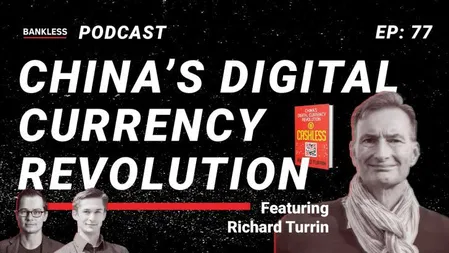
🎙 77 - China's Digital Currency Revolution | Richard Turrin
Exploring CBDCs and China's Innovation in FinTech
Up next
All episodes 01:31:41
News
01:31:41
News
📺 ROLLUP: EIP-1559 | Infrastructure Bill | CryptoPunks & NFTs | Bitcoin ETF
 01:38:21
Ethereum
01:38:21
Ethereum
📺 London Hardfork Livestream | EIP 1559 Goes Live!
 01:44:29
Podcast Premium
01:44:29
Podcast Premium
🎙️ Early Access: China's Digital Currency Revolution | Richard Turrin
 01:49:41
Ethereum
01:49:41
Ethereum
📺 EIP 1559 Expert Panel | Tim Beiko, Hasu, Micah Zoltu, Barnabe Monnot, Matt (LightClients)
 01:52:23
News
01:52:23
News
📺 ROLLUP: Uniswap Front-End | Elizabeth Warren Shadowy Super Coders | COVID-19 | FTX & Binance
 01:50:32
Podcast Premium
01:50:32
Podcast Premium
🎙️ Early Access: Inflation in 2021 | Lyn Alden
 01:05:41
NFTs
01:05:41
NFTs
📺 AMA With Andy | Fractional
 02:19:20
Ethereum
02:19:20
Ethereum
🎙️ 75 - The ETHCC Experience
Inside the episode
Don’t buy lottery tickets, learn about dropping your savings off at the POOL! 🌴🌞🏊♂️
Richard Turrin is the best selling author of Innovation Lab Excellence, and recently published his new book Cashless: China's Digital Currency Revolution. This new release covers the story and context of China’s new Central Bank Digital Currency (CBDC) and the innovation happening in that space.
In this episode, Richard walks us through the efforts China has made to innovate within its fintech platforms, and how it poses a long-term threat to US Dollar dominance. With smart contracts on the way, what does the world look like with a maximally successful Chinese CBDC? Listen in and find out.
🚀 In this episode's exclusive debrief, we dive into all the questions we didn't have time to ask and explore how big of a challenge CBDCs pose to crypto.
🎙️ NEW PODCAST EPISODE
Listen to podcast episode | iTunes | Spotify | YouTube | RSS Feed
Bankless Sponsor Tools:
💰 GEMINI | FIAT & CRYPTO EXCHANGE
https://bankless.cc/go-gemini
🔀 BALANCER | EXCHANGE & POOL ASSETS
https://bankless.cc/balancer
👻 AAVE | LEND & BORROW ASSETS
https://bankless.cc/aave
🦄 UNISWAP | DECENTRALIZED FUNDING
http://bankless.cc/uniswap
RESOURCES
🏴 JOIN THE NATION 🏴
Subscribe: Newsletter | iTunes | Spotify | YouTube | RSS Feed
Follow: Twitter | Instagram | Reddit | TikTok | Facebook
Not financial or tax advice. This newsletter is strictly educational and is not investment advice or a solicitation to buy or sell any assets or to make any financial decisions. This newsletter is not tax advice. Talk to your accountant. Do your own research.
Disclosure. From time-to-time I may add links in this newsletter to products I use. I may receive commission if you make a purchase through one of these links. Additionally, the Bankless writers hold crypto assets. See our investment disclosures here.
Transcript
welcome to bank list where we explore the frontier of internet money and internet finance this is how to get started how to get better and how to front run the opportunity this is ryan sean adams i'm here with david hoffman and we're here to help you become more bankless wow epic episode on china's central bank digital currency a digital currency revolution that's going on that we really haven't uncovered in crypto up to this point richard turner was the perfect guest for this incredibly comprehensive overview of what's going on in china in this important field
david what were uh what were your thoughts on this episode yeah the biggest takeaway i had is that unless you have actually like intentionally gone after and researched what china is doing with this central bank digital currency is then you do not know and so there is a mountain there's an absolute world uh going on in china that unless you have actually been researching yourself like you don't know what's going on because what i thought was going on and turns out what is actually going on are two totally separate things uh and i thought the
central bank digital currency was just a basic you know some sort of fintech layer on top of a central bank that last smoking years yeah like blockchain not bitcoin nonsense yeah no no no like richard turin uh laid down the story of the chinese central bank digital currency and it is a force to be reckoned with and he was a fantastic uh guest to tell us the story uh and i think the other really cool uh thing about central bank digital currencies is that they are inherently inspired by crypto by bitcoin by the technology that
we created but uh the chinese bank's digital currency has taken the the some of the parts that are most suited to them and applied it to their banking layer and but what is the resulting product of that is something much grander than i think what people uh give credit for yeah it's so true though so like we get these news clips uh you know come out of whatever and i don't know if it's like a east-west communication thing or like a you know translation thing or what it is but it's just suddenly you know china's
doing this with the central bank digital currency and there's never any detail right i've like forever since i've been in crypto wanted to understand the detail of this thing because it's been an active project since like 2014 2015 we've been hearing about it and for the first time this is a comprehensive overview and like here's what i feel like this story is is david over the last 10 years while the u.s banking system stayed stagnant china really digitized its banking system and it turns banking services into like a giant app platform
with wechat and alipay these are organizations you're going to find out more about um through this this podcast and through this digital banking functionality it's really leapfrog the west so i made the comment like hey here we are with uh ach transfers that take three days wire transfers we have to show up in person you don't have to do that in china anymore right like they digitize this and now they are launching a central bank digital currency appears like they're dead serious about it like it's coming 2022 it's coming and this is actually the second version like
a v2 of their entire digital currency strategy so all of this information is kind of like uh news to me and i feel like it's misreported in the west and this is like what is actually going on this is the story it's funny that you you mentioned the times richard said hey thanks to cryptocurrency for introducing it like he almost said this as if like hey central bank digital currencies we'll take it from here guys like we are the successor right thanks for all all you did cryptocurrency but like we'll take it from here and i think he's very bullish on
central bank digital currencies both for china and for for all countries and so it's a really interesting perspective that i don't think you'll you've ever heard on on bankless right um but i do forever really or ever i do think it is one version of the future uh that uh that could possibly play out here uh we frequently talk about uh the final boss of crypto which is you know the the central banking layer the or the bit more specifically the you know the federal reserve of the united states and
while that's true that final boss is also like this very old old king the old king with the old grey beard and and i would like to introduce a new like character into this story uh and that is like crypto's shadow twin which is a central bank digital currency and so while there's this old boss that we want to defeat there is also our equal who is our like shadow twin and that is the same our nemesis our nemesis maybe but also that's also another topic of conversation is because
while you know cbdc's might be crypto's evil shadow twin it has actually done more for banking people or at least at least the revolution of trying to step towards the cd scbdc because this has been a long arc and and richard is about to tell you that long arc towards china's banks uh is trying to assess cbdc but that that uh this progress that china has made towards the cbdc has actually banked so many more people that than crypto ever has and and so while we while we think that cbdc's in crypto are our evil
shadow nemesis it's actually done a lot of good for the world so that is something that we have to come to terms with as an industry uh when we uh talk about cbdc's yeah i think that's a really interesting discussion i i want to get into maybe a few definitions really quick here first in the intro uh so when richard refers to r b versus the juan uh there's not much difference there those two terms are both um like ways to say basically china's central bank digital or china's digi china's currency rather the rmb is kind of the
name of the currency the one is the unit of account those are used interchangeably you also use this term nfc that is a method of wireless data transfer so when you go to the store david and you got your apple pay and you're paying and it's like touchless that uses nfc technology that's a technology that's kind of picked up in the west not so much in china where they're using qr codes for those things so a few terms for you before we get into the episode i think you'll find that during this episode we didn't actually
push back very much on what richard was saying so there were times where um he'd say something about like you know you know privacy or about the centralized you know control and we didn't push back much with the bankless vision part of that was like we just wanted to listen to what he had to say and find out as much as we could about central bank digital currency the other part was we were kind of short on time but if you were interested in david and i's raw thoughts on that episode right and kind of the pushback points the puts and
takes of hey they're unbanking a lot of people but at what cost this cost of centralization how does cryptocurrency uh stack up against the central bank digital currency you will want to tune into the debrief this week the debrief is the raw after the episode episode where david and i give our thoughts about what we just listened to you can get the debrief if you are a bankless premium subscriber to do that go to newsletter.banklesshq.com subscribe there'll be a link in the show notes so you can become a premium member
and access that debrief wow um a lot to unpack here but we are going to get right to the episode before we do we want to thank the sponsors that made this possible bankless is proud to be supported by uniswap uniswap is a new paradigm in asset exchange infrastructure instead of a cumbersome order book system where trades are matched with other humans uniswap is an autonomous piece of software on ethereum which is what ryan and i call a money robot no human counterparties or centralized intermediaries just autonomous code on
ethereum input the token you want to sell and receive the token you want to buy something brand new in the uni-swap ecosystem is the uniswap grants program is now accepting applications for grants we have been saying this for a while and will say it again dows have money and they are in need of labor if you think that you have something to contribute to the uniswap dao apply for a grant to uniswap just look at the size of the uniswap treasury it's almost 3 billion this mountain of capital is looking for labor do you have something of value to
contribute to the uniswap dao no matter how big or small your idea is you can apply for a uni grant at unigrants.org and help steer unit swap in the direction that you think it should go that's exactly what we did to get uniswop to be a sponsor for bankless and you can do the same for your project thank you uniswap for sponsoring bankless balancer is a powerful platform for flexible automated market makers typical amms just have two tokens inside of one liquidity pool which can lead to fractured liquidity across the many pairs in d5 with balancer you can access
the full power of multiple tokens inside of one single amm which unlocks an entirely new playing field of possibility this makes balancer an awesome building block for so many different use cases balancer pools can make asset indices but instead of paying fees to portfolio managers balancer lets you collect the fees from traders who use your portfolio for liquidity additionally balancer smart pools can be programmed to have properties that change according to pre-determined rules such as changing the swap fee based on market conditions or even liquidity bootstrapping pools which can help you
launch and distribute your token with day one liquidity at bank list we use a liquidity bootstrapping pool to sell our bap t-shirts too much success balancer v2 brings powerful new features that makes your money work even harder for you in v2 idle tokens are capable of generating yield in defy without sacrificing liquidity in the pool using balancers asset managers balancer's vault architecture lets you trade between balancer pools at a fraction of the cost versus trading on other platforms balancer's mission is to become the
primary source of liquidity in d5 by providing the most flexible and powerful platform for asset management and decentralized exchange dive into the balancer pools at app.balancer.fi hey bankless nation we are super excited about our next guest on a topic we've been wanting to cover for a while we just recently found the perfect expert this is richard turn he is here to tell us about china's central bank digital currency this is a topic that's been swirling in crypto circles for a while
quick intro he's a best-selling author he's a former fintech executive at ibm had a 20-year career working for global investment bank so he's very familiar with the banking system as it exists he spent the last decade decade in shanghai where he had a first-hand view of what's going on in china's fintech sector we're definitely going to dwell on his some of his personal experience and he wrote this fantastic book it is called cashless you're listening to bankless but we were talking about a book called cashless and cashless really describes
the digital currency revolution that is going on in china right now richard we are delighted to have you all the way from shanghai how are you doing today sir um david and ryan i'm doing great and i'm delighted to be here because bankless cashless central bank digital currencies all go together so it's a really wonderful mix-up of them all um because really um central bank digital currencies offer us in short something new and that is
really the ability to go bankless and cashless and they're both part of the same solution and um they're going to change how uh we live in our world and yeah it's going to be bumpy getting there but so let's so yeah so let's let's hit me with as many questions as you want we're going to have a ton of questions because i've been i've been waiting probably for the last like three years to have a conversation with somebody who's actually knowledgeable what's going on in china their central bank digital currency but i actually
want to start with my experience in the us because i know you have experience in the us with its banking system today and here's the thing richard i live in the us i still write checks okay i still have to show up physically at a bank in order to wire funds when i do so i have to i have to wait five days for it to arrive at its destination as a business which we own a business i still have to pay three percent of my business sales to credit card companies like visa what is going on like where did the us go wrong with its
existing system my impression is china's a little bit differently but like where did the us go wrong how come the banking system is so stagnant that look that is a wonderful question and to everybody out there you should be mad look i had it right okay so look let me tell you a story let me i'm going to tell a story and then come back all right so i'm living in china and i need some money sent around i have a joint account in the u.s i call my brother and i said look you
got to send some money over here he says all the banks are closed i can't i said what do you mean you can't send anyone i call the bank no if you're going to do a wire transfer you must come to the bank thank god i had a bank account in singapore because my singapore bank account allowed swift transfers that i could implement over online so why should i be able to use a normal bank nothing special in singapore to send a swift transfer to myself in
china and why can't i do this right so next part of this ready i have to pay some other stuff and i go to usel all right so i use wechat and alipay every day they're my you know like everybody else in china these are the way we pay right it's easy i go to uh for the first time it's security locks me out like four four months in a row for me paying a rent check to a you know to a to a landlord it was just nuts and it was
really a compare and contrast how easy it is with china and how hard it is in the us to do some of this online banking and yeah you hit it how long do we have to pay credit card companies three and four percent and look i use square for some book sales and some other stuff and i and i certainly pay with paypal and i'm paying four and five percent because what we call fintech in the west
was basically built a time on top of these credit card rails that protect incumbents with large fees and that's why i often say and i know it's controversial i often say that fintech in the west or u.s and eu is a lie yeah they made the interface better but underneath it all they are stuck on this rails on the credit card rails which
basically are taking taking your money and for what purpose at this point you know it's how long will you pay three or four percent interchange and merchant fees to a credit card company how long are we signed up for this forever and i don't think so and that's that's the hope that central bank digital currency and digital currencies that are perhaps stable coins offer to people the hope that we can escape from what is a system that's rigged against you it's bad and i and i think
so i really believe that with all my with passionately look look so do we that's why we that's why we started bankless is because the banking system sucks and we want less banks and this is uh we're talking about the west here and i noticed you you mentioned zell which is an app from wells fargo so you're speaking our language we we like to knock wells fargo all of the time and you contrasted that with with wechat which can do like instant payments and all sorts of other magic for very low transaction fees free so free yeah for free let us make it clear it's free okay
there's point one percent not on payment but when you move money from a wechat account back into the bank you have to pay a small point one point one percent so but that but all the all the transfers you want uh in and out to pay out of your bank is 100 percent free no problem so this is cool so let's let's talk about because um i've been reading your book richard because this is like a very scarce content i think because i've never seen an exhaustive in-depth look at what uh
china is doing with their digital payment system there's in in their central bank digital infrastructure so i've just been like eating this book up and once again bankless listeners it's called cashless we'll include a link in the show notes so you guys can pick this up too but i want to set the scene because you really described in the first part of your book yeah there it is there it is guys there it is this is a qr code we're going to talk about qr codes soon um yes there is a qr code on the cover of the book live it goes to a great it goes to what i hope is an amusing site for you guys i just learned the importance of qr codes
too from this book partially but i want you to set the scene because you paint the scene in the first part of the book about um you know i i think your major point was this this was a revelation to me that uh china isn't kicking off it um its first version of a central bank digital currency right now it's been doing a first version of not quite a central bank digital currency but let's call it a digital currency system and now it's about to kick off its second version so in the west we hear headlines like china
is getting ready to pilot it's central bank digital currency and what i learned from your book and your main point is like no guys actually china has had a digital currency strategy for the last 10 years and what's actually moving from is from phase one to phase two i wonder if you could tell us for people who aren't familiar with what's going on in sort of this phase one what's been going on in china over the last 10 years what do you mean by this version one of china's uh digital currency system
abs absolutely that's a wonderful question and um i would give you a an a-plus grade for getting the the the the primary theme of the book down and so okay look let's let's dive in china is already a big user of digital currency through wechat and alipay however it is not a central bank digital
currency it is a corporatized system that uses the rmb and it they're they're called wechat and alipay are called world gardens they're platforms and you take your money out of your bank and you put it on the wechat platform or you put it on the alipay platform either one they sort of are separate from one another money doesn't go across but it goes via your bank okay it's fiat currency but it's digitized and it's made
into an easy payment mobile easy mobile payment system all right does that make some sense so this is what i call the first generation how successful was it it's been online since 2014 and basically it's the total amount of mobile payment in china is around 52 trillion dollars in 2020 and what does 52 trillion dollars mean
that's a big number okay so let's give it two comparisons so 52 trillion is 3.7 times the gdp of china so china's gdp is is 14 trillion and how do you get a payment number bigger than gdp well it's because payment flows in cyclic fashion so i'm buying you a coffee i pay the person who makes the coffee but you want to pay me back so the cost of the coffee goes
from me to the coffee vendor then you pay me back and then the money goes from the coffee made a coffee shop into its bank so that money has has flowed in that example three times you to me me to the coffee guy coffee guy to the bank and so so money goes around the system so great example of how huge digital payment is in china so okay 52 trillion dollars how about this it's around a little less than twice
all of the credit card use in the planet add up all credit card payments on the planet it's china's digital mobile payment is twice that that's incredible yeah mind-blowing right so they're fun statistics but what it really means now here's the real killer if you look at the percent of gdp that has a digital connection right digital gdp china's digital gdp is 30 percent sorry
i got it wrong 37.8 almost 40. the u.s and the uk are coming in at 8 and 7.7 respectively no sorry i got to know 9 and 7.7 i'm really losing it today so 9 for the us and 7.7 for the uk which were comparable just good numbers to compare so what digital per payment version 1.0 did is sweep the nation
with free payments for all and what it allowed the economy to do is to digitize to a deeper level and to have people using payment in a using digital payment in a way that allows them to digitize and put their business put their service put what they do online and because it and why because it's free for everybody so
um that's version 1.0 which has led to the broad digitization of the the chinese economy not all remember it's only it's only at a mere 37.8 percent it's got a long way to go but now we're looking at the next tool and that next tool is version 2.0 digital payment which is where the government says okay we're going to make cash
money digital and you don't need to use visa mastercard alipay a third-party company to carry the payments we're going to use the central bank and they're going to issue the money before we get to that before we get to that second stage uh richard i i'm wondering if you could um do some more to sort of paint the picture for um our western audience listening to this because like you mentioned the numbers 52 trillion in annual mobile payments just to give folks perspective
this again is from richard's book apple and google pay this was i think 2019 or 2020. uh they recently broke 540 million okay so 52 trillion and then the us the us's largest tech companies apple and google pay uh 540 million so 52 trillion to million that's like th this is incredible so but but like i don't think people uh in like the west living in the us and other places actually
have a the scope for what alipay and wechat actually are because it's sort of like this um social media platform as i understand it so think of like google plus facebook and also your entire banking system all rolled into one mobile app experience so they've almost created like banking as a service a banking platform inside of their ecosystem i'm wondering if you could illustrate for us richard like a day in the life okay sure like
how's it different than like you you got the the typical american who you know we've got credit cards in our wallet and we have a mobile phone and we're using like you know social media platforms this sort of thing how is that different from the experience of using uh an alipay in in a we wechat in in your regular day in china as a as a you know somebody living there look absolutely and and uh wonderful questions so let's get into it okay so this is a very common question i hear it
all the time i have digital payment in the west i have i i have google or apple pay on my phone i have tap and uh or swipe with my card and how is it any different you see most people in the west view payment as simply the act of paying so google apple pay boom done you paid and same thing with tap on your card you just pulled it up to the device bang
your guns you see that is true that is digital payment and it is fast and convenient it's good i'm not knocking it but it's only a very small sliver or part of what alipay and wechat pay deliver and what they deliver is this concept of a 360 degree lifestyle platform okay in the case of wechat that platform is built around
social media services where you talk to talk to people on your wechat you give them messages it's kind of like whatsapp on steroids plus a little bit of facebook rolled in for people who don't know it and in the other one which is alipay it's built around what is essentially their killer feature is uh selling stuff like amazon so it's got that but it's also got a complete and this is what you talked about before it's got complete banking services investment
services life insurance you name it you can do it so what's the difference all right so my day starts out on wechat where i text people and i am gonna for today actually as a matter of fact i'm gonna send my landlord rent money here so boom i go to wechat i link it's already linked to my bank account i pull the money out of the bank account i send it to my landlord done all right but what also happens on these platforms
is that i can do banking services now i can do banking services through the the specific banks that are associated with alipay or with wechat pay one wechat pay unsurprisingly has we bank which is a digital online bank and alipay has my bank my my aunt is my yi m.y which is why it's called my bank all right and those
were in 2014 the people's bank of china licensed the first private digital banks and that was sort of the breakthrough moment and my bank and we bank were among them and basically what they allowed was for banking to be combined with payment and then after that came money management buying stocks bonds and stuff and now by the way it's really funny because other
banks have apps that you act that you actually access through wechat and olliepay so icbc and other banks have full almost full banking apps that are on the wechat and only pay platform because they have to be where the clients are but i diverge what does it mean to be on the platform what does it mean so when you use apple pay yes you can now you you pay for stuff but it's not a
entry way into a ecosystem of services when i use alipay okay i'm like all right i'm on my ollie pay now i pick what i want to do i want to buy stuff okay i want to pay for my subway trip okay it's got an app for that it's got a capability for doing that i want to buy insurance i want to go to the bank i can cover almost 360 degrees of my life
on that app and that's not the same as with google payer or apple pay or a credit card so yeah it's this concept that you can do anything on the app and that's fundamentally different from anything we got in the west and it's a big deal and we're getting there they're you know we call these super apps and now the big battle now is to build platforms and to build super apps in the west we're going to be a whale
before we get there because of regulations but it's a good service and it's generally very um productive for people it makes it makes you your life better and no just because you got a credit card or apple pay or google pay doesn't mean you got a super app in your pocket and the west is surprisingly far behind in all this yeah richard as you said uh you can actually pay people money inside of things like facebook messenger inside of
io imessage on your apple device and so many other different ways to afford that tech companies in the west are trying to allow payment exchange inside of their app and i would imagine that maybe one of the reasons as to why there isn't these super app services where there's further and further banking services inside of these applications is because people in the west never adopted these things like i've never sent money inside of facebook messenger i've never sent money inside of like my imessage on my iphone even though it's possible even
though it's super convenient and so to some degree i would imagine that the reason why these banking services aren't being built out is because people aren't using the baseline payment services at all and so my question to you is maybe this is a a cultural divide maybe there's something about the the people of china and the people of the east that are they're just more suited to uh these kind of services than than people in the west uh because uh i would i would imagine if there was actual adoption of these digital uh payment rails that we that we have available to

David Hoffman
Co-owner at Bankless. Optimistic storyteller of frontier technology.
.png-a616dc52961c1edd72b0c1fdf5f47e7a.png)