153 - Why Crypto is Underrated with Tyler Cowen
Tyler Cowen is an American economist, columnist, and blogger. He’s also a professor at George Mason University, where he also produces the Conversations with Tyler podcast with guests like Vitalik Buterin. Marc Andreessen, and Ray Dalio.
Up next
All episodes 00:12:35
Ethereum
00:12:35
Ethereum
THE ETHEREUM MERGE! Everything You Need to Know
 00:03:01
Podcast
00:03:01
Podcast
Welcome to Bankless: New & Improved!
 00:19:18
Investing
00:19:18
Investing
Why is Crypto Full of Scams??
 00:15:17
Ethereum
00:15:17
Ethereum
What is ETH? BEST Explanation (2022)
 00:14:57
NFTs
00:14:57
NFTs
What Are Music NFTs?
 00:16:05
Podcast
00:16:05
Podcast
Next Level Ethereum Scaling: The OP Stack!
 00:21:21
News
00:21:21
News
Crypto in 2022: CONTAGION and FRAUD
 00:13:42
Ethereum
00:13:42
Ethereum
Ethereum Won the Bull Market. Now ETH is Winning the Bear.
Inside the episode
In today’s episode, Tyler shares why he thinks regulators should pause and wait before passing crypto regulation in the wake of FTX, how FTX and Enron are similar, why he calls himself a crypto-hopeful (even though he thinks Balaji’s Network State idea is utterly wrong). And finally, we play Tyler's favorite game—Overrated vs. Underrated—about everything relevant in 2023: Crypto AI, Inflation, America, China, Social Media, Wealth Inequality, and more.
TIMESTAMPS
0:00 Intro
6:10 Tyler’s 2023 Crypto Thoughts
6:50 Why Crypto is Confusing
9:04 Is Crypto Overrated?
10:25 Is Crypto Worth it?
12:19 Regulation
19:33 On-Chain Privacy, Taxes, Surveillance
24:00 FTX vs. Enron
27:35 Wealth Inequality
32:05 Crypto Regulation vs. Innovation
34:48 Can the U.S. Choke Crypto?
36:24 Crypto vs. the Internet
37:56 Whose at Fault for FTX?
40:00 Crypto Self-Regulation
45:16 A.I. Regulation
46:46 A.I.’s SBF Moment?
48:05 Is the Future Closer than it Appears?
50:31 Human Self-Regulation
51:16 Economists & Crypto
53:20 Vitalik
54:16 Free Markets & Greed
55:21 Overrated vs. Underrated
1:00:24 Balaji’s Network State
1:01:47 Banks
1:02:15 Closing & Disclaimers
RESOURCES
- Tyler on Twitter
https://twitter.com/tylercowen - Tyler’s Blog
https://marginalrevolution.com/ - Tyler’s Podcast
https://conversationswithtyler.com/ - Beware the Dangers of Crypto Regulation https://www.washingtonpost.com/business/beware-the-dangers-of-crypto-regulation/2023/01/03/27f6f31a-8b63-11ed-b86a-2e3a77336b8e_story.html
Transcript
Welcome to Bankless, where we explore the frontier of internet money and internet finance. This is how to get started, how to get better, and how to front run the opportunity. This is Ryan Sean Adams, and I'm here with David Hoffman, and we're here to help you become more bankless. Guys, special treat today. We have Tyler Cowan on the podcast. Tyler is an economist. He's a columnist. He's a polymath. He makes the case for why crypto is underrated. I feel like we need this case right now as we enter 2023. Three things to look for in this episode. Number one, why Tyler thinks regulators should pause and wait before passing crypto regulation, especially in the wake of FTX. This would be the absolute worst time to do it. Tyler makes that case. Number two, we talk about how FTX and Enron are similar and the lessons we should all learn from those two events. Number three, why Tyler thinks crypto is underrated? Why he calls himself a crypto hopeful, even though he thinks Balaji's network stake idea is utterly wrong, a complete farce. And finally, we play Tyler's favorite game near the end. Overrated, underrated. We talk about everything that's relevant right now AI, inflation, America, China, social media, wealth inequality. Are these things overrated or underrated? David, we had a lot to talk about during the debrief. What do you want to focus on?
I really want to focus on why polymaths seem to understand crypto better than everyone else. And that was one of the big questions that we ask Tyler is people that are siloed inside of their one institution, be it government or academia or the banking sector, they never really understand crypto. They kind of just treat it with resistance. But people that operate across these verticals, across these sectors, do seem to get crypto. And that seems to be Tyler and just the nature of Tyler's very punchy, concise answers about almost anything that we ever would want to ask. He's gotten an answer for. This type of persona, this person, I think, is worthy of exploration that I want to unpack in the debrief. And also why this episode, Bankless Nation, is faster. It's a very fast paced episode in comparison to other podcasts that you would listen to.
So, guys, if you want to get that episode, the one we released right after this episode, it's our thoughts on the episode of Tyler Cowan. Then stick around for the show, which is called The Debrief. Premium subs have access to that. If you're not a premium subscriber, you can upgrade now by clicking the link in the show notes. Okay, we're gonna get right to our episode with Tyler Bankless Nation. Want to introduce you to Tyler Cowan. Tyler is an American economist, he's a columnist, he's a blogger as well. He's also a professor at George Mason University, where he also produces a fantastic podcast. I think you should go subscribe to called Conversations with Tyler. He interviews many thinkers across many walks of life. He's had guests from crypto like Vitalik Buterin. He's also had people like Mark Andreessen, Ray Dalio, even had SBF on, I believe, at one point, maybe in the last year or so. Tyler, welcome to Bankless. How are you doing?
Brian Armstrong too.
Brian Arms?
Hello, thank you.
Can we just start here? Alright, so 2023, what do you think of crypto? What is this crypto thing? How do you explain it? What is crypto now?
I think we're at a margin where crypto has become underrated by most intelligent, honest observers.
So the collapse of FTX has led to a lot of bad publicity.
Whatever you think of that episode, I don't feel it matters for the long run prospects of crypto.
The decline in prices has cleaned out a lot of the fraud. There are serious people building things. I think we should be genuinely uncertain as to what will succeed, but I would say I'm cautiously optimistic.
Tyler, there's one thing we noticed frequently as representatives of the crypto industry is that people outside of the crypto industry have a really hard time understanding what crypto is all about. But you seem to not exhibit that. Like people that are inside of one institution, whether they're an economist or they're in government or they're in banking, they don't really seem to get crypto. But the more that people span many walks of life and are skilled on many different areas of knowledge, seem to get crypto a little bit more. And that's kind of how I place you. Why do you think crypto is so confusing to people on the outside?
Well, I'm not sure anyone gets crypto. There are plenty of people on the inside who get some part of it.
But if you think of crypto as Vitalik does, as a new kind of computer, more fundamentally than being any sort of money,
or being a new way of programming contracts,
it's one of the few truly new ideas in many decades.
So you could say, well, Einstein, that was like a very new idea.
That as you approach the speed of light, your mass becomes infinite. That's insane, right? Does anyone understand that today?
So crypto isn't that weird,
but it's deeply weird. It's counterintuitive. It's perhaps misleading to call it cryptocurrency.
You know, it's not necessarily a money,
and we still don't know which are the use cases that really will succeed.
You say deeply weird like it's a good thing. Aren't things that are deeply weird good?
Some are very good and some are very bad.
I think with crypto, for instance, is there the potential to take remittances and rather have the fees be often as high as 7%, make those fees 1 or 2%?
That quite possibly will happen. That will help poor people around the world to a great extent.
Are we convinced it will happen? No. Is there another scenario where simply competition from crypto makes the current suppliers of remittances lower the fees through competition? And we never see crypto have a major role there, but it's still been very beneficial. Absolutely.
But is there potential for danger in crypto? That's true as well.
You said earlier that you think crypto is underrated at the current moment. Is that sort of new? Would you have said that last year? Have you said that at other points during your observation of crypto that it's underrated? Or have there been times where it's been overrated? And if so, how?
Well, one has to be very careful with the exact dates here when you ask last year. But if you take whichever date was the highest, say Bitcoin price,
at that point in time, I believe crypto was overrated, not by everyone, but by a significant contingent of people
who simply thought it was an almost automatic way to riches and it was going to do everything and revolutionize the nation state. That was never majority opinion.
But you had a large block of people believing those things, which I have never believed in.
I think having crypto be cheaper is healthier for crypto.
There's a bunch of things you can do with it that will work.
But the key event here really is SBF and FTX, big headlines, a celebrity figure. Everyone can damn and criticize him. And crypto bears a lot of the blunt of that, and now crypto to me clearly is underrated. But yes, it was overrated when Bitcoin hit its peak price. What was what, December of 2021? Was that November?
November, I think, was when we hit yeah, all time highs, yeah.
So you feel like we're much more grounded with the reality of what crypto can do. Let me ask you this though, Tyler. There are some critics who say that this whole crypto thing that you guys talk so much about, and they might acknowledge potential future use cases such as remittances of the type that you said. They also say this technology, and you just mentioned that, you know, weird things can have the capacity for good or bad, but this particular one increases the surface area for scammers, for fraudsters, for people like the SBFs of 2022. Maybe this starts to get into your regulatory post, but let me ask the more general question Are you sure it's worth it? Is crypto worth it when you have greater surface area for the frauds and the scammers, and anyone can launch their own coin and send it to the moon with populist use of social media? What do you think about this argument?
Well, I don't think you can send your own coin to the moon anymore.
It was a bad state of affairs when you could.
On the issue of scammers, I view it this way because of the internet plus AI,
the supply of scams is now infinitely elastic, or it will become so rather quickly. Wow. Especially with AI.
Now, crypto is a kind of intermediate step in the amazing proliferation of scams and ability to reach people with mobile devices.
So you can blame crypto for that, but with or without crypto, it was headed toward infinitely elastic supply anyway.
So I don't think crypto will have made a difference
in the ongoing trajectory really.
So crypto scams obviously are bad, but I think you're picking out one thing from the universe. It would be as if you said, Well, horse races. Are there scams related to horse races?
Well, I'm sure there are.
But in the final analysis, whether those are there or not.
You know, the final scamming equilibrium will be what it is.
Tyler, you recently wrote an article, which is actually how we ended up recording this podcast with you today. And the article was Beware the Dangers of Crypto Regulation, where you urge caution on over-regulation. And I want to read a quote from that article that you put down. With systemic risk currently low, perhaps it's better to wait and learn more before moving ahead with regulation. I am not arguing, by the way, for zero regulation of crypto. I'm merely saying that a hurried bipartisan move against crypto following a highly visible public event with an identifiable villain, SPF, of course, would be a mistake. Tyler, can I get you just to elaborate and unpack that statement? What's motivating this pause for reflection among regulators in the crypto industry?
I don't think the regulators know yet what they're doing, and I give them credit for at some level realizing this. They actually haven't passed truly systemic crypto regulation.
I don't know that there is a way to do it without shutting down good crypto.
Now, if you focus on exchanges,
I do think regulators can regulate exchanges in a more or less sensible way.
And could do that now if, say, FTX had been a legitimate institution and you know had done more in the United States. But I myself doubt if exchanges are the future of crypto.
I think Coinbase, which is already regulated, will end up regulated more. We won't treat it exactly like a bank, but our regulators are quite good at imposing restrictions on well identified third party institutions. And Coinbase is one of those.
And a lot of those institutions want regulation, so the environment can be predictable.
But crypto as a whole, how we classify it,
again, I don't think there's anyone out there who knows what they're doing at all. And the fact that we don't currently know
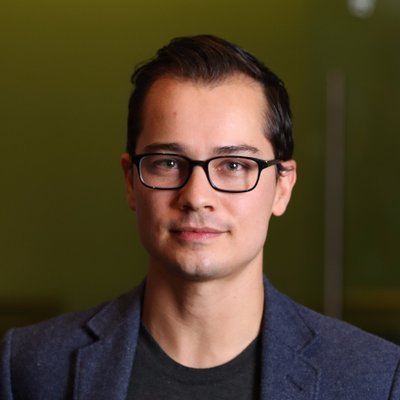
Ryan Sean Adams
Crypto investor going bankless.

.jpg-48bb3b8a9a7a83dee5836f716023f733.jpg)
.png-a616dc52961c1edd72b0c1fdf5f47e7a.png)


.png-336efc5e35995e6b184e7e830baa688b.png)