121 - The Bear Market Gift | Vance Spencer
Vance Spencer of Framework Ventures returns to Bankless to walk us through a tremendous opportunity—the Crypto Bear Market of 2022.

Up next
All episodes 00:31:55
Podcast Premium
00:31:55
Podcast Premium
Debrief - The Bear Market Gift | Vance Spencer
 01:41:13
News
01:41:13
News
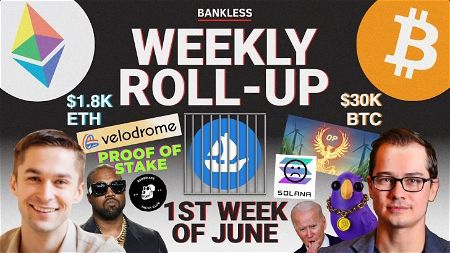
ROLLUP: OpenSea Arrest | Optimism OP Airdrop | Kanye West NFTs | OpenSea Arrest | Solana Halted | ETH 2.0 Merge | Velodrome
 01:12:56
Ethereum
01:12:56
Ethereum
Guide to the Ethereum Roadmap | Jon Charbonneau of Delphi Digital
 01:48:01
Ethereum
01:48:01
Ethereum
The Alfalfa Podcast | Layer Zero
 00:26:57
Podcast Premium
00:26:57
Podcast Premium
Debrief - Reinventing the Internet | a16z's Marc Andreessen & Chris Dixon
 01:32:36
News
01:32:36
News
ROLLUP: Build the Dip | GameStop Wallet | Terra Relaunch | PoolTogether Lawsuit - Mint a Pooly
 01:36:13
Investing
01:36:13
Investing
120 - Reinventing the Internet | Marc Andreessen & Chris Dixon of a16z
 00:43:00
Podcast
00:43:00
Podcast
14 - ImpactDAOs with Ale Borda
Inside the episode
With a steadfast thesis and a sober approach, Vance is bullish on Layer 2 ecosystems and GameFi. And of course, all roads lead to Ethereum. Crypto is a “coiled spring on a path to hypergrowth.”
Bear Markets are where legends are born. How will you take advantage of the opportunity of a lifetime?
TIMESTAMPS
0:00 Intro
5:00 Vance Returns
7:39 Where Crypto Needs to Be
16:44 Bull Market Lessons
21:38 Alt L1 Blockchains
26:40 The Layer 2 Rotation
32:13 The Future of ETH Killers
41:07 The Future of Layer 2’s
47:30 Optimism vs Arbitrum
49:35 The Ethereum Market
58:30 ETH is Money
1:02:18 Veblen Moneygoods
1:07:19 Who Buys ETH?
1:10:15 Bull Market Timelines
1:16:05 The Future of Tokens
1:21:30 DeFi’s Make or Break
1:28:25 Winners will emerge
1:32:15 The GameFi Rabbit Hole
1:37:18 Lessons from Axie
1:43:15 Metaverse Money
1:47:45 The Bear Market Gift
1:50:30 Closing & Disclaimers
RESOURCES
Vance on Twitter:
https://twitter.com/pythianism?s=20&t=z7tmj0LJ3O71UyWH9xlFqQ
Vance’s Tweets
https://twitter.com/pythianism/status/1528501361452584960?s=20&t=IDHtibGbBEp1t1lnsMyrIg
https://twitter.com/pythianism/status/1531719941853892609?s=20&t=OyT_N9CEGQ8-dWs1MVapcQ
https://twitter.com/pythianism/status/1526968297794723840?s=20&t=ndBaWVS2JCaliYyt24jViA
Rune Christensen’s Endgame
https://forum.makerdao.com/t/the-endgame-plan-parts-1-2/15456
Crypto Fees
https://cryptofees.info/
Betting the Fund on the Merge
https://shows.banklesshq.com/p/betting-the-fund-on-the-merge-hal?s=w#details
Bull Case For DeFi
https://www.bankless.com/the-bull-case-for-defi-vance-spencer?s=w
Bull Case For DeFi II
https://shows.banklesshq.com/p/-defi-verticals-vance-spencer?s=w
Transcript
Welcome to Bankless, where we explore the frontier of internet money and internet finance. This is how to get started, how to get better, how to front run the opportunity. This is Ryan Shawn Adams, and I'm here with David Hoffman, and we're here to help you become more bankless. Guys, this is a gift of an episode today with Vance Spencer. Because what if I told you you've just been handed a tremendous gift, maybe the biggest gift, the biggest opportunity of your life? What is it?
It's the crypto bear market of 2022. It's the bear market that we're in. We talk about how to maximize that opportunity. Crypto in the bear market. How should we think about it? That's the number one thing to take away from this episode. Number two, we go through which alternative layer ones will survive and which layer twos will thrive and explode coming out of this bear market. We actually go through them one by one. Solana, Avalanche, Polygon, Optimism, Arbitrum, all of them. We get Vance's takes. Number three, how to find the hidden gem in the bear market. Vance is an expert at this. In fact, number four, he actually thinks GameFi is the biggest opportunity of the bear market. And he explains why. And then, of course, number five, we talk about the bull case for ETH. And David, this was a finding for me. Apparently, Vance is now a member, certified member of the ETH is money cult. And he wasn't, I think, last time we talked to him.
So we talk about that change. What were your thoughts on this episode, David?
Yeah, we first brought Vance on the podcast very, very early, episode like in the 20s, I think. And it was because of frameworks just outsized success coming out of the 2018 to 2020 bear, making bets on things that everyone thought was never going to come back. Tokens. Back in 2018 to 2020, everyone got burned by tokens. And so no one wanted to touch tokens except for framework. And they made high conviction bets on things that did outsize huge outsize gains going into the next bull run, things like link Ave and Synthetics. And so he has been through the ringer of what it means to be an investor in a bull market, an investor in a bear market, and also a public versus private investor as well. And overall, Vance has just such a strong finger on the pulse of everything about this industry. And so that's why this conversation touches on almost everything that is relevant these days in the world of crypto. Of course, DeFi, Ether, Alt Layer Ones, Layer Twos, GameFi, public and private markets, a little bit of everything. So it felt like a candy conversation all the way through and through. And Vance is just someone that, no matter what phase of the market we're in, he always is very sober. He always can see things very clearly. And it's just such a treat talking to Vance every single time.
Yeah, this is like the Bible for the bear markets, the hitchhiker's guide for the bear market, because we cover just about everything you need to know about how to position yourself during times like this, because we've certainly been there before. Guys, we're going to get right to the episode with Vance, but first, we want to talk about these awesome tools to help you go bankless from these sponsors.
Bankless Nation, super excited to introduce you to our next guest. Actually, he's been on the show before, so he probably needs no introduction to the longtime bankless listener. This is Vance Spencer. He's the co-founder of Framework Ventures. Vance and Framework, both of them, rose to fame out of the 2018 bear market. How? Making high conviction bets in DeFi at a time when everyone else was afraid, everyone else was fleeing the market, doing all of this before DeFi was even a thing. In fact, I don't even think we were calling it DeFi back then. So he's been on Banklist twice before, updating us on the state of DeFi, bullish catalysts, the things that are going on behind the scenes. We wanted to bring him back because we are in another B market. All right. It is bear market territory. And so at some level, having you on the show, Vance, it feels like we're back home in the bear market. How are things going?
Things are going great. Thanks for having me back. It certainly feels like we're in familiar territory once again, but
it feels like we kind of have have them right where we want them in terms of, you know, we're making progress and things are a little bit
more calm. And it feels like, you know, fundamentally the space is progressing faster than ever, even though the prices are down.
Let's talk about this. So we want to talk about, I think the theme of this episode is uh crypto in the bear market, right? How does it change? What does it look like in the bear market? How are things different? Where are the opportunities? We want to talk about all that with you, kind of like sector by sector. So maybe DeFi and then Ethereum and all alternative layer ones and what people should do. Hopefully leave with some advice near the end. But want to start here. You uh tweeted this out recently, and we actually uh I think we covered something like this on the Bankless podcast before in one of our weekly roll ups. You said this crypto is exactly where it needs to be right now. Very much not dead, very much alive, washing out the excesses, very much building things people want to use. Coiled spring on a path to hyper growth.
I love that. I love that optimism. Vance, what do you mean by crypto is exactly where it needs to be right now?
Yeah, so I think one of the bigger opportunities right now is frankly to reflect on what happened over the past, you know, two or three years as we're in kind of the secular bull cycle for crypto. And I think, you know, one of the learnings that I have at least is, you know, you could probably separate the bull run into two component parts. And the first one was the high conviction rally that was built around DeFi. And, you know, people were using the products for the first time. We had, you know, found this addressable market that we hadn't even discovered before.
It was very high conviction rally. People were using the software. It felt like it was very fundamental. And then the second half of kind of the bull run, it felt like a lower conviction rally. And I would kind of define this as like the period after summer 2021, where people were excited about the future ZTF launch of Bitcoin. People were excited about the metaverse and NFTs. And that kind of felt like an apathetic run where interest rates were at an all-time low. And we just didn't have the requisite product progress. And so that time actually made me feel quite nervous about the space, just in terms of the there was probably going to be some sort of coming downturn. And then today, you know, interest rates are at you know very high levels. Crypto has been, you know, largely crushed. But what we have is a lot more rationality, a lot more people focusing on things that have real product market fit. And we have a calling of the herd of entrepreneurs who probably weren't built for the long term in this space versus ones who have been in a you know a market for three, five years that are just finally figuring out how they get to product market fit and how they scale their businesses. And so
You know, when you're when you're down 70, 80% as a project and you're starting to kind of really get into shared sacrifice territory where you figure out your business, that's where the most positive and constructive things happen. It's just so hard for these entrepreneurs to build in bull markets that really all of the best ideas really happen in the bear. And so for me, you know, I'm as positive as ever. Um, I have a very long term perspective, and I understand that this is where, you know, the progress is made. And we're just excited to be here.
I want to go and identify that high versus low conviction rally because I think what you're implying is that another high conviction rally is formed in the bear market. And so that's kind of what like perhaps we are at the very, very beginning stages of a high conviction rally that will happen much later because of what's being built now. But I want to go back and parse apart what you mean by high conviction and low conviction rally to classify how the 2021 bull market works, where you're saying that there was real utility, everyone was had real excitement about DeFi yield farming uh at the end of 2020 and going into 2021. But then that got replaced. I'm gonna go ahead and guess around like after that May crash, the May 2021 crash. Uh, and then the second half of the uh bull market was like the alt layer one movements. It was the NFT movement, the metaverse movement, which is largely undefined. Can you talk about just how you interpret high conviction and low conviction? You made it seem like it's a gut take or like an emotional interpretation, but I'm wondering if like you could put more parameters or definitions around what you mean by a high conviction and low conviction rally.
Yeah, I mean high conviction rallies are usually based off of, you know, things that have fundamental use that most market participants respect and know. And then there's also kind of this combination of fundamentals that are being embraced by institutions. And that is generally a very high conviction rally. And people can get behind it because they understand it and from first principles they can use it.
And you know, those things are usually products of stuff that's happened in the bear market in terms of product progress.
But it's also, you know, largely a product of things that happen in low conviction rallies as well. And what I mean by this is, you know, some of the best ideas that you have coming out of bull markets are usually kind of like the last, you know, dying breaths of bull markets. So the last low conviction rally I would put in that category, you know, the NFT kind of rally, you know, that felt to me like low conviction, but there's a lot of promise there. The gaming rally, you know, there was only really Axie. And so it was kind of a low conviction rally, but it feels like there's a lot of promise there. And then you take that stuff that you find in the tail end of a low conviction rally, which is usually the end of these bull markets, and you kind of put everything under the microscope during the bear market. And then by the time you know you kind of develop product market fit and you develop conviction in these ideas, that's what leads to these higher conviction rallies. And for me,
I can see the setup for another high conviction rally, and I can see the ideas from the low conviction rally and how you could really, you know, push them forward and find product market fit, and not all of those products or ideas will. And so, yeah, that's kind of how I separate the two. It is largely an emotional feeling, though, but I also feel like you can tie it towards just the amount of people that are using these things and in what nature. Is it purely speculative or is it for some higher level of utility? And the D5 versus kind of the metaverse and the NFT rallies, those felt very different to me as a result.
Would you say that you take the low conviction rally and you add
time, research, thought, and effort onto the good ideas of the low conviction rally, maybe also you add a bear market and then at the under end of those things, the ideas that do make it through those filters turn into the high conviction rallies of the future?
Right. You're just kind of squeezing out all of the excess. You're developing the idea and the thought process a little bit more and you're putting real work behind it. And so I I'm, you know, very bullish obviously on the future of GameFi and the future of NFTs, but you know, it's just worth being honest with everyone about, you know, what level of belief there really was in those rallies, um, just based on the level of product market fit that they had.
Is this uh basically something we see repeat in every market? And maybe it has repeated in crypto before too, right? So like I guess maybe the low conviction rally of 2018, would you say, or 2017, was sort of all of these ICOs, which led to kind of these like futility tokens. And it wasn't the case that tokens were a bad idea. That seemed to be after the big ICO crash, there was this counter-movement of all tokens are a bad idea and only Bitcoin is the thing. And Ethereum got even lumped in there as kind of an ICO platform that would never recover all of these things. It wasn't that tokens were a bad idea or even some of the DeFi protocols were a bad idea. It's that the market just went out too far on its skis, right? The market like overpriced the success before actually seeing the evidence. And I think we've also seen this in the early internet as well. We had like the dot com boom, of course, and then followed by a bust. It wasn't that the ideas of the dot com boom were wrong, it was just that the market was far outpricing.
like w what the current capabilities of these things are. So is that kind of what you're seeing? It's it's just echoes of maybe twenty seventeen. It's echoes of, you know, the dot com boom. We see this play out in every sort of innovation uh cycle.
Yeah, I think that's exactly the case. Right now, what I'm doing is just a lot of like looking back over the tape and seeing exactly what happened and how certain entrepreneurs did and how certain markets fared. And I think like separating these stages, you know, between each other can really help you frame, you know, what's working, what's likely to work, you know, what are the trends that are important to take out of this last kind of dying grasp of the bull market. But it also helps you just conceptualize how the market works and how it values narratives and how those can eventually unwind, but then become you know real again. And ICOs were basically the precursor to DeFi. People weren't using financial applications other than capital formation in 2017. But that laid a lot of the groundwork for not only infrastructure, but also the DeFi products themselves. And I think we're going to see that as well, you know, in the markets that were very hot and low conviction side of the rally. The things that I look for on, you know, like these developing trends are, you know, if you think about GameFi and DeFi, and a lot of our intuition that led us to DeFi is leading us to GameFi now. With DeFi, right when it started to really pop off with compound and their token launch, you know, you know, people had a mental model. They had an understanding of like, okay, we can do tokens, we can incentivize usage. And Axie at the tail end of the last bull market really kind of was the same thing for gaming. You know, people understood that, okay, I can play this game, I can make money using it. It might not be the best game, but like there's value there from a gaming perspective. And so a lot of the kind of mental models from the low conviction rallies, you know, help you kind of form theses around, you know, like what the future looks like. And so for us, you know, that's just
It's a good hallmark of where the space could go.
So let's talk about what the future does look like then. So if we take the lessons of 2021 and the end of 2022, what are the big takeaways from this particular bull market? As somebody that also took away lessons from 2017 and 2018 and turned that into wins going into the 2020 bull market, what are the lessons that you are looking at out of the 2021 bull market and how that has changed your attitude or perception or investment thesis moving forward to whenever the next bull market comes?
Yeah, I have to go category by category for these answers to really be specific or be helpful, but the first one I would just think about is just base layers. And I think what we learned about base layers and specifically, you know, alt L ones or Ethereum killers or whatever you want to call them is
You know, how easy it is to build something that looks like, you know, a competitor to Ethereum, but how hard it is to actually bootstrap it in the long term and keep it going and build economic security and build just a monetary premium. And I think that's really the first thing that I learned about with alt Ethereum uh chains, you know, in this bull run. And a lot of these chains said that they had, you know, all of the answers and that scaling was fixed and there was no trilemma, but that just didn't turn out to be true at the end of the day. And so I think, you know, with that lesson, what that tells me about the future is that, you know, whenever things really start to pop off in the next bull run, it's not going to be people building alt L1s anymore. It's people gonna be building L2s. It's easier to build, it's you can build economic security faster and cheaper, all the developer tooling is there. And so that's kind of like the first thing that I learned just by these people being able to get kind of to some sort of like seeming feature parity with Ethereum, but not ever really able to achieve escape velocity. So that's probably the first thing that I learned. In DeFi, I think you know what I learned was really.
We have dominant players in most existing categories today. And
one of the memes of DeFi was that these projects are the victims of their own success. You know, Uniswap happens and then SushiSwap copies them, and then compound happens, and then Ave copies them. And, you know, all of these things, which would suggest that, you know, DeFi is just a race to the bottom and unlikely to accrue any value.
I just don't think that actually played out the way that the market expected it to. And I think it's fundamentally positive just to show the pathway how winners can emerge from DeFi. So for Uniswap, you know, they just keep gaining market share. And the second they turn on that fee switch, it's going to be just an enormously valuable token.
Ave and compound, you know, they're dominating the borrow lend space. Like, and there's a reason that you don't see new AMMs or new borrow lend protocols funded very frequently anymore. It's just like acknowledged that the that's too far gone from a competitive perspective.
And so I think the thing that I learned from you know DeFi is that.
You know, it's largely the same things that dominate, you know, the web two, you know, or determine the web two kind of competitive spectrum. It's just how good is your team, how willing are they to, you know, stick around, stick it out, build products that have real demand. And I think with DeFi, you're gonna see a very different market in six months, 12 months, where the winners start to really pull themselves out of the bear market without this entire like, you know, bullish DeFi narrative emerging. I think, you know, things like Uniswap, things like Ave, things like you know, synthetics, like they're gonna be absolutely gigantic just because they have the management and the team that will stick it out. And so for me, the learning on the DeFi side is that the market is very large, but really what you want to bet on is longevity. And there's not a lot of projects that have longevity because most of them had been funded in the past year. And I think those are likely to die.
So that's kinda DeFi. GameFi, I mean
I just think it's going to be the world's biggest market, honestly, you know, of of really any type of software. And, you know, we've seen early indications of this with Axie, but we've kind of only seen like the tip of the iceberg with what this could become. And, you know, these things take multiple years to ship. It's not like three guys in a smart contract building a DeFi platform. And so for us, you know, we understand that it's going to probably take another six or nine months for these things to leave their gestation period, but this is the next mega trend that's happening. And so all of these things, you know, learnings about tokens, learning about community building,
you know, there's just such a rich amount of information over the past two years that like we're really focused on taking stock and actually trying to apply what we learned versus just repeating the same lessons over and over again.
All right, so there's three categories, three rabbit holes that I think you just opened up for us. Alt layer ones and the horizon for layer ones versus layer twos. Also, DeFi. Uh, I have a question about what I think CryptoTwitter has deemed the fat application thesis, which I think uh is what you alluded to. Also, and of course, gamefi, what you just finished with, and my brain goes there, is like, what about the current uh landscape of Trad gaming informs your GameFi thesis? So I think we'll go down each one of those rabbit holes, but let's go back to the layer one conversation. You kind of alluded to how you think that the layer twos are the new layer ones, but I'm wondering if there is in your brain like a place for a contrarian bet on alt layer ones, where like alt layer ones, there were so many of them that rose to fame in the second half of 2022 or 2021. Not all of them are gonna work. Most of them are gonna die. But is there a place to place a concentrated bet on an alt layer one? And do you think perhaps that as people rotate into like the layer two narrative, there might be one big successful alt layer one to actually make it through the bear market? I'm just wondering how you're placing bets and and how you kind of think about uh a contrarian bet on the alt layer one space.
We don't actually hold any L1s, so probably not the best person to ask about this. But really, I think that the market breaks down between Ethereum, probably Solana, probably some newer age kind of data availability plays. And then,
you know, frankly, the other one that I see that's having, you know, a bunch of usage, even though it's probably low quality usage, is BNB. But like most of these are kind of EVM chains, and really the thing that differentiates them is not their technical prowess. The best tech is probably not going to win in the base layer smart contract wars, anyways. But the things that are more regional or ideological about these chains, you know, you have SBF and FTX behind Solana, you have CZ and the Binance career behind BNB. And then you kind of have Ethereum, which is this kind of
You know, Switzerland style, open internet, you know, Ethereum is the base metaverse money play that looks very different from really any of them. And I think there's enough room for each of them to succeed, but it's going to be a power law distribution. And, you know, there's a future where most of the transaction volume doesn't live on Ethereum, but it is the most valuable smart contract chain. A good example of this is Apple. You know, Apple only has 14% of all smartphone uh market share, and yet it has 73% of the total smartphone market cap. And that is really kind of what I'm aiming towards as a technology investor. That's the clearest and most interesting opportunity for me.
I think interesting question though is Van, since you don't have any bets on alternative layer ones, the question of why? Why don't you? Because venture capitalists, you operate a fund, you're in the business of making money. Many VCs, many funds have made a lot of money on alternative layer ones, both betting on them early, but also maybe trading them, you know, selling them at certain points in the market. Why have you guys decided to just sort of opt out of the alternative layer one hype fest? Because if you ask, I think nine out of 10 VCs right now or fund managers, they will tell you that the world is absolutely going to be multi chain. And by multi chain, by the way, they don't mean many layer twos, they mean many alternative layer ones, of which Ethereum is like kind of one among this whole slew. And there may not be as clear a case for a power law winner. So why have you made this decision?
I think for me, a lot of the investing style that we do on the liquid side, where you know, potentially we would be buying all L1s, but we haven't, is
Just the simplest version of our highest conviction, best idea. And for us, you know, that is Ethereum. And I think the reason it is Ethereum because it has so much usage, it has a fee base that you know we can rely on. It's probably one of the only, you know, like you can build a smart contract chain that's competitive with Ethereum. There's a very small chance that you can accrue a monetary premium that's similar to ETH as it's used as money. And so for us, you know, Ethereum is always the place that, you know, frankly, we've been around and the community that we grew up in. And that's not to say that we didn't regret betting on any of these all L1s as they were absolutely mooning, but we could kind of tell that this was going to happen. There were just so many supply overhang dynamics that, you know, the prices of these things were likely to crash 90 to 95%. And sure enough, a lot of them have. And so for us, you know, we can bet on these things and you know, they can run up and they'll run down, or we can be focused on our the highest conviction, simplest version of our best idea, and also on the application layer. And on the application layer, that's where things get a lot easier. You know, you can forecast out cash flows, you can understand the relationship between customers and the product. And that's frankly spiritually where I see more framework as playing is just closer to the metal with founders that are building products, not as much on the platform level. I think most of the best smart contract layers, those are really funded before framework is even really a thing. And so for us, you know, we're focused on the things that we think can accrue value. And right now, it feels like the application layer is the most undervalued with the highest potential to have more users. And there's a future where the pricing power of blockchains goes down, but application layer remains the same. And so for us, that's just a definite hedge on you know, what if the fee landscape turns out to be less robust than we had thought?
Earlier you talked about how layer twos, they're easier to spin up. You don't have to have worry about consensus security because that's taken care of by Ethereum. And so there's this idea that because layer twos are easier to spin up and establish, and as soon as there's any amount of block space demand for layer twos, it turns the ecosystem into a revenue positive ecosystem because they don't have to pay for security. This has lent itself to a thesis shared by some in the Ethereum circles, as they're just like there was this alt layer one mania, there will also be a layer two mania as well. Just because if they're easier to spin up, especially when optimism comes and airdrops their token and it just lands, you know, still in price discovery at the moment, but we're talking about a six billion dollar valuation, that turns investors' heads. And then there's many other like layer twos to also show that they can do similar things. Like Arbitrum hasn't released their token yet. Everyone is assuming that they will do one. Uh, and there's other layer twos that we could talk about as well, where like, well, as soon as uh I mean, optimism is one data point, perhaps Arbitrum is another. And then all of a sudden that we have like maybe two or three data points that these layer twos can establish multi billion dollar valuations paired with the ease of setting up a layer two. The thesis is that it's this turns into a layer two summer, layer two mania. Now we've had this layer two like summer thesis on bankless for a while now, for like over a year. But I'm wondering if you like subscribe to this idea and if you have any sort of uh trajectory for us.
I totally agree, and I think you hit the nail right on the head. A good proxy for where froth is gonna go in the market is what is the lowest effort way to create the highest amount of market cap?
And you know, with the optimism launch, you now have like a $5 billion potential honeypot for anyone who's willing to, you know, fork it and throw their hat in the ring. And you have things like Metis and Boba, which are forks, but you know, really the ease of forking these L2s right now is extremely hard. And so I think there's going to be kind of like some developments there that allow people to fork things probably cleaner, easier, quickly. And that'll lead to just this explosion in L2 activity. I mean, at some point in the next year, I do expect the L2s to be one of the larger consumers of block space. And I think that's when the narrative will really shift, where people say, like, okay, not only are these things scaling solutions for Ethereum, but they're actually adding to the economic security of it as well in a meaningful way. And you'll have people just spin up a ton of L2s because, you know, if you're a DeFi project right now,
It just this is just a general example. You know, and you don't have product market fit, there's there's kind of a couple things that you can do. You can continue to build more applications, you can continue to try things and throw spaghetti, or you can start an L2 and kind of create this ecosystem play. You know, unfortunately, I think a lot of people will take the road that's a little bit easier, which is just like forking this L2.
And so, in a lot of ways, the incentives are just geared towards this happening. And, you know, all we need to do is just wait for it to play out. The good news is that it's just constructive for Ethereum writ large. And so, you know, kind of no matter what you do, Ethereum is a beneficiary of this.
How can we take the lessons of DeFi that you were referring to earlier, where Uniswap grabs a ton of market share and then SushiSwap forks it, right? And then, you know, there's a bunch of like borrowing and lending protocols that have forked off compound and Ave.
But leaning into the whole idea, well, there's kind of just one or if very few winners in each category, how would you apply that same lesson to the alt layer two movement if that indeed does happen?
It's a good question. I mean, the the DeFi learnings are just, I think there's a few. The first one is like the first mover advantage is huge. You know, like Uniswap being the first and the most dominant AMM is not something that you see very often in technology, but in crypto, it just happens to be the case. Same with compound and Ave. You know, you can make the argument for things like uh DYDX or synthetics on the derivative side, but like really the things that matter are did you launch early? Uh, how good's your team? Are you willing to stick it out to the bear market? And really just surviving a lot of your competitors. And if you look at Ruin Christensen from MakerDAO, uh his endgame post, you know, one of the things that he lays out very early on is that Maker DAO is no longer profitable. It costs them about $10 million a year to run this business. And, you know, now not just Maker, but a lot of these DeFi companies are up against a shot clock. And a lot of them will simply fold. And so I think outlasting your competitors and having a strong product direction and just getting integrated is are really the things that matter on the DeFi side. In terms of how that manifests into the alt L1 space or the alt L2 space, I think it's going to be a very different set of participants. Like I don't think it's going to be Uniswap launching their own L2. They're probably going to stick on optimism and be true to the Ethereum narrative, you know, in its most purest sense. But I think a lot of the people who are, you know, in the desert searching for product market fit or people who are probably not as
Just motivated by you know direct product market fit success, those are gonna be the folks who launch the alt L2s. And so, you know, think about kind of like the frog nations of last cycle, think about like those types of characters. Like that's what's coming for them, and it's coming pretty quickly. And so I think that is you know probably a pessimistic take on where the alt L2 space goes. It's probably gonna be rife with a lot of you know, also rands and people who are not ideologically you know pure.
But that's okay, as long as you're burning Ethereum, you know, like you're you're here with me.
Let's get into this a bit more then while we're camping on kind of um these blockchain ecosystems, right? Because they are going to be a very important building block. As we said so many times on Bankless, what do blockchains sell? Blockchain sell blocks. All right. And so I'm wondering if we could do like an ecosystem ranking or just tell us for each of these ecosystems, what are the things they have going for them and what are the things they have going against them? And we'll start with some of the alternative layer ones, give us that sort of summary. Then we'll go to some of the layer twos, like you know, StarkNet and Optimism and Arbitrum, and then we'll end with Ethereum and give us kind of your case for Ethereum through the bear market. But starting with the alternative layer ones, what do they have going for them and against them? Let's uh take Solana, Avalanche, and B as the ones that are primarily left standing here. I think you know, Terra is now, they would be among those four, but is now by the wayside, of course. What do you think? Solana, Avalanche, B and B, what do they have going for them and against them?
Solana is very clear, they have you know SPF, they have FTX, they have you know the people who write.
Code and Rust, uh mostly these people are traditional finance folks. And so they have kind of like a differentiated developer pipeline. They have kind of institutional support. And I think at the end of the day they have a bike people aren't gonna let this die and
A lot of chains just have a lot of people that will let them die. Solana does not have that. And I think that's a fundamentally positive thing. On the negative side, I mean the chain just like has problems staying live. You know, they need to implement a fee market. There is no L2 model. And I think a lot of the architecture decisions that they made are really going to be put under the microscope under the next year. And you know, Solana is probably going to look a lot different a year or two from now than it does today. And, you know, a lot of the uh the value proposition of Solana was like the monolithic chain gives you a very linear scaling model that everyone can rely on. And you can build on Solana today because it'll look the same in two years. I actually don't think that's the case. Um I think they're gonna have to pivot pretty dramatically. And so I think that's what they have working against them is like all of the decisions that were made almost four years ago to scale Ethereum, all of the work on ZK stuff, all of the work on optimistic roll ups, like you're now playing catch up with that time horizon. So that's not that great. But you know, we like Solana, we back Solana projects, like we're not ideologically just opposed to it. We're just we acknowledge the reality of where it is today, and it's far behind Ethereum.
Solana's gonna survive.

David Hoffman
Co-owner at Bankless. Optimistic storyteller of frontier technology.


.png-cde5b9c0aa4838d09c634abbd1136ff2.png)