60 - The SEC and DeFi | Hester Peirce
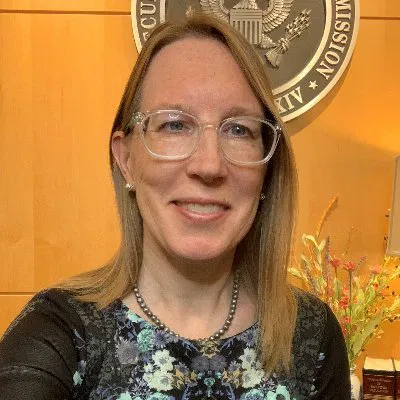
Bankless Fan and SEC Commissioner Hester Peirce comes on the podcast to discuss tokens, DeFi, 'self-driving banks,' and regulation.


Up next
All episodes 01:26:25
News
01:26:25
News
📺 ROLLUP: Coinbase IPO | FEI Protocol | DeFi Shopify | ETH 2 Merge | BTC ETFs
 00:17:34
Podcast Premium
00:17:34
Podcast Premium
EXCLUSIVE: Debrief | Uniswap with Hayden Adams
 02:28:26
DeFi
02:28:26
DeFi
59 - Uniswap | Hayden Adams
 01:04:48
News
01:04:48
News
📺 ROLLUP: Visa on ETH | SNL NFT Skit | PayPal Crypto | Bankless & Wells Fargo
 01:01:17
NFTs
01:01:17
NFTs
📺 SotN #40: Get a Job in Crypto | Rob Paone of Proof of Talent
 00:25:35
Podcast Premium
00:25:35
Podcast Premium
EXCLUSIVE: Debrief | EIP-1559 With Hasu
 01:05:11
DeFi
01:05:11
DeFi
📺 AMA with Chris Spadafora of Badger DAO
 01:12:35
Investing
01:12:35
Investing
📺 SotN #39: Is Wall Street Going Bankless? | David Grider of Fundstrat
Inside the episode
Hester Peirce is one of five SEC Commissioners and has been a knowledgable advocate for crypto as the world works out how to regulate the budding industry. The main goals of the Security & Exchange Commission are threefold – to protect investors; maintain fair, orderly, and efficient markets; and facilitate capital formation. The SEC governs far more than crypto, but increasing attention is coming to the space as capital gravitates into it.
Regulating crypto begins with officially establishing the asset class, e.g. currencies, capital assets, commodities, equities, et al. The next step is giving these assets legitimacy in existing financial institutions through exchange-traded products like a Bitcoin ETF.
Below the base money layer, there exists Layer 0, the social layer. Layer 0 must be willing to officially play ball with the cryptoeconomy to succeed, and that's what makes regulators like Hester so important. The net optimization of these layers makes for an unequivocally better society: a more inclusive, equitable, and efficient one.
Hester believes in governing principles, not specific technologies. It's important here to remember the three main goals of the SEC. The value propositions of crypto – providing a permissionless, trustless, and verifiable means to transact – are in accord with the values of a free state. The role of government is to encourage and protect mutually beneficial, voluntary engagement among citizens.
Although the harmony between crypto's core values and those of a free state are readily apparent to a seasoned Bankless listener, the rest of Layer 0 must still be convinced. Crypto is a frontier with infinite possibilities, and effectively regulating such an ecosystem is a massive task. However, based on this conversation, there seem to be many reasons to be optimistic about the future of Crypto & DeFi regulation.
RESOURCES
Transcript
welcome to bankless where we explore the frontier of internet money and internet finance this is how to get started how to get better and how to front run the opportunity this is ryan sean adams i'm here with david hoffman and we're here to help you become more bankless david what an episode first time we've had an sec commissioner on bankless and not only was she a guest she's also a listener of the show yeah absolutely fantastic pretty cool that the the great words of bankless are
making all making their way all the way into the office of the sec hester purse uh more more endearingly known as crypto mom has been one of uh i think crypto's biggest allies in the space and she's careful about that word because she doesn't advocate for any specific industry but why we call her crypto mom in the crypto world is because she understands the value and what can come out of crypto and she wants to make sure that the power the dormant power that is in crypto is able to manifest in ways that
are good instead are instead of being bad and it's very rare to have someone who is is in a governmental regulatory body that also understands the power that can be and is looking to help facilitate that so uh hester pierce is a fantastic ally of this base really happy to have a very deep and thorough conversation with her about a whole range of subjects such as tokens defy quote unquote self-driving banks and you know regulatory clarity and what she's optimistic about in into the
future yeah and i want folks to really really appreciate what this takes is because an as an sec commissioner right like the crypto markets that's just like a fraction of your brain space i mean you're not spending all of your time thinking about crypto um hester is not like us we spend all of our time thinking about crypto right so the fact that she can talk about defy the way she does um understands what dows are understands kind of the nature of nfts and of protocols and the removal of intermediaries and can speak in an
educated way about this space is super impressive and honestly is um it makes me bullish makes me excited it makes me optimistic and something that you repeat so often david is the most bullish thing for crypto is to be understood and that means understood by everyone we want like financial uh people to understand it and wall street we want silicon valley people to understand it we want everyday citizens to understand it we want regulators to understand it and in particular those that align with the value the value system of crypto which is open access to
a permissionless financial system they'll just gravitate to it and they'll fight our fight for us in the places where we don't we don't we we don't occupy and we don't exist and so you know i i just think that that was a very refreshing conversation with a regulator someone that you might think is sort of like uh you know the cop trying to tell you like what you can't do uh but she really she really gets it she really understands it and she has a very nuanced perspective on d5 so just a fantastic episode
the sec is only one of many regulating bodies that is relevant to crypto and so this this uh conversation does not represent all regulating bodies but if it did i would be extremely optimistic about the future of crypto and d5 regulation which is an inherently an almost impossible task to like perfectly regulate what is something that uh you know d5 moves at a speed that no one can comprehend not even ryan and i and that's a question that we ask hester like how do you even
try and regulate something that moves 10 times faster than any human can keep up with and her answers there i thought were pretty compelling because she said it's not about regulating the technology it's about regulating the principles and how else are you going to regulate something that you know it has infinite possibilities with regards to what could be done on ethereum and hester understands that and and the fact that she understands that i think is really important to what can be done here with crypto to make sure that we actually produce the ecosystem that we know crypto can be
yet it is not yet and i think hester would want us to to clarify that the views she expressed were her own personal opinions they were not views of the sec writ large but this of course is uh goes back to something we often say which the layer zero is people that's true for you know crypto networks that's also true for regulatory bodies there are individual people making the decisions and advocating for positions in our places in government as well so with that as an introduction
we want to get right to the interview with hester purse but before we do let's take a minute to tell you about the sponsors that made this episode possible metamask is your go-to wallet for the bankless journey if you're going bankless you need metamask period browser and mobile get them both this is your tool to unlock the world of d5 here's my favorite part now you can swap tokens directly in metamask with a single swipe this has got to be the easiest way to trade ethereum tokens choose a token you own a token to
exchange it with get your quotes if you like what you see you hit swap that's it what makes swap so useful is what happens behind the scenes it compares dexes aggregators and market makers to find you the best price with the lowest network fees and the least slippage this means you can swap a wider range of tokens and swaps can even automatically split up your trade to give you access to better liquidity you don't even have to think about it try it out download metamask for desktop or mobile now at
metamask.io and start swapping bankless is proud to be supported by uniswap uniswap is a new paradigm in asset exchange infrastructure instead of a cumbersome order book system where trades are matched with other humans uniswap is an autonomous piece of software on ethereum which is what ryan and i call a money robot no human counterparties or centralized intermediaries just autonomous code on ethereum input the token you want to sell and receive the token you want to buy something brand new in the uni-swap
ecosystem is the uniswap grants program is now accepting applications for grants we have been saying this for a while and will say it again dows have money and they are in need of labor if you think that you have something to contribute to the uniswap dao apply for a grant to uniswap just look at the size of the uniswap treasury it's almost 3 billion this mountain of capital is looking for labor do you have something of value to contribute to the uni swap dow no matter how big or small your idea is you can apply for a uni grant at unigrants.org
and help steer uniswap in the direction that you think it should go that's exactly what we did to get uniswap to be a sponsor for bankless and you can do the same for your project thank you uniswap for sponsoring banglaz bankless nation we are super excited about the conversation that is about to be had we have commissioner hester purse she is one of five commissioners on the sec for those not the us that is the securities and exchange commission in the u.s it's one of the most important regulatory bodies affecting this space
the sec stated mission this is important because we'll get to this is threefold protect investors number one number two maintain fair orderly and efficient markets and number three facilitate capital formation sounds like that mission has lots of intersection with crypto which is what we're going to talk about with commissioner purse today commissioner purse welcome to bankless thanks for joining us brian and david it is great to be here um i love listening to your show whenever i'm
feeling discouraged i i listen to your show because you're so optimistic about the future so it's a nice uh it's a nice way to to bring my mood up i do have to start out by saying that my views are my own views not necessarily those of the sec or my fellow commissioners i think everyone in this space knows that but uh i still have to say it well thanks for saying that we appreciate it and we're glad that you are a listener that would i mean we're honored uh to hear that and certainly uh we are avid readers of your speeches
because those speeches make us equally optimistic about what regulators are doing in crypto uh in addition to all of the things you say about crypto so it's an honor to have you um commissioner purse i want to start with this question because this is this is kind of a fun one but the the crypto industry has given you the moniker crypto mom and i think that's because you understand this space at a level that others don't but what's the history of that moniker i haven't really like what why does the industry refer to you uh under that moniker
um well i want to start out by saying i do i i do love your show and i i listen to it but sometimes i feel like it's a bit of a foreign language so i don't want to oversell my my knowledge of the space i'm learning i'm still learning and i'm definitely open to learning and you guys are helping me on that journey um but in terms of the the moniker it came after i wrote a dissent on a bitcoin etp um and after that someone came up with the title and it's it's kind of stuck since then what was that dissent i'm
just curious about the history around that well when i got to the sec it was i got there in january of 2018 and so that was just about the time people were thinking about doing a bitcoin exchange traded product there had been some efforts before i arrived but then um after i arrived there was there was a denial of one and i wrote a dissent saying hey you know i think bitcoins ready for an exchange-traded product you're applying different standards then
you apply to different kinds of products so what's the story here why don't we move forward and you know that was three years ago and look where we are today same place same place that's right i think the the crypto mom name came out of k it's kind of a it's very an endearing term and it's it's something i think out of the crypto space we are really lacking in good uh representation in our in our governing bodies in our in people that represent what crypto can bring to the world and you know it's
crypto often has you know a very tainted brand um there there's just generally negative connotations and it takes um someone who can come in with an open mind and see what what me and ryan see and be optimistic about the future of of crypto uh and so i but before we get this conversation started just thank you for for being that representative person that that our industry truly needs to to help facilitate what can be good crypto innovation
well i mean that's nice of you to say i i will say that you know i don't advocate for any particular technology or any particular industry but what i do think is important and something that we've kind of lost as a nation is to remember that the government is is there to serve the people it isn't the other way around and so you know they're they're people who are trying to do things and build new things and try new things and some of those experiments are going to fail i mean we know we know that when you're when innovation is happening a lot of failure has to happen along the way
um but this notion that it's that you have to get permission before you can try things i think is really detrimental to our society i think that's uh really what david was referring to commissioner purse when he mentioned that not so much an advocate representing an industry but an advocate representing some values that we in crypto hold dear and i want to ask you about this because we very much think the values of crypto open permissionless um you know
basically self-sovereign for the people sort of financial system aligns very well with american values some of the bankless community recently referred me to this um article uh from someone that was written in 1999 a gentleman by the name of ira magaziner and apparently he was an advisor to the clinton administration articles called creating a framework for global electronic commerce and he kind of goes through how they um navigated the regulatory
waters and sort of the government waters when it came to the internet because when the internet arose there were all of these questions like what about encryption what about privacy you know what happens if we get this communication technology to the people and he talked about the internet as a force for progress how it aligned and identified with american values and education open internet freedom of speech democratization people i'm curious crypto does crypto does open
permissionless blockchains is that in alignment with the values embedded in the us constitution yeah i mean i think it's certainly in line with what we are as a country and the fundamentals of what this country are which is that we want people to be able to engage with one another in mutually beneficial transactions that are voluntary and really the government should be stepping in only when there's an issue of someone
harming someone else and i think the whole crypto peer-to-peer model is one in which you've got people voluntarily engaging with one another um in in ways that they find to be beneficial to to you know each party finds beneficial and why should we stand in the way of that um as a government i think we should try to encourage that kind of thing because it's it's better for society when you have people cooperating with one another so i'm curious maybe this comes from um
a recent speech where you you articulated this well that you made in in february um it's called atomic trading and i'll note it had uh rocket emojis in the title of the speech at least as it was published in the sac so maybe some crypto culture leaking out here um but you made this comment you said technology does not change our regulatory objectives of protecting investors facilitating capital formation and fostering market integrity but for technology to have its maximum benefit we will need to change our
attitude specifically we tend to look at technology technological innovation the markets with deep suspicion and that mindset has to change i felt like in the speech you were making kind of this this dual argument that hey like first um our mandate at the sec as regulators hasn't really changed you know people are still as as we call it on bank list the base layer of this entire system and people really haven't changed uh across the centuries but at the same time
regulators government specifically has to look at technological innovation with an open mindset rather than suspicion can you get into that and you know why you made why you made those comments well i think one of the issues with regulators is that we you know we're people too right and that was that was part of the theme of the speech we have our own concerns about if something goes wrong people are going to come back and they're going to say hey why did you let this happen you know you could have you
could have shut this down before it became a problem and so we have to fight against that natural reserve on our part that national natural conservatism and say look we're willing to take a risk as regulators to allow people to and i hate to use the term allow people but to not stand in the way of people trying new things um because those new things could be good for society and so we have to constantly uh push against
that and of course we have our mandate so we're always going to be thinking about protecting investors we're always going to be thinking about the integrity of the markets but if you don't if you don't open the doors and allow for technology to come in people are going to lose out and we're seeing that so in our sector um everything we're very much about getting disclosure to investors that's a very important part of our mission but we're very much rooted in this paper-based approach and so if you compare what things are
like in non-financial sectors versus financial sectors they tend to be much more backwards much more old school in the financial sector than in other sectors and and people come to the financial sector and they already don't really want to spend a lot of time thinking about finance i mean it's it's boring it's intimidating and then you tell them and we want you just to look at this thick layer of documents and read through them and and people say no i'd rather be doing my online shopping on my phone and
so if we can try to marry those and allow financial firms to use technology to communicate with investors i think that's a good thing now you are saying we want to just jettison the old financial system altogether and go for this new this new model over here and my point of that is you know hey why not let people try those things too peer-to-peer systems are very good for for other reasons and so we should as regulators we should kind of like the fact that people are trying peer-to-peer because
it has certain qualities of resilience that that a centralized financial system doesn't have but again we tend to to you know be very slow to allow that to embrace that commissioner i want to get your opinion on what the what the potential that lies dormant in the crypto world has to to offer the world and i think going back to why this crypto industry has bestowed the title of crypto mom to you is we we think that you see that potential in there and with
that potential that crypto has to offer what do we have at stake with good regulation versus bad regulation like what what do we have to lose if bad regulation happens what do we have to gain if we can create good regulation well on the bad regulation front i think we're seeing a little bit of this now because a lot of things in crypto move so quickly regulators move so slowly other regulators in other places tend to be moving faster many of them are moving faster than than we are in the us
and so what happens is you have people trying to avoid the us all together um not only not building stuff here but they're they're trying to avoid even dealing with us persons and that's a very dangerous thing because then we'll miss out on a lot of that growth i think good regulation is is difficult to do because the technology is changing quickly what we've learned from the past is that it's really bad to bake old technology or any particular technology into the regulations so i would say on a sort of
on a general point you want to have regulation be as technology neutral as possible to allow for experimentation that said i think in the crypto space um we may need to do some specific crypto specific regulation to allow the freedom for some of these things to to work and it's it's a big job because i think you know i've i've suggested we need to do something to allow token distribution events to happen but i think there's stuff we need
to do on the custody side um and then there's if you want to look further down the road um if if you want to have a regulatory structure that that envisions dowse i think you have to think about that as well but in general i would say that the the the hope that i see and the the the um good things i see coming out of crypto is this ability to bring more people into the financial system to allow them to come in on their own terms you know doing away and again i don't think we're
going to do away with the centralized uh financial system i don't think we're going to do away with financial institutions you you guys might disagree with me on that but i think having this other option of of really self-serve you know just do it do it yourself do it with peers do it on an anonymous basis so that no one is deciding to shut you out of the system because they don't agree with you there's real there's real promise to incorporating more of the the american
population and the world population into the financial system um by using by using these these technologies i gotta say it's so refreshing to hear you articulate it in that way because that that is definitely the language that that we preach and it makes me optimistic even to hear you um use terms like dao's in like a correct context um so glad you're you're diving deep on this can you make the case so um david asked about sort of the the cost if regulation is not done right
but i i don't think the crypto industry writ large sees the other side of this which is what are the benefits if regulation is done correctly can you make that case to bankless listeners well i think getting it right means that then you give people the freedom to stop thinking so much about regulation you know i i it kind of disheartens me to listen to these podcasts and half the time people are talking about regulation instead of what's being built so one is just removing this distraction from people so
that they can concentrate on what they're best at but second is i mean the united states has a history of being a place where people from all over the world come to work together and build things now you know i guess one could argue in in this new world we don't all need to be in the same place have you guys even met each other yet because i know at one point not yet so i think right david i think that's becoming a meme like are we ever going to meet we may never meet at this point commissioner we're not sure but i mean i feel like you
don't you don't even you know you've got this really natural interaction with one another without even having met and so maybe we don't we're not going to be as geographic centric but i still like the notion of having the united states be the place where people want to come because it's a free place it's a place where they can build things and try things and and work with other people who are equally creative and enthusiastic and so i think if we don't want to lose our place i our capital markets are the best in the world and i you know i stand
by that but we have to remain nimble to do that so i think i would say you know to people who are asking why does regulation matter it really does matter to allow people that freedom to to be their best at doing what they're best at well this is what's interesting is because um david and i and i think listeners to the bankless show really believe that this parallel financial system that we're building this thing called defy is going to play a massive role in the future of finance in the
future of money in the future of how banking continues you know uh on the internet basically um but you also articulated in in your speech which i'm going to refer to once again that this kind of presents can present a challenge to regulators and maybe defy is one of the bigger challenges that they've seen we've had waves of challenges with like what is this bitcoin thing and then what is this ethereum thing and then like what are icos and now we have this d5 thing cropping up and it doesn't just touch areas of the sec or cftc it touches
fincen it touches the entire banking financial apparatus in the u.s i'm going to read a quote out to you from your speech decentralized finance will provide a very good test for our ability to regulate with an eye toward protecting the interests of investors markets and this is key not incumbents um can you talk about the challenges of d5 as regulators are are looking at this now and trying to to figure out what's going on well the the regulatory model especially
you know a model like the ascc is really reliant upon looking at particular institutions as a center point right so if we if there's an issue if there's a problem we know who to go to it's that it's that financial institution at in the middle that's intermediating between two people with defy you don't necessarily i mean you don't have a central entity to go to and you might not even know who wrote a smart contract right and and if you do
is it even appropriate to go to that person i would argue not so you really don't have anyone to hold accountable and i think that that's that's kind of the the challenge it's also the beauty of this because i think when when you when you're dealing with something like defy where it's really up to the people involved to make their own decisions the responsibility is clearly on them and so we have to that's the message right because when something goes wrong people want to come to us and say we'll do something about it and in d5 i'm not
sure what we could do about it if there's a problem so it's it it is you know if you think of a decentralized exchange for example um or an automated market maker who do who do we go to when something goes wrong i don't know who to go to so that's that's the big challenge for the regulator the interesting thing is there's there's really no one to go to it's your point this is all this is all code um this is also why we end every episode by by talking about cryptos this is the
frontier it's not for everyone this is sort of the the wild west and if you're playing in this space you have to take personal accountability a new level of personal accountability um but what you just well that's why i actually do appreciate that disclaimer that you have at the end of your episodes because i think that's an important message it's exciting to be part of this but being part of it means that you are taking a risk and if if you're not comfortable with that risk you shouldn't walk down that road so that's why i think there's going to
be you know even as d5 grows i think there there's going to be a way for people who aren't comfortable with that to be served so i think there will be some element of centralization that people can opt into or opt out of and that's probably the the best solution right that people can choose their level of comfort and their level of willingness to take risks completely agree this is we we sort of uh harken this to to the oregon trail right you could get dysentery you could
you know break an axle wheel you could starve on the road lots of bad things can happen to you when you're on this other side but i want to ask a question about um regulators current understanding of this because i think you articulated it very well like in d5 there aren't intermediaries but we're like looking from the outside not actually sure how many regulators understand defy at that level yet like some of the um conversations some of the the the verbiage some of the the tone coming out
uh sometimes makes us think that they think defy might just be another kind of banking sort of thing where ever there are intermediaries there are custodians at all times how close are regulators to understanding that we're talking about um code we're talking about no intermediaries we're talking about a a different level of self-sovereignty when it comes to to this financial system i mean i think people haven't spent that much time thinking about it yet honestly i think it's it's still as much as defy has has been having its
moment and growing or maybe its preliminary moment and growing really fast i just think there's not a lot of attention on it i mean you've got to keep in mind that regulators are just now coming around to the idea that well maybe bitcoin is is is going to be around for a little while um so i defy is is really not on people's radar but i mean i think we need to be having these conversations before it it really grasps um people's attention because what i'm
concerned about and i think it's better just to have this conversation out in the open what i'm concerned about is that when people see things move peer-to-peer people who are regulatory minded their initial inclination is to say let's figure out a way to grab those peer-to-peer transactions figure out a way to monitor them and let's figure out a way to um regulate them and though that raises those kinds of
inclinations raise really profound questions for us as an american people there are obviously reasons why we would want to monitor those things you know we aml kyc you wanna you don't want the financial system whether it's the decentralized one or the centralized one to be used to fund activities or other illegal activity so we get that um and and you i mean i guess there are other types of things that you would you know i think about
investor protection you want investors to be protected but at the same time the value of privacy the value of people's ability to transact without having government watch what you're doing in your in your individual financial life those are really important principles and i think if we don't put that out there and say we care about these things and you can't just plow over personal privacy and the ability of people to live their lives without being monitored we're going to end up in a really bad
situation really quickly it's very interesting to me in my in the in the more traditional securities land that i occupy and spend most of my time in we're just now starting this massive surveillance program for every trade in the in the markets every in the stock in options markets every retail trade is going to be tracked in those markets now and i don't think that's okay and people say well why why don't you think it's okay if you have nothing to
hide why do you care and my response to that is you don't have to have something to hide you just don't necessarily want some regulator seeing every stock you buy in every stock you sell because there's something personal about that now if you're doing something wrong of course we as regulators are going to go in and look at what you're doing totally fine but for for the average person just going about her day-to-day business to have to to have to think about being monitored all the time i find that really

David Hoffman
Co-owner at Bankless. Optimistic storyteller of frontier technology.