📺 SotN #46: The ETH Trade with Su Zhu & Kyle Davies of 3 Arrows Capital
Supercycles, the Flippening, and Net Worth in ETH





Up next
All episodes 01:59:03
Vitalik
01:59:03
Vitalik
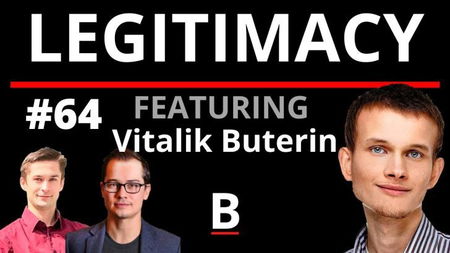
🎙️ Legitimacy | Vitalik Buterin
 00:31:04
Vitalik Premium
00:31:04
Vitalik Premium
EXCLUSIVE: Debrief | Legitimacy with Vitalik Buterin
 01:27:52
News
01:27:52
News
📺 ROLLUP: Uniswap V3 | BTC in Bank Accounts | Bankless DAO | ETH All Time High
 01:59:03
Vitalik Premium
01:59:03
Vitalik Premium
🎙️ Early Access: Legitimacy | Vitalik Buterin
 00:47:23
NFTs
00:47:23
NFTs
📺 RELEASE: VeeFriends with GaryVee
 01:26:11
Podcast
01:26:11
Podcast
📺 SotN #45: Chainlink 2.0 with Chainlink God
 01:41:51
Podcast
01:41:51
Podcast
🎙️ The Crypto Renaissance | Josh Rosenthal
 00:30:55
Podcast Premium
00:30:55
Podcast Premium
EXCLUSIVE: Debrief | The Crypto Renaissance with Josh Rosenthal
Inside the episode
Become an NFT Appraiser with Upshot! Early Access to the Beta for Bankless Badge Holders.
Su Zhu and Kyle Davies are legendary crypto investors & founders of crypto hedge fund Three Arrows Capital. They join the State of the Nation to discuss the bullish case for ETH.
State of the Nation is live-streamed on the Youtube Channel – Tuesdays at 11am PT.
📺 Episode 46 of State of the Nation
🎙️Listen to Podcast Episode | 📺 Watch the Episode
Bankless Sponsor Tools:
💰 GEMINI | FIAT & CRYPTO EXCHANGE
https://bankless.cc/go-gemini
🦊 METAMASK | DEFI PASSPORT
https://bankless.cc/metamask
🦄 UNISWAP | DECENTRALIZED EXCHANGE
http://bankless.cc/uniswap
🔀 KWENTA | SYNTHETIC ASSET EXCHANGE
https://bankless.cc/kwenta
State of the Nation #46: The ETH Trade
Guests: Su Zhu & Kyle Davies
May 12th, 2021
Su Zhu & Kyle Davies are renowned investors in the crypto space, and in this episode of State of the Nation, the Three Arrows Capital co-founders come on Bankless to discuss ETH as an investment, and more broadly, Ethereum as an ecosystem. They describe themselves as 'on-chain' maximalists, and we dive into how Ethereum boasts impressive on-chain metrics and its strong, fundamental narrative.
Big money likes productive assets, and ETH is proving itself to be highly productive as a capital asset. We discuss the flippening of Ether & Bitcoin, and the opportunity for it in this cycle. Su & Kyle make it clear that institutions are coming around on Ethereum, and the scope of the ecosystem is such that any EVM-compatible (composable with the Ethereum Virtual Machine) is in turn bullish for ETH.
Ethereum has painted six weekly green candles in a row and is indisputably red-hot at the time of this recording. Despite the bullish narrative, it remains difficult to properly measure the magnitude of this move. The inevitable unknowns do not frighten Three Arrows Capital, who explore denominating net worth in Ether. All in all, they leave us with some of the most bullish projections we have ever seen on the Bankless podcast.
Resources:
TRANSCRIPT
Ryan
Bankless Nation, we are super excited about our next guests. We have Su Zhu and Kyle Davies, they are legendary crypto traders, the founders of the legendary crypto fund Three Arrows Capital (also known as 3AC). We are talking today all about their ETH trading. Guys, someone said you were bullish on ETH. Is that true?
Su Zhu
Definitely true. Definitely not untrue.
Ryan
Welcome to Bankless. We're excited to dive into this. This is gonna be a really exciting episode. I've heard actually that this is the first podcast episode that the two of you are doing together. Is that right?
Kyle Davies
Oh, that's true.
Ryan
Wow, first time. All right. Well, this is exciting, you know, before we dig in, and I think that the context for this episode is all about the ETH trade that you guys have been talking about. But first I want to get a sense of how you guys think about crypto. So the Bankless platform is like I would say, almost notoriously long time horizon, right. So it's like, buy and hold here, the crypto money assets, DeFi, it's gonna be big buy and hold, we place a lot less emphasis on the trading side of things. But you guys are traders. Can you talk about how that's different and how you approach crypto from a trading perspective, how that's different from maybe narrative investing, long term buy and hold, we'll start with you Su.
Su Zhu
I think it is actually similar in a lot of ways, probably more similar than it is dissimilar. I guess the one bigger difference would be sort of reflexivity and seeing when certain ideas or certain narratives are sort of best positioned to take shape. So a good example is like, you know, if you're denominated in ETH, but it's late 2017, early 2018, you know, even if you believe in it, you may think also that ICOs just have millions of ETH that they don't really know what to do with and they need to pay people with so that that kind of, you know, may make someone who's a long term believer go into stable coins for a while, and then by the bottom, or by when it's, you know, been flushed out they're back in. So I think just like being aware, despite the long term view or the midterm view, what the short term actors are most likely going to do, sort of just thinking about those kind of flows is something that keeps us apart, I guess.
Ryan
Kyle, what would you say to that?
Kyle Davies
Yeah, I would say it's, we're much more similar in your mentality here, in the sense that for the better part of two years, we've been, like, long, right? So maybe 95% of the time, we've been like, pretty close to almost a full allocation. It's just a question of what we denominated, and what we, you know, and how, what the composition of our book looks like. So it just so happens right now that, you know, we are extremely overweight ETH. But we've been long crypto, like all the way through. Right. And that's, that's actually I think, something that really sets apart 3AC from a lot of other trading firms or market makers, long only funds, they're long only for sure. But for like individuals or trading firms, people that don't necessarily have to be long and have to make a decision, we made that decision, we made the decision that we you know, we do take a core long belief and crypto as a whole.
Ryan
So when you're going long, it sounds like there's like almost two layers to your strategy. Right? So you have sort of the long strategy where you've got these fundamental asset, what you denominate in maybe that changes, too. Sometimes that's Bitcoin, sometimes that's ETH. But it's always crypto. And then you have like trade optimizations at the second layer as Su was saying, when narrative time is right, or when an asset's time, time is right, you flip into those trading positions to optimize? Is that a good way to think about it? Kyle?
Kyle Davies
Yeah, I think that's reasonable. And part of that, I think we like, we're involved in the funding trade. So spot versus futures, looking at that, that basis, we're involved in, you know, in primary investments across a number of different other projects as well. And so we have a reasonable pulse on, you know, what we think is going to be big when and like, if the market gets a little overheated. And I think that's why, you know, we're not just like, blindly long, a single, you know, particular asset for like, a long period of time, we're rather saying the book is long. But now, how do you want to denominate and how do you want this composition to look like?
David Hoffman
I see, I do see a lot of resonance at least with my mental models, and maybe some of the things that we say on Bankless where we talk about, you know, maximize your exposure to the crypto monies. And that's what we call basically Bitcoin and ETH. And then also speculate in the app layer. And the app layer could also be you know, not actually applications, but also perhaps, you know, just seed into actual, you know, companies and teams. So when you mentioned that, you know, when we were talking about 2018 -019, you were talking about all these ICOs that had all this ETH and didn't know what to do with it and you integrated that into perhaps your model about the markets you're in and your trade notes. Speaking more generally, what signals or indicators do you guys really pay attention to? Like where, what sources of information do you really consistently look at to inform your trades?
Su Zhu
That's a really tough question. Because it honestly depends, I mean, we try to be as intuitive as possible actually, and kind of as macro as possible. So I think, you know what, some smaller trades, it can be more finesse or being more quantitative, but with like Bitcoin or ether allocation, or Bitcoin dominance, it's really the whole, it's really the whole, I think environment that we're in right now. So I think that we're in a backdrop where Bitcoin is 3x off, its previous all time high, you know, 20k to 60k, and it's running into a lot of resistance, a lot of people selling at the 3x all time high. And this is in a backdrop where ether has had probably its strongest tokenomics upgrades as a base money that it's ever had in his history. And also in a backdrop where across many retail onramps, and also just emerging market onramps ETH is already outpacing Bitcoin as people's first buy. In fact, Doge has actually outpacing Bitcoin in some of these onramps as well. So this, this environment is incredibly bearish for Bitcoin dominance. And also, it's an environment where now after the flush out in ETH, and I would argue that there's been basically three flush outs from 2018 to now, three distinct waves of flush outs, there's pretty much no one that has ETH that doesn't know why they have it. Like everyone who has ETH now, they've really put in a proof of work to have that ETH, right? Because you could have lost in so many ways, you could have sold it all to dollars at the bottom or near the bottom. You could have sold it all to Bitcoin during the bear market, you could have sold it all to like even to applications right, like it has outpaced a lot of applications by a massive margin now as well. So I kind of see that as sort of a massive scarcity play now that's happening where ETH is scarce versus not just like against fiat, but also scarce against the Bitcoin, the very overweight Bitcoin people, but then also even within Ethereum itself, a lot of ETH people don't have enough ETH, so that whole environment is very conducive to ETH now and you're kind of seeing that squeeze.
David Hoffman
The articulation as to everyone who's holding ETH can articulate why they are holding ETH is not something that I thought about, that's a pretty cool perspective. Kyle, the last time you and I talked was actually in November of 2020. And we were talking about on my other podcast, POV Crypto, about how 3AC was rotating heavily into bitcoin and really maximizing its bitcoin exposure while reducing its DeFi and Ethereum exposure. And this was coming right after, you know, DeFi Summer, right DeFi Summer was definitely cooling off. And that was the right move. Bitcoin was like 10k at the time, and then you know, just three or four months later, it was then 50k and so let's start, I want kind of start that conversation there where we left off in November, you guys are overweight BTC and underweight ETH, DeFi, that trade worked. When did you rebalance your portfolio next after that, after that trade worked? What did you rebalance your portfolio into? And was that the ETH trade that you guys find yourselves in today? Or was there a middle trade between now and then.
Kyle Davies
So the first thing I'll say is for the application layer, for DeFi, it's a completely distinct group. It's DeFiance capital, they have their own capital allocation. And they work with teams, and they're long only. So for us, if we believe there is going to be, you know, cooling off of all sort of DeFi or whatever it may be, we're not selling anything. So we are very much, we have to have something else. So that's, that's a lot where, you know, we wish I had a short on ETH. But the short was not a naked short, it was a short against, you know, a large portfolio of applications, right? With the thought being that we still want to win deal flow, we still want to work with teams, we still want to be long term invested in application. So this made sense. And BTC dominance ran all the way up to 73%. But uh, but yeah, and then I think the next big portfolio allocation was leading into the Coinbase IPO. About a month before that, we were looking at it, thinking this would be extremely bullish for Ethereum for many reasons, but basically, this is when we started to think, you know, it's time to start moving that allocation around. And then, you know, a little bit before we went, you know, very, very overweight ...
David Hoffman
What was the connection between Coinbase and Ethereum? Can you elaborate on that?
Kyle Davies
For Bitcoin dominance, like it takes a certain kind of narrative for a law, for Bitcoin dominance to work, but part of that is not capital raises, or, because anytime there was a capital raise, people have to make a decision. And anytime there's, you know, like, for example, in terms of applications, working people have to make a decision or anytime there's a decision, there's some sort of diversification that happens. And people look at metrics, and they look at many different things. Right. And I yeah, so around the Coinbase IPO where they've got, you know, today, the largest US exchange with many different assets on it, and a lot of their marketing is around, you know, people trading those assets. And yeah, I think by and large, that was going to be a, like a big boost for the Ethereum case.
David Hoffman
Su, you want to add to that?
Su Zhu
Yeah, I think also, you know, the Coinbase shareholders, they're very overweight ETH I think, in general, too, just in terms of both philosophy as well as their own coin holdings I would suspect. So I think I mean in late 2017, I think Bryan Armstrong himself said he owns more Ethereum than Bitcoin. And so I think, I think Coinbase like I mentioned is very bullish for you. Because it's sort of their, it's sort of their bread and butter almost at this point.
David Hoffman
Su in August of 2020, on a podcast again, I also think the POV Crypto pod, you said that you thought it was unlikely that ETH would ever flip in Bitcoin. But recently on the Uncommon Core podcast with Crypto Cobain and Hasu, you and all the other guests seemed pretty convinced that Ethereum would flippen Bitcoin at some point in time. Do you remember what the catalyst was that changed your mind on this? And when did this happen?
Su Zhu
For me, I think it was a number of factors. Just seeing his idea that new high net worth investors coming into the space and institutions, they ultimately respect network effects. And they respect the size of the network and the utility of the network. And so I think, when people start looking at it that way, if that's their framework, and they don't come in assuming a monetary maximalism will take over the space, then I think that if you start putting metrics side by side for each of the networks, and each of the coins, then I think Ethereum stacks up very well. And I think there's also something to the idea that, that people want to productive store value, as opposed to a non productive one. I've heard that quite a bit in people I've spoken with, where, you know, they don't put a whole lot of knowledge of facilities in their portfolio, if you're a pension fund, you don't even put gold in a pension fund. But you do put productive assets like commercial reads, like, you know, things that earn a yield. And so there are a lot of people are really interested in what happens with ETH once it has a yield? Now that it has one, people are seeing it. And I think to that, I mean, if he asked me back in August 2020, I would have said that, you know, it looks like Saylor is going to be the first and then there's going to be a lot of other companies that do this, putting Bitcoin in the Treasury, but you know, it's already, it's already going into mid Q2, and it's still not that many companies have done it, right. And the kind of price action doesn't appear like this, like a lot of treasury is doing it. And so once you see this kind of skepticism toward this, just like everyone's gonna hold this in the Treasury, then the sort of the game is open again, and, you know, the kind of battle for store value continues. And, and so that kind of made me think that if these things are all true, then one, you know, retail already likes it more than Bitcoin because they resonate more with the Internet of value as opposed to digital gold. And then two institutions want to own what other people own. And on top of that they also like productive SOV is, and then thirdly, you know, we've already had a nice coin run, and we already had sort of an activation of supply, you know, above 60k, that, that kind of really puts the pieces in place.
David Hoffman
Kyle, I definitely want to get your opinion on if you think Ethereum is flipping Bitcoin but before we get there, so you said that, you know, you're seeing just a lot of interest in productive assets over non productive assets and perhaps positioning a trade based off of that, but what do you personally believe? Do you personally believe in productive assets over non productive assets? Do you have an opinion on such a matter.
Su Zhu
I do but I think it's, it's not as relevant what my opinion on it is at any moment. It's ultimately what people decide, right? Like, if people, if we're in a wartime and there's very low activity, but then the big one, then the big one monetary maximum argument can be the most valid because then people really do value that slight decentralization edge that Bitcoin has over Ethereum, right as a like, as a base money, and so but if we're in an environment where people are not going to be able to quantify that value very well, of how much more Bitcoin is decentralized than Ethereum, just like, you know, in Ethereum smart contracts ,most people can't quantify the difference between Ethereum and you know, Solana or some other chain, then you are going to have a lot of people be quite okay with that. And I think it ultimately depends on what users need crypto for and what people want to use them for. And, and I do think that in a much larger percentage of cases, then people right now believe there's going to be a preference for either.
Ryan
So Su, I think some of the bear case around ether up to this point or part of the case is that yes, people recognize that ether will become a productive asset to stake. It is enabled, but you just mentioned another crypto network called Solana. Right. And there's not just Solana, there's Cardano. There's Binance Smart Chain, all of these things, many of these are staking assets, right. And so all these other layer one assets can become productive assets as well when they're staked, but you made a distinction, which I think is important you called ETH a productive SOV asset, which means, of course, listeners will be familiar with store of value asset, which implies some level of monetary premium, right. And Bitcoin, of course, quite famously has a fantastic monetary premium, people believe it is a store of value. The bear case for ether, up to this point is has been, I think that even if ether becomes a productive asset, people won't value it as a store of value, it won't, will not have a monetary premium, it has all of these competitors, these other layer ones that can also do the same things it is doing and you know, it's not Bitcoin, Bitcoin is crypto's reserve asset, it has the store of value property, those use cases won't float over to ether. I want to ask about that, the store of value of ether specifically, and whether you think that is a moat that other layer ones can overcome, and how it has started to achieve this, in your mind. Can you reflect on that?
Su Zhu
Sure, I think it's, first of all, it's very hard to just come up with a new store of value, right? Because it's not just about the tech, it's also about the community and about the coin distribution about the Gini coefficients about how do people work to get the supply that they have. And how do they value it. So I think that, in a way, it's quite beautiful for Ethereum that has been done proof of work up to now, because ether that has gone into the supply has been costly. And that process has made it so that supply has decentralized out and that is going to be a huge struggle for a lot of proof of stake networks, where, you know, the fairly smaller number of participants are going to have more of the coins. And it's very hard to distribute away. So I think distribution has a huge edge. Also, in terms of in terms of the the competition for smart contract block space, I do think that anytime you have smart contracts actually being deployed on chain and being used, whether that's on Ethereum or another chain, I actually think that's very bullish for Ethereum because it goes against the entire Bitcoin not blockchain argument, which is that blockchains are not that useful. The only use case of blockchains is money. Well, it turns out not and then, you know, with interoperability and with sort of bridging of assets across chains, you you know, Ethereum stands to be in very good shape in an on chain world, because there will be a huge number of persons who do value the highest decentralization haven and more. So there will be a lot of developers that build applications for that. So I think it's, it's almost kind of ironic, because I think, despite the whole ETH killer narrative, it's actually I think these have been actually very good for Ethereum because one it's pushed the application progress very quickly, it's pushing the scaling progress very quickly. And two, I think that it's shown the world that there's actually a lot of demand for on chain space like you think about BSC. Right? BSC has shown that if you if you did have lower fees then here, here's what users would actually do if they had this.
Ryan
So our take has been up to this point that there are two crypto assets that are emerging as a store of value Bitcoin and ether, right. And others could emerge as a store of value, but like not anytime soon and probably not this cycle, does that take overstate you know what, what you're saying? Do you think other layer one assets could become a store of value in the future?
Su Zhu
I think Dogecoin, Doge arguably is starting to look like it could be because it's got absolutely incredible volumes, right. And it's got absolutely incredible memes as well. So I don't see, also it's very old, very old and very decentralized. So I don't see any reason why it can't be. And I do think Doge is something where it definitely helps Ethereum in a way because it just chips up this idea of Bitcoin monetary maximalism because monetary maximum wants to say, it wants to assert that 21 million supply cap is the reason why it has any value. It wants to assert that, you know, these are all the reasons why it has value. But meanwhile, Doge just comes in with no cap and then outperforms and also kills the narrative that, you know, there's no alt that can be that can be up in sats, well, actually, you're up actually a massive amount in satoshis in Doge. So that kind of just the presence of Doge, I think has been one of the biggest bearish Bitcoin cases because now everyone sees Doge and they're like, okay, then I don't have to just, you know, be denominated in sats, I don't have to, I can also just see what, what's fun, and I can explore all these different assets. And so that, I think, is also becoming a store of value. I mean, it's also very cheap, right? And it's very usable. So it's, I mean, granted, not many, many people are using it, but it it does offer a different niche.
Ryan
You guys aren't long Doge, right, or are you?
Su Zhu
We are not we're not long Doge, it's something that we may be long in the future. But it's definitely an interesting asset that I think caught everyone by surprise as well. I think it does show the power of, the power of memes, right. And, and it definitely contributes to ether's meme being more stronger than ever, because what the ultra sound money meme, now it gives space for them to come in and say, well, we were actually even lower inflation and, you know, you get a natural yield from holding it. So that kind of contrast is going to be very stark for people when they want to check out the space.
David Hoffman
Kyle before I ask my next question to you, do you have any reflections on what we've been talking about?
Kyle Davies
Yeah, the only part I would add is that ETH as a deflationary asset is, is really gonna resonate with a lot of people. I think there's like, there's this point where you're, you know, you're bullish Ethereum the network. And you see, especially you see all the fees that are happening onchain and then, but you asked about the value role, and it's just a speculation on that. But once you can see that it's a deflationary asset, it's no longer a meme. It's just like, it's actually deflationary. And I think that will, that moves a lot of people, that moves the needle for a lot of people.
Ryan
Kyle, some people are still skeptical that ETH as a deflationary asset isn't actually going to happen. We're still in a pre implementation world of EIP-1559. And of course, the proof of stake, like the proof of work merge has not happened yet. So some people will say, yeah, there's a ton of execution risk in taking the position that you're betting on a deflationary asset. What would you say about that?
Kyle Davies
I mean there's, I definitely believe in, you know, counting execution risk, but that's, like, what makes a great trade or a great investment. So, I mean, if it was fully priced in, like, I don't know, maybe it'd be that $15k is FUD right now, so I don't I don't know where it would be. But either way, it'd be a very different investment.
Ryan
Wait $15k's FUD, Su? What?
Su Zhu
If everything is priced? Right, I think $15k's FUD.
David Hoffman
Wow! Well I do want to get into that specific number but first, I want to ask Kyle, Su here was on on that podcast with Cobie and Hasu talking about the inevitability of the flippening. Do you agree?
Kyle Davies
Yeah, I definitely do. I think the closer it gets to, like it just has to make a run at it. Especially the nice thing about the current state of the Ethereum roadmap too is there are events happening in like two months and like seven months out so even after EIP-1559 like, there's no sell catalyst, like there's you're still waiting for just the next one right like and it's within a reasonable time. Yeah, it's a little bit different story in a post proof of stake world then now you need to price it different, I just believe it's going to hit you know, the you know the, the correct whatever, P/E ratio, or however you're valuing.
David Hoffman
Yeah, yeah. Ethereum seems to have a lot arrows in its quiver, and we've talked a decent amount on the subject around like mainstream media and you know public narrative with this current like ether move, and overall how you guys position your trades, and I kind of want to attack that subject a little bit more directly. So how are you guys seeing mainstream media and its current like understanding of this space, the Bitcoin trade, the ether trade, the everything else trade, but also, more specifically, do you guys consider like the energy consumption part of this perhaps this Ethereum move or perhaps that's not there yet?
Su Zhu
I think it's not quite here yet because the merge hasn't happened. So I think you will actually need the merge to happen before the mainstream media will pick up on it. Because that's just the way media is. So I do think that that will be another great catalyst. I think also it's like a, it's a big contrast to late last year, right where you know, like when Bitcoin is about to get Saylor buying an absolute monster load of Bitcoin, there's a lot of, you know, high net worth in corporate buying a Bitcoin and, and so that, it was too early, because it was too far away from EIP-1559. That was more just an idea at that point that was getting traction. But like, also, like, now we are in the midst of, you know, the media picking up on the fact that, you know, Ethereum may become more deflationary than before, and the media is picking up on the fact that DeFi is not just a, it's not just a small meme anymore. It's not just a niche, it's something massive, right? We have, you know, we have global governments looking at how to, you know, deal with DeFi and how to encourage it even. And so I think that that, that kind of backdrop and also NFTs as well, I think, you know, we haven't discussed NFTs yet, but I think NFTs are incredibly bullish for either, because now culture, culture is now native to Ethereum. And I think once you get culture as well, that's actually when a lot of people wake up, because they say, well, I can be bearish on Bitcoin as a store of value because I think it has no use case, but I cannot be bearish on culture existing on Ethereum. That's an incoherent position to take, right. So I think the fact that you know, athletes and artists and musicians are, you know, getting very active in the NFT market, that brings incredible cultural prestige to the idea of Ethereum as a settlement layer. And that I think is actually incredibly difficult for anyone else to fight against either, because that, that does have a lot of network effects.
Ryan
I want to say something about this and ask a follow up on this, because this is something Dave and I have been talking about for a while, like the most bullish thing for ether is to be understood. And I still feel like we are so early in the cycle of the world actually understanding Ethereum and ether. I mean, you look at like Google searches, and Bitcoin is way up there Ethereum's nothing, NFTs have done something but people still haven't associated NFTs with ether as an asset. I'm curious how early you think we are, it feels like mainstream understands what Bitcoin is, like Bitcoin, digital gold, people on Wall Street can articulate that. If you ask a random person in the street, he could probably articulate that as well. But they do not understand ether or Ethereum. And this is where I see much of the upside. So if you consider that EIP-1559 is going to happen. Proof of stake is going to happen right? The majority of the upside is actually the world understanding these things. And for the first time understanding ETH the asset, and maybe I'm am I overstating the case here, I feel like the world is maybe like five to 10% of the way to understanding Ethereum and there are very few people who actually know about EIP-1559 and fee burn. And that issuance is going to drop and become deflationary, like there's a very small cult group that knows about it now. Am I overstating the case? How early are we on that? Su maybe you first.
Su Zhu
I think we're very early in terms of people getting a proper understanding of Ethereum. I think nowadays, even most I mean like even skeptics, they roughly understand how Bitcoin works. But just in terms of the basics of how Ethereum works, it's a more complex chain, and there's a lot of activity going on. So a lot of skeptics don't even realize that a lot of the skepticism that they have toward Bitcoin they can't use on Ethereum in the same way so I absolutely agree with you. I will say just as a slight counter to that, though, is that I do think that retail, they're naturally much more drawn to Ethereum in the first place because they already don't resonate as much as digital gold, I do think that there's something very fascinating about the fact that I think we've been more overweight ether than a lot of institutions up to now. And that kind of actually is almost like a fractal of like crypto itself, where we've also been ahead of institutions right, you know, DeFi was invested in by retail mainly during its first run ups. And so that kind of almost like makes it that much more powerful in a way that it is grassroots individuals. And as opposed to entities that have been capturing a lot of these moves.
Ryan
I gotta say, retail being first is one of my favorite things about crypto. It's just great. I love it.
David Hoffman
So I want to get into this actually, the details of this current ether move, and specifically the ether trade. So right now, ether is on its sixth weekly green candle, both on the dollar and on BTC. Ether just painted its biggest green weekly green candle ever, almost $1,000 in one week. Absolutely massive for an asset that's previous all time high was $1,400. It's up 25% in the week, meanwhile, like ETHBTC is 0.07. It's only ever been higher versus Bitcoin for like I think a total of five or six months in all of its lifespan. How do you guys explain this massive move of Ethereum? Like and also, can you help us measure its magnitude? Because you know, crypto is crazy. So sometimes crazy things are actually not all that crazy. Because you know, we're inside of a, we're inside of just a crazy world. So it's hard to measure craziness. So can you guys reflect on that? How big is this move? And why is this move happening? Kyle let's start with you.
Kyle Davies
Yeah well, I think there's a real power to to like the proof of the Lindy effect. So, before something like hits an all time high again, especially after a big flush out, there's always a question of you know, is this a dead cat bounce? Or is this you know, what is the value of this asset? And that's not correct like that. I mean, Lindy just means is it alive, right? That's the definition. But actually, people don't realize it until you start bringing all time highs. So for the Bitcoin did it first right versus it's 2017 all time high, but it for Ethereum, now, this is like when people wake up, this isn't you know, when people capitulate, or they take profit. And like this is one. This is one, people that were in Ethereum that heard about it, that had some money allocated probably lost a bunch in 2018. This is when they load up. And that's I think what we were saying like anytime we're looking at all time highs, it gets me excited because the same goes for like NFTs, you know, we saw CryptoKitties in 2017, but then we saw nothing for a long time, right. But now we see an emergence again, this is a proof of Lindy, like the likelihood of a big NFT boom again, or like a continuation is now actually quite high. Right? Whereas just as of last year was demonstrably lower. Right. So I think that's a, that that is really important, actually.
Ryan
Kyle, what about this, Right? So this almost seems to be playing out almost in a similar way to the way 2017 played out. I don't know if you think that it's kind of a fractal to 2017 or not, maybe you could comment on that. But the one thing that's different is ether right now is approaching half a trillion dollar market cap. Right? This is not the case when it started its run in 2017. So is it going to take a lot more money, more capital, bigger buyers in order to move the price in the way that it did in 2017? Any reflections on that? And where's this money coming from?
Kyle Davies
I mean, there is just so much money in the world these days. And people were saying the same thing about Bitcoin when it was like 10k. And anytime it went to 10.5, people just thought it was gonna get crushed again, and then it went straight to like 55, like, all the way up to 60k. Right. So I think that is much more remarkable in terms of the volume of dollars that went in to buy bitcoins. But yeah, there's just so much money in the world. Like, if you have to ask yourself, like, where, where's the incremental dollar to go in this? I would just feel like that's the wrong question. And the, I mean, the answer here is going to be it's going to come from Bitcoin and it's gonna come from dollars, basically. Right? But I, I just feel like if you have to think of like, who the incremental buyer is, every time if that's what's going to, that's just you're looking for reasons to sell and you can, if you're looking for reasons to sell, you will always find them. It's this particular argument to me, never holds weight, like who is the incremental buyer, because yes, obviously at the top, there's no middle bar, but like did your analysis truly bring you to like a good conclusion there or not?
David Hoffman
So let's talk about the magnitude of this move. In my opinion, this Ethereum move both vs dollar and versus Bitcoin is perhaps one of crypto's largest events ever in its 12 year history. Would you guys agree with that kind of like bold statement? Su? Let's start with you.
Su Zhu
Yes, absolutely. I think that it's broken key 2018 levels. And it's, it's at the point now where like, I know, people that have flown around the world to move their Bitcoin cold storage to buy ether. Like, I know that, that sounds kind of insane. But I think that that'll continue if it gets to 0.1 ETHBTC, right, because in the previous, you know, near flipping cycle, you know, there were a lot, a lot of talks about Bitcoin, oh, geez, move into ether and BCH and this kind of stuff. And that, like, then turned out to be a panic. And people say, well, that's repudiated, or that's refuted, right. But with this key, I think the key break was probably 0.05 and then 0.6 a couple days later. You know, you kind of can't, it actually, it actually kills off a lot of arguments, like against sort of a more pluralistic distribution of value in the crypto space. It's definitely making everyone like a little wake up, right? Because now if you're an allocator, you look into the space. You saw even the banks, right, JP Morgan, they were putting out research about how Bitcoin, you know, analyzing the digital gold thesis, and then they put out another thing about, you know, just covering the Ethereum Bull Run and and saying how, you know, there are actually a lot of reasons why Ethereum might outperform, you know, the clients are demanding it, and the coverage is also demanding it. So I think that, and actually I strongly believe, I mean, Mark Cuban, I think a great example of someone who was skeptical on crypto as a whole, but then seeing the adoption of onchain activity through DeFi, NFTs, came to realize that this was the next sort of big tech vision. I was speaking with a, with a billionaire, big tech investor, the other day. And he was saying how the reason he allocated to crypto is purely because of the idea that, you know, he's been long all these, you know, big tech internet stocks for many years now. And he thinks that it cannot continue in that direction for that much longer. Like, there, he's asking himself almost like, who's the incremental buyers sort of, in your speak, but he, but he's almost thinking like, you know, if the generational trends move toward a more, you know, distributed future, then it's still very early because no one understands this yet, right. And very few people truly understand this as sort of the inheritor of, of a new internet. So I think that is, it basically allows, like, price is, you know, it, it makes all the narratives, it makes people listen to all the narratives, so it makes people try to understand and that process is making a lot of people wake up.
Ryan
So, are you seeing maximalists capitulate then? Or are they going down with the ship?
Su Zhu
I mean, it's tricky, right? Because if your brand is a Twitter Bitcoin maximalist then you can't really capitulate in public because you'll lose followers. But I'm sure privately a lot of these people own a lot of ETH actually. And I think they're not incentivized to talk about it, but they, they definitely do, you can see it in the price action on some of these exchanges. You know, the ETHBTC volume has been incredibly high on Bitfinex, for instance, it's been about a third of the ETH volume on several days, you know, that's people who currently own a ton of BTC selling that BTC specifically for ether, right? It's not dollar, it's not dollar based buying so. But yeah, like that, that kind of also goes along with the idea that, like, I always find it funny, right? Like either people, they used to always hold a lot of Bitcoin, because they'd be like, well, the market is irrational, I need to have some Bitcoin, just in case. And then they're gonna have a lot of them, they hold a lot of ether, because they're like, well, the market's irrational have to hold some ether just in case. So it ends up being like everyone's 50/50, but for different reasons. You know, that kind of a lot of people are like doing Pascal's Wager there now. And they're just saying, like, even if this is like, not what I believe in the market, I just buy the one that the market wants, like, I don't kind of fight against the market.
Ryan
I actually think the hardening of ether's monetary policies, bringing some of the sound money people that have been bitcoiners for a long time over because the one, one criticism that I think had a lot of validity from the Bitcoin side is like, what's ether's plan for issuance into the future? Right. And, you know, Ethereans would say things like Minimum Viable Issuance, and they would say, yeah, but show me the code, show me the demand. And now that's starting to harden. Do you think that's part of the, the transfer here, the issuance policy being, you know, formed and articulated?
Su Zhu
I think for sure, that's part of it. I think like Cobie mentioned the previous one, like there's always a camp that thinks that you're just too centralized, there's too much control by the core devs and so it can be captured, and then once governance is captured, then the whole chain is kind of, it doesn't have a credible neutrality. So I think for those folks, they take a very philosophical stance against ether, but I think yeah, I agree with you, for a lot of people who just say, you know, ether is really not optimized for ether holders, which has been the case actually for Ethereum for quite a long time. I remember in 2018, I think, one of the big OTCs, they put out a paper saying, like ether inflation is just way too high, we need to lower the block reward from three to two ether, three to one ether. And, you know, after some time, they ended up doing it and the price went up. But you know, that was just in the beginning, because it was growing so fast and utility, there was never that concern for the ether holder, because they were already getting, like, you know, I think for the core devs there's this idea that well, you're already up to 100x, you're already up 100x. What else do you want? Like, I'm just gonna not even think about what ether holders want. But I think the bear market, what it brought out was sort of a, like a renewed kind of schelling point that ether had to be a prosper as a sort of value, kind of a repudiation of Jeremy Rubin's idea that you could economically abstract ether out of Ethereum. So if people kind of heard that, and then we're like, well, definitely, that's not going to happen. And here's why it's not going to happen. So I think Bitcoin, some bitcoiners, who saw that were like, okay, well, now, this is an investable asset, because people there are at least committed to this being an asset, as opposed to something other than an asset, because they were quite vocal people that said ETH is not an asset. Like to make it an asset would be to harm Ethereum's goal, right. That was actually very popular view in 2018.
David Hoffman
Yeah that's right on. Kyle, any reflections on what we've been talking about so far?
Kyle Davies
For me, it's all about onchain activity, to be honest, like, DeFi summer was fully incentivized. But then it came back, and the yields are still good. And sometimes even happening on other chains that are EVM compatible, right? So anytime I see onchain activity, I just feel like it's it's a bull case for ETH. I don't really care where it is, especially since the first bridge people always build is to Ethereum and everything is EVM compatible these days. So yeah, for me, it's all about onchain activity.
David Hoffman
I can't remember where I heard this Sue, maybe this was on the the Cobie podcast, that 3AC is the largest single holder of ether. Is that true? And if that is true, or regardless if that's true or not, when is this trade over? When sell, 1uestion mark?
Su Zhu
Not the largest, but I think I said one of the largest, one of the largest. I think that is definitely true. I've been trying to figure out what qualifies as one of the largest and made sure we bought the needful amount to be, like I was just saying to Kyle, like it'd be such a shame if we bought like these other coins, and then we didn't have enough ether, and then it went for this move that would just be like, it'd be really sad actually.
Ryan
Oh, welcome aboard guys!
Su Zhu
But you know, like, the cool thing about ether too is even as the market gets more efficient, whatever, you can kind of imagine a world where you still have a lot of yield spread, you can put it in DeFi and get yields, you can stake it and get yields. There's just so many, there's so much activity happening, right? And there's so many ways to use it. I think that's really attractive. Whereas like now, you see, like the GBTC trade is dead, it's actually negative. And originally I thought that wBTC would be more bearish for you than it was because I thought like each chain was just like lionizing Bitcoin as like the store value collateral but that really hasn't happened at all, people do prefer the actual native asset even on BSC people prefer BNB. And so that kind of preference for the native asset, that kind of native asset nationalism, I think I kind of underestimated and I do think that what wBTC actually did was convert a lot of Bitcoiners with you and because they just put their BTC in there for the yields 'cause they saw their friends getting it and then they're like, whoa, wait a second, like this actually, is actually kind of cool. And I need to own some of this like ether instead.
Ryan
So there's the reserve asset quality to ETH on on DeFi. Go ahead, Kyle.
Kyle Davies
Yeah, I think one of the other like ultra bookcases for me is people realize this past year that they could store their net worth on Ethereum whether it maybe not even in ETH, for like a lot of people they store it in stable coins, right? Heavily earned their yields. But that would then become like their primary source of how they would store, maximize, and earn their net worth, like their nest egg, right? And then naturally, yes, of course, like once you're using it, like a platform and a network like of course you're like, buy it right. Like at some point, if you're, you know, have a high risk tolerance you buy a lot if you have a lower stock you buy a little but like your bullshit, right? And I think that is maybe that the like single most pivotable pivotal moment, let's say the past year and a half where people both created A lot of network but also happily store like a large percentage of their network just like in the Ethereum network.
David Hoffman
Are you guys ETH Maxis now? ETH holders for life? Do you have an opinion on this?
Kyle Davies
Yeah, we're crypto. Okay. So we are crypto maxis and have been for like, like, a while, right? And with Ethereum we believe is like, undervalued given the, you know, the amount of activity on the network, then yeah, like, we're probably going to be overweight Ethereum. Right. So, yeah, like, I mean, if it, if things were to change, like they were to read and realize its value, or if onchan activity were to slow down. Or if another network that was not EVM compatible were to gain traction, and like, maybe I'll change my thesis. But yeah, for like, for the time being, like, I really don't see that at all, like, everything has to be EVM compatible to be, you know, for people to want to interact with it basically right now. Right? So I think I actually, I think there was this like idea, and there still is this idealism, that at some point, people will interact with the blockchain and have no idea what's on the backend, right. And this is still a beautiful vision, but the reality is, like, the only way to get even close to this vision right now is to be at the EVM level.
Su Zhu
Yeah, I think that, I mean, we definitely always try to pride ourselves on being as sort of busy as possible. So like, with new information coming in, you always have to change kind of a bit how you want to be positioned. So like, you know, if tomorrow, Chinese government comes out and says Bitcoin is the only accepted currency, then you have to go buy a lot of the big one. So there's always nonzero events that can happen that make some assets more bullish than others. And I think that that's always true. So I think that the risk reward for ether is actually even better now than it was before. It's arguably a better risk reward now than it was during the deep bear market where I think you really have to be a true believer and kind of be a deep tech, thesis driven investor to to make that trade, because you're getting dumped on by everybody right at that time. So I, so I really like a plot the kind of thesis driven kind of investors that that went into that time. But I think also like, my hope is that they don't kind of just want to, you know, sell for their 10x 20x 30x now and then and then move on, because I have seen like people do that. And the thing I tell a lot of crypto natives too, is like, if you look, if you just talk to natives all day, you'll just see people around you and then be like these all day, like everyone's too rich. Now we have to sell because everyone's too rich, but like actually, no, you happen to be in the bear market and have one of the best assets in the history of assets, and you bought it with your friends, like you actually deserve to be rich, you don't have to be ashamed of it, you can just prefer to keep staying rich, right. So that kind of PTSD from the bear market, I actually think has caused people to sell too early on the way up. And so I think that, like, for us, we think that, you know, Ethereum has reached a critical mass point where people can't ignore it. And the scaling is coming in a variety of ways. Even if it doesn't compare them with here, it'll come through sidechain type solutions. It'll come through other solutions. And onchain activity. And so I think you want to give that time to play out in sort of the fullness of that vision. Like, right now, there's a lot of talk about CBDCs. And this kind of stuff. I actually think that a lot of these will be ruled unconstitutional by a lot of jurisdictions and a lot of like judiciaries will end up having his, you know, governments if they wanted to UBI like they don't have to create a CBDC they can just like do it on a public chain. And then you know, whether that's Ethereum or on another chain like that that happening is also very bullish for Ethereum. Right. It's also very bullish for on chain activity. So I think there's still a whole lot of like misunderstanding, even now with ether at 4k about what it is and what the true vision could be. I do think that there will be a lot of trading opportunities as you get closer into the flippening as well. Because there'll be a lot of emotional stuff, right? Like some people will be selling to Bitcoin Sunday, we'll be signing the dollar, some people will be buying more. And so I think that that'll be very volatile. Like, I don't think that will be non volatile. But I think we're nowhere near those points yet where we are now.
Kyle Davies
I think we spend actually quite a lot of time and I think to some people it may seem simple that we're just talking about like long Bitcoin or long Ethereum. But there's this illusion of diversification right? And you can spend a lot of time hunting for like the right alter the right this or whatever, and then buy like six of them and then wanted to more than buy like six more of them. And then before you know, you got a portfolio of like, I don't know, 20 different, like random like positions that you may or may not believe in. Whereas if you had just like, decided to denominate your portfolio in ETH, you would have outperformed everything. Right. So I think we spend a lot of time just trying to figure out, you know, what are you denominated in and to what degree are you denominated in that? And then, yeah, like we have to we trade around other positions, too, but that is by far the most important.
Ryan
Well said, guys, look, the flippening that would be a major event, right? The first time that Bitcoin was flippened by another crypto asset, where does this go? I guess, you know, two things. One, where does this leave Bitcoin? And then secondly, where does this leave other ETH killers? Kyle, we'll start with you.
Kyle Davies
Um, yeah, I think the problem with let's say, other layer one smart contract, like blockchains, is they, they may or may not have more activity, but the amount of fees being paid on them is tiny compared to what's being paid on Ethereum and that's part of their value add, right, that the high TPS, lofi whatever, but like, actually for me, the whole value of Ethereum is the, like sheer volume that people are willing to pay in fees, the onchain activity, right, and so for me like, I like it, it's all about that. Yes. If there's a flipping that maybe you get a higher monetary premium to it. That I think would be like the obvious case, but um, but yeah, when I think about ETH, like ETH killers, like other layer ones, everything comes back to like, well, is it EDM compatible? Because if so, then I just buy more? And is it like, how much like in fees is being paid there? And if it's like, not very much, then like, okay, I don't really care, like so. Or maybe it's good for some other narrative reason, but it's not like a SOV kind of asset.
Ryan
David calls himself a fee maximalist, I've heard him say this before and I think that's kind of what you're saying. Su, what about you? So if Bitcoin loses the throne, does it lose its value proposition as sort of the the reserve crypto asset, all the liquidity that comes with that throne? And what's the fate of Bitcoin after that? Let's go ahead, Su.
Su Zhu
I'm so undecided on this, I will talk about this a bit in the Cobie podcast also, and I, I lean toward it being short and midterm quite bearish for Bitcoin, because it would be, you will have a lot of people who are actually sitting in Bitcoin saying that, well, this is like a stale long, almost like I had this long for this thesis, but it's been disproven, because it's not the most high liquidity and it, you know that so that would be quite a scary moment for them. And I think that then that would be the real test for the Ethereum community, like, will they then sell back to sats and stack more sats? Or will they really just hold it? And if they do just hold it then I think that it's gonna be very hard to attract additional dollars into bitcoin because then at that point, like I was just speaking with one of the my good friends on Ethereum. And he was saying how, you know, if ETH flippens Bitcoin, the wrong question is like, is it bearish for Bitcoin? The next direct question is, how many days would it take Doge to flip bitcoin next. And so like, he's saying like that, like, if he's put his finger on, he says, you go all in on, like, whatever is the third coin at that moment, because that's like, kind of like the obvious trade that would happen. So I do see that kind of being like highly emotional and highly disruptive time, if that were to happen, like you're kind of alluding to, and I think there'll be a lot of interesting opportunities for sure that time. You know, I think long term, it's a different question. I do think that, like, I still believe in all bitcoin's core, core kind of strengths. But the ultimate question, like Cobie said on the podcast is like, does the market demand these things? Right? Does it demand Bitcoin caliber decentralization? Does it demand fixed supply? Does it demand this kind of fixed issuance with like, basically, very few upgrades? And, you know, this kind of ossified protocol, does it demand this? And that's also something that only the market can answer, right? That can't be answered by any individual, because the needs of any individual are not relevant for the market, the market and society. If it demands an onchain future, then that will be very likely in the form of Ethereum as a store of value. And if it demands a more austere version of that onchain, of that kind of the future that's maybe more you know, regulated and then more like government friendly and unlike custody, you know, friendly then it'll go toward more that camp so I think like the, the bullish Bitcoin dominance case has kind of always been the pro custody, pro kind of, you know, regulated onramp case that Bitcoin has has generally done better in. But even now, you know, ether had now has all the same on ramps as Bitcoin does on those same things right, ether also has CME and either also has the grayscale trust and the ETFs. And, and so that that, that definitely does make it very, very hard for people to attract incremental dollars into the system when you have this compare and contrast.
Kyle Davies
Su, one more thing I would add to that is I think that Bitcoin, like the heart of the Bitcoin narrative is about self custody too right. But if you look at the, like main thesis of the past year, it has not been about self custody. It's been about like centralized custody, right. So this, I think, is a huge problem for Bitcoin. It is not a beautiful future to have centralized custody with regulated powers, it is a beautiful future to have self custody. And so yeah, if that were to change, then I think it can be a wonderful store value. But if it is like in centralized places, I don't know. It kind of defeats it, it hurts a narrative a lot. Yeah.
David Hoffman
So zooming out, is this the last cycle that crypto is going to see, you guys have opinions on this? Kyla, start with you.
Kyle Davies
I think that there are more cycles. To be honest, I think Su has a slightly new eye. He's got a different answer than me. That's why I have both of us on, though, right. So yeah, I think there are more cycles. I just think we're nowhere near the top of the cycle. Like, like an Ethereum Bull Run is not the top of the cycle. Like we got, there are other things that are gonna be there, but it's not an Ethereum like onchain Bull Run. Like, that's not it.
Su Zhu
Yeah, I think it's also it comes down to how you define cycles, right? Like, I was talking to Ari at BlockTower about this. And he's like, you know, like, your supercycle theory has already come true, because there are people talking about, like Bitcoin versus ether. And the only question is, which one do they buy? It's not a question of like, is crypto a scam it's only a question of what do you buy, what percent and so we've already made it. Like we're already here, guys. Like it's already supercycle. Because no one is even saying a scam anymore. Right. And so, you definitely will always have drawdowns. I mean, even in normal bull markets and equities, you have draw downs. And I think that I mean, DeFi arguably against ETH is already like in a bear market. For some time now. I think it's down like 40-50% in ETH. And, and so there's kind of always a bear market everywhere. And there's always a bull market everywhere. And I think that that will be kind of the, you know, I think in 2018-2019, I predicted that we will see all coin correlations go very low. And I think that we're really seeing it now where I think just like the last two weeks, realize all coin correlation has gone to like 30%, or something, which is like the lowest like ever, I can't remember the exact number. But that is it is a sign of maturity, right? It's a sign that like, there's no concept now like an alt season like nowadays, you see, like, some days ETH is up 12% and a lot are down in dollars. And so like that, that kind of, you know, I think Doge is contributed to or like Doge can be up 20% and everything's down. And so I think that that kind of decoupling of coins versus other coins is very healthy. And you know, after this continues more and more, I mean, single stock correlations in most healthy stock markets are around 30% as well. So you can definitely have markets where, you know, one coin gets very frothy, and then it cycles over to another coin or, you know, all coins fall back, you know, 20, 30, 40%, but I don't think you're gonna get a 90% fall on ether. Again, like, I don't think you get that chance again. And the reason why I believe that is because I think the structure of cycles is that it's very often the market gives you that one capitulation and then it's over, right, so like the Dotcom, you get that 95% down in Amazon and then you don't get that, you don't get that ever again. And then even the dip buyers, they're hoping for that 20% dip and Amazon they don't get it. They don't get it for like years. And you know, Ethereum has been exactly that for a ton of people where they like keep hoping for that proper, you know, bear candle and like that capitulation and massive liquidation and liquidations come but then there's spot buyers that buy right up, you know and everything. And it engulfs a red candle in like two days. And so like I said, like, I don't think we're anywhere near the point where you have to be thinking about going, like very conservative. I do agree with him that that point may come but even if you don't look for that point, I don't think you have to worry as much because it is now an institutional grade investment. Right? It's not like we can fall 95% right, like after 2017 ICOs having that much supply and having to dump it to pay their employees like yeah, you actually can lose 95%. Now, I think we will not have a 90% drawdown again. I think that that actually is a very contrarian view in crypto because of the nature of cycles. But I think that if you zoom out of crypto itself, and put it into, let's say overall disruption and tech cycles. Max pain is actually shallow dips. Because it gets everyone who's been used to bigger dips, just to not own enough of the asset that they need to have, right?
Ryan
Guys, this has been a really fun episode. And you guys are fantastic. Thanks. Thanks for guiding us through the thesis here a little bit in the ETH trade. We've talked super cycles, no more 90% draw downs, we talked about the flippening. Su, I want to end with this question. Because you said $15k ETH earlier in the episode was FUD. That is, what is a realistic price for ETH in this bull cycle for this trade that you're making, sir?
Su Zhu
I think we'll go over $25k at least. I think also that when the price comes off the top if there is one, I don't think that it will be the style of the old one. Because I think that if you, if you think about the way that 2017-2018 market, the structure was very inefficient, right, there was very, like poor liquidity at that time, like Bitfinex was 12% below Coinbase, for instance. Whereas now with markets incredibly efficient, the volumes are incredibly high. Crypto volumes are now already higher than exchange volumes on stock exchanges, you know, Binance volume is higher than the Chinese stock market volume, Coinbase volume on Sundays is higher than you know, NASDAQ. Actually, that might not be true. I think it's higher than some some things, FTX volume is incredible. I mean, like in the Deribit options market volumes are just absolutely insane. And I think that all that stuff, that's not coming back, right that that's not going back to the way it was because now people can get higher yields, people can do things, all this kind of stuff. So I think that, in general, my experience in bull markets is that it goes higher than the most ardent believers believe it will go. And that is actually the max pain because they sell it based on the dollar view, based on the fact that they can now buy a house, they can now buy five houses, they can now buy a boat, they can buy a bigger boat, and so max pain is actually them, like having been believers, but then not making, you know, the full moon, the full moon, because they think, you know, they're too focused on their own life, basically, in terms of like what that money means for their own life. And that's actually the entire story of like, pretty much all good assets, right? So I think another point kind of, back to the like, idea of why think Ethereum is such a strong investment, because it's one of the few assets I think that is going from many to few in the sense that the you know, the wealthier people are trying to figure out how to, how do we get more of this from many people, whereas a lot of like other coins, it is few people who own them, and they want to sell them to many people. And so this like few to many, many to few, I think is very bullish because it shows the quality of the asset.
Ryan
Kyle, give us your price prediction before we head out.
Kyle Davies
I must say that I got nothing new to add to that $25k, it would be a nice target for that. I think for that to happen, you need to see EIP-1559 happen on schedule, and you need to see proof of stake. You see those two things. $25k's reasonable.
Ryan
David, what do you think of this? We did the ETH Bull's episode and even our most bullish stance, this was in December, was at $20k. Now we're at $25k, it is pretty incredible. David, what you got last question.
David Hoffman
Yeah. So this is a complete, complete check. sChange of subject, but you often say this phrase, prefer wealth. And I actually haven't really completely integrated what that means. And so I'm just hoping to ask you directly. What does prefer wealth mean?
Su Zhu
There's this idea of like log wealth and linear wealth, right? Yeah, and the idea of this, I mean, we kind of saw the Twitter fights about it with Paradigm and then SBF, where SBP is saying, like, I prefer linear wealth, and then Paradigm saying no, all humans prefer a log wall. It's just the question of log and all this kind of hilarious stuff. And that's kind of where the prefer wealth meaning came out. And I think for me, what it means is that when you make an investment decision or a trading decision, you do the one that is to optimize for wealth, as linearly as possible, because that is the truest form of wealth. And also that you don't try to let like life things come into that. It's almost like a venture approach, right? Like if you make a venture investment in something, because it has no liquidity and it has no mark to market. You don't call anything about it, how do you sell it? Like, you just ride it up and down. You just prefer owning the thing itself. And I recommend people to view crypto in the same way where it's, you've done this investment into it, and you just let that stuff sit in that actual bucket. And you don't think too hard about what this can now buy you in the real world, I mean, look, obviously, make sure you don't go broke, right and make sure you take care of yourself and definitely spend, but you also have to have some part of your brain thinking deep tech venture long term thesis, because that's the that's the whole point of being in the investing space in the first place. Right. And so I think that, you know, that's been kind of my, I guess, my like, lesson to people on Twitter, which is that, you know, it's, it's actually, it's actually totally fine to own assets. And if they go up, you can keep owning those assets, especially if you believe they will continue to make you wealthy, there's no need to, let's say, like, like, basically have this mentality that you're constantly looking for when to cash out and when to dump. And, and when to kind of start spending the money that you've created. You can just grow wealth, basically.
Ryan
Prefer a wealth denomination in crypto money assets. I think that's what we're saying. I want to end with this quote from Su's pinned tweet. "If you don't understand crypto and refuse to learn, it's going to be a tough century for you." I love that. I would say the same thing about ether. It's gonna be a tough century unless you understand this asset, this asset class. Gentlemen, it's been a pleasure to have you both on Bankless. Thanks so much.
Kyle Davies
Thank you, appreciate it.
Su Zhu
Thanks for having us.
Ryan
As always, guys, risks and disclaimers. Of course, crypto is volatile and risky. ETH is volatile and risky as well. You could lose what you put in, none of this was financial advice, but we are headed west. This is the frontier. It's not for everyone. But we're glad you're with us on the Bankless journey. Thanks a lot.
🙏Sponsor: UPSHOT | BECOME AN NFT APPRAISER!
THIS WEEK ON BANKLESS:
- ⚒️ TACTIC TUESDAY | RAI Arbitrage Opportunities
- 📈 MARKET MONDAY | The ETH Trade
- 🎙️ PODCAST | Legitimacy with Vitalik Buterin (5/10)
- 🧢 WEEKLY RECAP | Bankless DAO is Born (5/8)
- 🗞️ WEEKLY ROLLUP | Uniswap V3, Bankless DAO (5/7)
🏴 JOIN THE NATION 🏴
Subscribe: Newsletter | iTunes | Spotify | YouTube | RSS Feed
Follow: Twitter | Instagram | Reddit | TikTok | Facebook
Not financial or tax advice. This newsletter is strictly educational and is not investment advice or a solicitation to buy or sell any assets or to make any financial decisions. This newsletter is not tax advice. Talk to your accountant. Do your own research.
Disclosure. From time-to-time I may add links in this newsletter to products I use. I may receive commission if you make a purchase through one of these links. Additionally, the Bankless writers hold crypto assets. See our investment disclosures here.
Transcript
welcome to state of the nation david and i are super excited to have you tuned in to this special episode where we are talking to the founders of three arrows capital a fantastic very large investment firm we're talking about their rotation into ether the asset david they're pretty bullish man what's your take on this episode it's always funny when we bring on guests who haven't historically been eath maxies and then they come on and they're more bullish than us like both of us put
together yeah that's exactly what happened suzu and kyle davies of three arrows capital they are famous for generally just getting things right having incredible reads on so many different things all at once on-chain metrics you know mainstream media and narratives you know crypto twitter look man they make the trade you wish you made but they do it six months in advance like almost consistently every time it's how i think about them yeah and and so let it be known like traders can be successful and
and these guys have been one of the uh most successful trading firms and perhaps in crypto history period question mark i don't actually know but it definitely it definitely feels like that and so they have a lot of prowess a lot of clout and so people definitely pay attention to what three arrows capital is doing and recently they have gotten very loud about their ether rotation there was a very big podcast that went around on uncommon core with uh kobe a multi-cycler uh crypto trader
uh and and suzu who's one of the one of the guests one of the two guests one of the two founders of the three hours capital about the flipping right ether flipping bitcoin and the ether trade and the just the magnitude of both kobe and suzu uh publicly talking about their conviction about the eat flipping was a big deal in of itself and so we got kyle and sue which is actually the first time they've actually ever been on a podcast together we got them both on to talk and go into more detail about this ether
rotation this massive just price run up of ether we are at six green weekly candles of on the ether us dollar chart and the ether bitcoin chart uh ether just painted a 1 000 ether weekly candle last week with it's when its previous uh 2017 all-time high was one thousand four hundred and forty dollars uh so painting a one thousand dollar weekly candle is absolutely insane
and we asked i asked uh sue like sue let's let's try and measure the magnitude of this move like and i asked him do you think this is the biggest event in crypto's history and he said yes and that that's bullish that's pretty much how the podcast went a lot of a lot of that back and forth a lot of bullishness um guys we usually do state of the nation live recorded we weren't able to do that this week just because of time zone conflicts so this is pre-recorded and playing to you right now but this is just a fantastic episode
about the eth trade a trade that uh i think is the one to make if you don't have enough exposure to eath right now and certainly the three arrow capitals folks do as well just a few other things before we get in what's new in the nation in the bankless nation this week we just dropped a fantastic episode with vitalik on legitimacy guys i can't say enough about vitalik of course but this episode specifically if you don't understand legitimacy you don't understand crypto that's what i
walked away from that episode with it's kind of the theory of everything it answers many of krypto's frequently asked questions and i think you need to wrap your mind around the episode metallic was just brilliant at laying out the case for what legitimacy it is and why it's so important in crypto david any other reflections on that episode yeah i frequently say that the crypto vantage point over just the world at large not just the financial world the macro world but almost almost the whole
entire world the the perspective and the position of viewing the world that crypto gives you is really advantageous and i don't think you can get that in any other industry and that's really well embodied by this particular episode with vitalik where we just answer some very fundamental questions not about crypto but about the universe the whole the whole goddamn thing and it just happens to apply extremely well to crypto and answer some of crypto's like most frequent like you said the free most frequently asked questions and
you know a a composed theory of everything uh which is embodied by legitimacy i think really does a good job helping people understand why things are what they are in crypto uh and i think the the the the fastest way i could explain this this podcast and how it relates to crypto specifically is that crypto doesn't have any real world assets ether bitcoin they're all virtual and the reason why these things are valuable while still not being real or at least tangible is because of legitimacy and so that's why ryan says if you don't
understand legitimacy you don't understand crypto so if you listen to bank lists you basically have to listen to this episode yeah you have to there's no other choice guys also um one last opportunity we want to share with you our friends at upshot are running a beta promotion for bankless badge holders upshot of course they are becoming the zillow of nft pricing so you know how zillow has a zestimate so you can see the price of your nft they have that as well and they've opened the beta to bankless listeners you could
basically do like a hot or not which nft do you like better which nft is worth more and you earn from directly from the upshot protocol from your appraisal that's what you're doing you're saying this nft is better than that one and you're earning usdc and upshot tokens as well so make sure you check out what upshot is running you can go to app.upshot.io there's also a link in the show notes david are you ready to get into this episode man absolutely
before we do i gotta ask you the question i ask everyone what is the state of the nation today sir the state of the nation is rebalancing all of the crypto world seems to be rebalancing uh there seems to be just a massive inflow into ether and i think that also comes from outside of crypto and so is there some institutions that i would not yet consider part of the bankless nation but they are rebalancing into ether and therefore rebalancing into the bankless nation all the same meanwhile we have uh you know long time bitcoiners uh
rebalancing into ether generally people are the this massive trade this massive move into ether that people are making is really people who were perpetually underway ether and just did not have a a measured amount of ether exposure and they are now rebalancing their portfolio into ether if you've been in ethereum since you know i since i got into into 2017 ryan you got in i think in the into into the world of crypto in 2016. if you've been paying attention to ethereum
you have been waiting for this moment and if feel it the fact that it's actually here kind of feels like a unicorn but uh regardless it's here the unicorn exists and people are rebalancing into ether now all you have to do is ride that unicorn right david rebalancing is the theme for today david remind me to tell you the story i actually got my first dm from a bitcoin maximalist that said actually i have changed my mind on ether um off to share that story with you
maybe we'll share it on the weekly rollups but uh anyway stay tuned well for what it's worth suzu shared similar stories on this episode so there's more where that came from yeah i don't know how rare that's going to be but my first one ever so sort of exciting stay tuned for this fantastic episode we're going to dive right in but before we do we want to thank the sponsors that made this bankless episode possible bankless is proud to be supported by uniswap uniswap is a new paradigm in asset exchange infrastructure instead of a
cumbersome order book system where trades are matched with other humans uniswap is an autonomous piece of software on ethereum which is what ryan and i call a money robot no human counterparties or centralized intermediaries just autonomous code on ethereum input the token you want to sell and receive the token you want to buy something brand new in the uni-swap ecosystem is the uniswap grants program is now accepting applications for grants we have been saying this for a while and we'll say it again dows have money and they are in need of labor if you think
that you have something to contribute to the uniswap dao apply for a grant to uniswap just look at the size of the uniswap treasury it's almost 3 billion this mountain of capital is looking for labor do you have something of value to contribute to the uniswap dao no matter how big or small your idea is you can apply for a uni grant at unigrants.org and help steer unit swap in the direction that you think it should go that's exactly what we did to get uniswop to be a sponsor for bankless and you can do the same for your project
thank you uniswap for sponsoring bankless synthetics is ethereum's decentralized derivatives liquidity protocol what does that mean synthetics is a platform for creating and trading synthetic assets which are assets that are priced via an oracle rather than bids or asks traders can use the quenta exchange which hosts and trades all of the synthetic assets created by synthetics traders on cuenta can trade synthetic tokens like sbtc s oil or sd5 because quinta is powered by synthetics
traders experience zero slippage on their trades no i didn't mean low slippage i meant no slippage because that is the power of the synthetics platform no slippage on your trades you can also easily short assets with isynths which are synthetic assets that move inversely to their target asset synthetics isn't just for traders developers can build on synthetics to access the infinite liquidity offered by synthetic assets or investors can stake collateral to the protocol and earn fees that the protocol collects if you're a
trader and you're looking for a trading platform and not found in the legacy world check out quenta.io if you're a developer or you just want to earn yield on your collateral go to www.synthetics.io where you can stake your snx or ethe and earn fees from synthetics bankless nation we are super excited about our next guest we have suzu and kyle davies they are legendary crypto traders founders of the legendary crypto fund three arrows capital we are talking
today all about their eath trade guys someone said you were bullish on eth is that true definitely true definitely not untrue well well welcome to bank list we are excited to dive into this this is going to be a really exciting episode i've heard actually this is the first podcast episode that the two of you are doing together is that right wow first time all right well this is exciting you know before we dig in and i think the the context for this
episode is all about the eath trade that you guys have been talking about but dave and i want to get a sense of how you guys think about crypto so the bankless platform is like i would say almost notoriously long time horizon right so it's like buy and hold here the crypto money assets d5 is going to be big buy and hold we place a lot less emphasis on the trading side of things but you guys are traders can you talk about how that's different and how you approach uh crypto from a trading perspective how that's different
from maybe narrative investing long-term buy and hold we'll start with you sue yeah i think it is actually similar in a lot of ways uh probably more similar than it is dissimilar i i guess the one bigger difference would be sort of reflexivity and seeing when certain ideas or certain narratives are sort of best best positioned to take shape so a good example is like you know if you're denominated in eth but it's late 2017 or early 2018 you know even if you believe in it you you
may think also that icos just have millions of eve that they don't really know what to do with and they need to pay people with so that that kind of you know may may make someone who's a long-term believer in eve think still that they have to first go into stable coins for a while and then buy the bottom or or or buy when it's you know been flushed out so i think just like being aware despite the long-term view or the midterm view what what the short-term actors are most likely going to do uh sort of just thinking about uh those kind of flows is something that again
keeps us apart i guess so kyle what would you say to that uh yeah i would say it's uh we're much more similar in your mentality here uh in the sense that for the better part of two years we've been like long right so uh maybe 95 of the time we've been like pretty close to almost a full allocation long uh it's just a question of what we denominate in and what we um you know it and how what the composition
of our book looks like so just so happens right now that you know we we're extremely overweight eve um but uh it's not like we were you know we've been long crypto like all the way through right and that's that's actually i think something that really sets apart three arrows from a lot of other uh trading firms or market makers uh long only funds they're long only for sure but for like uh individuals or trading firms people that don't necessarily have to be long uh and have to make a decision we we made that
decision we made the decision that we uh you know we do take a core long belief in in crypto as well so when you're going long it sounds like there's like almost two layers to your strategy right so you have sort of the the long strategy where you've got these fundamental assets that you denominate in maybe that changes too sometimes that's bitcoin sometimes that's eth but it's always crypto and then you have like trade optimizations at the at the second layer as he was saying when a narrative's time is right or when in assets as time time is right you flip
into those trading positions to optimize is that a good way to think about it kyle yeah i think that's reasonable and and part of that i think uh we like we're involved in uh the funding trade uh so spot versus futures looking at that basis um we're involved in you know in uh primary investment across a number of different uh other projects as well and so we have a reasonable pulse on you know what we think is going to be big when and like if the market gets a little overheated and i think that's why
you know we're not just uh like a blindly long a single you know a particular asset for like a long period of time where we're rather saying the book is long but now how do you want to denominate and how do you want this composition to look like i see i do see a lot of resonance with at least with my mental models and maybe some of the things that we say on on bank list where we talk about uh you know uh maximize your exposure to the crypto monies and that's what we call basically bitcoin and eth and then also speculate in the app layer uh and that
app layer could also be you know um not not actually applications but also applications but also perhaps um you know just seed investments into actual you know companies and teams uh sue when uh you mentioned that you know you you uh when we were talking about 2018 2019 you were talking about all these icos that had all this ethan didn't know what to do with it and you integrated that into perhaps your model about the markets you and your and your trade you know generally speaking more generally what signals or or indicators do you
guys really pay attention to like where what what sources of information do you really consistently look at to inform your trades that's a it's a really tough question because it honestly depends i mean we try to be as intuitive as possible actually and as kind of as macro as possible so i think you know with some smaller trades it can be more it can be more finesse or bit more quantitative but with like bitcoin or ether allocation or bitcoin dominance it's really the whole it's really the whole i think environment that we're in right now so i
think that we're in a backdrop where bitcoin has 3x off its previous all-time high you know 20 to 60k and it's running into a lot of resistance a lot of people selling at the 3x all-time high and this isn't a backdrop where ether has had probably its strongest tokenomics uh upgrades as a base money that it's ever had in its history and also in a backdrop where across many retail on-ramps and also just emerging market on-ramps eth is
already outpacing bitcoin as people's first buy in fact doj is actually outpacing bitcoin in some of these on-ramps as well so this this environment uh is incredibly bearish for bitcoin dominance uh and also it's an environment where now after the flush out in eve uh and i would argue that there's been basically three flush outs from 2018 to now uh three distinct waves of flushouts there's pretty much no one that has eath that doesn't know why they have it like everyone who has eat now they really put in a proof of
work to have that ease right because you could have lost it so many ways you you could have sold it all to dollars at the bottom or near the bottom you could have sold it all to bitcoin uh during the bear market you could have sold it all to like even to applications right like has outpaced a lot of applications by a massive margin now as well so i kind of see that as sort of a massive scarcity play now that's happening where eth is scarce versus not just like against fiat but also scarce against the bitcoin the very overweight bitcoin people but then also even within ethereum itself a lot of people don't
have enough uh ether because they either thought it was frothy when you know layer ones were pumping then they sold to dollars a lot of people did that actually shockingly uh that i found out and and so that whole environment is just very conducive to now and you're kind of seeing that squeeze the articulation as to everyone who's holding eth can articulate why they are holding eath is is not something that i thought about that's that's a pretty cool perspective um kyle the last time you and i talked was actually in november of 2020 and we were talking
about on my other podcast pov crypto pod about how uh three hours capital was rotating heavily into into bitcoin and really maximizing its bitcoin exposure while reducing its defy and ethereum exposure and this was coming right after um you know defy summer right d5 summer was definitely cooling off uh and that was the right move bitcoin was like 10k at the time and that's and then you know just three or four months later it was then 50k uh and and so um let's start i want to kind of let's
start that kind of our conversation uh there where we left off in in november you guys were overweight at btc and underweight ethic that trade worked when you rebalanced your portfolio next after that after that trade worked uh what did you rebalance your portfolio into and was that was that the east trade that you guys find yourselves in today or was that was there a middle trade between now and then uh so the first thing i should say is for application layer for d5 uh it's a
completely distinct group it's defiance capital they have their own capital allocation and they work with teams and they're long only so for us if we believe there is going to be uh you know cooling off of uh alts or defy or whatever it may be uh we're not selling meat um so we are uh very much we have to head for something else um so that's that's a lot where uh you know we actually had a short on eighth um but that short was not a naked short it was
short against you know a large portfolio of applications right um with the thought being that we still want to win deal flow we still want to work with teams we still want to be long-term invested in applications so this made sense um and dominance ran all the way up to uh 73 um i was calling for 20 75 i think we got almost all the way there um but uh but yeah and then uh i think the the next big uh portfolio allocation was leading into
the uh coinbase uh yeah uh like about a month before that we were looking at it thinking uh this would be extremely bullish ethereum basically um for many reasons but uh but basically this is when we started to think it would you know it was time to start moving that allocation around and then uh you know a little bit before uh we went you know very very overweight what was the connection between coinbase and ethereum can you elaborate on that
for bitcoin dominance uh like it takes a certain kind of narrative for a law for for bitcoin dominance to work but part of that is not uh capital raises or uh because any time there's a capital race people have to make a decision and any time there's um you know like for example anytime there's applications working people have to make a decision or and anytime there's a decision there's some uh sort of diversification that happens and people look at on-chain metrics and they
look at many different things right um and i yeah so around a coin based ipo where they've got you know the largest u.s exchange with many different assets on it and a lot of their marketing is around uh you know people trading those assets and um yeah i i think by and large that was going to be a like a big uh ethereum bold case sue anything you want to add to that yeah i think also you know the coinbase shareholders they're very overweight i think in general too just in terms of
both philosophy as well as their own coin holdings i would suspect so i think you know i mean in late 2017 i think brian armstrong himself said he owns more ethereum than bitcoin um and and so i think i think coinbase like carl mentioned is very bullish for e because it's it's it's sort of their it's sort of their bread and butter almost at this point sue in august of 2020 uh you on on a podcast again i also think uh pov crypto pod you said that you thought it was unlikely that eth would ever flip in bitcoin uh but recently on the uncommon
core podcast with kobe and hazu you and all the other guests seemed pretty convicted that ethereum would flip in bitcoin at some point in time do you remember what the catalyst was that changed your mind on this and when did this happen for me i think it was a number of factors one is raul paul i think actually it's quite influential in my thinking just seeing his idea that new high net worth investors coming into the space institutions they ultimately respect network effects and they respect uh the size of the network and the
utility of the network and so i think when people start looking at it that way if that's their framework and they don't come in assuming a monetary maximalism will take over the space then i think that if you start putting metrics side by side for each of the networks in each of the coins then i think ethereum stacks up very well and i think there's also something to the idea that that people want a productive store value as opposed to a non-productive one i've heard that quite a bit in people i've spoken with um where you know they don't put a whole
lot of nonprofit suvs in the portfolio if you're a pension fund you don't even put gold in a pension fund but you do put productive assets like commercial reads like like you know things that earn a yield and so there a lot of people are really interested in what happens with ethereum once it has a yield no now that it has one people are seeing it and i think too that um i mean if you asked me back in august 2020 i would have said that you know it looks like sailor is going to be the first and then there's going to be a lot of other companies that do this uh putting bitcoin in the treasury but
you know it's already it's already going into mid q2 and it's still not that many companies that have done it right and the the kind of price action doesn't appear like there's a lot of treasuries doing it and so once you see this kind of skepticism toward this just like everyone's going to hold this in the treasury then the sort of the game is open again and and the you know the the the kind of battle for store value continues and and so that kind of made me think that um if these things are all true
then one you know retail already likes eth more than bitcoin because they resonate more with the internet of value as opposed to digital gold and then two is institutions want to own what other people own and on top of that they also like productive sovs and then thirdly you know we've already had a nice bitcoin run and we already had sort of a activation of supply you know above 60k that that kind of really puts the pieces in place i think for kind of seeing that uh kyle i definitely want to get your opinion on uh if you think ethereum is flipping bitcoin but before we get there
sue you said that um you know you're seeing just a lot of interest in pre uh productive assets over non-productive assets and uh perhaps positioning a trade base off of that but but what do you personally believe do you personally believe in productive assets over non-productive assets do you have an opinion on such a matter i i do but i think it's it's not as relevant what my opinion on it is at any moment it's ultimately what people decide right like if people if we're in a war time and no one then there's very low activity but then then
the bitcoin then the bitcoin monetary maximus argument can be the most valid because then people really do value that slight decentralization edge that bitcoin has over ethereum right as a like as a base money and and so but but if we're in an environment where people are not going to be able to quantify that value very well uh of how much more bitcoin is decentralized than ethereum just like you know in ethereum smart contract space too most people can't quantify the difference between ethereum's uh you know decentralization and solana or
some other chain then you are going to have a lot of people be quite okay with that and i think it ultimately depends on what users need crypto for and what people want to use them for and and i do think that um in a much larger percentage of cases than people right now believe that is going to be a preference for ether um so sue i i think some of the bear case around ether up to this point is um part of the case that yes people
recognize that ether will become a productive asset stake it is enabled but you just mentioned another crypto network called solana right and there's not just solana there's you know cardano there's a binance smart chain all of these things many of these are staking assets right and so all these other layer one assets can become productive assets as well when they're staked but you made a distinction which i think is important you called eth a productive sov asset which means of course listeners will be familiar
with store value asset which implies some level of monetary premium right and bitcoin of course quite famously has a fantastic monetary premium people believe it is a store of value the bear case for ether up to this point is has been i think that um even if ether becomes a productive asset people won't value it as a store of value it won't will not have a monetary premium has all of these competitors these other layer ones that can also do the same things it is doing and you know it's not
bitcoin bitcoin is crypto's reserve asset has the store of value property those use cases won't flow over to ether i want to ask about that the store of value-ness of ether specifically and whether you think that is a moat that other layer ones can't overcome and how it has started to achieve this in your mind can you reflect on that sure i think it's first of all it's very hard to just come up with a new store of value right because it's not just about the tech it's also about the community and about
the coin distribution about the genie coefficients about how do people work to get the supply that they have and how do they value it uh so i think that in a way it's quite beautiful for ethereum that has been done proof of work up to now because each ether that has entered supply it has been costly um and and that process has made it so that supply has decentralized out and that is going to be a huge struggle for a lot of proof-of-stake networks where you know the the
a fairly smaller number of participants are going to have more of the coins and it's very hard to distribute away so i think distribution ethereum has a huge edge i think um also in terms of in terms of the the competition for smart contract block space i do think that any time you have smart contracts actually being deployed on chain and being used whether that's on ethereum or another chain i actually think that's very bullish for ethereum because it goes against the entire bitcoin not blockchain
argument which is that blockchains are not that useful the only use case of blockchains is money well it turns out not and then you know with interoperability and with sort of uh bridging of assets across chains you you know ethereum stands to be in very good shape in an unchained world because uh there will be a huge number of participants who do value the highest decentralization for on-chain activity and more so there will be a lot of developers that build applications for that so i think
it's it's almost kind of ironic because i think despite the whole eth killer narrative it's actually i think these have been actually very good for ethereum because one has pushed the application progress very quickly it pushed the scaling progress very quickly and two i think it's that it's shown the world that there's actually a lot of demand for on-chain space like you think about bsc right bsc has shown that if you if you did have lower fees then here here's what users would actually do if they had this uh so so so our take has been up to this point that there are two crypto assets that
are emerging as a store of value bitcoin and ether right and others could emerge as a store of value but like not anytime soon and probably not this cycle does that take overstate you know what what you're saying do you think other layer one assets could become astora valley in the future i think doge i think doge arguably is is starting to look like it could be because it's got absolutely incredible volumes right and it's got absolutely incredible memes as well so i don't see anything also very old also very old and very

David Hoffman
Co-owner at Bankless. Optimistic storyteller of frontier technology.