53 - Building DeFi on Layer 2 | Synthetix, Loopring, Immutable
Leading Developers at Synthetix, Loopring, and Immutable Come on the Podcast to Discuss Layer 2 and the Future of DeFi
Up next
All episodes 01:14:24
News
01:14:24
News
📺 ROLLUP: ETH & BTC ATH's | NFT's | Andrew Yang | Bitwise DeFi Index | Reflexer launches RAI
 00:23:15
Investing
00:23:15
Investing
📺 The Attack on Hugh Karp: Post-Mortem
 01:35:53
Podcast
01:35:53
Podcast
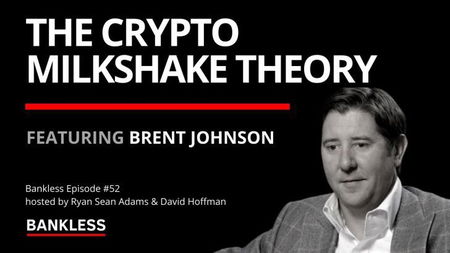
52 - The Crypto Milkshake Theory | Brent Johnson
 01:08:15
DeFi
01:08:15
DeFi
📺 AMA with Tascha From Alpha Finance
 00:54:45
Ethereum
00:54:45
Ethereum
📺 SotN #33: Joseph Lubin on CME ETH Futures
 01:59:23
Ethereum
01:59:23
Ethereum
51 - 2020 Reflections on Crypto and Beyond | Vitalik Buterin
 00:29:38
Podcast Premium
00:29:38
Podcast Premium
EXCLUSIVE: Vitalik Buterin Debrief
 01:11:12
News
01:11:12
News
📺ROLLUP: ATH for $ETH & $DPI | Logan Paul NFTs | HashMasks | Saylor Conference
Inside the episode
Justin Moses - CTO of Synthetix
Robbie Ferguson - Co-Founder & President of Immutable
Matt Finestone - Head of Business Development at Loopring
We discuss how these three voices in the crypto space have been integral in building successful DeFi products on the Ethereum mainnet. Listen in for a deep-dive into the different methods these protocols have taken to implement their apps on an Ethereum Layer 2.
TOPICS
- Immutable NFTs & ZK-Rollups
- Loopring & ZK-Rollups
- Synthetix & Optimistic Rollups
- Why Ethereum? Why Rollups?
- Layer 2 Efficacy
- Roadmaps for Synthetix, Loopring, and Immutable
- Composability Issues
- Layer 2 Fiat On-Ramps
- Is Layer 2 Competing w/ ETH?
RESOURCES
Synthetix
Immutable
Loopring
An Incomplete Guide to Rollups (w/ Vitalik)
Transcript
welcome to bankless where we explore the frontier of internet money and internet finance this is how to get started how to get better and how to front run the opportunity this is ryan sean adams i'm here with david hoffman and we're here to help you become more bankless david how you doing absolutely fantastic and much more knowledgeable after we just got done with this l2 implementers panel we brought on three different individuals who are all working on three different projects who are all implementing their application on a
specific l2 so we brought on matt feinstone who works for business development at loopering justin moses the cto of synthetics and we also brought on robbie ferguson who is the co-founder behind immutable x which is a zk roll up based nft exchange and so the through line behind all three of these individuals is that they are working for a protocol that is building something on an l2 they are not an l2 they are building something on an l2 so there's an important important differentiator there and so we talked to them about
what it's been like going through the research phase going through the building phase and where they are now and then also where the road map is ahead of them and i found it extremely informative and i'm sure the listeners will as well yeah absolutely so two things i want to say here the reason that this is top of mind and relevant is because uh ethereum gas fees are high and it needs to scale outside of what we call kind of mainnet manhattan into into uh into layer two which are these other
chains that represent kind of like the suburbs as we've talked about before so this is a very topical issue right now that's that's really facing ethereum and what we think is d5 is going to have to completely re-architect itself into this layer two mode the other thing i wanted to say is if if you're kind of new to to layer two what we're talking about is layer two is basically a chain that is not on the ethereum main net but is secured by the ethereum main net this is different than
a side chain which might integrate with ethereum but it's not secured by ethereum that is the distinction between a layer two solution and something that might be a side chain or a another non-ethereum chain that's not uh as well secured by ethereum and the thing about this panel is these are all application developers and that's why david and i wanted to get uh folks that were in the trenches actually building on top of these layer two solutions to talk because they can
give the most credible perspectives on what's working and what's not because they're actually like users of the product they're consumers of the layer two they made a strategic choice and investment choice to build on top of layer two so if they're doing that if they're investing in it then we we wanted to know why and we figured that they would have the the best perspective on what's real what's not and when all of this stuff is coming and happening i
think they gave us this so if you are looking to try to understand what ethereum ethereum scalability trajectory looks like what layer two looks like on ethereum this is the perfect podcast i think to to get up to speed there were two parts in this conversation that i really really enjoyed the first where is where we asked about the research process so you know each one of these guys has works for a team and there was a research process to go into which l2 was the best choice but before we asked that we asked well why did you even stick with
ethereum like what you could have gone elsewhere why didn't you and i think that was one of my favorite parts in this conversation and then the other favorite part of this conversation came at the very end where we asked about their thesis or theories about does the value capture that's going on on l2 actually compete with ethereum and ether the asset or are they value generative to ethereum and ether of the asset i thought that was a really fantastic part of this conversation you guys are really going to enjoy this conversation but before we get into it
we want to tell you about the fantastic sponsors that made this episode possible so as you guys know there is always a debrief at the end of every single episode that we reserve for the premium subscribers to the bankless program but we want to give the free listeners just a taste of what that kind of what those debriefs are like so if you are interested in hearing the debrief you can stay tuned to after the episode and you will be able to hear the 30-35-minute conversation that ryan and that ryan and i have after the episode
where we talk about our takeaways our lessons our our thoughts that we had during the episode just me and ryan uh so if you are interested in that content again it's at the end of the episode uh it's it's free for everyone this time and if you are interested in the future and if you are interested in accessing the future debriefs you can subscribe to the bankless premium rss feed there's a link in the show notes to get that done i i thought this debrief was pretty cool and so check it out it's at the end ave is a borrowing and lending protocol on ethereum and just recently released
ave version 2 which has a ton of cool new features that makes using ave even more powerful with ave you can leverage the full power of d5 money legos yield and composability all in one application on ave there are a ton of assets that you can deposit in order to gain yield and all of those same assets can also be borrowed from the protocol if you have deposited collateral here you can see me getting a 200 usdc loan against my portfolio of a number of different defy tokens and eth i'll choose a variable
interest rate because it's a lower rate than the stable interest rate option but i could choose the stable interest rate option if i wanted to lock that interest rate in permanently one of ave's v2 features is the ability to swap collateral without having to withdraw your assets trade them on unit swap and then deposit them back into ave ave does all of this for you all in one seamless transaction so you don't have to repay loans in order to change the collateral you have backing them check out the power of ave at ave.com that's aave.com if you want to live a bankless
life you need to get a monolith defy visa card monolith is a one-two punch of both an ethereum smart contract wallet and an accompanying visa card that lets you spend the money that you have in your ethereum wallet everywhere where visa is accepted when you swipe your monolith visa card at the grocery store or at a restaurant it actually makes a transaction on the ethereum blockchain that spends some of the money you hold in your monolith wallet it's insanely cool and it's one of the best tools out there for living a bankless but still
normal life monolith also offers on-ramp services for getting your fiat money into the world of defy so it's trivial to top up your monolith card if you ever need to and your deposited money goes straight into your non-custodial wallet so your money is never held by a centralized intermediary because monolith is native ethereum infrastructure the money you hold in your monolith wallet still has the power of d5 behind it swapping assets on uniswap or earning yield in defy is at your fingertips go to
monolith.xyz and sign up to get your monolith visa card today all right bankless nation we are here with matt finestone of loopering business development at loopring we're also here with justin moses who's the cto of synthetics and then also last but not least robbie ferguson who is the co-founder of immutable uh which is the studio behind god's unchained so matt justin and robbie welcome to bankless and we're so excited to have you guys on the show today thanks for having me
so l2 implementers assemble gentlemen you guys have all been invited here to because you share something in common you have all built and deployed functioning applications to the ethereum main chain and has seen success and adoption in the usage of your apps which is already a feat but there's something even more unique about their respective projects that all of you guys work on and that each of you guys have implemented or are in the process of implementing which is your guys's app being deployed on an ethereum l2 synthetics is offloading much of its
infrastructure onto optimistic roll-ups loopring is building a complete payments and exchange platform on zk roll ups and immutable is building an nft asset exchange platform also on zk roll ups so again we brought jesse robin and matt here to tell us the story of their app their need to scale and their process thus far so let's start with uh with you matt and loopring tell us about the nature of your app what does it do and at what point did you realize that ethereum's main chain capacity just wasn't going to be enough
thank you david yeah really excited to be here with fellow l2 implementers um yeah so blueprint is a bit different than i think my uh my compatriots here um in the fact that we had we were a protocol and then we built products and then we built a new protocol ourselves to the layer two protocol to augment the products so um the application did not force us to kind of
uh look elsewhere for a layer two we built it ourselves so we're kind of a layer to protocol and layer two products um but yeah we realized long ago that like you know we had no business doing what we were trying to do on ethereum layer one we were building order book exchanges um the experience was really poor on ethereum layer one so we looked for scalability this was early on roll-ups were just kind of being whispered around and uh we built our zk
roll up specifically to scale our order book exchange so we built an application specific zk roll up and then you know we start learning and we actually have users and iterating so the product changes a bit and then we we enhanced the protocol to support amms on layer two as well and then payments as well so what came from just like an order book deck protocol um really turned into an order book and amm exchange and payment zk roll up protocol
um yeah it's a bit of a go all over the place there but as you see we kind of did like full loop uh no pun intended honestly and uh yeah that's that's where we're at right now maybe you can talk a little bit about how how and why building an order book exchange on the ethereum l1 was such a such a pain like why why did that not really work out so well right very briefly the the biggest thing is to get liquidity on order books you really need
market makers or liquidity providers that are in control of their quotes uh what they're you know quoting to buy and sell and 15 second blocks and gas prices to submit to potentially cancel does not allow them to do their thing and kind of quote as and as the market's moving uh be quick and cheap like low latency low fee so it's really like a non-starter it's maybe one of the one of the worst things you could do if you're trying to replicate that legacy style order book on a blockchain but layer two allows us to really replicate
that that performance you feel like you're on coinbase pro or in except you're on this layer completely coupled to ethereum base player security right so market makers even with ethereum before scale was really an issue in the in the way that gas prices were today those like 15 second block times and you know even penny's worth of a transaction it was already like without the congestion that we have today it was already a poor experience for and you
know people who are managing order books need to be able to basically have instantaneous control not not 15 second delays or pennies at a transaction so even before ethereum was congested the l1 was never ever going to be able to do what you guys wanted to do that's a great point actually i didn't think of that kind of theme here that like you know justin and synthetics were forced after like large success on layer one already and uh potentially same with robbie we couldn't do what we wanted to
do even a few years ago um that that's that's very true and i guess we'll jump to this but the layer one not being suitable for this type of behavior is actually kind of about spawned amms where these market makers don't need to jump in and be quick you're just kind of dumping your money and letting a function do the thing so it kind of uh amms came out of the the environment that optimized for it yeah matt they really came out of necessity right it was due to this constraint of
basically uh you know low amounts of transactions per second that the automated market maker model became so successful and so popular uh maybe robbie for you kind of same question can you tell us a bit about the nature of your application and at what point you decided that you needed uh layer two yeah of course the point was actually really early when we were first launching the original sale of god's unchained it was at the same time f coin was doing their exchange listing uh and
i don't know if everyone watching this remembers but the way they incentivized that was basically as poor as you get with they incentivize transactions in the ether network with high gas fees and so for the first time ever we were seeing gas fees of like 150 180. um we did some innovations then which were fine but fundamentally we did the maths we were like okay if we even get to 30 the size of hearthstone so a medium-sized game we are taking up some absurd amount of the ethereum blockchain via nft transactions uh particularly
because nft transactions are a ton more expensive than just erc20 transfers like you can transfer a million dollars worth of erc20 value for a fixed cost you're transferring in a million dollars worth of uh nft value and god's unchanged um that looks like probably you know 500 000 cards uh so there's a fundamental difference between fundament fundable tokens and non-fundable tokens um and so in picking a solution really there were there were no available solutions i would say three years ago um there were
ideas being thrown around state channels have yet to come to life uh plasma chains also really have not been implemented in a mainstream way and this i think was what drove people to things like new layer ones or side chains and then we had this magical thing called a zero knowledge proof come out which i remember being obsessed with when i first heard about it especially the different parables of ways of explaining it like the the parable of the cave or um you know the numbers and and how it's all kind of
like probabilistically determined um which gave me some rough approximation of the mass which is probably like one percent of what it actually is uh but this is as vitalik says like the way it will scale um and so i think we we determined that solution pretty quickly um that this was the most obvious way to scale in particular nft transfers because they were so problematic on ethereum um and then it was just a matter of choosing okay who do we think the best kind of roll up provider is um zk roll ups a bit about nfts just because the lack of withdrawal time right now i
think optimistic solutions work better if you want generalized programmability which i think why you know synthetics is is going with optimism which is also an excellent solution um so yeah i think that was the the genesis of when we knew and also when we knew there'd be a solution was when we first saw traction and deployment of roll-ups so to be clear robbie you are going with a ziki roll-up type solution in the same way that matt's team is with loopring is that correct yeah that's right um i think we use
slightly different providers i think um looping do you guys use metalabs um we use ourselves um loopering uh pro protocol was the first zk roll up um as of 14 months ago so that's that's our kind of provider that's why i was kind of saying we're a bit of a beast we're a bit of a different beast like yeah yeah yeah operate across the stack but yeah no hard feelings no no no very cool very cool i'm sorry i didn't know that i think um i mean creating those proofs is bloody hard
that's why that's how we partnered there and um ultimately i see there's a few layers of the stack here there's proof providers there's a protocol on top of that so i almost call that like uh an aws infrastructure right down the bottom which is clearly what you guys are providing and then you have okay well what networks or products that build on top of that and then you have applications then you have open c super ram marketplaces games um which sit on top of that protocol um so we went for this level we said we don't need to make the magic maths um i
don't think we wanted to do that uh and and moon's real need exactly yeah actually um and the implementation of it for nfts is already tremendously difficult so we took on that challenge instead all right so let's turn to to justin at synthetics justin uh synthetics never really was destined to be an l2 in the same way loopering or or gauze and chained immutable was but you guys have turned into an l2 just simply out of necessity um because if your email one is congested so let's
talk about a little bit of again the nature of your app the nature of the economic activity that goes on in synthetics and at what point did you guys realize that you know l2 was not just like an option for you guys but something that you guys must do so synthetics is a decentralized exchange a little bit like uh blueprint matt was saying i guess the big difference for us is we're a bit more like uni swap and that we're here to contract and we don't have an order book as such what's actually happening is
people stake a token uh snx token um and from that they can issue a stable coin and then they can basically reprice that stablecoin into any other synthetic asset so basically what we have is this big shared deadpool that's comprised of all these different synthetic assets the more people that go into synthetic the more the deadpool is denominated in eth which is kind of cool because it means that you can get this idea of like infinite liquidity you can take any any synth and 100 convert its value to any other synth that is supported
um but the problem with that is that that means that it's all shared like it's all shared state um and as for those of you who've ever written any absolutely know that that tends to mean things like you know you're looping over every cent from the system to figure out how much debt there are there is and this stuff is very gas intensive so i think for us the that they're sort of sort of somewhat super prompt um i actually think um you're a little a little off um david on that um assertion that we were never destined for l2 like if you talk to kane he's he's always been very much that that we he wants the experience like
matt was saying he wants it fast and snappy like a traditional uh you know dex um and so you know we obviously couldn't do that on l1 but on top of that we have this very owner of gas fees that are just preventing you know regular people people who you know might only be staking you know a few hundred snx for actually doing anything because the code that we have is fairly complex um you know with some people looking at a hundred two hundred dollars worth at the time of trying to do simple things admitting now spending you know a few hundred dollars worth of eath in order
to to earn maybe half fifty dollars worth of less than x so for us still really those two those two factors required us to go over and to answer your second question it was actually a devcon 5 um in a sucker when we saw the unipeak demo we saw um for those of you who were there or wanted to see the video basically uh you know the plasma team who became what it became the optimism team they worked closely with hayden and the uni swap team and they put together zuni pig and you know just seeing it you know just
seeing the the tactile response you know my background's like you know full staff web engineering and i you know i was shocked and when we did our demo on l2 it was funny because our front-end engineers were now dealing with like regular kind of you know concurrency problems that we just never had with ethereum we're like we have multiple users using the app we need to basically use web sockets or something to to to tell in real time what's happening to this the shared state which we never had to worry about you know with l1 so yeah for us the uni peak demo which was uh about was it october 2019 was
definitely the moment we were we started to take a lot of interest and optimistic and we started talking to them being honest so guys let's let's dive a little bit deeper into kind of the selection process of of layer two and i want to start here i know none of you are let's call it um you know chain maximalists of any sort i i'm pretty certain i think that you guys are looking out for your user's best interest that's what application developers do they want to provide the
best user experience and the best application possible for users and of course when when you think about layer two you could also go in another direction which is a non-ethereum blockchain and there are a ton of what we'll call them eat killers uh in quotes out there that are promising you know low gas fees no gas fees infinite amounts of of block space kind of the all you can eat buffet please come to my blockchain justin from
speaking on your app here uh and yet all three of you have chosen to stay within the ethereum ecosystem and not only that but have chosen the the security model of ethereum as well so it's not only kind of a side based on the ethereum virtual machine you're actually choosing to go down this even harder road where the security of your roll-up is actually based on ethereum so there's some some really new technology that you're cutting your teeth on i want to know why and i think
listeners want to know why why did you stick with ethereum and what was the rationale behind the selection of the the layer two that you've chosen let's start with uh justin on this question yeah that's a good question i mean i think uh you know for us um i i don't know if any of you know this but um when we went haven which is what synthetics was before before it sort of rebranded um i was actually uh working on writing porting our contracts to eos
i did it for maybe six weeks um i was brushing up on c plus plus and writing code and getting involved and really trying to get um like write open source code right um continuous integration that that pulled together docker containers and spun everything up and tested everything and whenever i tried to ping the community on eos it was just crickets like it was just nothing like and i was peeing different block producers and trying to get them to like help and and it really just just re-illustrated how strong the ethereum developer community is it's massive you know there's just so
much infrastructure there's so much tooling um and there's so much momentum there and i you know obviously i'm an engineer right so i tend to maybe i over index on that but my experience very strongly is that ethereum's developer community is so rich that it would be you know very hard to move away from it and and i didn't i haven't seen any you know if killer that has showed me that there's any developer community anything quite like it so for for us it doesn't make any sort of sense um to move over to another one can we talk as well well i've got you on
this justin about why the optimistic roll-up design specifically what were the advantages of that versus the other roll-ups or other eth uh layer two scaling solutions out there well i mean i think uh like some assuming we're on stage sticking on ethereum i mean for us like obviously you know the zk um they're not having to worry the one week for draw period is obviously there's obviously a better user experience there's no doubt about that but for us a big part of the the decision is how complex our smart
contracts are um still to this day there's no easy way to port smart contract logic you know into anything into anything zk at all right uh on to l2 so the solution is to try to you know to try to take a little part of it right whatever you need to sort of take onto l2 and create some sort of zk compatible solution and create it and a big part of the the decision for us particularly for me is maintaining these two different code bases so i'd like to talk more about this at some point and
this is a good uh piece but um there's a lot of complexity in our maintaining state on both and not just state but also contracts um code or both l1 and l2 like i'd like to think of as a new dimension now we have our contracts deployed on different networks right like you know covambelhaven but now we also have this dimension of layer two and the more you know the more cognitive load you put on your engineering team the harder it is to get things done so for me the big a really big part of the appeal of optimism was being out of port more or less exactly as is the contract
code that we have on l1 and run it in l2 and then have two separate systems which is one elegance to the shards and and what i imagine is going to eventually happen is we are going to probably see different l2s and there'll be there'll be capital moving between these different layer twos and we need to handle how that's going to happen i don't actually think it's necessarily going to be when it takes all um you know so for us to be able to take our logic and move it over wholesale is a huge value out of optimism robbie let's talk about the process over at immutable when you guys were
realizing that the ethereum l1 wasn't going to be enough for all the data that you guys would need to be able to put on chain did you guys ever look elsewhere other than ethereum and if you did what was the rationale behind why you decided to stick with ethereum yeah of course we looked elsewhere uh we even had offers massive grants from different chains you know how like these things go um this was actually a really simple question for me though uh and ultimately i am an 8th maximalist um i think a bit
contrary to the original thing and the reason is not just inherently hey this is this is what i like it's i i think i'm a decentralized maximalist and ethereum is really one of the only public blockchains which fulfills that criterion for me um the alternative blockchains simply like either their consensus mechanisms are so centralized that if i hired a crackpot team of um hitmen with two million bucks i could go crack it um or if the government cracked down they could go crack it or if the ceo of the company um
or their supplies blockchain don't know who i could be referencing here um was to leave that'd be a significant impact to the blockchain so i think um just speaking pretty candidly there's very few decentralized alternatives so my question is what is the point then why don't i run a marketplace on my database on my computer why don't i just do another steam like the whole point of this is to give users self-custody sensitive resistance uh and it's fundamentally decentralization and sovereignty over hard capped assets and hard cap money and so i don't think
going halfway and just creating a nice experience for trading valuable things that can that is fundamentally vulnerable to the same things centralized markets are is doing anything at all um the next thing i would say is that that's that's why ethereum um but the next thing i would say is it's not sufficient for me to have some sort of relationship with the ethereum ecosystem and i think there's a lot of wool being pulled over people's eyes here as well at the same time uh which is i think i mean and this is where i actually take my my learnings from you guys because i think you so cleverly articulated
what are the value propositions of ethereum which in in my mind are four each is a consumable eighth is a capital asset eighth is a store of value and ether is a form of economic bandwidth guaranteeing via security the operations that exist on that protocol to me you have to therefore rely on ethereum security uh currently the only scalability solutions which rely on ethereum security are roll-ups um so i think that that was partially why i chose that like at the end of the day you want to have the cost to attack the
stuff you're trading to be the same as the cost to attack your roll-ups i think optimism has a slightly more um linear cost to it to attack the proofs but it's it's still correlated to it to ethereum security um so still really good and i think um you know justin was on the money with the fact that it's just way better for di define apps right now an optimistic solution um so that was why ethan that was why roll ups um and ultimately at the end of the day for customers it's way better too like it is where all the network effects are it's where all the developers are
that's a really hard thing even with 250 million dollars to buy you know your own ecosystem of developers it's just you know that money will only go so far and that people will be motivated by cash rather than um the true kind of cultural genesis of a decentralized community which we've seen on ethereum today and so what about the research phase for immutable and an l2 uh how did you guys come to a decision as to what l2 was the right l2 for you
yeah so it's it's really just two decisions it's one what kind of um so in my mind the only l2s are rollups right now i mean that's because the definition of an l2 is something which inherits the security of the l1 rollups the only solution which do that currently um other mechanisms like sidechains useful and they just they have their own consensus mechanism so you're not actually getting a security they they have bridges and it's it's great for the ecosystem and this is partially why polygon said hey we want to be this you know um relationship to future zk roll
ups and and things like that um i'll i'll be excited when they release one and and they can they can use us if they like um for nfcs so i think that uh the first choice was out of rollups which one zero knowledge was very clearly the choice for us nfts have a reduced need for evm compatibility over complex smart logic and we're also getting there so immutable x's implementation of zero knowledge roll up with starkware uh already has the prover on chain which is able to basically take any evm logic we
just don't have the language and tooling which is going to get there this year um so that's future-proofed um and the main reason for nfts is instant withdrawals so the benefit with erc 20s in a you know a protocol like synthetics is you can do things with liquidity bridges to kind of get around this problem with the withdrawal time they're not perfect but they're pretty good for fundable tokens you can't do that for nfts if you have a you know one-of-a-kind cryptokey axi godzilla chain card i can't you know loan you or construct some liquidity bridge which is going to give you early access to that

David Hoffman
Co-owner at Bankless. Optimistic storyteller of frontier technology.