Spark Wants to Make Bitcoin Spendable Again
Spark is a Bitcoin 'L2' that uses statechains to power cheap, fast, and self-custodial transactions.
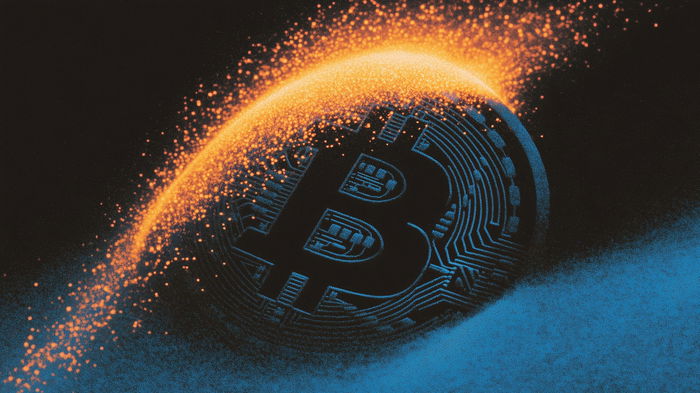

Spark is an up-and-coming project in the  Bitcoin L2 arena that is placing bets on the concept that Bitcoin can be fast, cheap, and stablecoin-friendly without bridging, wrapping, or leveraging smart contracts.
The project is focused on bringing speed and affordability to Bitcoin-native assets, particularly Bitcoin-based stablecoins. Spark notably doesn't rely on bridging or wrapping. Instead, the network is built atop tech known as Statechains, which allows for streamlining Bitcoin transactions between parties offchain without needing smart contract architecture.
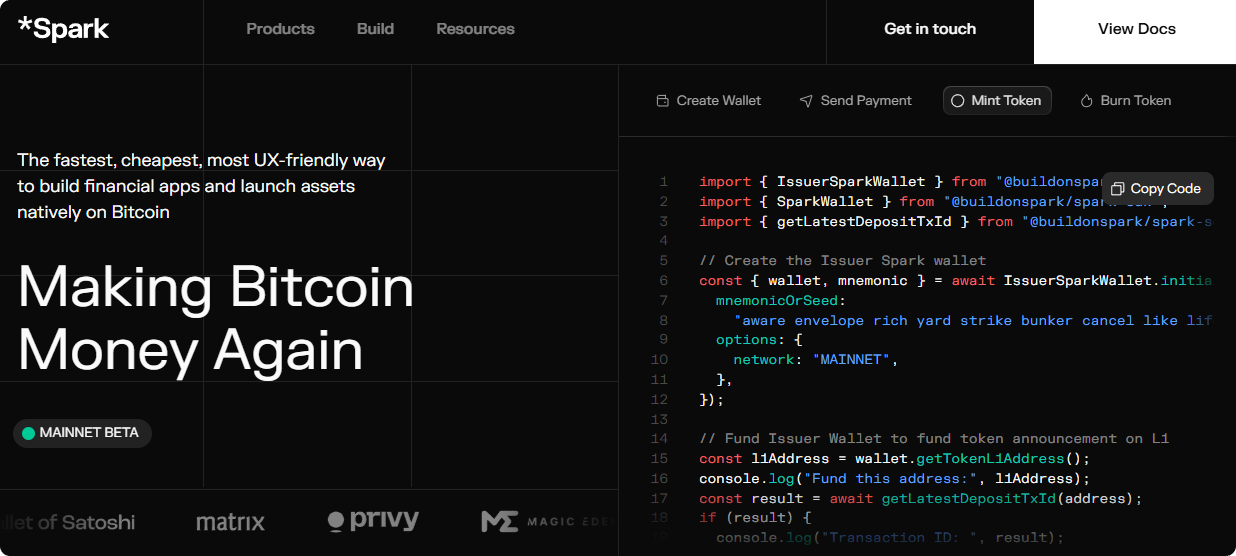
Thus, Spark isn't a chain in the sense of a typical L2. Instead, it's a distributed ledger designed as a shared signing protocol. To move funds here, you temporarily delegate signing rights to the protocol. The underlying assets themselves are maintained as Bitcoin UTXOs.
On the Bitcoin mainnet, Spark appears as a sequence of multi-sig outputs. Spark Operators (SOs) cosign transfers with users, but crucially can’t move funds alone.
Before you ever deposit, you generate a pre-signed exit back to your own Bitcoin address. If operators go offline or misbehave, you can broadcast that transaction and leave as you please.
Time locks are also arranged so the current owner always has the earliest exit window, and watchtowers guard against bad behavior. In trust terms, Spark aims for a “1/n” assumption at the moment of transfer. You just need at least one honest operator in the set for safety, and operators forget old keys after handoffs for security.
For assets beyond BTC, Spark introduces BTKN, a lightweight tokenization scheme adapted from Lightning Network's LRC-20 standard but redesigned for Spark’s model. Issuers can mint, transfer, freeze/unfreeze, and burn tokens like stablecoins without deploying smart contracts or wrapping coins elsewhere.
On Spark, BTKN balances ultimately live as metadata linked to your Spark outputs. The plan is that soon you’ll be able to withdraw these non-BTC assets to Bitcoin with the same unilateral exit guarantees that Spark now affords to BTC.
Enjoying this article?
Subscribe to Bankless or sign in
At @spark, we've been building. The team is working around the clock to bring you the best network in existence. Wanted to share a bit of what's been happening in the last few weeks: 🧵
— Kevin Hurley (@kphur) July 31, 2025
(1/n)
Additionally, Spark's Wallet SDK and Issuer SDK are paving new avenues for Bitcoin app builders. However, the underpinning bread and butter is payments. Spark-to-Spark transactions settle near-instantly and currently cost effectively nothing, bridging to and from Lightning is supported, and exits back to L1 cost normal Bitcoin fees.
With all of this in mind, if you want to explore the Spark ecosystem, note that Spark is currently in mainnet beta. Today there are only two operators (Lightspark and Flashnet), the SDKs are early, and the team is prioritizing correctness over throughput for now. So if you dive in, start small.
With those caveats in mind, there are various projects you can try here. Some of the earliest apps building on Spark include:
- Blitz — a self-custody Bitcoin wallet
- Brale — a stablecoin issuance platform
- Guap — a payments app, think Cash App but onchain
- Luminex — a Bitcoin assets launchpad
- Magic Eden — a popular Bitcoin DEX that's integrating Spark
- Sparkscan — a block explorer designed for Spark
- Wallet of Satoshi — a Lightning wallet powered by Spark
Spark is a pragmatic take on treating BTC like digital cash to be spent and not just digital gold to be hoarded. It's self-custodial, Lightning-aware, and designed to make stable value actually usable on Bitcoin.
If it onboards issuers, hardens its operator set, and continues partnering with Bitcoin apps, it could become a leading Bitcoin rail for instant payments and dollar-denominated transactions. Let's see where Spark goes from here!
William M. Peaster
William M. Peaster, Senior Writer, has been with Bankless since January 2021. Immersed in Ethereum since 2017, he covers the onchain frontier with a particular interest in art, games, and other culture apps. He has a background in creative writing and writes fiction in his free time.