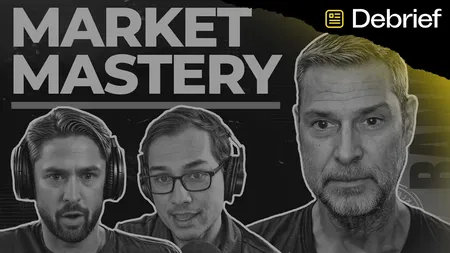
PREMIUM: Ethena - A Crypto-Native Digital Dollar | Arthur Hayes & Guy Young
A new stablecoin design


Up next
All episodes 01:27:23
Podcast
01:27:23
Podcast
Is $TIA Modular Money? | Nick White
 00:27:51
Podcast Premium
00:27:51
Podcast Premium
DEBRIEF: The Raoul Pal Interview
 01:34:04
Podcast
01:34:04
Podcast
Your Guide to the Bull Run | Raoul Pal
 00:48:13
Podcast
00:48:13
Podcast
"We Plan to Win" - Hayden Adams on Uniswap vs. the SEC
 01:24:38
Podcast
01:24:38
Podcast
ROLLUP: Uniswap vs. SEC | Eigenlayer Mainnet | Blackrock BUIDL Fund | $TNSR Solana Airdrop
 01:22:15
Podcast
01:22:15
Podcast
Crypto vs. The World | Jake Chervinsky & Amanda Tuminelli
 01:05:32
Podcast Premium
01:05:32
Podcast Premium
PREMIUM: The Rollup Trilemma | Myles O'Neil & Andrew Huang
 01:29:59
Podcast
01:29:59
Podcast
The Debate Over ETH's Monetary Policy
Inside the episode
Today on the show, Guy Young, founder of Ethena, and Arthur Hayes, inceptor of the Ethena Idea walk us through the Ethena Protocol and the USDe Synthetic Dollar.
Because Ethena does not use dollars in a bank, USDe is an entirely crypto-native product. It uses crypto collateral, crypto’s centralized exchanges and perp venues.
This is an entirely new design construction of a stablecoin, but is it a better approach? That’s exactly what this episode seeks to answer.
TIMESTAMPS
0:00 Intro
5:32 Ethena’s Success
6:49 Defining Synthesized Dollar
17:42 What’s Different about USDe
21:39 USDe and the Stablecoin Trilemma
27:18 The Ethena Engine
35:49 Ethena’s Impact on Funding Markets
49:26 USDe Demand Side
58:37 Ethena’s Roadmap
1:03:55 Economical Consequences
1:14:14 Closing & Disclaimers
RESOURCES
Guy Young
https://twitter.com/leptokurtic
Arthur Hayes
https://twitter.com/CryptoHayes
Ethena App
Ethena on X
https://twitter.com/ethena_labs
Crypto Hayes Substack
Transcript
Welcome to Banklist, where we explore the frontier of internet money and internet finance. And today on Banklist, we are exploring the frontier of new stablecoin design. Today on the show, Guy Young from the Athena Protocol and Arthur Hayes, Inceptor of the Athena idea, walk us through the Athena Protocol and the USDE synthetic dollar.
Actually, not a stablecoin, a synthetic dollar, because Athena does not use dollars in a bank. There are no dollars in the Athena system. Athena is an entirely crypto native product. It uses crypto collateral, it uses crypto centralized exchanges and perp menus, but it does not use an external bank, and no one is holding dollars anywhere in the Athena system. Instead, Athena executes a delta neutral trade using perp exchanges that captures yield on both sides. Yield from staked ETH as collateral on one side, and yield from the funding rates of shorting ETH on the other. People in crypto love going leverage long on crypto so much that there's typically always someone willing to pay yield to access extra capital so they can get more ETH on their ETH.
Athena provides that capital by shorting ETH, accruing some fees, but they're doing it using staked ETH as collateral to create that short, creating a basis neutral trade that produces a synthetic representation of a dollar.
This is an entirely new design construction of a stable coin. Again, not actually a stable coin. It's instead a synthetic dollar, but semantics really, that occupies a different trade-off set than all of the other alternatives that we've seen out there. So, in this episode, why is USDE different? Why is it better than USDC or Tether? Is it more aligned with the crypto industry? It requires using crypto banks, but not TradFi banks. So is it still bankless or maybe it's just bank light? Also, towards the end of the episode, Arthur explains why he thinks that because Athena does not use United States treasuries to produce its stable coins, like how Tether and Circle both do, that the US government will actually be more favorable to Athena, not less. Hot take, hot take. Get ready to learn a lot in this episode, Bankless Nation, because I definitely did. But before we get into the episode with Guy and Arthur, first, a moment to talk about some of these fantastic sponsors. Bankless Nation, excited to introduce you to Arthur Hayes, writer, trader, derivatives, expert, and the originator of the idea behind Athena. Arthur, welcome back to the podcast.
Yo yo yo, glad to be here.
Also, with us today, Guy Young, co-founder of Ethena Labs, the actual builder of the idea of Athena. Guy, welcome to the podcast.
Thanks for having me on, man.
So Athena has just been making tons of waves in the crypto space lately. USDE, which is the uh synthetic dollar, which is the product of the Athena protocol, is the fastest growing USD asset in the history of crypto, just passing $2 billion, $2 billion in supply in about a hundred days. Uh guy, first, congrats. That's huge. Um sentiment, vibe check. How does that feel? Like one of the fastest product uh growing protocols I in in crypto history.
Yeah, no, I think we're we're obviously super pleased with like uh the way that the team has actually executed on the idea that we had. Um I think we
uh have also been very fortunate with like the market timing. So um I think you can have a good idea sometimes.
There's a huge amount of path dependency uh between a good idea and actually like a good outcome. And I think we also just need to recognize that like the market conditions were really set up.
In a perfect way for us to sort of come to market. So just for your listeners' like context, funding rates on BTC and ETH have been, you know, averaging like north of 30% since the beginning of the year. And that's because people are sort of speculating to get long
on like ETF speculation.
And so for us, that's just an incredible backdrop to bring this product in in. So yeah, I think pleased with how it's gone, but I think also recognize a huge role that luck played in the whole thing.
Yeah. So talking about the funding rates, uh, we'll open up the door to actually explain how this product, this uh not stable coin is different from what other bankless listeners are familiar with. DAI is a stable coin, uh USDC is a stable coin, but we don't really call USDE uh a stable coin. We call it a synthetic dollar. And this idea kind of goes back to just how USDE is generated in the first place, which uh first it was generated as an idea from like an article, I believe, that Arthur you wrote way back in the day. Uh can you explain this the inception of this idea of the synthetic dollar of USDE, how this thing comes to be uh and and why it's not a stable coin?
So basically, it goes even back before
BitMEX was even created. The first futures exchange in crypto called ICBit. It's
I think it was two Russian dudes sitting in the Caribbean somewhere. And they created a Bitcoin margin inverse futures contract.
And what makes that interesting is that.
You're margining the contract, the Bitcoin US dollar price in the home currency Bitcoin. And so that is different than say what maybe people are very familiar with today, which is say a tether margin Bitcoin US dollar do a USDT contract, because you're providing Tether as the collateral.
And so how you construct that is it's actually a um an exponential or inverse function one over X, and which means that
If I'm short this futures contract or now perpetual swap, the amount of Bitcoin that this swap is worth goes up as the price goes down. And the amount of Bitcoin that this product is worth goes down as the price goes up. So essentially, what that means is if I am long Bitcoin and I'm short one of these contracts, and the price of Bitcoin goes to infinity, I cannot be liquidated if I'm fully collateralized on the exchange.
Which is very important. So, what does that mean? If I've combined Bitcoin or Ethereum and a Bitcoin US dollar inverse contract or Ethereum US dollar inverse contract, I've essentially created a synthetic dollar because it's worth one US dollar of Bitcoin at any price. And so when you construct this, then essentially you're capturing a funding rate or an interest rate, whether it's variable fixed, depending on it's a perp or a futures contract, in this derivative. And you can essentially farm that or arbitrage that or whatever the verb you want to use to describe that. And so people have been doing this, and I've called this cash and carry in many blog posts over the many years I've been writing.
Since I got started in crypto back in 2013, this is the first thing that I did when I discovered Bitcoin I went on IC Bit. I bought Bitcoin on MTGox. I shorted a futures contract and I earned, I think it was at the time 200% to 300% per annum funding rates, essentially. Now, obviously, that's come down a lot since then. Um, in 2016, at BitMEX, we invented the perpetual swap, which gave a variable funding rate, and that's what you know, it's the most popularly traded product in crypto history. However, many trillions have been traded across all the major exchanges.
And you
know, I've written many times over that essentially what you're doing by doing this cash and carry strategy is creating synthetic dollars.
And over the you know, many years that I've been in crypto, I've always you know fantasized that okay, well, Tether and Now Circle and some of these other um stable coins are super successful, but they're very dependent on the US banking system. So if the US banking system
For whatever reason, doesn't want to use allow these people to bank with them, then guess what?
No more tether, no more circle. And so why don't we use a synthetic dollar that's created inside the crypto ecosystem itself as this dollar, if you want to call it that, that people can go into when they don't want to be into a crypto risk. And so that's kind of where the synthetic dollar concept came from. Guy obviously read a Dust on Crust post that I wrote in March of 2023. Um, I met Guy and the team in August of the same year when they were just starting out with Athena. And I was like, wow, this is great that you guys are executing on this. And obviously, they've done an amazing job since then.
Maybe to explain a little bit more just how this whole thing works, we can go back to like middle school algebra, right? And you have uh two equations on different sides of the equal sign. Uh and since your collateral that you're using, be it Bitcoin or Ether, is the same thing that you are shorting on the other side of the um uh the equation, you can just like cancel out parts of the equation and then once you're done canceling out, uh you are left with one dollar uh on both sides of the um both sides of the equation. Uh and so this is how like the synthetic uh uh word comes into the into play here, but also how uh the collateral is only crypto. Uh so I think really the thing you are you are really emphasizing, Arthur, is like A, you produce a a a synthetic dollar, but B, you don't actually use any dollars. There's no banks involved here. There's no there's no uh dollars inside of a bank in the banking system. Uh you are actually using either Bitcoin or Ether uh to make this um uh make this uh synthetic dollar happen, uh, and you just are both longing and shorting ether or longing and shorting Bitcoin, and as a result, a dollar is left on the table. Can you also just like double click into like why you are actually receiving money as a result of that? So like there's this thing called funding rates, uh people are borrowing money to go long. Why how do you actually make money from that rather than actually instead of paying fees? Because like I think intuitively people are like, oh, you have to pay fees to go long. Um so like when we were doing this margin trade to like cancel out the collaterals on both sides of the equation, why do you actually accrue fees rather than paying fees?
So essentially in crypto,
um you want you essentially are selling fiat to buy
crypto, Bitcoin, Ether, what have you, right? And so
To get the fiat into the system, you have to you have to take counterparty risk on the exchanges. So I have a dollar that outside of the system in TradFi.
I need to have a dollar inside of the crypto exchange ecosystem to go and buy some crypto, right? Now, obviously, as we know, there's very high counterparty risk with the various exchanges. They've gone under, they've gotten hacked, and all sorts of things have happened. And so there's a reticence for people to provide dollar funding inside of crypto. But there's an insane demand because Bitcoin is probably the best performing asset in human history in terms of its price performance from the Genesis block in 2009 until the present. And so there's a bias towards I should be long Bitcoin because it's going to go to something less than an infinity, but it can only go down to zero. And you know, fiat's being debased. So therefore, on a forward basis, I expect Bitcoin to go up. And it's it's more profitable to be long. So I'm willing to pay a very high interest rate because the Bitcoin volatility and its past price performance and my expectation of the future tell me that I should go long Bitcoin. And if I pay 30, 40, 50, 60% per annum in cost of interest to get that leverage, I still make money on a long-term basis. And so that's why there's this insane demand. It's lack of trust of people who will hold a lot of dollars outside of crypto to put them into crypto exchanges and an insane demand from long speculators who have seen that over time the best strategy is to just go long Bitcoin or Ether, some of these assets. Therefore, they're willing to pay a high rate. And so that's where this funding comes from. So if you're willing to say, I'm going to supply synthetic dollars to the system, because remember, how do you get Bitcoin in the first place as an arbitrageur? You borrow or sell dollars in TradFi or you bring it to the exchange, you buy some Bitcoin, and then you hedge out that Bitcoin dollar risk by selling a perp or a futures contract. So you are placing these dollars, you're taking this risk as a trader and you're and you want to get compensated for it. And your compensation is the funding rate. But obviously, on the upside, you give up the upside price appreciation of crypto, which is why as the price of crypto goes up, IA, as an arbitrager, expect to get paid more in terms of funding. And so it's a procyclical effect. And that's what Guy was talking about in the beginning. This is a great time to launch a product like this because.
He has, you know, thirty to sixty or seventy percent APY on this variable rate product versus five and a half percent that you get on treasuries or any sort of other re RWA type asset in in crypto. So it's a very favorable time because the market is in a bull market mode.
And so just to really make sure I understand this, so I've got one Bitcoin, and that's my collateral. And I'm not paying fees or receiving fees on that collateral, but then I go also go short Bitcoin. And because everyone is paying to go leverage long, that it is inverted on the short side. And so that's where you collect the fees because you are actually collecting fees by going short, by like taking the other side of the trade. Is that right?
Correct. You're giving you're you're providing the leverage to the system, but giving up that upside return. And in return, you're getting a very high interest rate.
And then Guy, how does that actually become a token? Uh so we have this trade and you have this synthetic dollar, but how does the synthetic dollar actually turn into a token on Ethereum?
Yeah, so um the infrastructure that we built on Ethereum is essentially just a front end and it's a pretty simple contract that's just taken through assets. Um so it can be ETH, uh liquid staking tokens or dollars. And essentially it's sending it through to institutional grade custodians where the actual assets are held. And as it's coming through our min contract, essentially the off-chain infrastructure that's been built is automating um a hedge against the collateral that's just come through. And once you get confirmation that a hedge is actually being executed, you can obviously issue uh USD in return, less execution fees, which are which are actually charged to the user who's actually doing the mintern redeem. You can think about that conceptually similar to uh the 10 basis points fee that Tether charges for every single mintern redeem that you see uh coming out of Tether. Uh but yeah, that's a basic idea where once you have confirmation and the collateral that's come into our system and is being held in the back end has actually been hedged, then you can issue the USDE on the other side.
And the way that that sort of pricing mechanism works on chain is that whenever there's a discrepancy of the price of USDE versus other uh stable assets, whether it's in a curve pool or somewhere else, um, an arbitrager has basically an incentive to come to our mental redeem and either bring us like new collateral or actually just redeem from the protocol by by buying USD below uh below $1. So if you look at the price chart of USD, it's it's held a pretty consistent, tight sort of like peg around one. Um and that's just because of the the R mechanism that's that sort of sat there in place.
I think this construction has really like um like tied people's brains in a knot at times just because it's so different from what people expect. Like we have these like fully endogenous stable coins in DAI and uh FRACs, right? Which is just it's just completely internal to the crypto space. And then we have the fully exogenous stable coins like USDC and Tether, which is literally actual dollars held in actual external bank accounts. Uh and then this one kind of like uh is a kind of transcends both, where it's highly endogenous in the sense that it uses our native crypto assets as collateral to uh produce this synthetic dollar, right? It comes the value of USDE comes out of ETH and BTC or produced by the value of our crypto native assets. But you also need these centralized venues where these perps are traded, but they're not they're not external banks, right? They're not banks in the TradFi world. They're actually like crypto exchanges uh with uh with also uh crypto custodians. So we do we are using like centralized counterparties, uh, but we aren't using external banks. Can you just like elaborate on this point a little bit and how it's just like kind of unique and different from like other alternatives?
Yeah, sure. So on the endogeneity point, just to be 100% clear here, like the and a governance token and that kind of stuff has like absolutely zero role to play within USD itself, unlike uh like the biggest blow-up we obviously saw with um Luna. I think actually the best way to conceptualize this is it doesn't actually look that different uh like a maker CDP with ETH on the top. It's just instead of you having to put up $2 of ETH collateral with a stable that's issued at like $1 versus the $2 of collateral, uh you're basically just putting up $1 of ETH collateral, hedging it, and then issuing the stable unit on the other side. The reason that you can do that is because you're hedged, while with Maker,
Um you obviously need to have that buffer because if you have like a limit down in the price, you just need to have like a buffer so that you don't become sort of insolvent. So it doesn't actually look that different from a CDP. I just think it's a much more efficient, like much more capital efficient uh CDP. Uh so I think that that's like the simplest explanation in terms of how you can sort of think about the backing that's actually sitting behind it.
Um
And then, yeah, I think uh to the point that you're making around like banking system versus our system, this is really cool uh in terms of what I actually found interesting about Arthur's article, which was you're not actually trying to create something that's perfectly decentralized. We're not walking around pretending that we are. I think we're pretty honest in terms of the trade-offs that we are making, that there is like centralized touch points here. Really, the core piece that you're trying to solve for here is actually just moving collateral outside of the US banking system, essentially, which is like the core piece that we see we're trying to solve for here, where fundamentally like crypto as a system is actually there to try and I guess undermine uh like existing legacy systems. I guess it's like literally in the name of your show. Um, while even though it does sort of touch centralized uh um entities within crypto, these are sort of like people that want crypto to succeed, right? This is like uh exchanges and custodians that are sort of in our system rather than the one that's outside. And that was really, I think, the nuance there where.
I think that that diversification is actually useful to some people because
one of the issues that we saw
When SVB went down in March 23, was that we kind of realized that we had like really no alternative because every single um stable asset had the exact same risk exposure sitting behind it. So if you remember, like DAI and FRACS actually traded down with USDC on that weekend and they all went like sub 90. And that's because the mark was actually looking at that and saying, I can look through and understand that the custodial risk here is exactly the same because DAI is just backed with USDC, and so is FRACS. And so we didn't have any alternative over that weekend where any uh exchange or anything could function because USDC had had sort of gone below a dollar. And so uh I'm not saying that it's better or worse to have your collateral within the US banking system or crypto. We just think that there is value in having that diversification, where if you can actually do this at scale and size, it is quite useful to have um an alternative.
Yeah, because because a lot of the value the value of USDC comes endogenously from BTC from ETH, uh, like the TradFi banking system, we don't actually care what happens over there uh until the point where it actually affects the value of BTC and ETH, which I'm sure it would if there was some like cataclysmic event in the world of TradFi, like it's gonna impact crypto prices. But it's crypto prices that impact USDE, not uh whatever's going well, whatever chain engines is happening in the TradFi world. So there is some like like nice um uh nuance about like it's actually a complete uh severance from the traditional banking system. Uh I want to pull up um the famous uh um
Uh stablecoin trilemma here. And just to really kind of drive this point home, so USDC from Circle and USDT from Tether are like completely centralized stable coins. There is a single entity behind these things, in addition to like all their banking partners. And so, like, while USDE from Athena does use centralized venues for being a custodian and also for actually trading the perps, there's actually not one centralized venue that uh USCC is beholden to. So, like on the whole scale of like how decentralized is it, like, while it does require centralized parties, it doesn't require any one centralized party. Uh, can you talk about just like the position of USCE on this like hail whole stable coin trilemma? And if just for listeners who aren't familiar with the stable coin trilemma, so this famous, famous trilemma about how you build a stable coin, you can pick two of three things. One is decentralization, uh, one is scalability, as in like how much supply of stable coins there is, and then the third is the peg, like how well do you hold the peg? Uh and the the meme here is like you kind of can only pick two. Guy, where would you put position uh USCE on the stablecoin trilemma?
Yeah, I think uh we see a lot of trilemmas within crypto, and I think they're usually just invented to um put in pitch text to present pretend you're like solving something. But I think with like uh stablecoins is actually very real. Um like this this is this is like actually uh quite a real um uh trilemma, and I think that uh USDE doesn't uh sort of like solve this entire thing is the honor uh honest answer. Um I think there's a bit of nuance actually if you jump into each of these items um where yes, USDE is more scalable than stuff like CDPs, because as we know, like the CDPs are sort of tied to the ultimate demand for leverage. And that's why you've seen um you know projects like Make a Dow eventually expand to adding USDC and RWAs and all that kind of stuff, which I think is a perfectly fine thing to do. Uh, but we acknowledge that uh sort of the design of having one dollar of collateral coming in uh versus having to overcollateralize it just makes this like a lot more scalable than uh purely um CDP based designs.
Having said that, it's nowhere near as scalable as like a tether, where you can sort of think about that as infinitely scalable, where you have more than enough treasuries to sort of uh satisfy the demand to grow tether. And so I think uh the answer there is it's not infinitely scalable, but definitely scalable enough to get uh really large uh within crypto. Um and so I think the honest answer there is that it's always sort of sitting between the extremes. And I think that that sort of applies across all of these things here, where no, it's not a liquid, where it's like perfectly decentralized, but guess what? Nothing else uh within like the stablecoin issuer sort of space is anywhere near decentralized when when you sort of think about uh the entities that are sort of controlling the collateral in the back. So again, I don't see ourselves on the extreme of having bonds within a within the US bank banking system, and I don't see ourselves anywhere near liquidity. It's sort of operating within that middle ground, and I think that sort of applies to each of those three um pieces of of the trilemma.
Yeah, would you characterize Athena and USCE as just a a middle ground stable coin? Like it's not super decentralized, but it's not centralized either. Uh it's not uh maximally scalable, but it is also pretty damn scalable, at least on a one to one basis, right? You actually don't lose any value from your ether. So like it's it's kind of like a a middle goal a middle ground synthetic dollar that kind of it picks a goalie luck zone between a bunch of different trade offs.
Yeah, that's exactly right. I think um it's also just my approach with this kind of stuff generally. I think within crypto you sometimes get
Funders who are like really idealistic around uh these ideas of decentralization and sort of like working towards them. And then you get more practical people who are sort of just saying, like, let's actually build a product that's useful first, and then walk back towards um some of those ideals. I obviously think that's incredibly important for things like the actual base layer, uh like Ethereum, but I think at the application layer is just less important on some of these items where I think sometimes uh you can see a bit of like theatrics around the decentralization. So, from my perspective at least, I've always found it more important to just really solve for like pragmatism and actually producing something that's useful and really like narrowing in on the qualities that you you actually do want to retain. And I think for us that was just defining no collateral within the banking system so that it looked actually different in the risk profile. And then um, I think the the other piece that we're really solving for is thinking about.
What is it that users actually want to use a stable for? I think Tether's kind of won the game and it's an incredibly fortuitous position that they're in in terms of like the value that they can extract, where they are actually money on centralized exchanges. That is very difficult to go and unseat that. For us, we sort of saw a niche where we think that we can produce the highest return on a dollar like asset within crypto. And we think that that is actually a fundamentally very powerful thing to be able to produce, uh, where we sort of see money as the killer app. And if you can produce the highest yield on a dollar, um, the demand for that isn't like a billion dollars. It's like north of 20. Um, and so that's just really the niche that we're sort of like focusing on at the moment um to try and win. Yeah.
Mm-hmm.
So with all of these stable coins, there's two systems here. There's the production and like the distribution of the actual stablecoin, USDE, uh in being held by people, being used in DeFi, just like the actual product of the stable coin. And then on the other side, there's the engine that produces it. Uh and this engine is like the novel thing that everyone is trying to focus on and learn about in Athena. Like on the maker side of things, it's all of the vaults and all of the acceptable collateral and all that stuff. Uh with the Athena side of things, it's the delta neutral um per uh all the these margin positions that are that are delta neutral. Uh, who can you talk about when someone comes and deposits their ether into Athena? And then we're in the future, we're gonna talk about the roadmap and then in the future Bitcoin. Uh, whose hands does that go into? How does that end up on which exchange? Who is actually doing the trading? Can you kind of like illuminate the back end of like what's going on here with and with the actual production of the stable coin?
Yeah, sure. So it it looks actually very similar to the way the circles set themselves up with approved parties or like market makers who are the only people doing the mint and redeem. It's the same way that sort of ETFs work in the real world, where you're KYC and you really know who the individuals are who are actually interacting with the mint and redeem contract itself. But then all of the sort of external demand uh to either create or destroy uh the like unit of account basically comes from just external trading to Athena. So the Athena front end is actually extremely simple. It's basically just routing any user who's coming on there into a curve pool or a unisort pool on the side. And if you just think of the flow of funds, you've got like a million dollars coming through as a pie into USDE. The price of USDE will go up to like one, two basis points above a dollar. And now a market maker has an incentive to bring us collateral, mint USDE, and then sell it down to sort of close out that arbitrage. And so uh we haven't actually got like any.

David Hoffman
Co-owner at Bankless. Optimistic storyteller of frontier technology.
.jpg-48bb3b8a9a7a83dee5836f716023f733.jpg)
.png-cde5b9c0aa4838d09c634abbd1136ff2.png)

.png-a616dc52961c1edd72b0c1fdf5f47e7a.png)
.png-336efc5e35995e6b184e7e830baa688b.png)