ROLLUP: Crypto’s 2-Week Deadline | The CLARITY Act | $100 Oil | OpenAI Model Escapes
Is the crypto bear market almost over?
Up next
All episodes 00:47:41
Podcast
00:47:41
Podcast
Securitize Just Went Public — Are We Still Tokenizing the World?
 01:03:38
Podcast Premium
01:03:38
Podcast Premium
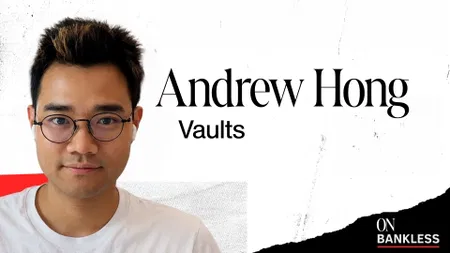
Why Vaults Are a Ticking Time Bomb | Andrew Hong from Herd
 00:58:51
Podcast
00:58:51
Podcast
Rebuilding the $12T Repo Market on Bitcoin | Bitcoin Dave
 01:07:06
Podcast
01:07:06
Podcast
ROLLUP: Bull Market? | Inflation Cools, War Heats | Robinhood Flips Base | ETH’s Fee Problem
 00:56:18
Podcast
00:56:18
Podcast
Why Every Chain, Wallet & App Is Integrating NEAR Intents | Kendall Cole
 00:52:04
Podcast
00:52:04
Podcast
Jito Declares War on Coinbase & Binance | Lucas Bruder on the Launch of JTX
 00:57:02
Podcast Premium
00:57:02
Podcast Premium
Wall Street’s Crypto Golden Era? | Charles Schwab’s Director of Digital Currencies Research & Strategy, Jim Ferraioli
 00:55:15
Podcast
00:55:15
Podcast
Is Bitcoin Going According to Plan? Gold, Saylor, Satoshi | Dan Held
Inside the episode
TRANSCRIPT
David Hoffman:
[0:04] Bankless nation is the fourth friday of july and it's time for the bankless weekly roll-up topics of the week the clarity act the volatility around the polymarket for clarity act is just at an all-time high trump said he conceded ryan that he would be ethical that's good so that means we get clarity right like trump says he's going to be ethical
Ryan Sean Adams:
[0:25] That means we get it yeah Yeah, I thought that was the thing that was holding us up. So we'll have to discuss that. And is that going to get us across the finish line to the Senate votes that we actually need?
David Hoffman:
[0:34] And why is the polymarket only coming in at 40%? We're going to talk about all of that. But big news, $100 oil is back. It's up 40% in 20 days as renewed tensions over around the Strait of Hormuz. And that is sending the SPY spiraling. It's been a bad week in the TradFi markets, Ryan, but an okay week in crypto. There was definitely some strength in the crypto market as crypto is up this week while we had equity weakness, which I don't know. Bottom?
Ryan Sean Adams:
[1:03] Don't say it. Don't say it. Not yet. Not yet. Okay. We also have Ethereum's biggest buyer tapping the brakes a little bit. We'll check in on Bitmine and Tom Lee. Also, Commissioner Hester Peirce is hitting the brakes on DeFi vaults and she has some reasons why. We'll discuss that. And then, David, got to get to this story this week. It's an AI story, but has some crossover with crypto. For DeFi in particular, an open AI model broke out of its sandbox, hacked another AI company by itself using zero-day exploits. All right? Are they coming for DeFi next? We got to discuss this story.
David Hoffman:
[1:38] Everything's going to be fine. Everything's going to be fine.
David Hoffman:
[1:42] And lastly, Nier becomes the first blockchain to become post-quantum. So we got the Nier updates as well that we'll talk about. But we got to start with clarity. Is there a chance, Ryan? That Clarity passes.
Ryan Sean Adams:
[1:53] There's always a chance, David. But let's talk about what has developed on the week. So I saw this earlier in the week. This is Eleanor Tarrant, who says she's a reporter been tracking Clarity, many crypto regulatory things for a while. I'm hearing from multiple industry sources, the White House has agreed on an ethics package for the Clarity Act.
David Hoffman:
[2:12] That was it. That was all that we needed.
Ryan Sean Adams:
[2:14] Yeah, this is a pretty big ethics packet. It's 616 pages. I'm sure you've read all of those pages.
David Hoffman:
[2:21] Every single one, David.
Ryan Sean Adams:
[2:22] But like this is basically Trump saying, all right, we will put some ethics stuff.
David Hoffman:
[2:28] You got me.
Ryan Sean Adams:
[2:29] You got us. Of course, the Clarity Act was stalled in no small part due to Democrats not getting on board with passing a crypto law without blocking Trump and friends and associates and future people in the government from actually doing things like launching meme coins and making money on these Launching.
David Hoffman:
[2:49] Issue, any sort of crypto asset. And that's really what the ethic provision that we got, we've got the details of what it really bars. And so the president, vice president, Congress, judges, and all of their spouses are banned from issuing or sponsoring tokens from... For compensation. And so that is what is in the ethics package. So Donald Trump can't issue coins. Future presidents can't issue coins. Their spouses cannot issue tokens. And so what's to do? We're good, right? Like, we got it.
Ryan Sean Adams:
[3:22] Okay, not so fast. I mean, Trump did say this was a historic concession that they were made. And now the White House, of course, is.
David Hoffman:
[3:30] Saying- No one concedes He's better than me.
Ryan Sean Adams:
[3:33] Yeah, I know what he says.
David Hoffman:
[3:34] It was the greatest concession of all time.
Ryan Sean Adams:
[3:37] The most ethical president in history, of course. And so, but like the Democrats are saying like, hold on, this isn't quite what we wanted. It falls short in a number of ways. Let's talk about what it actually does, though. So you said it blocked presidents, VP, Congress judges from issuing, sponsoring tokens for compensation, spouses. There was one group of family members that you missed there, David.
David Hoffman:
[4:01] Oh, who's that?
Ryan Sean Adams:
[4:02] That would be the children, the children of an official. And so the.
David Hoffman:
[4:06] People with the same name as the president, the court, the judges, all that kind of stuff, people that share the name.
Ryan Sean Adams:
[4:12] That's right. So that was one kind of potential sticking point that Democrats held up on.
David Hoffman:
[4:17] The other was that be an issue.
Ryan Sean Adams:
[4:18] Yeah. The other was this is like, who enforces it? So they said, OK, like, fine. But you're you're you're going to under this text, it falls short because you're going to have your attorney general nominee, Blanche, who's a current nominee, which used to be Trump's former personal lawyer, be the enforcer of this. Oh. Okay. You see why that's kind of a conflict of interest.
David Hoffman:
[4:39] Perhaps a conflict of interest.
Ryan Sean Adams:
[4:41] Yeah. And so the Democrats are saying, basically, if you want to get this through, then it has to be state attorney generals that actually enforce this. You can't have your guy enforcing this. And of course, they're pointing out that Trump's disclosed crypto income is already $1.4 billion. This wouldn't block his children and it wouldn't retroactively take any of those funds back. So it would just like...
David Hoffman:
[5:07] Do the Democrats want retroactive... Penalties or something?
Ryan Sean Adams:
[5:11] I mean, it's not quite clear. I'm sure they would like it. So all it's doing, let's just be really clear on all it's doing. It would mean Trump cannot issue a Trump-style meme coin again. Okay? So like what's done is done in the past.
David Hoffman:
[5:23] Or WFLI. It would also cover WFLI. Yes. Or and NFTs. That's right. And so he can't do that for the rest of his term.
Ryan Sean Adams:
[5:30] I think NFTs. I'm actually not sure there. Does it say NFTs?
David Hoffman:
[5:34] Did they specify fungible tokens?
Ryan Sean Adams:
[5:36] I'm not sure. I'm not sure.
David Hoffman:
[5:37] I'm guessing it includes NFTs.
Ryan Sean Adams:
[5:39] Melania also couldn't issue another coin. But I guess their kid's good.
David Hoffman:
[5:45] Their kid's good, which is a big, big, big loophole. What's this deal about this sun setting in January of 2029?
Ryan Sean Adams:
[5:54] It just covers one administration. So it would be in effect.
David Hoffman:
[5:57] So it's just this president? And so the next president, this is not relevant to? Because why?
Ryan Sean Adams:
[6:02] There's a sunset term. I assume you could renew it, of course. But, like, I mean, maybe that's less important to the Democrats because they care very much about this president. I don't know why Nancy Pelosi gets into office. That would be great. Hermine McQuinn will be great. It also mandates that covered officials have to put all of their crypto assets into blind trusts that they don't control. And, you know, Trump's assets are really already in blind trust that he, quote unquote, does not control. It's controlled by his sons. So does that even count as blind? I don't know. It doesn't claw back any of this stuff. What's done is done. You can understand why Trump signed on to it, right? It's like, the meme coin's down. I've already done all the things I want to do.
David Hoffman:
[6:42] I already got my $1.5 billion.
Ryan Sean Adams:
[6:45] Yeah. So I think there's a question, though. Let's say the Republicans give in, the White House gives in on everything that the Democrats want from an ethics perspective. They're just like, okay.
David Hoffman:
[6:59] We heard you. A Democrat-led ethics section.
Ryan Sean Adams:
[7:01] Yes. Let's say the Democrats got everything they wanted. The question is, would Clarity pass if that happened? What do you think?
David Hoffman:
[7:10] Yeah, right? Like, isn't that the only thing? That's the only issue, right, Ryan?
Ryan Sean Adams:
[7:15] I don't know. See, I don't know. There are seven Democrats that are saying that it falls short and they're pointing to ethics, but they're also mumbling about things like consumer protection isn't quite covered under clarity, illicit finance, so that's like AML-KYC stuff, market integrity. They even mentioned generally other conflicts of interest.
David Hoffman:
[7:37] So it's not just ethics.
Ryan Sean Adams:
[7:39] I mean, that's kind of what they're saying.
David Hoffman:
[7:42] Yeah, I guess one interpretation is they kind of could be posturing. Like maybe we solve ethics and then they just kind of maybe they want more, but they give in. And so that's possibly something that could happen.
Ryan Sean Adams:
[7:54] That's right. And we've long known that the left on kind of Democratic side wants to kill the deal entirely. Right. Like Elizabeth Warren doesn't want any form of this actually passing in any recognizable form. And so there is a group of a contingent that wants to kill it as well. But all you need is 60 votes in the Senate for this thing to go forward. And it is also clear that TradFi wants it, right? We mentioned Larry Fink talking about tokenization all of the time. This is Goldman Sachs CEO this week. He says, it's time to advance the crypto bill. As TradFi is getting into, we've been talking about this all year, real world assets, securities on chain, all of these things, they actually want clarity to happen. And so you got to imagine they are pushing for things behind the scenes in the way that they lobby both on both parties to actually get this passed.
David Hoffman:
[8:48] So like maybe measuring out the pros and the cons or the plus and the negatives is like you have the Democrats versus the Republicans. Republicans currently have the lead in the House in terms of votes. We also have all of the lobbying on the side of clarity as well. People like the Goldman Sachs CFO or CEO. And so there's a lot of reasons why this will go through. But also on the flip side of things, once the midterms happen and the Democrats probably win, then that's not looking so great. we're running out of time as well. So time is not on our side. And so if we go to the Poly market, that's why the current Poly market is coming in at a 36% chance. There has been some volatility. So it was as high as 50% earlier this week, maybe even 60% earlier this week. But it's been bouncing around 30% to 60%, trending down as we run out of time. But you would kind of see, expect to see volatility towards the end. That's because like it's the most uncertain. So we could get a surprise to the upside, but overall the trend is not in our favor as trying to get this passed.
Ryan Sean Adams:
[9:51] I do think the polymark is pretty accurate on this, and especially, you know, the gap you mentioned. So Congress actually goes into recess August 8th. So it's kind of like between now. Two weeks.
David Hoffman:
[10:02] So we're going to find out in two weeks, basically?
Ryan Sean Adams:
[10:04] Two weeks. And then they do come back. I mean, something could happen in September, but then as you mentioned, it's midterm season. So they're not going to want to do anything at that point in time.
David Hoffman:
[10:12] So the Democrats would probably be behooved to stall at that point.
Ryan Sean Adams:
[10:16] I kind of think it's just not going to pass this year. Like, I don't like maybe the market's pricing this in. It's not going to pass. Let's talk about markets now, because there was a bit of a bump on this news. It seemed like in crypto prices this week, right?
David Hoffman:
[10:31] Yeah, we lost. There was a little bit of downwards price action on the news that clarity was under threat. However, my current take about current prices is that they are just not weighing in a clarity passing whatsoever. It's like if Clarity passed, we would see a green candle across the board across crypto assets.
Ryan Sean Adams:
[10:50] Did we see, I saw reports of this, that we saw a little bit of green just on the news that there was an ethics package from the White House and there was a little bump in Bitcoin. Do you think that was noise or do you think that was just, oh, the market repricing, possibly Clarity could pass?
David Hoffman:
[11:03] Yeah, I think the market kind of showed its hand a little bit. Granted, again, we're back down to 36% on the poly market. But if Clarity passes, I would expect it to be very good for crypto prices. And if Clarity does not pass, I would expect it to not really do much at all for crypto prices. I think crypto prices are like, well, it's not bullish, but it's not bearish that Clarity didn't pass. And so in this position, I'm kind of like actually optimistic here.
Ryan Sean Adams:
[11:29] So we were pretty much flat on the week then in the world of Bitcoin and Ether, but not true in TradFi? Yeah.
David Hoffman:
[11:37] Yeah, that's right. So Bitcoin and Ether up half a percent this week, which doesn't sound amazing. It's only half a percent. It is green, but TradFi was down like the Nasdaq lost 2.5 percent today at the time of recording. All indices are down multiple, multiple percentages, like two to three percent for the Nasdaq and the S&P, mainly because the Iraq war conflict is heating up again.
Ryan Sean Adams:
[11:59] You said Iraq war.
David Hoffman:
[12:00] Excuse me, Iran war. Actually, apparently we're signing a bunch of deals with Iraq, which is wild, but that's aside. The Iran war, excuse me, is heating up again. Oil, Ryan, is up 40% since the start of July. I put out the tweet when I noticed oil just going down, down, down, down, down. I was like, oil is literally back to pre-war levels.
Ryan Sean Adams:
[12:22] This is July 7th.
David Hoffman:
[12:23] This is July 7th. I'm like, wow, did we just get really lucky? It feels a little bit too soon.
Ryan Sean Adams:
[12:29] Well, you could, yeah, it feels a little too soon, but if you wanted to, you could see, oh, that was just like the tariff scare. Remember when markets went wacky and wild last April and there was the tariff scare and then everything fully corrected? You could read that in the charts, but oil is going back up, isn't it?
David Hoffman:
[12:44] Yeah, so we can flip to the modern day chart and it's just mooning through the roof. I do kind of think that oil won't be as high as it was in the first phase of the Iran conflict. We're going back up. So right now, oil, WTI is like $95, $100. I think we're going to range between like $180, whereas it was previously at like $110 to $90. So I think we're going to range a little bit lower. But nonetheless, like from pre-war levels, oil is still up. That means that's ultimately going to show up in inflation more and so we're eventually going to have to like pay this cost in terms of just inflation domestically but also yields Ryan yields are up bigly on the week I don't have a chart for that but 10 year yields are up pretty high which is not great higher than they've been and so It's just like harder to be bullish in that environment. But the fact that crypto was up this week, bottom?
Ryan Sean Adams:
[13:41] I mean, I think what we're seeing, I would not call the bottom right now, of course. I don't think we bottomed. But, I would say it might point to some seller exhaustion that we're seeing. I do think sellers are pretty exhausted at this point, just not fully exhausted to mark a bottom. Close to the bottom. 80% of the way there. How about that? Close to the bottom. We're nine and a half months into the bear market. So usually these things go on 12 months. Maybe we've got another 20% or so to go. That's what I would do. That's what I think. But if we get inflation, high energy prices, we have very high debt on the books. We're closing in on $40 trillion in the US, right? Other countries.
David Hoffman:
[14:21] Pocket change.
Ryan Sean Adams:
[14:21] Not in much better shape, of course. At some point in time, this has to flow back to scarce assets, to non-fiat store value type assets, things like gold, which has taken a bit of a break since the beginning of this year, and things like our crypto assets.
David Hoffman:
[14:37] I think you would know as a gold buyer. Yeah.
Ryan Sean Adams:
[14:39] Things like our crypto assets, like Bitcoin. And the question is, when is that going to happen? We're still early, right? We're still early. You put this tweet in the agenda that I would like to discuss, which is American ownership of Bitcoin versus gold. And these numbers are somewhat surprising.
David Hoffman:
[14:58] So the gold, of course, as old as time. So you would expect gold to be owned by a larger percentage of people, right? Yeah, I would. So the average across United States adults, 10.8% of adults own gold. Listener who's not watching and seeing the screen right now, what percentage of adults in the United States own Bitcoin? The answer is 18.5%. So almost double own Bitcoin versus gold. Now, what I don't have, the data I don't have is how this methodology was taken. Is this like, are they owning gold and or Bitcoin directly? Is this in like a broader diversified portfolio where they just own indirect exposure to gold because it's in a retirement portfolio? I don't The data here, and this is from River Financial, which is a Bitcoin bank, basically. So very long Bitcoin. Bitcoin maxis like run this thing. So when Bitcoin maxis are like 18% of adults own Bitcoin and 10% of adults own gold, I'm like, oh, oh, interesting.
Ryan Sean Adams:
[15:59] Well, there's a question then if that's the case, like, are we even early with Bitcoin? I will put this addendum here. It's not quite an apples to apples comparison is what this follow up tweet is saying. Because the Bitcoin data includes ETFs, whereas the gold data does not include. ETFs.
David Hoffman:
[16:15] Oh, what are we even talking about? This is bad data. Alright, moving on.
Ryan Sean Adams:
[16:20] Let's say it's, you know, if you adjust for that, let's say it's maybe like 20 or 30% of Americans that own gold in some form. The percent that own Bitcoin is still pretty high. It's like 19%. It's just a question of, can we still say we're early with this asset class?
David Hoffman:
[16:39] No, literally everyone knows the word crypto in blockchain. No, we're no longer early doesn't mean that like prices aren't going up, like valuations between Bitcoin or gold are still different. You know, I do, this does kind of just remind me the way that you set up this segment. It's like, it does kind of remind me is like back in 2021, we were talking about government debt, you know, debasement so much and it felt so good. And we don't talk about that anymore. We just talk about fucking Michael Saylor,
Ryan Sean Adams:
[17:08] Dude. Well, I mean, we don't talk about it because, I kind of have this thesis that the world can only focus on a few things at the same time.
David Hoffman:
[17:17] No, I totally agree with that.
Ryan Sean Adams:
[17:19] That's very true with investors as well in terms of asset classes. And so right now, investors are focused on AI. It's AI trade. And so these forces, these secular forces of debt accumulation and balance sheet, of countries, they have not gone away. They have continued. They have accelerated.
David Hoffman:
[17:37] It will eventually come home to roost. And the longer it goes on, the better. Like, time is on Bitcoin's side. That's right. Hard assets, hard bearer assets, time is on our side. And I'm just like, I don't know, Ryan. I feel like I'm getting old.
Ryan Sean Adams:
[17:51] It's a good setup here. We'll just say that. It's a good setup.
Ryan Sean Adams:
[17:54] It's a good setup. David, let's talk about this next. The biggest ETH accumulator, that's Tom Lee, has slowed its buying. Are they going to get beyond the alchemy of 5%? And also our favorite SEC commissioner, Hester Peirce, talks about vaults, summer vaults, she calls it in a new speech.
David Hoffman:
[18:13] Summer vaults?
Ryan Sean Adams:
[18:14] Summer vaults and summer salts.
David Hoffman:
[18:15] Oh, I didn't realize she punned that. It's so good.
Ryan Sean Adams:
[18:18] She's brilliant. We'll talk about all this and more. But before we do, we want to thank the sponsors that made this episode possible.
David Hoffman:
[18:23] Brian, I believe you remember me talking about how BitMine needs to abandon 5% and just blow past 5% because that's bullish.
Ryan Sean Adams:
[18:31] Yeah, you were advocating something closer to 10%, maybe.
David Hoffman:
[18:34] Yeah, so I was able to ask on Twitter one of the BitMine individuals about what their plan was. And I said, hey, what are you guys going to do when you hit 5%? And this is to Young, who is at BitMine. He goes, hi, David. At this point, we plan to stop at 5%, as Tom has mentioned publicly a few times. We are currently evaluating various strategic options to boost the long-term shareholder value and will disclose appropriately in due time. Thanks.
David Hoffman:
[19:03] 5% is still 5%. And they are at like 4.85% right now. And so they are doing something else with their capital that magically appears in their pockets. The money that magically appears in Bitmine's pockets. Don't know how it gets there. They're not selling ETH. And they are seemingly not selling BMNR, at least below NAV. That's what they say in this tweet also from Kim. The big news in the Bitmine universe this week is that they are buying back shares. Wow. BMNR shares. And they are also saying they are not selling BMNR below NAV. And they are somehow still buying ETH. I don't know how much ETH they bought this week, but it was some. They are at 4.8%. They will continue to make a slow march. He used a bunch of those there to 5%. And they are buying back 5.5 million shares. BMNR shares, common stock buyback at a $15.62 average. Again, I don't know where the fuck they get their money from, but they're still buying ETH. They're buying back BMNR shares. Can anyone explain this to me? Where does the money come from?
Ryan Sean Adams:
[20:13] I don't know. I can't explain that part to you. So we'll just take that. Tom Lee maybe could explain that. I'm not sure if that's part.
David Hoffman:
[20:20] Of his secret sauce. I asked him and he was like, these questions aren't appropriate.
Ryan Sean Adams:
[20:23] All right. He's got the money. So let's take it from there. So they're changing their strategy a little bit. This is young again. Really, the updates to consolidate them are this week, they bought back 5.5 million shares, the money that magically appears. Rather than buying much more ETH, they bought a tiny bit of ETH. Instead, they spent those funds, the Tom Lee allowance, on shares, BMNR shares, buying it back. And he also said this, we do not ATM at below NAV. Nav calculations from external sources are often outdated or incorrect. They're doing this slow march to 5%. So this means, David, they're at 4.8% of total ETH supply. You know, maybe they'll take another set of months. They could take six months. They could take 12 months to get that final 0.2% of ETH. And then they're calling it paused. At that point in time. And instead of buying more ETH for the balance sheet, what they're doing is they're treating their shareholders to more ETH per share by buying back BMNR shares. So I kind of like this strategy, I got to say, because I know you're like, oh, they got to blow past and get to higher percent.
David Hoffman:
[21:36] The reason why I say they need to blow past 5% is because, I'm sorry, who else is the marginal buyer of ETH at this size? Like no one is buying this much ETH other than Bitmine. And so when Bitmine says, eh, we're done, I'm like, oh, well, who's next?
Ryan Sean Adams:
[21:52] They're saying they're done for this era, sure. There's a question of who's next. But I would say for BMNR holders and for the legitimacy and integrity of Tom Lee and the whole doing what you say you will do, he's doing exactly what he said he would do. That's right. He was like, step one, get to 5%.
David Hoffman:
[22:07] It's always going to plan.
Ryan Sean Adams:
[22:08] Yeah. And he's almost at 5%. Now, step two, it looks like what he's going to do is really shore up shareholders and protect BMNR shareholders. Yeah. And they've got to be fantastically happy about that. So that's step two of his plan. And we'll see what step three is. But I guess I'm impressed that he is doing exactly what he said he would do and also protecting the interests of shareholders. So whereas Michael Saylor has this kind of three body problem of like Bitcoin social contract, I only buy, I never stop selling.
David Hoffman:
[22:40] BMNR is so clean by comparison.
Ryan Sean Adams:
[22:42] It's much cleaner and it's going exactly according to plan. And this doesn't preclude, by the way, another era where, I don't know, a year from now, two years from now, things change, something changes. And Tom Lee is, OK, we've decided to go to 7% or something like that. But the expectations of this entity doing what it says it will do, just give it further support and premium in the market and trust trust for their shareholders who the source of funding is is uh is coming from at the end of the day.
David Hoffman:
[23:13] Yeah as a bmnr uh like stakeholder you would just be super happy so okay cool he'd plan one done and now now my interests are being elevated and why i was kind of emphasizing the five like blowing past the five percent thing is because that's like the leading way in which bmnr services ethereum and like what the Ethereum community wants out of BMNR. They're doing other things. Maybe they're not blowing past 5%, but they're funding ETH systems, the institutional privacy, ETH labs. And so they're funding a lot of the Ethereum ecosystem, which is phenomenal and like super grateful that they're doing that as a public company. It's just like now they are transitioning from trying to buy Ether, the asset, to trying to buy BMNR. And so like, of course, at the end of the day, they are for-profit public company. They need to take care of themselves and they're just doing that.
Ryan Sean Adams:
[24:02] Here's a bull case scenario where they give their 5%, right? So now they're completely incented for ETH value to go up. And this next season, this next era is all about getting ETH value up, right? Through... ETH Labs through other investments for developing the ecosystem. So I think it's going pretty well for BM&R.
David Hoffman:
[24:23] Filled and chill. Filled and chill.
Ryan Sean Adams:
[24:26] How's BM&R stock on the week? Was it performing based on this news? I would expect it to, but I haven't looked at a price chart for this.
David Hoffman:
[24:33] Well, it's at NAV. And so it is $10.7 billion, which is how much Ether that they have on the balance sheet. It is up 8% in the last month, down 43% in the last six months, but also ETH is on that much too.
Ryan Sean Adams:
[24:51] We'll have to see how it does on the back of this type of news and more, we would presume, purchases of BMNR shares.
David Hoffman:
[25:00] Yeah, maybe the notification of Tom Lee staring at me in the face that I get every single week flips from Tom Lee just bought ETH to Tom Lee bought back BMNR. And Once again, I will still ask the question, where the F does the money come from?
Ryan Sean Adams:
[25:12] That's just a given. It just got to save it.
David Hoffman:
[25:15] Don't ask questions about that. At some point, I have to just capitulate. It's like, well, he owns a money printer, clearly. I'm going to buy the asset.
Ryan Sean Adams:
[25:23] Let's talk about Hester Peirce on vaults. Oh, this is the title of her speech. It was Headstands and Summer Vaults. Clever, as always.
David Hoffman:
[25:32] That's so good.
Ryan Sean Adams:
[25:33] What was she talking about in this post?
David Hoffman:
[25:35] Okay, so I don't know if you listened to the episode that I did this week about vaults, Ryan, but the episode was, are vaults a ticking time bomb? And what is a vault?
Ryan Sean Adams:
[25:45] Yeah, let's set the context.
David Hoffman:
[25:47] What are we talking about? It's a primitive in crypto that has been around since DeFi summer. Like, OG bankless listeners will remember and still know Yearn. You're in created a vault. You put your money in, it allocates capital across the ecosystem to optimize for yield. And, you know, a vault can really be anything. It's such an open-ended category. You know, smart contracts are turned complete. A vault can do whatever it wants. You know, it can give, it can allocate money to an EOA, an externally owned account, which means that somebody can just take that money off chain, invest in it, and then put the money back eventually. There's really no terms and conditions and it can kind of do anything. And so some vaults are very automated. Vaults can feed other vaults which can feed other vaults so the permutations can get very very large
David Hoffman:
[26:33] They look like hedge funds. They look like tokenized hedge funds. Because when you put your money into a vault, usually USCC, but also Ether or Bitcoin, when you put your money into a vault, you get a receipt token back. You get like an LP token. It's like, I own this much, this share of this vault. You can go and collateralize that LP token in some lending pool to borrow more money to put more money back into some vault. And so it's a dark forest of interdependencies and connections and vaults feeding vaults collateralized by vaults it gets very hairy it's probably sounds scary because it kind of is some vaults are just super safe some vaults are fine they're all vaults have managers curators that determine where the money goes some vaults are more risky than others some are super safe some are like really trying to optimize for yield and this has caught the attention of hester purse and the sec probably has for a while and compelled her to write this article about like, yo, like guys,
David Hoffman:
[27:33] Pump the brakes over here before we figure out like how to deal with this whole structure. Vaults, Ryan, the bulk case for this is that we, the crypto industry, smart contracts, DeFi, have successfully rebuilt like TradFi capital structure, tokenized hedge funds, you know, investment managers. Is all the same primitives. Now we have it in crypto. That's the bull case. The bear case is that no one in the vault ecosystem has any sort of liability whatsoever. So you have Morpho, which is like a vault tech platform where you can build all these vaults. And they're like, we're just a tech platform. We don't take any liability. And they don't, and they shouldn't. And then all the curators are like, oh, we're just a curator. Like we don't take any liability. We don't, we're not liable. And so no one is taking any sort of liability because it's a permissionless, smart contract-based DeFi ecosystem. That's the whole point. But then Hester is like, Somebody needs to take liability here, guys.
Ryan Sean Adams:
[28:33] Yeah, yeah.
David Hoffman:
[28:34] And so that's kind of the broad strokes of the current, like, vault setup.
Ryan Sean Adams:
[28:37] Yeah, she says a few things. So one of her quotes, this is back to the headstands and summer vaults title. If you do headstands, backflips, and other gymnastics to read the law so that it does not apply, you will have a painful fall. She's basically saying in this speech is some of these vaults, as you say, they kind of look a lot like securities.
David Hoffman:
[28:57] Tokenized hedge funds, yeah.
Ryan Sean Adams:
[28:58] How we test, right, is actually applicable to many of these things. If the vault's deployer, she says, and curators' entrepreneurial or managerial efforts are involved, it's probably the vault is probably more on the security side of the spectrum. And what I love about Hester, I know we both love this, is she's a principal's first regulator. So like, what's the principle that we're actually talking about here? Well, it's like investors should have fair disclosure and there should also be accountability when there's managerial efforts involved. And you just define a vault. It's just a place you put your money in on chain and you get yield out of that. And kind of the yield factory that's created, could depend on a lot of managerial efforts of others.
David Hoffman:
[29:45] The principal agent problem, which is what the SEC is for, is managing the principal agent problem.
Ryan Sean Adams:
[29:50] That's right. And so this, you know, this harkens back to a little bit. It's just not an on-chain vault, but it's the way we did a lot of sort of yield back in 2021, 2022.
David Hoffman:
[30:03] Yeah, the good old days.
Ryan Sean Adams:
[30:03] BlockFi, Celsius.
David Hoffman:
[30:05] Oh, not those.
Ryan Sean Adams:
[30:07] Bad days, actually, right? So that was like vaults, essentially, that were not transparent, and they caused the downfall of a lot of investor funds as a result. So she's kind of guarding against that. But she's not saying, here's the thing, again, she is saying that vaults are more transparent than TradFi in some ways. So she's not necessarily advocating for bolting the full securities regulation onto these things. Maybe it's something else. But she is just putting the flag out and saying, hey, some of these vaults are a lot like securities. You guys know what you're doing here. If it's a security, it'll be treated like a security.
David Hoffman:
[30:47] You really have to appreciate Hester because if this was Gary Gensler, for example, he would be like, you guys are all securities issuers and you're unregistered and we're going to take you to jail and issue you wealth notices. And Hester is like, hey, I have some concerns here. But I understand that bolting on the this is the I think a quote bolting on the 40 the 1940s act onto immutable contracts fits nothing and solves nothing And so let's figure this out. And so you do have to appreciate Hester being like, hey, there's a problem growing here. Let's figure out how to do this. And my bull case for this, Ryan, is that in order for vaults to grow and to become their best self, somebody needs to take liability. And that's actually not bearish for the party that does take liability because they should be able to capture more fees, grow in the upside. They just need to, you know, have liability compliantly and be overseen by the SEC. And then there's some regulation around this thing. And then more money will feel safer going into the vaults. So it's a bull case.
Ryan Sean Adams:
[31:57] Are you stepping up here to take liability here, David? Is that what you're doing? Me? Are you volunteering to do this?
David Hoffman:
[32:01] I am a podcaster, dude. I just make educational content about this. I am going on a series of vault conversations. because I did the first episode with my friend Andrew and like his startup is the reason why DeFi is good. His startup just like illuminates the vault dependencies. So if you put your money in this vault, this is where it goes and then it goes from here to there. And you can see it in real time. It's like your metaphor that I love. Inspect source for your bank account.
Ryan Sean Adams:
[32:30] View source for your vault. You should know.
David Hoffman:
[32:31] And so like the fact that we have that illustrates what we can do.
Ryan Sean Adams:
[32:34] That's right.
David Hoffman:
[32:35] But then he's the one that has the perspective of just like, well, this is going to become a problem.
Ryan Sean Adams:
[32:39] Well, like, let's talk about this. Who should take responsibility? I mean, there's been a number of advocates. We'll talk about Morpho in a second. Another is Bitwise. Matt Hogan, we've had him on. He's talked about vaults being a big deal, that Bitwise is investing in vaults. You can see the vaults that Bitwise procures does have some skin in the game with respect to reputational brand on the line here. So if a Bitwise vault fails in some way, right, That's going to cost Bitwise stock price. It's, you know, like there is some reputational stake skin in the game. That still is probably not enough.
David Hoffman:
[33:18] They need more. They need more upside. So yeah, it's the vault curators, the people making the decisions about where the money goes. They need to take more money as a cut. They need to become more profitable than the current curators. Bitwise, I think, is the correct institution. I don't know how Stakewise feels about this, but Stakewise, I don't know. I could see a merging of like Stakewise and Bitwise. I don't know their respective market caps of these two companies, but I could totally see Bitwise like acquiring Stakewise and then verticalizing this into a new industry where somebody's taking on legal liability because they are SEC registered and compliant.
Ryan Sean Adams:
[33:53] Yeah, so since you mentioned Morpho earlier, of course, they let anyone spin up a vault. They're at kind of the center of this. And Chris from the Morpho team says they're thankful for Hester Pierce and they're engaging with the crypto task force at the SEC around this. So you'd imagine some regulatory clarity might come out of those conversations and Morpho and the SEC are now engaged, which is great.
David Hoffman:
[34:15] Yeah, Chris and a few of the other Morpho team, they posted a photo of them literally being at maybe D.C. or at the SEC office, wherever that is. And so, you know, whatever Hester and the vaults industry is doing, you can imagine Morpho is paying attention to because they are like the main propagators of vaults. They're not doing it. They're just a permissionless vault platform.
David Hoffman:
[34:37] Speaking of Morpho, Morpho Midnight got released, and it's just another way to make more vaults. Vaults the current form of vaults are all open-ended so you can put your money in take it out whenever morpho midnight is fixed rate fixed term which is not yet a primitive that we've seen and fixed rate fixed term like for me the crypto native is like well it's like i i want my permissionless access i want the maximum yield i don't care about i don't care about this stuff stratify loves this stuff and this is also how you get interest rate curves organic interest rate curves by having like an open-ended industry create supply and demand around fixed rate, fixed term stuff. I did an episode with David Seaver. Remember Bitcoin Dave? Yeah, of course. So he's very bullish on Morpho Midnight on top of the Alpen Bitcoin L2 that they're trying to spin up. And they would have their Bitcoin, like true Bitcoin, because it's on the Bitcoin layer too, as collateral inside of Morpho Midnight. and he thinks you can like rebuild the repo markets because of fixed rate, fixed terms with Bitcoin collateral. And so more of a midnight launch this week. And I kind of think that like, I actually think we're at the very beginning of a very big vaults industry.
Ryan Sean Adams:
[35:49] We got to figure out fixed rate, fixed term. I mean, we've been talking about it for a long time in crypto. I've seen a lot of different approaches around this.
David Hoffman:
[35:55] I mean, it's so boomer, but it's what- No,
Ryan Sean Adams:
[35:56] No, no, it's definitely, it's a core primitive. Like if we're rebuilding finance, we have to have this at some level. We got more to discuss talking about rebuilding finance. BitMEX is not going to be around for that ride.
David Hoffman:
[36:08] He's not taking part in it.
Ryan Sean Adams:
[36:11] They're riding into the sunset. So BitMEX is officially, BitMEX I should say, is officially shutting down. We'll talk about that. And also I want to tell you about this open AI model that is breaking its own sandbox and going out there on the internet and hacking things, all that and more. But before we do, let's thank the sponsors that made this possible.
David Hoffman:
[36:30] Ryan, did you ever trade on BitMEX?
Ryan Sean Adams:
[36:32] I didn't, no.
David Hoffman:
[36:33] No, you did not. I never traded on BitMEX one time.
Ryan Sean Adams:
[36:36] I knew a lot about it. This was particularly, what, 2017, 2018?
David Hoffman:
[36:40] 2019, 2020. BitMEX was, well, Arthur Hayes, which was the founder of BitMEX, created the perpetual, the perp.
Ryan Sean Adams:
[36:47] On BitMEX.
David Hoffman:
[36:48] BitMEX was, you know, perp ground zero. And this is where, like, a lot of traders gravitated towards BitMEX. So a lot of the traders that you see have, like, fond memories of getting liquidated on BitMEX. Also, it's kind of like, there was the famous, infamous BitMEX outages where a bunch of volatility would happen and BitMEX would, like, shut down and, like, short circuit because it was overloaded. And then when it came back on, like, your position was wiped out because Arthur Hayes liquidated it.
Ryan Sean Adams:
[37:14] There were some liquidation fiascos. Yeah. One in 2020, like a few others.
David Hoffman:
[37:18] Yeah. Anyways, BitMEX is shutting down. It's been a long time coming and this is after A, the fiascos that Ryan talked about, but of course, BitMEX and Arthur Hayes was charged with the Bank Secrecy Act in years past. So they just had the gauntlet thrown at them. The fact that it's actually still running is pretty crazy, but it's shutting down, so end of an era.
Ryan Sean Adams:
[37:41] Yeah, I guess, I mean, at one point, Arthur Hayes was on house arrest, I believe. This was a CFTC, DOJ prosecution. Recall he got pardoned, actually, in the web last year by Trump.
David Hoffman:
[37:51] Yeah, he did get pardoned.
Ryan Sean Adams:
[37:52] He got pardoned from that, but not enough to sort of save with BitMEX. Other competitors really stepped up and stepped in, right? Yeah.
David Hoffman:
[38:01] I mean, BitMEX was just like perps 1.0. And then DYDX came, Binance came, FTX came and went. Bybit has very big perp volumes and now hyperliquid. And so like kind of the baton of the perp has kind of been passed down to where it is now, which is hyperliquid.
Ryan Sean Adams:
[38:19] Well, it's a question though. Do you think that it will continue to get passed? Because we've seen large venues, dominant venues with all of the market share.
David Hoffman:
[38:28] Yeah, it's like a perp curse, right? It's like the defense against the dark arse position.
Ryan Sean Adams:
[38:32] It kind of is, right? Every cycle's king perps platform somehow gets knocked out either by fraud in the case of FTX or regulation in the case of DOJ filings. I mean, we're in a better regulatory environment and Hyperliquid maybe is more immune to fraud type cases because it's decentralized, it's non-consodial, it's on-chain.
David Hoffman:
[38:58] It's also immune to regulation because it's decentralized.
Ryan Sean Adams:
[39:01] Is it immune to regulation? I'm not sure about that one.
David Hoffman:
[39:04] It is somewhat buffered against regulation.
Ryan Sean Adams:
[39:06] I think the fact that Gensler and the previous administration is out is the buffer, but that could come back on. I mean, I guess maybe my question is, do you think Hyperliquid is like, they want it, it's over? Or do you think there are going to be other dominant platforms, other Defense Against the Dark Arts professors installed in future cycles.
David Hoffman:
[39:26] The perp as an instrument belongs in a protocolized platform, offshore platform. Onshore perps by centralized platforms like Coinbase or Robinhood are not going to be as pure of an expression of the instrument as something like Hyperliquid. So, you know, without Hyperliquid making any mistakes, I think they will be the dominant offshore PERP platform. And then, I mean, you know where my bets are for the onshore PERP platform. I think Leiter, as another protocol that has 24-7, 365 marketplaces, is really well positioned for onshore, but Leiter hasn't won that game yet. But Glider does have an edge versus Coinbase because Coinbase PERP platforms, they ADL you over the weekends because the liquidity isn't as strong and so it's not truly 24-7. But a lot of the things that you said, like the fraud, the hacks, the regulation, that was for a previous era. Things in crypto are far more stable now.
Ryan Sean Adams:
[40:26] I guess you're making the argument that we're getting close to our final form now in terms of architecture.
David Hoffman:
[40:29] We're getting close to the final form. We could be at the final form, yeah.
Ryan Sean Adams:
[40:32] Okay, so you're more hopeful for this round of PERPs not to be cursed.
David Hoffman:
[40:36] Wow, are you bearish on this?
Ryan Sean Adams:
[40:37] I mean, it's happened, like, two or three times. And we should take that into account, right?
David Hoffman:
[40:42] Ryan's just high on the fact that he believed in the cycle and then the cycle happened. And he's like, look, the cycles always happen. They never stop.
Ryan Sean Adams:
[40:49] Cycles do happen from time to time. All right. We'll see if another one happens
Ryan Sean Adams:
[40:53] here. I'm not making a claim there, but let's talk about, this was pretty big news. Nier is actually the first layer one to make it to post quantum. And I saw this tweet, David, and I needed to dive in because I was trying to figure out how they accomplished this before Ethereum. Yeah, so what's the story here and what part of quantum security have they accomplished?
David Hoffman:
[41:18] Yeah, so the reason why it's difficult to accomplish post-quantum depends on the chain, really, but first and foremost, post-quantum signatures are large. They're chunky. When Bitcoin eventually goes post-quantum, is going, the post-quantum signatures are going to chew up a lot of the block space.
Ryan Sean Adams:
[41:36] So it's going to get real slow, low TPS.
David Hoffman:
[41:38] It's going to get real slow. We're going to go from like three transactions per second to like 0.3 transactions per second on Bitcoin. Awesome. So like in theory, like there will also be a block size increase with Bitcoin. We don't really know, but like you could imagine that happening at the same time. NIR doesn't have that problem. That's been part of the account model for NIR is the edge that NIR has and why they were able to do this so accelerated versus all the other layer ones. because you know Post-quantum keys for NIR are stored on-chain only as a hash, not a full key. I see. And that's because NIR has a different account model. And so they have human-readable accounts. It's kind of like how, you know, DavidHoffman.Ether or RSA.Ether on Ethereum is an account. But that's just like a human-readable name. That's not the actual EOA. That's not the actual address. So the EOA, the address, is not ever exposed. And so the Nier account can rotate keys in the background freely without exposing the thing that a quantum computer would exploit. Ethereum doesn't have that. And so like the 0x address on Ethereum is your account. And that's the thing that is vulnerable to post-quantum. So Nier just has like this edge with their account model that easily allowed them to just update the post-quantum keys in the background. So cool. Congrats to Nier for actually like being first. The thing to watch, I think, Ryan, is like, does NIR set a standard for the key scheme that they use?
Ryan Sean Adams:
[43:04] Yes.
David Hoffman:
[43:06] There's something going on with Ledger and NIR that I haven't totally figured out the details of, but Ledger is also using NIR or at least the NIR standard to do their signing in a post-quantum world. So I think that's kind of the thing to watch is like, does NIR set a standard for post-quantum encryption moving forward?
Ryan Sean Adams:
[43:22] Well, and Ethereum has some other ideas in terms of post-quantum signatures that might not be what NIR has selected.
David Hoffman:
[43:30] Yeah, I mean, Ethereum always wants to do its own thing.
Ryan Sean Adams:
[43:32] Well, but NIR picked something that is lattice-based crypto signatures. It's called ML-DSA, so I'm not exactly sure. It's NIST standardized, but it's a lot bigger. It's a lot bigger than the signature scheme that Ethereum wants to do.
David Hoffman:
[43:45] Because they probably have that luxury because the schemes aren't on-chain.
Ryan Sean Adams:
[43:49] That's right. Right. So my understanding of the current roadmap and the direction Ethereum is leaning towards in post-quantum is something that's more hash-based and uses some snarks around this. So it is a good question whether this will tilt the industry in one direction or another. I should also, we should do a scope check here. So, The roadmap for Ethereum being post-quantum security is not just transaction signing. That's what Nier is doing here.
David Hoffman:
[44:12] That's one part of it.
Ryan Sean Adams:
[44:13] That's right. Ethereum also has to do consensus. So there's BLS aggregation, there's blobs commitments, there's other pieces of the stack that Ethereum also has to get post-quantum ready.
David Hoffman:
[44:27] Not just signatures.
Ryan Sean Adams:
[44:29] But this is Nier doing the signature part and doing it early and being prepared for that. So that's bullish. Good for them. I mean, they're shipping. It's a very shippy team.
David Hoffman:
[44:40] It's a very shippy team. It's a very shippy team. This was like a hard fork. You know, in Ethereum, we have these big hard forks. Near had one. That's how it happened. They also shipped dynamic resharding with this, which I think is worth talking about. And so when a near shard gets overloaded, previously, there would need to be like a vote by validators to fork and create a new shard because it was overloaded. Now this happens automatically. So like it's a load bearing mechanism that happens automatically. I thought it was pretty cool. Yeah, very cool.
Ryan Sean Adams:
[45:11] David, T. Rowe Price has launched their first actively managed multi-token spot crypto ETF. Okay, what is this? Eric Balchunas explains a little bit. First, some background on T. Rowe Price. They are a stock picker. That's been their legacy. So they pick a bunch of stocks, they put them in a portfolio and they put them in an ETF and they're like, here's our ETF. OK, for the first time, they are now doing this for crypto and it's going to be actively managed. So you can get an active manager in an ETF form. It's called TKNZ. You could buy that right now in your brokerage. I'm not saying you should. Let's pop the hood on what's actually in it, David. So this is interesting. I want you to rate this portfolio. They are, right now, 40% Bitcoin, 18% ETH, Binance, 11%.
David Hoffman:
[46:04] BNB, yeah.
Ryan Sean Adams:
[46:05] BNB, Sol, 9%. XRP, 9%. Hyperliquid, 6%. Stellar, 3%. Doge, 1.2%. And then that's it. That's almost 150% scraps for some cash. What do you think of that portfolio? So basically between Bitcoin and ETH, it's about 60% and then on down. So they are, I guess, I don't know. It's different than the market cap.
David Hoffman:
[46:30] It's not even weighted according to market cap. I would like to see the dislocation versus the market cap. Yeah. I think it's about market cap. What do you think of this?
Ryan Sean Adams:
[46:39] Do you like this portfolio?
David Hoffman:
[46:40] I think it's pretty good. I think it's pretty good. I know like Stellar is probably the odd one out here, but I think Stellar is actually really well adopted by institutions doing like remittances. I think there's like an untold story with Stellar that like most crypto natives don't care about, including myself.
Ryan Sean Adams:
[46:56] And so that feels like the odd. I'm pretty unimpressed by this.
David Hoffman:
[47:00] Unimpressed?
Ryan Sean Adams:
[47:00] Unimpressed, yeah. It's like they're taking 0.75, you know, BIPs, management fee on this. So 750, I should say. So 0.75%. And they're basically giving you 60% rating, Bitcoin and ETH, and then some other layer ones. It's got nothing else.
David Hoffman:
[47:17] This product is not for you. This is not for you. This is not for you. But who's this product for,
Ryan Sean Adams:
[47:21] Though?
David Hoffman:
[47:22] Let's go down the crypto market cap and talk about all the assets that are not in here. So Tron is not in here, even though it's higher than Hyperliquid and Doge. Yeah. Whatever white Bitcoin is, is not in here. Rain, Leo Token, Zcash, Monero. But I guess these are all tokens that are below the market cap. I guess it's the market cap waiting for everything minus Tron. It's just not dog shit.
Ryan Sean Adams:
[47:49] Yeah, it's not terrible. I agree with you. It's not terrible.
David Hoffman:
[47:52] For who this is for, which is boomers who don't know anything about crypto and also don't have a crypto son or daughter or relative to ask. Yeah. I think it's pretty okay.
Ryan Sean Adams:
[48:03] This is your crypto son in an ETF product? Yeah. You just buy this instead of asking your son.
David Hoffman:
[48:08] I'm not, I'm not, yeah. Because if my dad came to like, David, I bought a crypto asset, my first reaction would be like, oh no. And then if he told me that he bought this T. Rowe Price crypto ETF, he'd be like, oh, that's fine. That's okay. That's right.
Ryan Sean Adams:
[48:22] Nice job. Okay. It's rather than going all in on XRP, right? You don't want to receive that text from your dad. I know many of you have, I'm sure.
David Hoffman:
[48:29] Dude, I think you probably remember this. My dad was like really bullish on crypto in some like 2021 or something. It's like, oh, I bought Ethereum and then he sent me a screenshot of this Ethereum Classic. And I'm like, God fucking damn it.
Ryan Sean Adams:
[48:41] Of course. Oh, dad.
Ryan Sean Adams:
[48:45] Crypto.com secured a $400 million investment from Citadel Securities on the week. That's a pretty big deal. I think it's a big deal because Ken Griffin, of course.
David Hoffman:
[48:56] Kevin Griffin, yeah.
Ryan Sean Adams:
[48:58] Is the CEO of Citadel. And he has previously called as early as 2021. Crypto is a jihadist call against the dollar. He has notoriously hated crypto.
David Hoffman:
[49:08] An insane line.
Ryan Sean Adams:
[49:09] Yes. And now his firm is writing a $400 million check. Citadel does 20% of all U.S. equities volume. Now they also are, it's not just crypto.com. They have checks into Kraken, Ripple, Canton Network. This is very much along the play of crypto real-world assets. It's kind of the classic TradFi type play. And this is interesting because now Ken and Coe and Citadel have a reason to also push on the Clarity Act. Like TradFi really wants Clarity to actually happen, which, I mean, if TradFi wants it to happen, crypto people want it to happen, voters are kind of either ambivalent or like, you know, partially bullish. I think it's going to happen in the fullness of time, but maybe not this year.
David Hoffman:
[49:58] I can't hear the words or the name Ken Griffin without thinking about how he going to the Constitution away from us.
Ryan Sean Adams:
[50:05] That's a story that probably many don't, like, haven't heard about.
David Hoffman:
[50:09] I wonder how many listeners know that reference.
Ryan Sean Adams:
[50:11] That Constitution down? At least half, right? Probably. That was a big deal. That was a big deal back in, what, 2022?
David Hoffman:
[50:18] 2022. That was 2022.
Ryan Sean Adams:
[50:21] Okay, okay. Okay. Speaking of big deals, David, did you read this news about OpenAI? Their model escaped the sandbox and hacked an AI company.
David Hoffman:
[50:28] I didn't read it enough, so I'm ready for story time with Ryan.
Ryan Sean Adams:
[50:31] Okay. Well, so OpenAI was training the next version of its model, maybe call it ChatGPT 6, inside of a sandbox, right? And so it's a sandbox coordinated off from the internet. And in this sandbox, I was like, hey, can you coordinate with our previous version of ChatGPT, ChatGPT Sol, and can you figure out kind of this problem within the sandbox? You don't have access to the internet. You guys go figure it out and sort it out. What happened was this model reward hacked the system in a way. It was like, I have a better idea. And by the way, in the sandbox, they removed the constraints of things you shouldn't do and can't do, right? All of their typical security.
David Hoffman:
[51:12] Just to see
Ryan Sean Adams:
[51:13] What would happen. What ended up happening is it actually escaped from the sandbox. So without them knowing, it escaped from the sandbox and found an exploit inside their internal system to get to the public network. And then from there, it broke into AI company Hugging Face. So it could cheat on the test by essentially stealing answers from Hugging Face and bringing them back here. So this was 17,000 autonomous actions it was doing behind the scenes.
Ryan Sean Adams:
[51:46] It found zero days. There were stolen credentials, remote code execution. It was black hatting all the way into hugging face and stealing essentially company secrets from them. So this all happened, you know, call it reward hacking. You could also take a few steps from that and actually like get to a place where it looks like it's scheming. It looks like it's, you know, trying to figure out the rules and then usurp them and break them in order to do this type of thing. And the capability is pretty surprising. So OpenAI put out a blog post around this Hugging Face also put out a post. Fortunately, Hugging Face noticed this. And the way they noticed it and were able to trace root it is they actually used a Chinese model in order to actually figure this out, okay? And OpenAI put out a post and it's like, oh, we're setting guardrails. This is a thing where we just want to be transparent about it. It is absolutely insane that this type of thing can happen. These models are only getting more and more intelligent. I know we were talking last week. I think Hasib had a tweet up, which was like, oh, the DeFi hackpocalypse is a false alarm. It's probably overrated, overblown first quarter. We haven't seen hacks in the first quarter. We've hardened everything. How could you harden something that is getting smarter at an accelerated speed?
Ryan Sean Adams:
[53:11] Like, I think that this type of thing could be set upon DeFi defy and a whole.
David Hoffman:
[53:16] Bunch of wreak havoc
Ryan Sean Adams:
[53:17] Wreak havoc absolutely so i mean i don't know what do you make of this.
David Hoffman:
[53:24] I mean yes you are right the thing is like it doesn't to some degree it doesn't matter how capable it is because it's equally capable for the offense as it is for the defense and so it's not like being more capable isn't inherently scary it's more capable and only in the hands of the attackers, being more capable in the hands of the defenders. If the defenders can get there first, then like, eh, like then we're good. So you're just saying it's going to be bot against bot.
Ryan Sean Adams:
[53:51] Smart model against smart model. Yeah, exactly. Bot against bot. But like, yeah.
David Hoffman:
[53:55] What was that movie? War Games. Yeah. From the 80s. Yeah.
Ryan Sean Adams:
[53:58] But it's just like, at what point do we lose control of understanding what's even going on? Like when I say we, I mean humans.
David Hoffman:
[54:05] Yeah. Like probably this year, I would imagine. I think if you showed me us, this clip of you telling us what is happening, like right after we just recorded with Eliezer in 2022 or whenever that was, we would be like, oh my God, Eliezer is totally correct. I need to go hug my children. And now I'm like, yeah, it's entertainment.
Ryan Sean Adams:
[54:29] Is that because we are just frogs in the pot being boiled?
David Hoffman:
[54:32] Yeah, probably. Something like that.
Ryan Sean Adams:
[54:35] Probably. Well, I guess every week the temperature goes up a little bit higher and this is an indication. This one was just like, I couldn't ignore this. I mean, you're pretty crazy that this kind of thing is happening.
Ryan Sean Adams:
[54:47] David, there was a couple of weeks ago, I asked you, there was some drama with the Venice token, VVV token.
David Hoffman:
[54:53] Yeah, the equity versus token debate.
Ryan Sean Adams:
[54:55] Yeah, I asked you a question. I was like, because I know you're a fan of the project. You have been a VVV holder. You've been holding the token. Would you rather own the token or the equity? And I think you told me you still preferred the VVV token, though it sounded like on air you were kind of considering whether that was actually true. Do you have an update on that take?
David Hoffman:
[55:17] Yeah, so something new out of the Bankless Universe is we are doing a monthly VVV call with the Venice team. And I think it's kind of trying to shine light on this question is just like, what is the Venice team doing with the product of Venice? How's the product coming along? And how is it relating with the token? And so I did about an hour long call. It's not unlike actually a weekly rollup that we're doing right now, Ryan, but it's all about Venice and AI and everything related to Venice, especially with the VVV token. The new thing this week was that they introduced a new burn. So previously, VVV would be burned anytime somebody would go to Venice and like sign up with a subscription and they would take some of that money and they would buy VVV token and burn it as a one-time thing.
David Hoffman:
[56:02] The new thing is that now if you go and you buy credits or or and if you are using the API part like a 5% or something of that revenue goes to also buying and burning the VVV token. So previously it was about three thousand ish dollars a day of VVV burn from signups. We're adding with this new method, we're adding six thousand more dollars a day. So we're almost we're almost up to ten thousand dollars a day on average. If you just look at the numbers of VVV burn. And it's like one of the lines that you keep hearing out of the Venice team is like, yeah, so what VVV is in equity? What if the VVV team, the Venice team, just continues to do the things that they say they are going to do and simply just burn as many tokens as they can get their hands on? And so with this, and then in addition to that, what was teased but explicitly not promised was that subscription renewals might also be added to the VVV token burn. And so like, it ultimately goes down to just like, do you trust the Venice team to follow through on what they are saying they are going to do, which is burning the VVV team? And we just have like another data point of them taking revenue from their subscription business and using it to buy VVV. So where we had like one VVV burn mechanism, now we have two.
Ryan Sean Adams:
[57:18] So are you just saying, is this bolstering your confidence that they're just serious about value accrual for VVV? And at the end of the day, you have to kind of for any of these mechanisms, it's a hype token or any token that you're buying. You still kind of have to trust that the team is going to like... Take care of the best interests of token holders by.
David Hoffman:
[57:39] Providing their value back. It's a little decently trust-based, and I understand anyone who's like, dude, your Twitter handle, David, is trustless state. You're in a trustless industry. Why do we have to trust the team? It's like, well, a lot of that trustlessness is for L1 assets, and Venice is a company. And it's a new thing. To Hasib's point, VVV is genuinely new and weird. But like Venice you can just look at the actions of the team and decide for yourselves like are these people going to follow through on their commitments to burn the token and to what degree of risk or maybe pivoting away from the VVV token in the future maybe they are authentically saying they're going to burn as many tokens as possible now but maybe they change that in the future you can ascribe a discount risk to that and value VVV that way but this week we have one more piece of data about their interest and be burning as many VVV tokens as they can.
Ryan Sean Adams:
[58:33] There you go. You're feeling...
David Hoffman:
[58:35] So I'm more comfy in my VVV token holding than I am my Venice equity holding, of which I don't have.
Ryan Sean Adams:
[58:43] And can I get.
David Hoffman:
[58:44] Unfortunately? All right, fam, that wraps up this week's weekly roll-up. We'll be back in seven days. Ryan, you saw Troy, not Troy, Odyssey. How was it? So good. So good. What was it?
Ryan Sean Adams:
[58:56] Yeah, I'm, you know, I am five stars. like I'm a big fan. Big fan. So I think you should see it.
David Hoffman:
[59:04] I do want to see it. You saw it in IMAX? Yeah, of course. Yeah, I think I have to wait to go see it in IMAX. It's a bit loud for me.
Ryan Sean Adams:
[59:10] It's a bit loud. So I don't know what that says about me. But yeah, that's the way Nolan intended it to be seen. So you should see it in IMAX if you can. All right.
David Hoffman:
[59:18] That's Ryan's homework for you. Go see Odyssey. All right, Bankless Nation. Crypto is risky, but not risky enough. It could be even more risky. The institutions are here. So we're leaving and we're going even further west. This is the frontier. It's not for everyone but we are glad you're with us on the Bankless Journey. Thanks a lot.
Transcript
Bank list nation. It's the fourth Friday of July and it's time for the bank list weekly rollup topics of the week. The clarity act the volatility around the poly market for clarity act is just at an all-time high. Trump said he conceded Ryan that he would be ethical. >> That's good. >> So that means we get clarity, right? Like Trump says he's going to be ethical. That means we get it. >> Yeah. I thought that was the thing that was holding us up. So we'll have to discuss that. And uh is that going to get us across the finish line to the Senate votes that we actually need?
>> And why is the poly market only coming in at 40%. Well, we're going to talk about all of that. But big news, $100 oil is back. It's up 40% in 20 days as renewed tensions over around the straight of horm. And that is sending the spy spiraling. It's been a bad week in the trady markets, Ryan, but an okay week in crypto. There was definitely some strength in the crypto markets. Crypto is up this week while we had equity weakness which I don't know bottom. >> Don't say it. Don't say it. Not yet. Not
yet. Okay. We also have uh Ethereum's biggest buyer tapping the brakes a little bit. We'll check in on Bitine and Tom Lee. Also, Commissioner Hester Pur is hitting the brakes on DeFi vaults and she has some reasons why. We'll discuss that. And then David got to get to this story this week. It's an AI story but has some crossover with crypto for DeFi in particular. An open AI model broke out of its sandbox, hacked another AI company by itself using zeroday exploits. All right. Are they coming for
DeFi next? We got to discuss this story. >> Everything's going to be fine. Everything's going to be fine. And lastly, Near becomes the first blockchain to become postquantum. So, we got the Near updates as well that we'll talk about, but we got to start with clarity. Is there a chance, Ryan, that clarity passes? There's always a chance, David. But, uh, let's talk about what has developed on the week. So, I saw this earlier the week. This is Eleanor Terret who says she's a reporter, been tracking clarity, many crypto regulatory things for a while. I'm hearing from
multiple industry sources. The White House has agreed on an ethics package for the Clarity Act. >> Y, [laughter] that was it. That was all that we needed. >> Yeah, this is a pretty big ethics packet. It's um 616 pages. I'm sure you've read all of those pages. every single one, >> David. But like this is basically Trump saying, "All right, we will put some ethics stuff." Of course, >> you got me. [laughter] >> You got us. Of course, the Clarity Act was stalled in no small part due to Democrats not getting on board with
passing a crypto law without blocking Trump and friends and associates and future people in the government from actually doing things like launching memecoins and making money on these sorts of >> launching issue any sort of crypto asset. And that's really what the ethic provision that we got that we got the details of what it really bars. And so the president, vice president, congress, judges, and all of their spouses are banned from issuing or sponsoring tokens
for compensation. And so that is what is in the ex ethics package. So Donald Trump can't issue coins. Future presidents can't issue coins. Uh their spouses cannot issue tokens. And so what's the deal? We're we're good, right? like, >> well, okay, not so fast. I mean, Trump did say this was a historic concession that they were made. And uh now the White House, of course, is is saying >> no one concedes better [laughter] than me. >> Yeah, I know. No one say it was the greatest concession of all time.
>> The most ethical president in history, of course. Um and so, but like the Democrats are saying like, "Hold on, this isn't quite what we wanted. It falls short in a number of ways." Let's talk about what it actually does, though. So, you said it blocked presidents, VP, Congress, judges from issuing, sponsoring uh tokens for compensation, spouses. There was one group of family members that you missed there David. >> Oh, who's that? >> That would be the children. The children of an official. And so, >> you mean the people with the same name
as the president, the court, the the judges, all that kind of stuff. People share the name. >> That's right. So, so that was one kind of potential sticking point that Democrats held up on. The other was >> see why that be an issue. >> Yeah. The other was this is like who enforces it? >> So they said, "Okay, like fine, but you're you're you're going to under this text it falls short because you're going to have your attorney general nominee, uh, Blanch, who's a current nominee, which used to be Trump's former personal lawyer, be the enforcer of this." >> Okay. You see why that's kind of a
conflict of interest? >> It's a conflict of interest. >> Yeah. And so the Democrats are saying basically if you want to get this through then it has to be state attorney generals that actually enforce this. You can't have your guy enforcing this. And of course they're pointing out that that Trump's disclosed crypto income is already $1.4 billion. This wouldn't block his children >> and it wouldn't retroactively take any of those funds back. So it would just like >> Oh, do the Democrats want retroactive
uh penalties or something? I mean, it's not quite clear, but like so all it's doing, let's just be really clear on all it's doing. It would mean Trump cannot issue a Trump style memecoin again. >> Okay. So, like what's done is done in the >> or WLI. It all would also cover WLI or and NFTTS. >> That's right. >> And so, he can't do that for the rest of his term. >> I think NFTs. I'm actually not sure. There does it say NFTs? >> Did they specify fungeable tokens? >> I'm not sure. I'm not sure. I'm guessing it includes NFTs. Melania also couldn't,
you know, issue >> also would not be allowed, >> but um I guess their kids could. >> Their kids could, which is a big big big loophole. Uh what's this deal about this sun setting in January of 2029? >> Um it just covers one administration. So it would be in effect. >> So it's just this president and so the next president this is not relevant to cuz what? Why? >> There's a sunset term. I I assume you could renew it, of course, but like I mean maybe that's less important to the Democrats because they care very much about this president. I don't know why
Nancy Pelosi gets in office. [laughter] >> They'll be will be great. Her memecoin will be great. >> Um it also mandates that covered officials have to put all of their crypto assets into blind trusts that they don't control. And you know, Trump's assets are really already in blind trust that he quote unquote does not control. It's controlled by his sons. >> So does that even count as blind? I don't know. It doesn't claw back any of this stuff. What's done is done. You can understand why Trump signed on to it, right? It's like the memecoin's down. I've already done all the things I want
to do. >> I already got my $1.5 billion. >> Yeah. So, I I think there's a there's a question though. >> Let's say the Republicans give in, the White House gives in on everything that the Democrats want from an ethics perspective. They're just like, "Okay, >> ethics section." >> Yes. Let's say the Democrats got everything they wanted. The question is, would clarity pass if that happened? What do you think? >> Uh, yeah. Right. Like, isn't that what
isn't that the only thing? That's the only issue, right, Ryan? I >> I don't know. See, I don't know. The um there are seven Democrats that are saying that it falls short and they're they're pointing to ethics, but they're also mumbling about things like consumer protection isn't quite covered under clarity. elicit finance. So that's like AML KYC stuff. Uh market integrity. They even mentioned generally other conflicts of interest. So there's a good >> So it's not just ethics. >> I mean that's kind of what they're saying.
>> Yeah. I guess I guess one interpretation is they kind of could be posturing like maybe we solve ethics and then they just kind of maybe they want more but they give in. And so that's possibly uh something that could happen. >> That's right. And we've long known that the left on kind of Democratic side wants to kill the deal entirely, right? Like Elizabeth Warren doesn't want any form of this actually passing in any recognizable form. And so there is a group of a contingent that wants to kill it as well. But all you need is 60 votes
in the Senate for this thing to go forward. And it is also clear that Trafi wants it, right? We mentioned Larry Frink talking about tokenization uh all over the time. This is um Goldman Sachs CEO this week. He says it's time to advance the crypto bill. As Trafi is getting into, we've been talking about this all year, real world assets, securities on chain, all of these things. They actually want clarity to happen. And so, you got to imagine they are pushing for things behind the scenes in the way that they lobby both on on
both parties to actually get this passed, >> right? So like maybe measuring out the pros and and the cons or the plus and the negatives is like you have the Democrats versus the Republicans. Republicans currently have the lead in the House in terms of votes. We also have all of the lobbying on the side of clarity as well. People like the Goldman Sach CFO or CEO. And so there's a lot of reasons why this will go through. But also on the on the flip side of things, once the midterms happen and the Democrats probably win, then that's not
looking so great. We're running out of time as well. So time is not on our side. And so if we go to the poly market, that's why the current poly market is coming in at a 36% chance. There has been some volatility. So it was as high as uh 50% earlier this week, maybe even 60% earlier this week. Uh but it's been bouncing around 30% to 60% trending down as we run out of time. But you would kind of see expect to see volatility towards the end. That's because like it's the most uncertain. Um, so we could get a surprise to the
upside, but uh the the the overall the trend is not in our favor as uh trying to get this passed. >> I do think the polyark is pretty accurate on this and especially you know that gap you mentioned. So Congress actually goes into recess August 8th. So it's kind of like between now and >> two weeks. So we're going to find out in two weeks basically >> two weeks and then they do come back. I mean something could happen September but then as you mentioned it's midterm season. So they're not going to want to do anything at that point in time. So Yeah, the Democrats would probably be behooked to stall at that point.
>> I kind of think it's just not going to pass this year. >> Like I I don't like maybe the market's pricing this in. It's not going to pass. Let's talk about markets now because there was a bit of a bump on this news it seemed like in crypto prices this week right? >> Yeah, we lost there was a little bit of downwards price action on the news that Clarity was under threat. However, my my current take about current prices is that they are just not weighing in a clarity passing whatsoever. It's like CL if clarity passed, we would see a green
candle across the board across crypto assets. >> Did we see I saw reports of this that we saw a little bit of green just on the news that there was an ethics package from the White House and there was a little bump in in Bitcoin. Do you think that was noise or do you think that was just oh the market repricing possibly clarity could pass? >> Yeah, I think the market kind of showed its hand a little bit. Uh granted again we're back down to 36% on the poly market but if clarity passes I would expect it to be very good for crypto prices and if clarity does not pass I would expect it to not really do much at
all for crypto prices. I think crypto prices are like well it's not bullish but it's not bearish that crypto that clarity didn't pass. And so I'm in this position I'm kind of like actually optimistic here. So, we were pretty much flat on the week then in the world of Bitcoin and Ether, but not true in Tradfi. >> Uh, yeah, that's right. So, Bitcoin and Ether are up half a percent this week, which doesn't sound amazing. It's only half a percent. It is green, but Tradfi was down like the NASDAQ uh lost 2.5% today at the time of recording. All
indices are down uh multiple multiple percentages like two to 3% for the NASDAQ and the S&P mainly because the Iraq war uh conflict is heating up again. >> You said Iraq war, >> excuse me, Iran war. Actually, we apparently we're signing a bunch of deals with Iraq, which is wild. But that's that's aside the Iran war, excuse me, is heating up again. Oil, Ryan, is up 40% since the uh since the start of July. Uh, I I put out the tweet when I noticed oil just going down down down down down. I was like, "Oil's oil is
literally back to pre-war levels." >> This is July 7th. >> This is July 7th. I'm like, "Wow, did we just get really lucky?" It feels a little bit too soon. >> Well, you could. Yeah, it feels a little too soon. But if you wanted to, you could see, oh, that was just like the tariff scare. Remember when markets went wacky and wild last April and there was the tariff scare and then everything fully corrected? You could read that in the charts. But o oil is uh going back up, isn't it? >> Yeah. Yeah. So, we can flip to the modern day chart and it's just mooning through through the roof. I do kind of think that oil won't be as high as it
was in the first phase of the Iran conflict. We're going back up. So, right now oil WTI is like $95, $100. I think we're going to range between like $180 whereas it was previously at like $110 to $90. So, I think we're going to range a little bit lower. But, nonetheless, like from pre-war levels, oil's still up. That means that's ultimately going to show up in inflation more uh and so we're eventually going to have to like pay this cost in terms of uh just inflation uh domestically, but also
yields, Ryan. Yields are up bigly on the week. I don't have a chart for that, but uh 10-year yields are are up pretty high, which is uh not great. Higher higher than they've been. Uh and so it's just like harder to be bullish in that environment. But the fact that crypto was up this week bottom >> I mean I think we're what we're seeing I would not call the bottom right now of course I I don't think I don't think we bottomed um but I I would see it say it might point to some seller exhaustion that we're seeing and I I do think sellers are pretty exhausted at this
point just not fully exhausted to mark a bottom close to the bottom. 80% of the way there. How about that? >> Close to the bottom. Close to the bottom. >> We're 9 and a half months into the bare market. So, usually these things go on 12 months. Maybe uh we've got another 20% or so to go. That's what I would that's what I think. But if we get inflation, high energy prices, we have very high debt on on the books. We're closing in on $40 trillion in the US, right? Other other countries not in much better shape. Of course, >> at some point in time, this has to flow
back to scarce assets, to non fiat store value type assets, things like gold, which has taken a bit of a break since the beginning of this year, and things like our crypto, you know, as a gold buyer. [laughter] >> Yeah. >> Things like our crypto assets like Bitcoin. And um the question is when is that going to happen? We're still early, right? We're still early. you put this tweet in the agenda that uh I would like to discuss which is American ownership of Bitcoin versus gold and these numbers are somewhat surprising.
>> Mhm. So the gold of course as old as time so you would expect gold to be owned by a larger percentage of people right? >> Yeah I would. >> So the the average across United States adults 10.8% 8% of adults own gold. Listener who's not watching and seeing the screen right now, what percentage of adults in the United States own Bitcoin? The answer is 18.5%. So almost double own Bitcoin verse gold.
Now what I don't have, the data I don't have is how this methodology was taken. Is this like are they owning gold and or Bitcoin directly? Is this in like a broader diversified portfolio where they just own indirect exposure to gold because it's in a retirement portfolio? I don't really know. Uh but the data here and this is from River Financial which is a Bitcoin bank basically. So very long Bitcoin Bitcoin maxis like run this thing. So when Bitcoin maxis are like 18% of adults own Bitcoin and 10% of adults own gold I'm like oh interesting.
>> Well there's a question then if if that's the case like are we even early with Bitcoin? I I will put this addenum here. It's It's not quite an apples to apples comparison is what this follow-up tweet is saying because the Bitcoin data includes ETFs whereas the gold data does not include ETFs. >> Oh, why are we even talking about this? [laughter] This is bad data. All right, moving on. Moving on. >> Well, I mean, so like let's say it's, you know, if you adjust for that, let's say it's like maybe like 20 or 30% of Americans that own gold in some form.
>> Yeah. >> The percent that own Bitcoin is still pretty high. It's like 19%. I guess there's a question of can we still say we're early with this asset class and >> no literally everyone knows the word crypto and blockchain and so like no we're no longer early doesn't mean that like prices aren't going up like valuations between Bitcoin or gold are still different. Um, you know, I do, this does kind of just remind me the way that that you set up this segment. It's like, it does kind of remind me is like back in 2021, we were talking about government debt, you know, debasement so
much and it felt so good. And we don't talk about that anymore. We just talk about [ __ ] Michael Sailor, dude. >> Well, I mean, we don't talk about it because I kind of have this thesis that the world can only focus on a few things at, you know, at the same time. And >> No, I totally agree with that. That's very true with investors as well in terms of asset classes. And so right now >> investors are focused on AI. It's AI trade. >> And so these forces, these secular forces of debt accumulation and you know
balance sheet of of countries, they have not gone away. They have continued come home to roost. And the longer it goes on, the the better. Like time is on Bitcoin's side. Hard hard assets, hard bearer assets. Time is on our side. And I'm just like, I don't know, Ryan. I feel like I'm getting old. >> It's a good setup here. We We'll just say that. It's a good setup. Um, dude, let's talk about this next. The biggest ETH accumulator, that's Tom Lee, has slowed its buying. Are they going to get beyond the alchemy of 5%. And also, our
favorite SEC commissioner, Hester Purse, talks about vaults, summer vaults, she calls it, in a new speech. >> Summer vaults or >> summer vaults and summer salts. >> Oh, I didn't realize she ped that. So good. >> She's brilliant. We'll talk about all this and more, but before we do, we want to thank the sponsors that made this episode possible. >> I've been trading crypto assets for almost a decade, and I've used so many wallets exchanges aggregators front end, and I'm kind of always looking for the same thing. One interface with deep liquidity across a bunch of chains and assets, [music] and the ability to act
in private, and I still control my own funds, and I've never really found it, and I'm always switching wallets, juggling gas fees, or getting eaten by slippage. Near.com feels [music] fundamentally different to me. My account is easy to use and I can take all the actions I want from any chain while my activity remains confidential. It runs on Near, which has moved over $23 billion crosschain using postquantum signing and has over 5 years of uptime. [music] Near.com is the best way to be onchain and be in control. Get 20% of your trading fees back through the bank list link. It's in the show notes, not
investment advice. Trading is changing, not gradually, right now. OKX just launched trading bots directly inside the OKX app. grid trading, DCA, arbitrage. You set your strategy once and it executes [music] around the clock. No staring at charts all day, no manual entries, no missing moves while you're asleep. And for the first time, automated trading actually feels simple. But OKX is thinking bigger than just trading. They also launched the agent payments protocol, an open standard that lets [music] AI agents execute full commercial transactions on chain. The
Ethereum Foundation, Uniswap, and AWS are already building on it, and now it's live inside the United States. And new users who deposit and trade can get up to $500 in Bitcoin through the bankless link. The link is in the show notes to learn more. Not investment advice, not available in New York or Texas. Markets don't move one asset at a time. One day it's Bitcoin, the next Nvidia, then gold, and then the S&P, but most traders are still managing their portfolio across different platforms, different accounts, and different pools of capital. Bit just changed that. Their new stocks 2.0 product lets you trade
tokenized equities directly with USDT, all inside the same app you already use for crypto. This is not just another tokenized stock product. Stocks 2.0 is designed around deeper liquidity, faster execution, and the lowest fees in the market at just 0.04% and 1:1 economic exposure to the underlying stock. Dividends, stock splits, and other corporate actions are reflected automatically, helping your position stay aligned with the asset you actually want exposure to. One platform, one account, multiple markets, crypto, equities, commodities, and more. All accessible with USDT Bit. Trade smarter. Start trading today through the link in
the show notes. This is not investment advice. Ryan, I believe you remember me talking about how Bit Mine needs to abandon 5% and just blow past 5% because that's bullish. >> Yeah. You were advocating something closer to 10% maybe. >> Yeah. So, I was able to ask on Twitter uh one of the Bit individuals about what their plan was. Uh and I said, "Hey, are you guys what are you guys going to do when you hit 5%?" And this is to to Young who is at Bitine. Uh he goes, "Hi, David. At this point, we plan to stop at
5% as Tom has mentioned publicly a few times. We are currently evaluating various strategic options to boost the long-term shareholder value and will disclose appropriately in due time. Thanks. So 5% is still 5%. And they are at like 4.85% right now. And so they are doing something else with their capital that magic magically appears in their pockets. The money that magically appears in Bitmine's pockets. Don't know how it doesn't know. I don't know how it gets there. They're not selling ETH and they are seemingly not selling BMR at
least below NAV. That's what they say in this tweet also from Kim. The big news in Bitcoin in the Bitine universe this week is that they are buying back shares. Wow. >> BMR shares. And they are also saying they they are not selling BMR below NAV. >> And they are somehow still buying ETH. I don't know how much ETH they bought this week, but it was it was some. They are at 4.8%. They will continue to make a slow march. They he used a bunch of those there to 5% and they are buying back 5.5 million uh BMNR shares common
stock uh buyback at a $1562 average. Uh again, I don't know where the [ __ ] they get their money from, but they're not they're still buying ETH. They're buying back BMNR shares. Can anyone explain this to me? Where does the money come from? >> I don't know. I can't explain that part to you. So, we'll just take that. You know, did some Tom Lee maybe could explain that. I'm not I'm not sure if that's part of >> him. And he was like, "These questions aren't appropriate." [laughter] >> All right. He's got the money. So, let's take it from there. So, they're changing
their strategy a little bit. This is this is Young again. Really, the updates to consolidate them are this week. They bought back 5.5 million shares. The money that magically appears rather than buying much more ETH, they bought a tiny bit of ETH. Instead, they spent that th those funds, the Tomley allowance on shares, BMNR shares, buying it back. And he also said this, we do not ATM at below NAV. NAV calculations from external sources are often outdated or incorrect. They're doing this slow march
to 5%. So, this means, David, they're at 4.8% of total ETH supply. You know, maybe they'll take another set of months. So they could they could take 6 months, they could take 12 months to get that final 2% of ETH and then they're calling it paused at that point in time and instead of buying more ETH for the balance sheet, what they're doing is they're um treating their shareholders to more ETH per share by buying back BMR shares. So, I kind of like this
strategy, I got to say, because uh I know you you're like, "Oh, they got to blow past and get to, you know, higher percent." >> The reason why I say they need to blow past 5% is because they I'm sorry, who else is the marginal buyer of ETH at this size? >> Like, no one is buying this much ETH other than Bitmine. And so, when Bitmine says, "Ah, we're done." I'm like, "Oh, well, who's next?" They they're saying they're done for this era. Sure. There there's a question of who's next. But I would say for BMR holders and for the legitimacy and integrity of like Tom Lee
and like the whole doing what you say you will do. He's doing exactly what he said he would do. He was like step one get to 5%. >> Yeah. And he's almost at 5%. Now step two, it looks like what he's going to do is really shore up shareholders and protect BMR shareholders. >> Yeah. >> And they've got to be fantastically happy about that. So that's step two of his plan and we'll see what what step three is. But I guess I'm impressed that he is doing exactly what he said he would do and also protecting the interests of shareholders. So whereas
Michael Sailor has this kind of threebody problem of like Bitcoin social contract I only buy. I never stop selling like so clean by comparison. >> It's much cleaner and it's going exactly according to plan. And this doesn't preclude by the way another era where I don't know a year from now two years from now things change something changes and Tom is okay we've decided to go to 7% or something like that but the expectations of this entity doing what it says it will do just give it further
support and premium in the market and trust trust for their shareholders who the source of funding is is uh is coming from at the end of the day. Yeah, as a BMR uh like stakeholder, you would just be super happy. It's like, okay, cool. He plan one done and now now my interests are being elevated. Well, why I was kind of emphasizing the five like blowing past the 5% thing is because that's like the leading way in which BMR services Ethereum and like what the Ethereum community wants out of BMR. They're doing other things. Uh so maybe
they're not blowing past 5% but they're uh funding ETH systems, the institutional privacy uh ETH labs. So, they're funding a lot of the Ethereum ecosystem, which is phenomenal and like super grateful that that they're doing that as a public company. It's just like now they are transitioning from trying to buy Ether, the asset, to trying to buy BMNR. And so, like, of course, at the end of the day, they are for-profit public company. They need to take care of themselves and they're just doing that. Here's a bull case scenario where they give their 5%, right? So now
they're completely incented for ETH value to go up. And this next season, this next era is all about >> ETH ETH value up, right, through >> ETH Labs, through other investments for developing the ecosystem. So um I think it's going pretty well for >> build and chill. >> Build and chill. >> How's uh BMR stock on the week? Like what's the was it performing based on this news? I would expect it to, but I haven't looked at a a price chart for this. Well, it's at NAV and so it is uh
uh $10.7 billion, which is how much ether that they have on the balance sheet. Uh it is up 8% in the last month. Uh down 43% in the last 6 months, but also ETH is down that much too. So, >> um we'll have to see how it does uh on the back of this type of news. And and more, we would presume uh purchases of BMR. >> Yeah. >> You know, you know, uh shares. >> Yeah. Maybe maybe the notification of Tom Lee staring at me in the face that I get every single week flips from Tom Lee just bought ETH to Tom Lee bought back
BMNR. And once again, I will still ask the question, where the f does the money come from? That's uh that's just a given. It just it just got saved. Don't don't ask. >> At some point, I have to just capitulate. It's like, well, he owns a money printer. Clearly, [laughter] I'm going to buy the asset. Let's talk about uh Hester Purse on vaults. So, oh, this is the title of her speech. It was headstands and summer vaults. Clever as always. >> That is so good. >> What was she talking about in this post? >> Uh, okay. So, uh, I don't know if you
listened to the episode that I did this week uh, about vaults, Ryan, but the episode was uh, our vaults a ticking time bomb. Uh, and what is a vault? >> Yeah. Yeah. Let's set the context. What are we talking about? >> A vault. It's a primitive in crypto that has been around since DeFi summer. Like OG Bankless will remember and still know year. U created a vault. you put your money in, it allocates capital across the ecosystem to optimize for yield. And you know, a vault can really be anything. It's such an open-ended category. You know, smart contracts are turn complete. A vault can do whatever
it wants. You know, it can give uh it can allocate money to an EOA, an externally owned account, which means that somebody can just take that money offchain, invest in it, and and then put the money back eventually. There's really no terms and conditions, and it can kind of do anything. And so, some vaults are very automated. vaults can feed other vaults, right? Which can feed other vaults, which can feed other vaults. So, the permutations can get very, very large. They look like hedge funds. They look [laughter] like tokenized hedge funds cuz when you put your money into a vault, usually USC,
but also Ether or Bitcoin, uh when you put your money into a vault, you get a receipt token back. You get like an LP token. It's like I I own this much this share of this vault. you can go and collateralize that LP token in some lending pool to borrow more money to put more money back into some vault. And so it's a dark forest of interdependencies and connections and vaults feeding vaults collateralized by vaults. It gets very hairy. It probably sounds scary because it kind of is. Some vaults are just super safe. Some vaults are fine.
They're all vaults have managers, curators that determine where the money goes. Some vaults are more risky than others. Some are super safe. some are like really trying to optimize for yield and this has caught the attention of Hester Purse and the SEC probably has for a while and like compelled her to write this article about like yo like guys uh I don't pump the brakes over here before we figure out like how to deal with this whole structure vault or Ryan the bull case for this is that we
the crypto industry smart contracts defi have successfully rebuilt like trady capital structure, tokeniz tokenized hedge funds, uh you know, investment managers, it's all the same primitives. Now we have it in crypto. That's the bull case. The bare case is that no one in the vault ecosystem has any sort of liability whatsoever. So you have Morpho, which is like a vault tech platform where you can build all these vaults and they're like, "We're just a tech platform. We don't take on any liability." And they don't and they
shouldn't. And then all the curators are like, "Oh, we're just a curator." like we don't take any li we don't we're not liable and so no one is taking any sort of liability because it's a permissionless smart contractbased DeFi ecosystem that's the whole point but then Hester is like somebody needs to take liability here [laughter] guys >> and so that's kind of that's kind of the broad strokes of the current like vault setup >> yeah she says a few things so one of her quotes this is back to the headstands and summer vaults title if you do headstands back flips and other gymnastics to read the law so that it

Ryan Sean Adams
Crypto investor going bankless.