

Why Hasn't The Dollar Fallen? | Lessons from Currency Historian Barry Eichengreen
Inside the episode
Barry:
[0:00] I think we are seeing the beginnings of the decline of the dollar as a global
Barry:
[0:06] currency, as central banks are trying to hedge their bets, moving out of dollar, U.S. Treasury securities into gold and other non-traditional reserve currencies. The analogy I sometimes use is like an iceberg, which melts very slowly until a whole chunk, big chunks calve off all at once. So that's kind of the scenario I imagine.
Ryan & David:
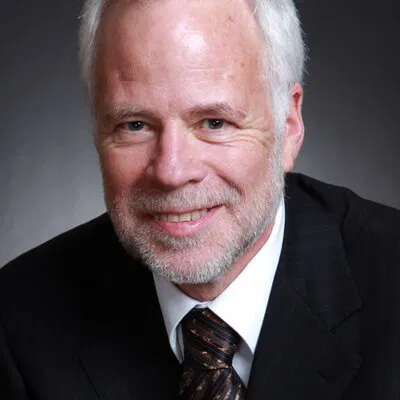
[0:37] Bankless Nation, very excited to introduce you to Barry Eichengreen. He has spent 40 years studying how dominant currencies rise and fall in his new book, which is fantastic, by the way, Money Beyond Borders. It traces the full arc from Croesus to crypto. I'm not sure we're going to get all the way back to Croesus, but Barry, welcome to Bankless. It's great to have you. So I don't know if you collect coins, but I got to tell you, I used to as a child and your book made me want to collect more. So I had to start a question. Of all of the currencies you talk about in your book, which is the one you would most like to own right now? Which one would you like to buy? Do you think somebody's answer might be, oh, I'd love to own the U.S. Dollar? Or is there just incompatibility?
Barry:
[1:23] No, I think it's quite possible people will be looking back nostalgically at the dollar 500 years from now. Another fact I was reminded by in the course of writing the book is that the dollar hasn't been the dominant currency in the United States for the entirety of this country's history.
Barry:
[1:45] So Alexander Hamilton famously created the U.S. Mints in the early 1890s, but there was such a shortage of gold and silver in the country before the California gold rush and the nevada silver rush that the dominant unit used for transactions were spanish silver coins pieces of eight you know spanish pesos or dollars that were cut up like a pizza in eight slices it was legal tender in the united states as late as 1857 you know after the gold rush the mint up and running, but the dollar has not always been with us. And as you imply, it may not be with us forever.
Ryan & David:
[2:32] That's interesting. There's a lot of questions that stem from that. I think we want to get back to the Denarius maybe later in the story, and you can talk about maybe its rise and its fall and how you see the parallels in the U.S. But maybe since you brought us to Spanish pieces of eight, this was one of the interesting facts I learned actually from your book, which was, I would maybe, I don't know if you go as far as to say this, but it seemed like Spanish silver, Spanish pieces of eight were the original US currency. And this preceded the dollar, but from the time of the revolution, all the way to the California gold rush and then the creation of the green back, it was really Spanish pieces of eight that was the dominant currency in the fledgling United States of America. Can you talk about why that was? Because Spanish pieces of eight did something that no other currency that preceded it has done, which it kind of dominated the globe. So it was on every continent and every local market that it entered, it seemed to outcompete the local market or the local currency that that was. Why did Spanish Pieces of Eight take off in such a way in early America and then other locations around the globe?
Barry:
[3:45] Well, part of the story is that the 13 colonies before the U.S. Gained its independence were prohibited by the Brits from operating a mint and coining money. So Americans had to look around for something with which to conduct, make payments, conduct transactions. And they looked south to Mexico and Peru, where the Spanish were minting high-value silver coins. Spanish silver was widely available because of the immensely large silver deposits in present-day Peru and Bolivia and elsewhere. That the coin was minted in large amounts in Peru and Mexico.
Barry:
[4:38] In addition, in Spain itself, you know, bars and ingots were shipped across the Atlantic back to the mother country. if you will.
Barry:
[4:48] And then that Spanish bullion, bars of silver and coin were used to settle transactions with Asia. So the Europeans would import silks and ceramics and all manner of exotic goods from Asia, and they would make payment in silver, which was the coin of the realm, if you will, in China as well. So the Chinese would take payment in Spanish silver for the goods that they exported to Europe. Meanwhile, the Spanish were shipping silver across the Pacific. The famous Manila galleons, these big ships that would typically sail twice a year from Peru or China.
Barry:
[5:35] Mexico to Manila in the Philippines, where they would be offloaded and transferred to other ships, doing business with China and India and other parts of Asia. That's how Spanish silver basically encircled the world. And as you say, it was, in a sense, the first true global currency in that earlier international currencies like the Dutch Gilder, they got to Asia via the Dutch East India company, you know, trading company slash military power. But they never got to Latin America. They got to the Caribbean, but no, you know, Dutch islands in the Caribbean, but no further. Spanish silver got everywhere.
Ryan & David:
[6:20] So a country like China, maybe that was using copper coins, maybe they're using silver ingots, these types of things, pre-Spanish silvers, pre-Spanish pieces of eight. When they were hit by pieces of eight, what would happen to the previous currency that was dominant in that local environment? Is this an example? There's a law we talk about on Bankless often, which is Gresham's Law, the idea that bad money drives out good, and the good money in the economy is kind of kept, those that the individual actors believe is superior. They hold that money and they spend the bad money. And I'm wondering if, like for what reasons Spanish pieces of eight were perceived as the better money and why were they such an apex predator when they entered a country like China?
Barry:
[7:08] Well, as you say, China relied on copper coinage in various periods. It relied on paper money. You know, the banknote was essentially a Chinese invention, much like the compass and the clock and gunpowder and other things. But copper is inconvenient for large value or significant value transactions. Copper is not a very, it's abundant, it's not very valuable. People had to carry around large numbers of copper coins on a necklace around their neck or in their pockets. They needed something of higher value. And silver was convenient for regular commercial transactions in China. They used gold coin occasionally for very high value international transactions, but silver kind of matched the needs of the economy. Copper coin continued to circulate just like pennies circulate alongside. I haven't seen a penny in a while, but like pennies have traditionally circulated alongside dollar bills and so forth.
Ryan & David:
[8:21] Of all the examples in your book of currencies kind of dominating and then following a cycle of getting displaced, Spanish silver to me and pieces of eight seemed like it most maybe benefited from a technology advantage, if that makes sense. So the coin itself being superior wasn't like Florin's maybe, which were much more plugged into a banking network. It was almost a decentralized bottom-up adoption. Would you say that's true?
Barry:
[8:47] No, I think it was fairly centralized in that the Spanish crown would basically appoint or sell the right to be the equivalent of the mint master and send people out to verify that the mint was coining gold. Units, coins of the relevant weight and relative purity, fineness, it's called. And occasionally there were scandals when the mint master would coin, stamp out coins that were less pure than required and, you know, be able to keep more for himself. And in Pitocis, the main mint in Peru, there was a famous such scandal in, if I recall, 16th century. But by and large, this process worked well. You know, just like the comptroller of the currency keeps careful watch on the quality of the banknotes that are printed in the United States today.
Barry:
[9:55] The Spanish crown had a mechanism. There were, there could be slippage. There were sometimes what economists call principal agent problems where the agent didn't quite do what the principal wanted. But by and large, the quality of the coin was maintained for three centuries and more. And that's what made for its wide acceptance.
Ryan & David:
[10:18] I'm curious of the logistics behind cutting up the coin into eight pieces, because it seems like that would be a coordination challenge for people to accept. How did that happen? Was that a top down decree from some authority saying, hey, we do this now, we can cut up our coins into eight pieces and this is just how this works? Or was it more bottom up and it was just like, hey, this I'll cut my coin in half and you can have half a coin. and then they just did that a couple more times. Because like there's, how do you divide them equally? Because I could imagine that like, oh, that piece of eight's slightly larger. Yes. Maybe I want that one. It feels like there's a coordination challenge with all of this. How did this story come to be?
Barry:
[10:59] You guys are demanding hosts. You expect me to know everything. This is one where I am not confident of the answer, but I think the answer is that it became a convention and people took it upon themselves to make small change. And it created all the problems that you allude to, that not every piece of eight was equivalent to every other. And people might be, you know, weigh them in their hands and pick the ones from their customer that they particularly preferred or weigh them more technically. It was surely an awkward arrangement compared to regular coinage of small change.
Barry:
[11:48] I'm going to have to go back and find out more about the answer.
Ryan & David:
[11:51] Barry, if your coin of choice then is the denarius, and I guess, you know, a silver successor is pieces of eight. I actually want to talk about my coin of choice, the one actually I do plan to buy after reading this book. I don't have an extensive coin collection, but I plan to start building one, maybe, because this really gripped me, is the solidus. Am I pronouncing that correctly? The solidus? Is that how you say it? So this was a Byzantine Empire coin. This was in some ways the successor to the Roman denarius. This was a gold piece. I believe it's a fraction of an ounce of gold. It's something like 0.14 ounces of gold. you can buy one of these.
Ryan & David:
[12:35] It costs, as I've done my research, $400 to $1,500. It's about 40% higher than the price of the actual gold. So they're very affordable and they're in plentiful supply. But the thing that really gripped me was not only is it gold, but it had the longest reign of all the currencies that you talked about in your book. So this was a hard asset and it had a 700-year reign. It didn't get debased until its later stages, as many of the other currencies died from debasement, which I'm sure we'll talk about. And it was called the dollar of the Middle Ages. In fact, one historian you quote in the book said that the solidus surpassed even the US dollar in the 1950s in terms of stability and intrinsic value. Since this is one I plan to buy and collect. Can you tell us about the solidus?
Barry:
[13:30] Well, I'll tell you first about the historian, Robert Lopez, longtime Yale historian, from whom the quote You mentioned comes and the phrase dollar of the Middle Ages. So he was trying to impress on a 1950s readership, a post-World War II readership that in a period when the U.S. Dollar really reigned supreme, when it was the only currency standing. We were the only country with open financial markets to the rest of the world. So, Lopez trying to impress upon his readers the durability and reputation of the Byzantine solidists made the analogy with the dollar. Even more important than the dollar, if you can believe that, was basically what he was saying. The Byzantine Empire gets short shrift, in my view.
Barry:
[14:29] It was characterized by fiscal prudence. One of the things that was important was that for many centuries, despite having hostile rivals and enemies on all borders, it basically lived within its budgetary means. So the pressure to debase the currency, issue more coins of less value in order to divert more resources to the government and the military, that pressure was not so intense. So that enabled, if you will, the solidus to retain its value for a long time. It circulated around the Mediterranean, but also into Asia and India and elsewhere. This in the period from like 500 AD until 1200 or 1300 AD. So there are your seven centuries or so, a remarkably... Durable international currency, if you will.
Ryan & David:
[15:35] Yeah. And this gets to some of the lessons that I think we collect in this book, because part of the fun of this book and the interesting thing about this book is these lessons throughout history, we can then start to apply today. And maybe one thing that we can take from the solidus is that if you want to have a currency, an international currency that persists throughout the centuries, fiscal prudence is an imperative. Without that, you faulted debasement as maybe the Roman denarius did and as
Ryan & David:
[16:06] many of the currencies did in your history. Maybe this gets us to some of the patterns that you see with all of these currencies. So can you talk about how a currency becomes an international currency? So every empire maybe has their own form of currency or money, but what are the preconditions that are necessary for it to launch into something that is more internationally used?
Barry:
[16:31] So I think there are two sets of preconditions. One set that international monetary specialists, economists have been talking about and studying for many years and another set of preconditions that we're only now really beginning to understand. So, the first familiar set of preconditions has to do with economic, commercial, and financial prowess, if you will. If country or kingdom or state does a lot of trade with the rest of the world, with other countries, kingdoms, or states...
Barry:
[17:11] Those others will encounter its currency and coin. They will probably want to acquire some of it to ease their trade with the country in question. So having a strong economy that trades a lot with the rest of the world means that the rest of the world comes into contact with your currency. Financial development is important because it's not only trade but lending and borrowing across borders that needs a vehicle and the currency of the country that does a lot of that lending and borrowing is kind of a natural vehicle for that kind of cross-border finance having liquid capital markets financial markets at home so the currency is easy to buy and sell You can get it when you need it, and you can dispose of it when you want to. Market liquidity makes a currency valuable not only to residents, but to investors and others around the world. So those are the kind of factors that economists have been studying for a long time. But I think there are also political preconditions that the currency should hold its value over time if people around the world are going to be willing to hold and use it.
Barry:
[18:35] And that brings us to the government has to live within its means, issues that we were talking about, Ryan, a few minutes ago. There has to be checks and balances on arbitrary action by the executive, Emperor Nero, going back to Rome one more time, had an ambitious canal building program. He wanted to build himself a 300-room palace in Rome. And back in the day, back in the day of the Roman Republic, there was a Senate to say, no, no, no, you can't do that. Come the Roman Empire, the emperor was imperial. He was the king and he could do what he wanted. And what he wanted wasn't always good for the stability of the currency. So you can kind of guess where I'm going here. Subtext about what's going on in the United States at the moment. Checks and balances, rule of law, are important for inspiring confidence in the currency, not only domestically but around the world. And the strength of a country's alliances is important as well.
Barry:
[19:44] For widespread foreign use of its currency, governments, central banks like to hold and use the currencies of their alliance partners because their alliance partners are trustworthy. They are good stewards of the reserve holdings of the foreign central bank and holding and using the currency of that alliance partner is a show of good faith in that partner.
Barry:
[20:10] We value our security alliance with you and here's some money on the barrelhead to demonstrate that fact. So I think there are both standard economic, commercial, and financial preconditions for the rise of an international currency, but there are also political preconditions domestically, rule of law, internationally, and in terms of reliable alliance politics.
Ryan & David:
[20:39] What about a third, and maybe this does fit in political, which is military dominance or military strength, and how would you weight that? Because I think in many of the examples of currencies throughout the ages that you go through, we do see some superior military dominance, but not in all examples. Florence is an example, which did not have an impressive military and it appeared to have bootstrapped the florin into some level of international currency status and dominance just by route of trade and financing. But how would you rate the role of military dominance? Is that most commonly a prerequisite to have an international currency?
Barry:
[21:21] It is commonly associated with international currency status. So I used to say the The recipe for an international currency was size, stability, and liquidity. Big economy, stable economy, liquid financial markets. But I would add security as a fourth ingredient. Military security, first, the ability to defend your own borders. Secondly, the ability to protect your trade routes. I had been making that argument for a long time before our attention was attracted to the Straits of Hormuz. Yes.
Barry:
[22:00] Being able, you know, the Dutch East India Company, the English East India Company, they were basically paramilitaries that did all the things that their respective national militaries did to protect their ports on the Indian subcontinent, their creed-y ports in China. And, you know, they would bombard the locals if the locals threatened to restrict their access to that market. So both the ability to protect the currency issuers' borders, the integrity of those borders, and to protect their shipping lanes and commercial activities, I think have been important in history. And you do point to the exception that proves the rule. The exception is Florence, whose Florin was probably the dominant currency in Europe from the late 13th century into the early 15th. They were not a first-class military power. They were too small. A city-state in Tuscany with modest hinterlands and no natural resources to speak of. but a lot of commercial prowess and the first true international bankers. They used finance to project financial
Barry:
[23:22] Power and encourage use of their currency, despite the fact that they weren't a dominant military. But every other case I talk about in the book does point to the importance of security.
Ryan & David:
[23:35] What role would you say does the rule of law play with the acceptance of a currency, a strong, fair, just legal system, like judicial branch? Is that a relevant variable here? Or Or maybe that's just a secondary input to thriving capital markets. And it's actually capital markets that's the more fundamental. What would you say to the idea of just like strong property rights, strong rule of law as relates to the strength of a currency?
Barry:
[24:04] Yeah, no, I think rule of law, economic and financial transparency, separation of powers have throughout history been associated with global currency status. So in Rome, in the period of the Republic, there were the Cresveri, these bureaucrats who oversaw the operation of the mint and reported to the Senate where property owners and landowners and others had voice. They were basically subordinated to the whims of the emperor when the republic gave way to the empire. And those checks and balances, that transparency, that rule of law, if you will, began to crumble. So in the present context, I worry about...
Barry:
[25:01] The willingness of those who manage our finances and determine the course of the dollar to defer to the courts, defer to the Congress, respect the independence of the Federal Reserve, which I think is important in this context as well. So I write in the book about the Chinese renminbi. I don't know if you want to go there later or not, but when I go to China, I had the pleasure of going twice last year and give talks related to this. One of the points I observe is that every leading global currency in history, with maybe the exception of the Spanish dollar that we were talking about before, has been the currency of a political democracy or republic, where there is separation of powers and rule of law. And the fact that the Pollock Bureau in China, President Xi and China is all powerful. And can wake up tomorrow morning and change the rules of the monetary and financial game
Barry:
[26:07] Arbitrarily will cause central banks and investors of other countries to think twice about parking their reserves in Shanghai. So I think, you know, this rule of law issue is a challenge for Chinese aspirations to internationalize their currency as well. So when I make this point, my Chinese audiences are always respectful, and you can see their thinking, but they don't say anything in response.
Ryan & David:
[26:38] That is fascinating, isn't it? The idea of checks and balances as being crucial
Ryan & David:
[26:43] to exporting an international currency. Maybe this leads into the story. We do want to bring this to current day later, but maybe this leads into the other pattern, which is not the preconditions for rise of an international currency, but the preconditions maybe for the fall of an international currency and how that happens. And were there some patterns that you saw in each of these that are common? So one of them certainly seems to be debasement. Another seems to be maybe military loss. But what are the patterns that you see for how an international currency loses its status and dies essentially or falls away and gets superseded by another?
Barry:
[27:28] So you mentioned debasement and military defeat, and often they go together. You know, military challenges that cannot be met are financed for a while. The Day of Reckoning is put off by debasing the currency and channeling more resources toward the military. The other fundamental issues. Obvious fundamental is inability to keep up economically, deteriorating international competitiveness. So the Florentines were on a, they were basically cloth finishers. They took raw wool from, imported from Northern Europe and they cleaned it and dyed it and finished it and exported it. But after a while, they couldn't keep up with the more sophisticated textile makers of the Netherlands, of the low countries, and of England. If you want to talk about the pound sterling in the 19th and 20th century, the first industrial nation,
Barry:
[28:30] England in the early 19th century becomes the sick man of Europe by the mid-20th because various internal issues prevent them from keeping up economically with the rising powers, the U.S. and Germany. So that's an interesting case in that Britain is overtaken by the United States in terms of GDP in 1870 and by Germany around the turn of the century. But the pound sterling hangs on as an international currency until World War II, that there's this association between economic decline on the one hand and decline of an international currency on the other hand. But there are what monetary economists call long and variable lags between the one and the other.
Ryan & David:
[29:20] Barry, if you had to project out maybe to current times, of course, we're in an era of U.S. dollar dominance. The dollar is the global currency. I'm sure we'll talk more about the dollar in detail, but I just want to ask this question here. If the dollar were to fall sometime, lose its status as an international currency or the reserve currency in the years to come, how do you think it would fall. From history, would it fall in the way that the Gilder fell or that the Pound fell or more like the Denarius in Roman times through debasement? What's the analog here that fits?
Barry:
[29:57] So I am reminded of what famous international economist Rudy Dornbusch said about currency crises, that they always take longer to arrive than you thought they would. And then they occur more violently than you ever imagined. They could. So, you know, it's like who said there are two ways of going bankrupt slowly and then rapidly. So I think we are seeing the beginnings of the decline of the dollar as a global currency, as central banks are trying to hedge their bets, moving out of dollar U.S. Treasury securities into gold and other non-traditional reserve currencies. I think the analogy I sometimes use is like an iceberg, which melts very slowly until a whole chunk, big chunks calve off. All at once. So that's kind of the scenario, I imagine. And so I can give you a scenario, I can't give you a date. First rule of forecasting is never to give both.
Ryan & David:
[31:08] But is there a currency that comes to mind in that it will be most like this, maybe, the denarius, when Roman emperors kind of removed from all checks and balances, started to mix the silver with lesser metals. And so it went from, what, 80% silver all the way down to 5%. Through the course of many decades. Will it be like that? Will it fall more like the pound in that the U.S. has to lose a world war or some sort of war in order to be under the receiving end of that? Will it fall in the way that the florin fell, which is just that wool, which was their primary export, no longer becomes the competitive commodity from that era of the world and it gets superseded maybe by more industrial technology? The U.S. loses its competitive edge. If you had to name a threat vector, where's it coming from here?
Barry:
[32:01] So I can't answer that question because there are multiple threats. You know, we talked about U.S. Debt rising rapidly and foreign central banks beginning to hedge their holdings of treasuries because they wonder whether U.S. Treasury securities are going to hold their value. There are Questions about U.S. politics, questions about whether our European friends, former friends in Europe, regard us as trustworthy, alliance partner or not. There are lots of moving parts, so I don't know which part is going to move, which part is going to force the issue. I like to use history more to point out differences than similarities. So, you know, history doesn't repeat, but it rhymes. I don't think we can find an exact analogy with the Florentine Florin or the Dutch Gilder or whatever, but it can kind of point us to a few similarities and maybe what's distinctive about the current conjuncture, which is that the dollar potentially faces threats from many sides, most of which emanate from within the country itself. But there are multiple reasons, I think, to worry about the dollar where you look back at these earlier cases and there typically was one or two.
Ryan & David:
[33:22] When you say currency crisis tend to happen slowly and then suddenly, do you mean, how acute do you mean when it comes to the U.S. Dollar? Like, will there be a Wikipedia entry saying, you know, in the year 20 something something, I don't even want to give a decade, but there will be like a Wikipedia entry that says like this is when the dollar went through an acute event and people lived through it. Like, do you mean that level of like acute crisis or maybe just something maybe a little bit more diffuse than that? How acute do you mean when you talk about the inevitability of the U.S. currency crisis?
Barry:
[34:03] So I... May not sound like it, but I'm basically an optimist. I look back at the behavior of the dollar over the last 25 years. And as a reserve currency held by central banks around the world, it has lost one half of a percentage point of global market share a year, year after year after year over that period. So its global market share has declined from a little over 70% 25 years ago to a little under 60%. Today, about one half of a percentage point per year. And the number of countries around the world that pegged to the dollar has similarly been declining very gradually, that analogy with a melting iceberg again.
Barry:
[34:51] So I'm hopeful that the transition will continue in that fashion. It will be gradual And that will create time for the euro area and China to get their acts together so that their currencies can more meaningfully supplement the dollar. But if foreigners conclude that the people running the US government are crazy.
Barry:
[35:14] And they're apt to do crazy things, and they flee from the dollar sooner rather than later, before China and the euro area have gotten their acts together. That's a scenario where interest rates shoot up, markets crash, and all kinds of dislocations occur. So I'm an optimist. I prefer, I hope for the first scenario, but I can't rule out the second one.
Ryan & David:
[35:41] Let's talk more about the the dollar then and where we are today so 40 percent of global trade invoiced and in dollars 50 percent of global gdp in dollar-linked countries 90 percent of global fx transactions so anytime you're converting from one currency to another 90 percent of that is going to involve u.s dollars as you said 58 as a store of value held in central banks pretty massive dominance. And it's been this way since the end of World War II, since Bretton Woods kind of established this. And you go through this history quite well in your book. I really enjoyed those chapters. In the grand scheme of all international currencies, as you compare it to history, how remarkable or unusual is the dollar? And I think of each of the currencies that you mention as having a superpower. So the Athenian owl and maybe the Lydia coin out of that. That was the first time we ever did a coin, for instance. The solidus had this superpower of having persisted across 700 years. Incredible. Florin added banknotes to the picture. Each of these currencies added and evolved on the last and created something special. What's special about the dollar and how remarkable is it compared to previous?
Barry:
[37:00] Well, I think the dollar became special first after World War I when we created the institutions needed for its international use. Federal Reserve system to kind of backstop the market in dollars was the most important precondition. After World War II, when we were the only major industrial economy standing, only country, as I said earlier, with deep and liquid financial markets open to the rest of the world. So there was no alternative to the dollar, no meaningful rival of any sort anywhere in the world. The only other currency that was held widely was the British pound sterling in 1945, because Britain's colonies had been force-fed pounds in return for the raw materials and stuff that they provided the war effort, but they couldn't use them. So it was all about the dollar after World War II. What's remarkable about the dollar, I think, is that the world has changed quite dramatically since 1945, and the dollar does remain as dominant as you described it a moment ago,
Barry:
[38:18] Ryan, that the dollar's dominance was cemented by the creation of the Bretton Woods system in 1944, when only the dollar was convertible into gold at a fixed price and it had this special status. The Bretton Woods system collapsed. It disappeared in the 1970s, but the dollar remained the anchor currency for much of global trade and finance. Now we have the rise of China. The dollar still remains the dominant international currency. I do see kind of some fraying around the edges of that dollar dominance as I described before. But... Durability and persistence in the face of quite dramatic structural changes, I think, is what stands out. Another answer, you know, I could give you is we haven't seen a dramatic decline in the global dominance of the dollar. I've been predicting such for many years now, and I'll keep predicting it until I'm right.
Ryan & David:
[39:24] You may be right at some point in the decades ahead. As I was reading about these various currencies, the most remarkable thing to me about the dollar was 50 years off of the gold standard in a pure fiat, non-pegged sort of system since 1971. I mean, it hasn't been pegged against gold. That seems unique. I mean, has any other international currency persisted for as long in pure fiat forms?
Barry:
[39:51] Well, in a sense, the Dutch builder was not fully freely convertible into specie, into precious metal for much of the 18th century when it did play an important international role. So the Dutch Republic established a central, basically what was a central bank, the Bank of Amsterdam, where people would deposit their gold and silver coin and they would get a note from the bank. And those notes became, they were bank notes. They were notes issued by the Bank of Amsterdam and they were used for all kinds of everyday transactions. Initially, people could take them and redeem them, get gold and silver in return. Changed in 18th century when only certain people who deposited their gold and silver with the bank before a specified date could redeem their notes in that way. And then those notes were, subsequent notes were basically fiat currency. They knew that the bank had gold and silver and stood behind them, but they were not freely convertible into gold and silver.
Ryan & David:
[41:08] So that is an analog.
Barry:
[41:09] So I think that was an important step in the direction of what you're describing, fiat currency. But we've taken many more steps in that direction in the 20th and 21st centuries.
Ryan & David:
[41:22] We've certainly supercharged it. There was this point that you write about when Bretton Woods was being discussed and there were multiple proposals for this. John Maynard Keynes had this idea for something he called Bancor. Maybe that was manifested later in these SDR type rights that the IMF managed. Is there a world, hey, I just want to ask the question about money from the perspective of like what experiments didn't work and Bancor was never able to take off and SDR was never able to take off either. Is there a world you could see where those currencies and those plans and those strategies could have been successful? Or do you really need some of the other preconditions that we talked about earlier, which is kind of like empire and military and trade-based? I mean, in another world, do you think Bancor could have been the world reserve currency at this point?
Barry:
[42:17] I think absent a global government, it's hard to imagine a global currency and Bancor was designed to be an important step toward a global currency. So in an earlier incarnation, I worked as a senior advisor at the International Monetary Fund and my boss.
Barry:
[42:37] An eminent economist, Michael Moussa, used to walk down the corridor that led to the IMF cafeteria, where the currency notes of all the 180 IMF members were framed and on the wall. And he would pound his hand on the wall and he would say, one country, one currency, or one government, one currency. You can see it here. Europe, the euro area is an exception, I think, because of It's very special history, but the euro is not widely used as a global currency. It's used in Europe's neighborhood, in Eastern Europe, where parts of Eastern Europe where they're not formal members of the euro area in North Africa, but not more widely because the euro area doesn't have a treasury, doesn't have common fiscal policy. It doesn't have a source of high-quality treasury securities to be held and used by central banks and governments and firms around the world. So I do think there would be efficiency advantages from having a global currency. Just like if everybody spoke Esperanto, we'd find it easier to communicate, but nobody speaks Esperanto and we don't have a global government. So I'm dubious about our moving in that direction.
Ryan & David:
[43:58] It's something that looks good on paper, but once you apply it to the real world and geopolitics and the power dynamics and the coordination required, it just doesn't seem like it could ever be possible. Yeah, it kind of seems like if the UN tried to make a currency, just at face value, I just know that that wouldn't work. Wouldn't work. It wouldn't work.
Barry:
[44:16] Well, you know, the IMF, which has issued occasionally special drawing rights, its own paper monetary claims, is a United Nations organization. So yeah, David's right, that would be... Hypothetically, the entity to do it. Right.
Ryan & David:
[44:36] And we got to almost see how that experiment tried to play out and just couldn't pass muster. There is some question, though, for Americans in the U.S., and I think most realize that we have the dominant currency, though they may not appreciate the pain it took to actually get here. You write often about the dollar dominance being almost like a national inheritance, right? So some countries are endowed with fantastic natural resources. This is not a natural resource, but it is an inheritance that we've gotten from institutions of the past that our forefathers in previous generations have worked hard to create. It's almost like the Constitution is an inheritance of U.S. citizens. Others are starting to see the dominance of the dollar as something that's more of a millstone around our necks rather than some great endowment that we've been blessed with. And they point to things like trade deficits, the hollowing out of manufacturing in the U.S., the financialization of everything. They'll even point at things like wealth inequality and the populism that stems from it.
Ryan & David:
[45:42] How would you steelman the argument that the dollar reserve status of the world is actually bad for America? Can you make the case there?
Barry:
[45:51] So I would acknowledge that the balance sheet of dollar dominance has two sides, benefits and costs. The benefits include the convenience of being able to do cross-border business in our own currency, the fact that we can place treasury debt at a lower interest rate than otherwise, and the fact that we get kind of automatic insurance when a bad thing happens, war breaks out in the Gulf, the dollar strengthens because traditionally it's been a safe haven currency. People like to move into dollars because we're a big country with liquid markets, makes us a safe haven. Those are the benefits and the costs would be that because people move into dollars, the dollar exchange rate is stronger than it would be otherwise And that creates headwinds for U.S.
Barry:
[46:43] Manufacturers and exporters seeking to compete internationally. So that is a valid argument. The question is how much importance you attach to it. When I think about what are the fundamental determinants of U.S. Export international competitiveness, I think education and training of our workers, how many smart innovators and entrepreneurs there are in Silicon Valley and other places, how successful we are at investing and updating our capital stock and building the infrastructure needed for our economy to function, how good we are at developing our financial markets, which provide liquidity for economic growth. And somewhere down that list, item number 10 or 11 would be the dollar exchange rate. So I think these other fundamentals are much more important determinants of how well the U.S. economy is doing. Absolutely. And relative to our competitors and the dollar exchange rate is... Down the list.
Ryan & David:
[47:47] I agree with you on those other determinants as being more important, particularly on paper. But let me push back on one item, which is the fact that we do have this exorbitant privilege and we can export dollars to the world and we can effectively sell our dollars. Dollars are a product of the United States. Doesn't that just pull all of, let's say, the profits and the talents and the know-how and the capability into a narrow financial set of the economy, where we're not able to focus on the education, the exports, the manufacturing, the technology, and the other determinants that you mentioned, because it's just not as profitable as selling a dollar that we can print at any point in time. So on paper, I get what you're saying, but haven't we run this experiment over the past 50 years? And we've seen that financialization and selling dollars becomes a gravity well for of the United States and impairs our ability to actually dedicate resources and, I guess, national, like a national push towards manufacturing in the U.S.
Barry:
[48:51] I do worry about excessive financialization. I think we saw its pernicious effects during the global subprime crisis and the global financial crisis between 2007 and 2009. And I worry about private credit and and and ai investment in the present present context other countries have suffered from excessive financialization the uk is a place where they worry and complain about it a lot as well and it reflects the legacy of sterling's historic role as an international currency and london's present role as which devolves from that as an international financial center
Barry:
[49:39] I don't think it's the dollar's international role that is primarily at work here. It's simply that our highly developed financial markets are attractive places for highly compensated people to play and concoct new financial instruments in ways that may be channeling resources into activities that don't have the highest possible payoff. So, you know, the financialization of the U.S. Economy, that the ratio of financial assets and liabilities to output is as high as it is, reflects a bunch of things. And I'm not sure it primarily reflects the fact that dollars are used by foreigners.
Ryan & David:
[50:30] I think another way to get at this question or the idea behind the privilege is to ask what it would feel like if it was taken away. So if suddenly, let's say, this year at some point in time, the dollar lost its global reserve dominance, or maybe this happens over a decade in a more gradual way, so we're not imagining a cataclysm here. What would the average American lose? Maybe you can explain this in sort of a version, a truck driver,
Ryan & David:
[50:59] let's say, from Ohio would understand. What would change about their life?
Barry:
[51:03] Well, the person who was, I don't know if the truck driver in Ohio would be eating French brie and drinking Italian wine, but it would become more complicated to import those things into the United States because everybody wouldn't be using our currency. People would have to go through their bank and their bank's correspondent bank abroad or some high-tech market in order to get the foreign currency that our counterparties were demanding instead of dollars.
Barry:
[51:36] Interest rates would be higher than otherwise because the Treasury would not have kind of automatic insured market for additional Treasury debt from foreign central banks and governments. So they would have to offer higher interest rates to place that debt. And we wouldn't get that automatic insurance when a bad thing happens. In 2008, when Lehman Brothers failed, we did the bad thing, but the dollar strengthened. Safe haven flows. So the price of our imports went down. Our financial markets did not all collapse because funds flowed in to the United States. In this alternative scenario, they would flow out just like they have been flowing out of Asian countries in the last three or four weeks. So I think those effects that it would become harder for us to import and export, interest rates would be higher and higher treasury interest rates spill over into higher mortgage rates for your Ohio truck driver and that automatic insurance that the reserve currency country enjoys would go away. You said, Barry, that
Ryan & David:
[52:51] You would continue to share the message that the end of dollar dominance is nigh into the future. And I'm wondering what makes you think that message is particularly relevant now versus, say, the 1970s when others were saying it, particularly after Nixon closed the gold window and the dollar got off the gold standard. I mean, people in the 1970s were saying this is the end of the dollar. Gold was rising relative to dollars. we had rampant inflation, and then we had, of course, a restoration of dollar dominance and an increase in dollar dominance. Couldn't that same thing happen now? And I will also add this element, which seems to exist now. In the 1970s, there wasn't an obvious competitor. And so the world does, it seems, prefer to consolidate to one network law kind of winner for a currency. It tends to converge on something that's dominant. And it's not obvious what the competitor would be right now. So aren't we in a similar position as we were to the 1970s? Isn't it too early to call it a death of dollar dominance?
Barry:
[54:02] So I do think the 1970s and the Nixon era are a good comparison to make with what we're going through at the moment. It was not only Nixon's decision to break the link between the dollar and gold and remove the constraints of the Bretton Woods system, but it was also Watergate and corruption and all that. But remember what happened at the end of that process. Nixon was forced to resign by the threat, credible threat of congressional impeachment. The Congress was able to rein in the excesses and affirm the fact that the U.S. Was a country with separation of powers and rule of law. You guys have been admirably apolitic so far. I commend you for that. But, you know, whether the same will be true today, that the Congress and the courts will be able to restrain executive power.
Barry:
[55:03] There were strains in the 1970s, similarly between the U.S. and our allies. That was the era, the Vietnam War, the first half of the 1970s. But those strains are considerably greater at the moment. So I think the political
Barry:
[55:20] dimension is what makes this time different from the early 1970s. And, you know, I think the hold of network externalities, it pays to hold and use the same currency everybody else is holding and using.
Barry:
[55:38] Those network externalities are being undermined. They are being weakened by the digital revolution. You know, it's now easier to trade currencies and use a different currency than your interlocutor is using because you can exchange one currency for another using a device you carry around in your pocket. That was not possible in the 1970s.
Ryan & David:
[56:02] Barry, one of the points you make in the book, of course, is a point that I made a little bit earlier, which is that the dollar does not have too many strong competitors. We already talked about why the euro is not a strong competitor, lack of a bond market, treasury market, certainly not the depth of liquidity. China, though, it seems, has the GDP, commerce, trade, manufacturing, demand for goods capability that maybe Florence did, or maybe the U.S. Did at the turn of last century. And so you sort of see some of the key preconditions that we talked about emerging in China, yet the reninbi is just like woefully, it's kind of dismal with respect to its usage numbers and its store of value usage numbers, that sort of thing. In what world, or can you think of a set of a scenario by which the reninbi actually becomes the global reserve currency and exceeds the dollar?
Ryan & David:
[57:03] Does that world even exist in your mind or is it just an impossibility?
Barry:
[57:08] I think the renminbi can come into more widespread use among countries that are geo-strategically allied with China, but not globally. That the problem is not that China trades too little. It's the leading trading partner, leading trading power around the world. And it's increasingly important in terms of foreign direct investment in Africa and Asia and other parts of the world. But there are those political constraints that Chinese authorities can change the rules of the financial game tomorrow morning. The People's Bank of China is not independent of the government. It is required to take marching orders from the executive branch, if you will. So I think that will cause hesitations on the part of foreign investors. investors,
Barry:
[58:07] I think countries in the West, certainly the United States, but also to an extent the Europeans view the Chinese not only as an economic but a geostrategic rival. Do they want to be dependent on China or their international financial business? That would be the implication of using the Chinese renminbi and using China's clearing platform, the cross-border interbank payments system, which is the way it moves money between banks in different countries. In the same way people worry about the U.S. Weaponizing the dollar and the U.S. Correspondent banking system and SWIFT, the messaging system for cross-border payments, Western governments would worry about China weaponizing its system and would worry about our becoming too dependent on it so long as we and they are regarded as geostrategic rivals.
Ryan & David:
[59:10] So if China is unlikely to win for some of the reasons you stated, and we talked about the euro being unlikely to win, doesn't the dollar just win by default and continue winning by default? Even if some of the checks and balances are impaired and some of the fiscal restraint is removed, it's still, I think you used the term, the cleanest shirt of all the dirty shirts?
Barry:
[59:33] Yeah. So certainly the fact that there is no viable alternative at scale tends to support continued use of the dollar, other things equal. But it doesn't guarantee continued support, continued use of the dollar. If there is an economic, financial, political crisis in the United States that leads foreigners to seriously question the wisdom of keeping funds on deposit in the U.S. And using the dollar for their cross-border transactions, they will... Flea dollars for whatever is around, whatever is available for gold, for we haven't said crypto yet, but we could for non-traditional currencies of reliable countries like Canada. Mark Carney is a former central bank governor, both of Canada and of the UK.
Barry:
[1:00:34] You know, the currencies of the middle powers, if you will. And if as a result of that, there isn't enough liquidity to go around, that's the bad scenario we were talking about before, where globalization, as we know it, comes under threat. So I would agree that the fact that there is no perfect substitute for the dollar
Barry:
[1:00:59] out there tends to encourage continued use of the currency, but it doesn't guarantee. continued use.
Ryan & David:
[1:01:05] Barry, since you mentioned gold, maybe let's talk about gold now and then we can get to cryptocurrency. So gold is not the main character of the book because this is a book about currencies in particular, international currency. It's not a book about, let's use another term, money, right? Which is maybe more of a kind of a store value base type thing. Whereas an international currency, it seems like often emerges from a money, but is kind of a network or powers additional refinement of that money into a currency-type product. So maybe that's somewhat of the difference. But what role does gold keep serving in these international currencies? Because it seems to be present at two main points. It seems to be often present at the beginning of these new currencies in order to back them. It also seems to be present as they start to get debased and devalued. And as one regime shifts to another. So what is the goal of a hard money asset like gold and why does it keep coming up in these currencies throughout history?
Barry:
[1:02:09] Well, because historically it has been a reliable store of value.
Barry:
[1:02:15] Can be used in payments and financial transactions if it's coined. And today, if it is held on deposit at the Bank of England or the New York Fed or the London Metal Exchange, it can be used as collateral in financial transactions. It can be lent and borrowed.
Barry:
[1:02:36] There are liquid markets, well-regulated markets in gold in London and New York and a few other centers. So, history favors gold. The fact that central banks of the advanced countries have inherited lots of gold reserves from the past and that they can use them in financial transactions if they so choose works in its favor as well. So in the last week, the Turkish lira has been falling due to the events in the Middle East, and the Central Bank of Turkey has gold on deposit in London, and it's been selling it in order to get the dollars and euros needed to intervene in foreign exchange markets and prop up the currency. The other thing that's relevant at the moment, of course, is that if you worry about being the target of sanctions, you put that gold on a boat and you bring it back home. You vault it at home where it's safer from sanctions than our dollar deposits or U.S. Treasury securities. But if you bring it home, you can't use it for anything.
Barry:
[1:03:49] It's hard to use for payments. It's dense. And if you've ever picked up a gold bar, you know it's dense and heavy. Thank you. And it can't be lent, pledged as collateral, whatever. So there is a trade-off there. But, you know, for the last few years, emerging market central banks, which did not inherit gold from their past, have been buying it as a way of diversifying their reserve portfolios. They didn't want to hold all their reserves and financial securities. So adding some gold on the margin was sensible commodity play. And because gold has a bigger, more liquid market than many other commodities that central banks might consider holding, it was the logical thing to do.
Ryan & David:
[1:04:37] It seems like the reoccurring role that gold is playing is as a restraint on debasement for the sovereigns that are meddling with their currency. Is that the reoccurring role?
Barry:
[1:04:49] Well, I think that has been the historic role, and that was supposed to be the role of the dollars linked to gold under the Bretton Woods system from 1945 until 1971-73. The dollar was supposed to be valued, gold was supposed to be valued at $35 an ounce. Yeah.
Barry:
[1:05:12] And any foreign central bank or government that brought dollars to the Fed was supposed to get gold at that price back. And the idea was that would restrain U.S., prevent U.S. Fiscal excesses. And it turned out that there were more important political considerations driving U.S. Fiscal policy, the Vietnam War, LBJ's new society, things like that. So historically, that has been the role now that currencies are not pegged to gold anymore. The way that would work is that if people lose confidence in the dollar, central banks will be looking for to sell their dollar securities and buy something else. And gold may be one of those things. So that's the way the restraint would work. Presumably, rational, thoughtful U.S. government would worry about that. Scenario, and a rational, prudent Congress would get its arms around chronic budget deficit problem to avoid that scenario from playing out.
Ryan & David:
[1:06:21] Let's talk now about another store of value competitor for some of the listeners
Ryan & David:
[1:06:25] who are quite passionate about cryptocurrencies, and that is Bitcoin and other assets like it. I know you mentioned Bitcoin briefly in your book as a possible contender as a currency, but you dismiss it as a currency just simply because it's too volatile right now and it's not really in usage. And I think that's probably a good point when it comes to the medium of exchange and unit of accounts, international currency type use cases. However, for something like gold, where it serves as a scarce store of value, where it acts as sort of a debasement hedge and alternative, it does have some properties that gold doesn't. One of which is it is highly portable. And so you don't need to load it into airplanes and send it from one country to another. That, it has some other properties that make it attractive as well relative to gold. What would it take, do you think, for Bitcoin to compete with or replace gold as a hard money? And can you imagine a scenario where that actually happens in the future?
Barry:
[1:07:29] So I'll get around to your question in one minute. Before I do, I would observe that there's nothing that prevents a large holder of gold from tokenizing that gold and putting it on a blockchain.
Barry:
[1:07:42] You know, there have been efforts to create gold-linked stablecoins as well. Haven't really taken off, but they're out there. The way I think about it is that the consequential innovation that's going to change the international monetary sphere in which I work is blockchain, distributed ledger technology. This is a new set of payment rails that everybody will be able to use. And the question is, what will run on those payment rails? Will it be plain vanilla cryptos like Bitcoin? Will it be stable coins linked to the dollar or something else? Stable coins as envisaged by the Genius Act. Will it be central bank digital currencies, the tokenized equivalent of Federal Reserve treasury money in the United States? Or will it be tokenized bank deposits, the bank deposits most of us? I know this is the bankless podcast, but there still are lots of us with bank deposits, which can be tokenized, put on the blockchain and transferred between different parties doing business. So my view at this point is that plain vanilla cryptos are still volatile and therefore they're.
Barry:
[1:09:04] Least likely to be used in actual payments on a day-to-day basis. And if they're not used in payments, that will limit their use for other things. The case for stablecoins is yet to be proven. Will they really be stable? Will they be fungible if Walmart can issue a stablecoin and Amazon can issue a stablecoin? Will you be able to use Walmart coin at Amazon and vice versa? I think central bank digital currencies are coming. Central banks for centuries have shown that they change with the times. They change with developments in technology. We now have this thing called Fedwire where the Fed can move money between banks 24-7 in a matter of seconds. So why not on some kind of distributed ledger technology in the future? And I think commercial banks are thinking the same thing to hold on to their business. One of the things they're going to have to do is tokenize bank deposits. Put them on blockchains. So I would put my money, I think, on a combination of central bank digital currencies and tokenized bank deposits, not on stable coins and bitcoins.
Ryan & David:
[1:10:23] Barry, this was one of the best books on monetary history I've ever read. I can't recommend it enough to our audience. It's called Money Beyond Borders. I've read many of them. This was just very comprehensive and well done. That part alone was fantastic. The other parts when you get to The dollar is a fantastic history as well. One of the things I'm taking from this book, of course, is I've got to expand my coin collection to some of the coins that you mentioned. We have a lot of investors listening as well, Barry. And investors today have never gone through a shift in monetary dominance where one currency diminishes while some other currency wins out. Do you have any lessons for investors in this book? And what would you tell
Ryan & David:
[1:11:07] them about the transfer from one dominant money to another money system? What do they have to be wary of?
Barry:
[1:11:16] Well, I would tell them read more history. I would tell them that the shift from one dominant currency to another is rarely smooth. It comes with disruptions. And we all know that the best defense against disruptions is diversification. Not putting all your eggs in one basket given all the stuff that's going on in the world at the moment I think sometimes the obvious advice can be the best advice We'll leave it there.
Ryan & David:
[1:11:48] That is fantastic advice. There is no single safe asset anymore. Maybe it's a portfolio, a diversity of multiple assets. Barry, thank you so much for joining us today. It's been a pleasure.
Barry:
[1:11:58] Yeah, it's a pleasure, guys.
Ryan & David:
[1:11:59] Bankless Nation, got to let you know, none of this has been financial advice. Crypto is risky. You could lose what you put in, but we are headed west. This is the frontier, not for everyone, but we're glad you're with us on the Bankless Journey. Thanks a lot.
