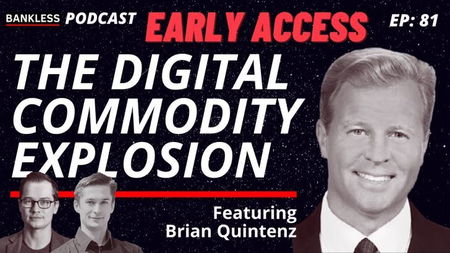
🎙 81 - The Digital Commodity Explosion | Brian Quintenz
Discussing Regulation & DeFi with CFTC Commissioner
Up next
All episodes 01:43:06
Regulation Premium
01:43:06
Regulation Premium
🎙️ The Digital Commodity Explosion | Brian Quintenz
 01:20:45
DeFi
01:20:45
DeFi
🎙 Layer Zero | Eric Conner
 01:37:15
Ethereum
01:37:15
Ethereum
🎙80 - Ethereum is the Greatest Trade | Raoul Pal
 01:39:34
News
01:39:34
News
📺 ROLLUP: Visa buys CryptoPunk | Budweiser Beer. ETH | NFT Mania
 01:33:31
NFTs
01:33:31
NFTs
📺 NFT Mania | Andy8052 & DeeZe (SotN 8/25)
 01:25:02
Ethereum
01:25:02
Ethereum
🎙 Layer Zero | Dmitry Buterin
 01:28:55
Regulation
01:28:55
Regulation
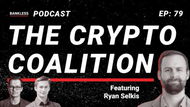
🎙️ 79 - The Crypto Coalition | Ryan Selkis
 01:28:55
Regulation Premium
01:28:55
Regulation Premium
🎙️ The Crypto Coalition | Ryan Selkis
Inside the episode
Want in on sports NFTs? Check out SoRare—the largest platform for football club collectibles.
Brian Quintenz was a commissioner on the Commodity Futures Trading Commission from 2017 until April of this year. The CFTC serves to regulate the derivative markets, and Brian particularly worked to embrace innovative technologies and emphasize the power of free markets, even in a regulatory environment.
He has been an advocate for the exploration and growth of the crypto space and is provides an insider’s perspective to deal with the question of crypto regulation. His sober and pragmatic takes are deeply insightful, and there is a clear alignment of values between Brian and the industry.
This episode dives into the disruptive nature of cryptocurrencies, and how we can make sense of this Cambrian explosion of new assets.
🚀 Get this episode's exclusive debrief to hear Ryan & David’s unfiltered takes on the podcast.
🎙️ NEW PODCAST EPISODE
Listen to podcast episode | iTunes | Spotify | YouTube | RSS Feed
Bankless Sponsor Tools:
💰 GEMINI | FIAT & CRYPTO EXCHANGE
https://bankless.cc/go-gemini
🔀 BALANCER | EXCHANGE & POOL ASSETS
https://bankless.cc/balancer
👻 AAVE | LEND & BORROW ASSETS
https://bankless.cc/aave
🦄 UNISWAP | DECENTRALIZED FUNDING
http://bankless.cc/uniswap
RESOURCES
🏴 JOIN THE NATION 🏴
Subscribe: Newsletter | iTunes | Spotify | YouTube | RSS Feed
Follow: Twitter | Instagram | Reddit | TikTok | Facebook
Not financial or tax advice. This newsletter is strictly educational and is not investment advice or a solicitation to buy or sell any assets or to make any financial decisions. This newsletter is not tax advice. Talk to your accountant. Do your own research.
Disclosure. From time-to-time I may add links in this newsletter to products I use. I may receive commission if you make a purchase through one of these links. Additionally, the Bankless writers hold crypto assets. See our investment disclosures here.
Transcript
welcome to bank list where we explore the frontier of internet money and internet finance this is how to get started how to get better and how to front run the opportunity i'm ryan sean adams i'm here with david hoffman and we're here to help you become more bankless david fantastic episode brian quintes is a former commissioner at the cftc former and he just resigned actually the day before we talked to him this is a very candid conversation and what's going on in regulators minds particularly the
cftc with respect to crypto just fantastic insights here this is definitely part of the bankless series where we try and explore the disposition or the nature of these agencies that regulate the financial world and are all kind of jostling for position with how to deal with the crypto regulation question uh it was actually really uh fortuitous that brian had just resigned from the cftc so he could probably he was probably a little bit more capable of speaking freely and so we were able to pick his brain about like
what's it like to take the perception and perspective of the cftc uh as it relates to some of the big questions that we have about how crypto is ultimately going to be regulated by the nation state or even if it can at all we also went through kind of just a background of the cftc and how it came to be and what its role is uh and then of course extended that and extrapolated that to crypto um and then and then also just talked about the inherent um problems the nature of crypto and how it might you know cause a big obstacle for
not only the cftc but for regulators at large if you if you guys remember our episode with josh rosenthal we talked about how everyone now has a printing press for assets uh how is a an agency going to deal with that um so questions like this were uh rampant throughout the episode and i overall really enjoyed brian's very sober and pragmatic uh responses to all the questions that we had yeah not only pragmatic but also like values aligned and this is just another reminder to people in crypto who think all regulators are evil and like bad and
coming out to get us like there are some fantastic people in the halls of our government and in the halls of regulators who want many of the same things that we want and value many of the same things i think brian is very much to me we had uh hester purse from who's the commissioner of the sec on bankless podcast a few months ago and i think we were also surprised at how values aligned she was with um the crypto industry and uh so is brian and i was just uh amazed to hear that like he had just fantastic insights
that i think anybody in this space for the reasons you listeners are in it we are in this see to to go bankless to disintermediate uh you know financial systems become more self-sovereign more free um brian sees all of that and so he had some very candid uh insights into how these industries work like the difference between the sec and the cfdc is there a little beef there i don't know uh it was interesting to get his uh insights into you know the the world of regulators how they're reacting to crypto and i think big takeaway for me
david was um brian thinks that there needs to be a balance restored that we are too uh much on the side of of saying no to everything no you can't do this no did you ask for permission i'm sorry you can't do this we need to swing the pendulum back the other way and specifically regulators talking about america but other countries as well towards being a bit more like pro innovation like asking questions like well what if we did this could we sandbox this could we let this experiment run how can we focus on maybe
um prosecuting the fraud and the scammers directly rather than uh creating blanket rules and unclear regulations that that harm the entire industry as a whole so super aligned i think with uh with our hopes and aspirations you know my only regret david is that brian's still not a cftc commissioner because we need people like him in our government bodies um fighting the fight that we're fighting uh only from the inside yes that is very true it is a bummer that he is not um in like you know
having the the regulatory power that he does have yet i'm really excited to see what his future uh lies because it sounds like he is trying to work his way into the crypto industry so i don't hate that either also you're totally right his take about how uh the permissionless and open nature of crypto as a response a backlash to the permissioned nature of the alternative financial system i thought was a really good take and i think was probably my favorite part in this conversation so without further ado i think we should just go ahead and get right into that conversation with brian quintez but
first before we get there a moment to talk about some of these fantastic sponsors that make the show possible bankless is proud to be supported by uniswap uniswap is a new paradigm in asset exchange infrastructure instead of a cumbersome order book system where trades are matched with other humans uniswap is an autonomous piece of software on ethereum which is what ryan and i call a money robot no human counterparties or centralized intermediaries just autonomous code on ethereum input the token you want to sell and receive the token you want to
buy something brand new in the uniswop ecosystem is the uniswap grants program is now accepting applications for grants we have been saying this for a while and we'll say it again dows have money and they are in need of labor if you think that you have something to contribute to the uni-swap dow apply for a grant to uniswap just look at the size of the uniswap treasury it's almost 3 billion this mountain of capital is looking for labor do you have something of value to contribute to the uniswap dow no matter how big or small your idea is you can
apply for a uni grant at unigrants.org and help steer unit swap in the direction that you think it should go that's exactly what we did to get uniswop to be a sponsor for bankless and you can do the same for your project thank you uniswap for sponsoring bankless balancer is a powerful platform for flexible automated market makers typical amms just have two tokens inside of one liquidity pool which can lead to fractured liquidity across the many pairs in d5 with balancer you can access the full power of multiple tokens inside of one single amm which unlocks an
entirely new playing field of possibility this makes balancer an awesome building block for so many different use cases balancer pools can make asset indices but instead of paying fees to portfolio managers balancer lets you collect the fees from traders who use your portfolio for liquidity additionally balancer smart pools can be programmed to have properties that change according to pre-determined rules such as changing the swap fee based on market conditions or even liquidity bootstrapping pools which can help you launch and distribute your token with day one liquidity at bankless we use a
liquidity bootstrapping pool to sell our bap t-shirts too much success balancer v2 brings powerful new features that makes your money work even harder for you in v2 idle tokens are capable of generating yield in defy without sacrificing liquidity in the pool using balancers asset managers balancers vault architecture lets you trade between balancer pools at a fraction of the cost versus trading on other platforms balancers mission is to become the primary source of liquidity in d5 by providing the most flexible and powerful
platform for asset management and decentralized exchange dive into the balancer pools at app.balancer.fi bankless nation we are super excited to introduce you to our next guest this is brian quintez he is a very recently former commissioner at the cftc the commodity and future exchange he was nominated by both presidents obama and trump unanimously cur uh confirmed by the senate for that position before being a commissioner he used to run his own investment firm he was an analyst
during the banking sector i think that was his trial by fire because there was a little banking crisis in between there he ran a commodity hedge fund as well so he's got an experience in capitol hill as well as in capital markets brian it is fantastic to have you on bank list how are you doing sir thanks ryan i'm doing great it's great to be with you and uh excited to be uh doing this um host government yeah that's cool so you just resigned uh recently then is that the case
yeah that's that's that's the case so uh as as a commissioner uh i and my colleagues are appointed to calendar date set terms and it's a five-year term and technically mine actually expired last year uh but i could stay on through the end of of this year unless my replacement had been nominated and confirmed that didn't happen so i was basically um given the choice of when i cho would want to choose to step down and and this felt like the right time and i'm excited
having been at the commission for four years uh four full years i'm excited to take the next step well this is super cool because i think you can uh get give us some takes that are maybe not representative of the cftc now these are your own kind of personal takes that will be exploring this industry but you have that i don't have i don't have to give my disclaimer anymore you know it took me four years to remember to give my disclaimer and now i don't have to do it again so yeah i'm happy to talk uh uh about my my own my own thinking you know free and clear from how it may affect uh you know anyone's view of the
agency we'll start here like free and clear i think what a lot of crypto people are wondering is does the us government hate us does the us government hate crypto um i mean if you know i think there's a short answer and a longer answer to that the short answer is that um i think it depends on the time period and uh the people in positions of authority uh i think the longer answer is that we've obviously seen a transition
in in um political dynamics in the power structures uh of the white house and capitol hill and in the regulatory community and those power dynamics uh have philosophical impacts in terms of a regulatory regulatory outcome and um it seems to me like uh there's uh we're in an environment that's much more negative i think um i i'm disappointed to say that and and that's not necessarily to put value judgments or um
uh you know negative connotations on anybody's any particular person's motives i've uh plenty of friends that are colleagues that are you know in majority positions now and have been in minority positions but i mean you look at um as i know you've talked about extensively you look at you know what happened with the infrastructure bill you look at what's coming out of uh you know the sec and and and some of the agencies um you look at you know the language that's being used on capitol hill uh by some very outspoken members of congress
and um it's hard not to think that there's a little bit of a target on crypto's back right now we've been feeling that brian to be honest i think the infrastructure bill uh is a time in the crypto industry's history where we really felt that significantly uh we got lots of stuff to talk about but let's park on this for a minute i'm curious why do you think this has skewed negative recently in the current zeke gust uh across regulators across all of government why is this regime maybe we're currently in
a bit negative on crypto so i think i think it's i think it's a few reasons um number one it is you know a lot of it is currently outside of the control of regulators and uh and and and that creates interesting dynamics for the first that dynamic that it creates is that it competes against you know the regulated environment and so just just from a a a fairness perspective i think it's
legitimate to to kind of ask yourself if you're in a position that's appointed that is um you know swearing to uphold the law uh to to look at you know what you regulate and what you can't or don't regulate and ask yourself you know am i creating you know fair competition and i know one of my colleagues is kind of focused on that you know at my former colleagues as focused on that at the agency um but i think there's more to it than that and i think you know more to it is um
when you're in a position like a regulator you're used to having control you're used to expressing uh some of your political philosophy or your regulatory philosophy through that control and things that are outside of your control that are related to your space i think um you know challenge that and diminish your authority and diminish your power and diminish um uh you know uh what you know your reach and i think some of this could be
motivated uh by you know the the the need to do more uh the want to create a a new uh regulatory uh framework and structure uh that that is some kind of legacy uh that is you know could be self-serving uh for for those in positions of authority uh so i mean i think there are a lot of dynamics that are going on um right now and you know there's there's kind of the traditional fair competition you know discussion and
you can kind of err on the side of um innovation and letting the market kind of evolve before you take a you know more of a stricter view uh or you can err on the side of i need to enforce the law as it is currently written you know against anyone who should be caught up by it regardless of whether or not they fit into this box innovation versus like very strict uh rule following being sort of a stickler for this sort of thing you know uh
before we get any farther brian i'm actually interested in your personal take here so like what's your personal take on crypto is it is it a good thing is it something that um the us government should kind of push away and relegate to the fringes of society what's your take well so you know maybe this represents ignorant thinking you know or or old-fashioned thinking and you know that the cftc is a small agency and we have authority over a huge market 400 400 trillion dollars of derivatives you know
are traded that is that are within our jurisdiction that's the biggest market by far of any financial market by far of course that's a notional value uh you know uh uh measurement so it doesn't necessarily measure you know uh true risk in terms of dollars you know exposed to risk but it's but it is a huge market it affects all areas of the economy uh for risk management purposes you know to ensure risk transfer functions and hedging activity of of of every sector and we're 750 people or the agency is
700 i'm not there anymore right so it agency was it is 750 people and so you know it's there's a lot to handle um and so i think you know the the the agency during my time there worked hard at trying to keep on top of of what's going on um and you know my i've worked hard at trying to keep on top of what's going on but you know it takes about two clicks you know through a thread on twitter to realize that um there's a lot of stuff going on that i still need to learn more about so i say that uh you know there's a
little bit of a caveat to say you know maybe this is over style thinking and we can you know talk more about it in real time you know if there's more to add but you know i i think about you know crypto is kind of how it evolved i i was i felt i was very early in my role at the agency to defend the intrinsic inherent value of bitcoin um you know bitcoin was kind of bitcoin and and ether and you know the ethereum blockchain and the bitcoin blockchain were kind of the most prominent things
in the space you know as i was coming into the agency and as i was you know nominated for this role and preparing to come into the role um and you know at that point as there still are uh there were a lot of value judgments being made you know on uh what this is if it has value whether or not it's a fraud um and and you know i gave uh uh just i gave speeches in the united states i gave a speech direct you know directed at
um the powers to be in europe to say look you know i don't know what the value of this is but there is unquestionable value in it and to dismiss it as something that you know is is a fraud or is worthless or ponzi scheme or a bubble misses how i think 95 of the world is going to look at this we can't look at it at that point through the lens of a reserve currency status of the united states or the euro
or some other major global currency we need to look at it through the demand and and accessibility uh with something that has a finite supply in terms of bitcoin specifically at that point and understand that this is something that is going to grow in interest and likely value and so you know i feel like i've been consistent about um uh the fact that there is inherent value in what we've seen develop you know from a
crypto token crypto asset uh basis and i've never felt like we needed to necessarily have you know new regulations for that that um you know those tokens you know were either securities or non-securities and while we would all possibly like more clarity on what those things on on the status of that from the sec uh we didn't necessarily need um new law you know to to address some of that i think it was more process as
opposed to policy if that makes some sense um but then as you know we start getting into d5 i think the conversation shifts a little bit in terms of you know what the cftc's purview is because there have been you know some uh protocols you know through you know smart contracts um native tokens that have allowed for derivative like contracts to be listed and traded and that directly implicates the cftc's jurisdiction and and i think you know that's where
you know we can really talk about you know where where i fall on on the scale of you know strictly enforcing the law in real time regardless of innovation you know or the progress uh of a certain you know of a certain space or percentage sector and regardless of some of the features that that that space has that doesn't exist in the traditional regulated financial system that solve for some of the problems which regulation was designed to address
you know or um you know taking what i view as more of a of us of a stand back um you know a wait and see approach to see how this space develops to see how it can address some of these problems through transparency through open access how it can promote freedom how it can promote uh wealth creation how it can promote access uh to you know financial uh products and then revisit the law and or an agency's regulations
if there is a need you know to address some flaw and you know i don't know i'm sure there are a few but i don't know of a lot of or or a huge swath of investors in this space or owners in this space that are raising their hands and say and saying hey us government please come and protect me i i need your help i can't make my own decisions yes i agree plea please make value judgments for me you know i don't see that anywhere and i think that that should be you know a direct response to anybody uh on
capitol hill in agencies uh that are saying you know we care about investor protection and uh this area is right with fraud and and uh you're at risk unless you know we're there to help brian we have so much to talk about and i want to get to this conversation of d5 and so many things that um that you mentioned uh like feel like american values you know d5 being a representation of american values so we definitely want to get to that discussion in a little bit but i'm
wondering if you could provide for our listeners a quick primer on the cftc as a regulatory agency so you did that a little bit 750 employees regulating this this man this massive uh 400 trillion dollar derivatives market and pretty incredible and i i noticed the mission of the cftc it says is to promote the integrity resilience and vibrancy of the us derivatives market can you tell us maybe in some plain speak terms like what is the purpose and
mission of the cftc why are you guys there how are you guys helping yeah thanks so i um i'll try to take a little bit of a walk back through time not to not to bore anybody but i think it's interesting and i think you know it actually speaks to um some of the regulatory and the political uh environment of the agency and how we interact with capitol hill and what you may see going forward and why but you know the the u.s derivatives markets really began in chicago in the 1850s
and um you know that's that's where uh trading occurred you know uh for commodities you know for a future delivery at a specific point to allow farmers transporters producers processors just to manage their risk to manage their risk so prices going up prices going down you know supply disruptions weather events all those kinds of things and that was a um a federally unregulated um privately
self-regulated marketplace through the 1930s when ultimately because of some price movements there was a a political call to create a an agency at that point within the department of agriculture because of the uh birth of the futures markets from the agricultural sector in products like corn wheat soybeans um uh you know to create a regulatory agency within the department of agriculture to oversee you know the futures exchanges
and you know and that was in the 30s and then fast forward in time and in the 1970s congress passed the commodity exchange act which officially created the cftc and gave this agency independent status which meant it wasn't neces it wasn't part of the administration and it achieved a level of independence by virtue of having a bipartisan multi-member board so we have five uh appointed presidentially nominated
and appointed roles senate confirmed presidentially nominated employment roles and no one political party can have more than three members so usually you have two republicans two democrats and the chair appointed by the president so the president's party has you know um governing control over the agency uh so that's how the the agency was originally created you know you know through the 80s and 90s you had the um invention the you know the innovative development of financial futures you
know futures contracts on treasuries futures contracts on on stock indexes which which significantly expanded the agency's jurisdiction from both a number of contracts traded and the markets and what was underlying those markets then because there were you know futures on stocks there was a you know agreement between the sec and the cftc about narrow-based you know security futures contracts and you know single name security features narrow-based
security index futures and broad-based security index features that's just a little bit of an aside but it can be relevant going forward um then as we got through the financial crisis and a in my view a very tiny corner of the swaps market um played a role uh you know in that through credit default swaps on mortgage-backed securities you know we're talking about a you know hundreds of trillions of dollars of you know market this is i i don't know what the numbers are on top of my head i'd say probably you know
2 trillion 3 trillion something like that a big number big number but tiny fraction of the swaps market but congress responded to that you know financial crisis with a whole new regulatory regime for swaps and that was implemented through the dodd-frank act so then that gave the cftc jurisdiction over interest rate swaps credit default swaps equity swaps commodity swaps foreign uh exchange swaps uh you know that rule writing occurred in the age at the agency
mostly in the first kind of four years of the 2010s although we have recently wrapped up a number of very important rules that were left unfinished uh on things like swap dealer capital uh our cross-border view of swap dealing activity a position limits regime that expanded position limits to new commodity futures contracts and um you know and that brings us front and center to today when um i was being nominated for this role and i was preparing to talk about all
things dodd-frank and the implementation of new swaps market uh rules and you know within two months of uh joining the agency and and and deciding to sponsor our technology advisory committee bitcoin futures get listed by two exchanges and put the agency front and center in the crypto debate and it's you know it's we haven't looked back since and i certainly haven't looked back and i'm i'm thrilled to i was thrilled to be a part of the nc when that was happening um and you know i can't wait to see uh where it goes and how i can be involved
it seems like there's one trend brian which is like um new financial product is created something bad happens congress reacts cfdc gets more jurisdiction to come fix it uh but it seems to oftentimes start with some bad thing happening in a new financial market some sort of fraud that's out there is this the the recipe that's repeating so um when i first joined capitol hill as a policy staffer
you know young right out of college uh opening the mail giving towards the capitol building you know great stuff a lot of fun you know but but very introductory uh i remember someone coming into the office who you know um uh you know was well known in the office and and they just said you know brian i just want you to remember two things you know i want you to remember something congress is great at doing two things nothing and overreacting and i didn't say that i'm quoting someone that did say it so you know no
one can say that it's my view i'm sure he was quoting someone else too exactly probably but but i would i would um expand upon that or actually rationalize it to say you know that you know at some level that's what it's supposed to do you know i also went to a a class on a procedure and process at the library of congress my first you know couple weeks at uh you know on capitol hill and you know uh one of the experts in in congressional procedure and the rules
that are structured to consider bill said you know a lot of people get frustrated because they think congress has created to enact laws when if you really read the constitution and think about what the founding fathers had in mind congress was created to try to make it as hard as possible to have bad ideas become law and you know we can debate about how successful they were um you know over the course of time and what's developed but it is very hard for congress because of checks and
balances because of you know the consensus that's needed because of how much is on their plate um and and how much time it takes to consider just the normal business that they have to do of funding the government every year it is very difficult to pass new legislation and usually there is only um you know momentum necessary to focus the time and the resources and the rule writing and get support for you know a product if it's responding to a crisis and you know it in that kind of
scenario in my view you're never going to end up with um a a rationalized right-sized um you know uh scalpel-like or flexible kind of approach or one that distinguishes well between um things that didn't have anything to do with the crisis or why the crisis happened to begin with um so you're right and you know that that if a crisis happens congress usually responds
and depending on who's in power uh and what their political views are you know you're you could get a you could get a result that's very punitive um luckily i think for the most part the the the rule writing that the cftc did certainly while i was there in the last four years to to rethink and recalibrate a number of rules that were written in response to the crisis have been done in a way that really respect risk respect the market and respect the public
um but who knows if a crisis hits the crypto space what congress is going to do who's going to get a new authority who's going to be at that agency when that authority is given and what those rules end up looking like ryan you just went through and gave us a historical context for the establishment and growth of the cftc and i just want to add a little bit more color upon that because in the crypto world we often talk about how we are speed running the evolution of money and finance and you know the commodities and the
financialization of commodities are just a part of that history as everything else uh and you talked about how the you know futures contracts came out to help people help farmers um manage risk and help ensure that they can you know perpetuate their farm and into the future without having the um the whims of the market dictate whether their farm can survive and so for the people who are you know crypto native and want to uh gain a map for how this relates to our industry like bitcoin miners are a new age farm right this is our new age yield uh with like new age
Ryan Sean Adams
Crypto investor going bankless.
.png-a616dc52961c1edd72b0c1fdf5f47e7a.png)